Department of Orthopedics, Union Hospital, Tongji Medical College, Huazhong University of Science and Technology, 1277 Jiefang Avenue, Wuhan, 430022 Hubei, China.
The Division of Plastic Surgery, Brigham and Women's Hospital, Harvard Medical School, Boston, MA, USA.
Biomed Res Int. 2022 Jan 22;2022:5564604. doi: 10.1155/2022/5564604. eCollection 2022.
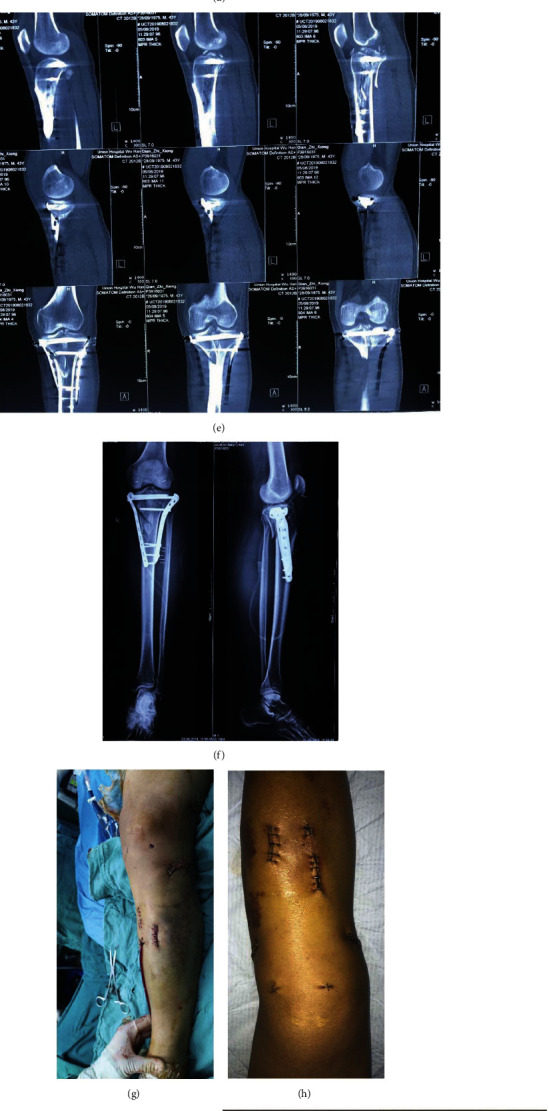
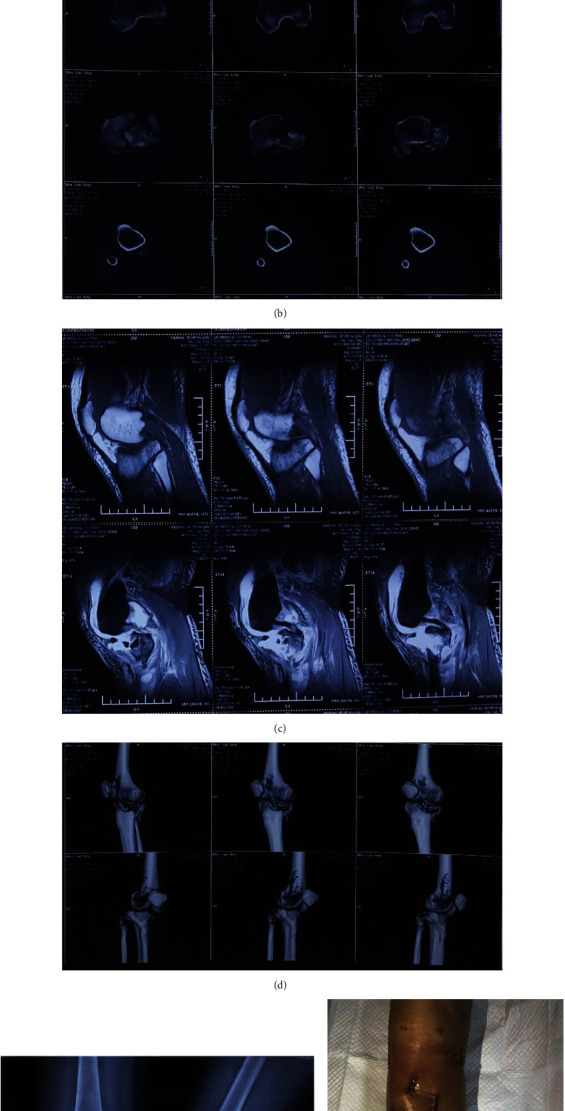
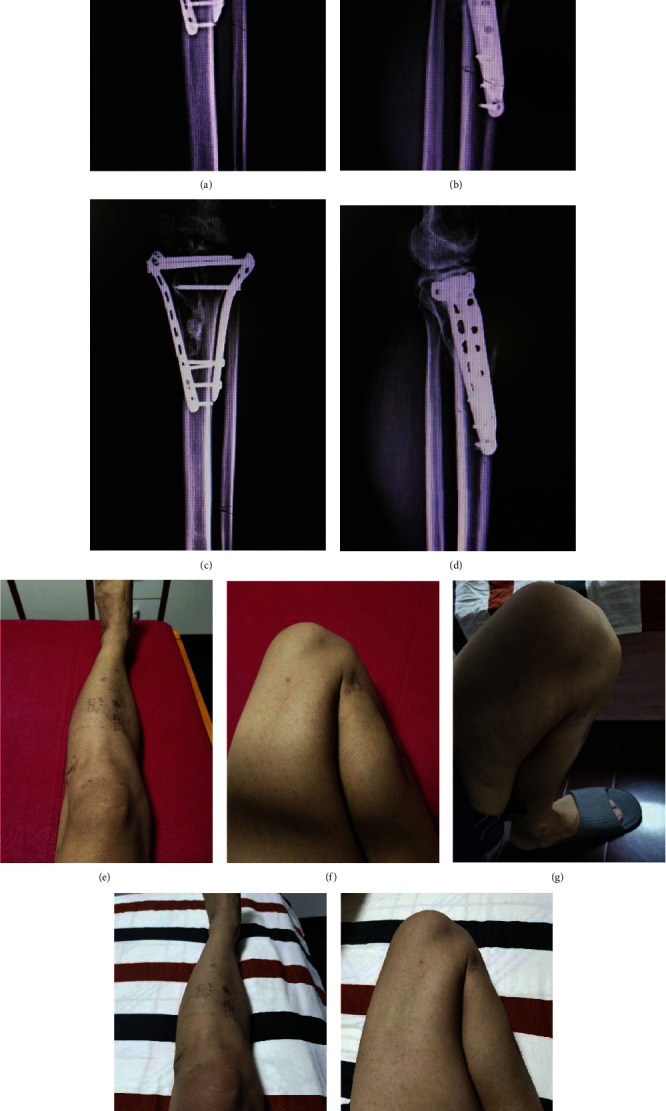
The aim of this study was to evaluate the clinical application of double-reverse traction for minimally invasive reduction of complex tibial plateau fractures. A retrospective analysis was performed to identify all patients admitted to the Department of Orthopedics, Union Hospital, Tongji Medical College, Huazhong University of Science and Technology, from March 2017 to December 2019 with Schatzker type VI tibial plateau fractures. 12 patients were identified (7 men and 5 women) with an average age of 46.15 ± 13 (39-58) years old. All patients were treated with double-reverse traction and closed reduction. After the fracture was reduced, the bone plate was fixed by percutaneous minimally invasive implantation. Outcomes assessed in this study include operation time and intraoperative blood loss. Imaging was performed during the postoperative follow-up, and functional recovery was evaluated at the final follow-up according to the Hospital for Special Surgery (HSS) score and the International Knee Joint Literature Committee (IKDC) functional score. Patients were followed up for 12.54 ± 1.5 (8-15) months. The average operation time was 63.63 ± 21 (35-120) minutes, and the average intraoperative blood loss was 105.45 ± 21 (60-200) mL. The Rasmussen imaging score was either excellent or good in all cases. The knee joint HSS score was 86.15 ± 6 (79-90) points, and the IKDC score was 80.01 ± 11 (75-90) points. No complications, such as wound infection, incision disunion, loosening of internal fixation, and internal fixation failure, occurred. In the treatment of Schatzker VI type complex tibial plateau fracture, the dual-reverse traction minimally invasive technique has the advantages of safety and effectiveness, less soft tissue injury, and allowing early joint movement, which is worthy of clinical promotion.
本研究旨在评估双反向牵引微创复位治疗复杂胫骨平台骨折的临床应用。采用回顾性分析方法,选取 2017 年 3 月至 2019 年 12 月华中科技大学同济医学院附属协和医院骨科收治的 Schatzker Ⅵ型胫骨平台骨折患者。共纳入 12 例患者(7 例男性,5 例女性),平均年龄 46.15±13(39-58)岁。所有患者均采用双反向牵引闭合复位,骨折复位后经皮微创植入钢板固定。本研究评估的结果包括手术时间和术中失血量。术后随访行影像学检查,末次随访根据美国特种外科医院(HSS)评分和国际膝关节文献委员会(IKDC)功能评分评估功能恢复情况。患者随访 12.54±1.5(8-15)个月。平均手术时间为 63.63±21(35-120)分钟,平均术中失血量为 105.45±21(60-200)ml。所有病例影像学 Rasmussen 评分均为优或良。膝关节 HSS 评分为 86.15±6(79-90)分,IKDC 评分为 80.01±11(75-90)分。无切口感染、切口不愈合、内固定松动、内固定失败等并发症发生。双反向牵引微创技术治疗 Schatzker Ⅵ型复杂胫骨平台骨折安全有效,软组织损伤小,允许早期关节活动,值得临床推广。