Institute for Pharmacoeconomics and Medication Logistics (IPAM) e.V., University of Wismar, Germany.
UCB Pharma, Monheim, Germany.
Ger Med Sci. 2021 Dec 23;19:Doc15. doi: 10.3205/000302. eCollection 2021.
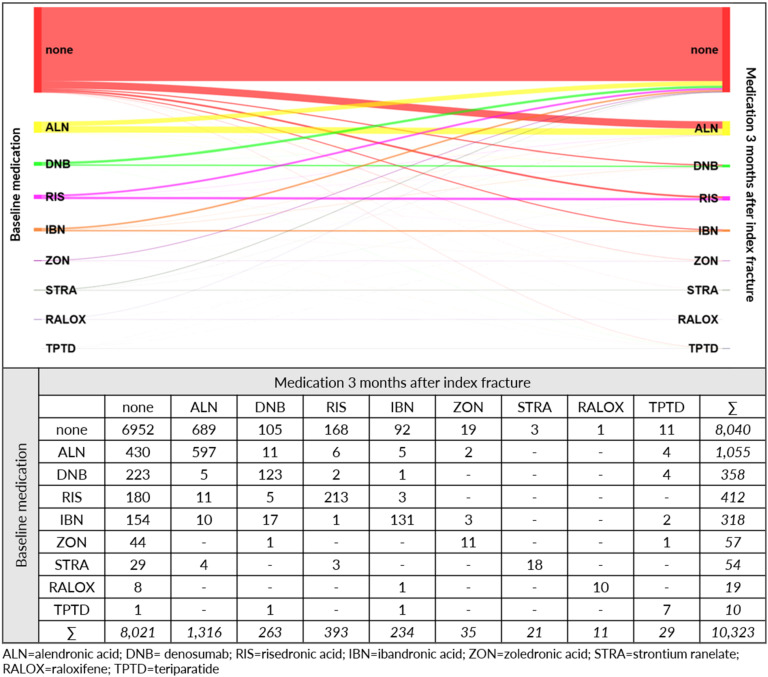
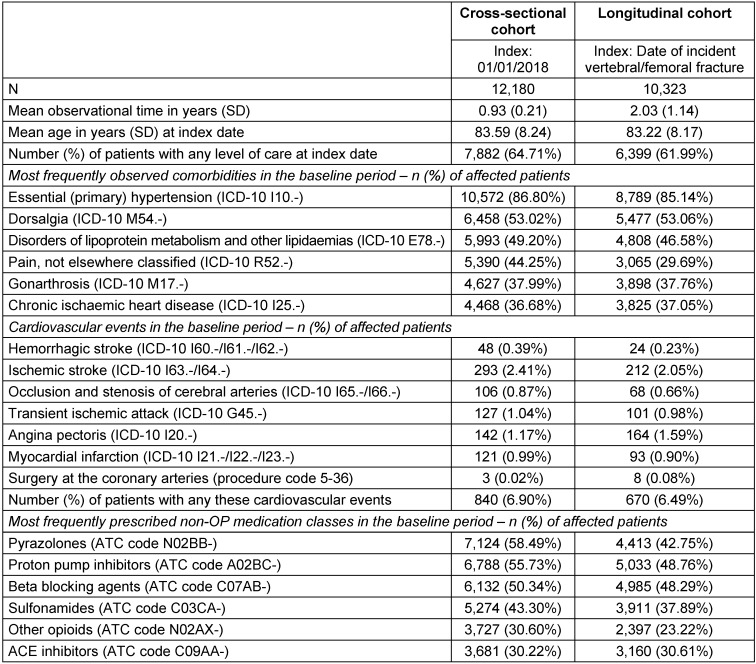
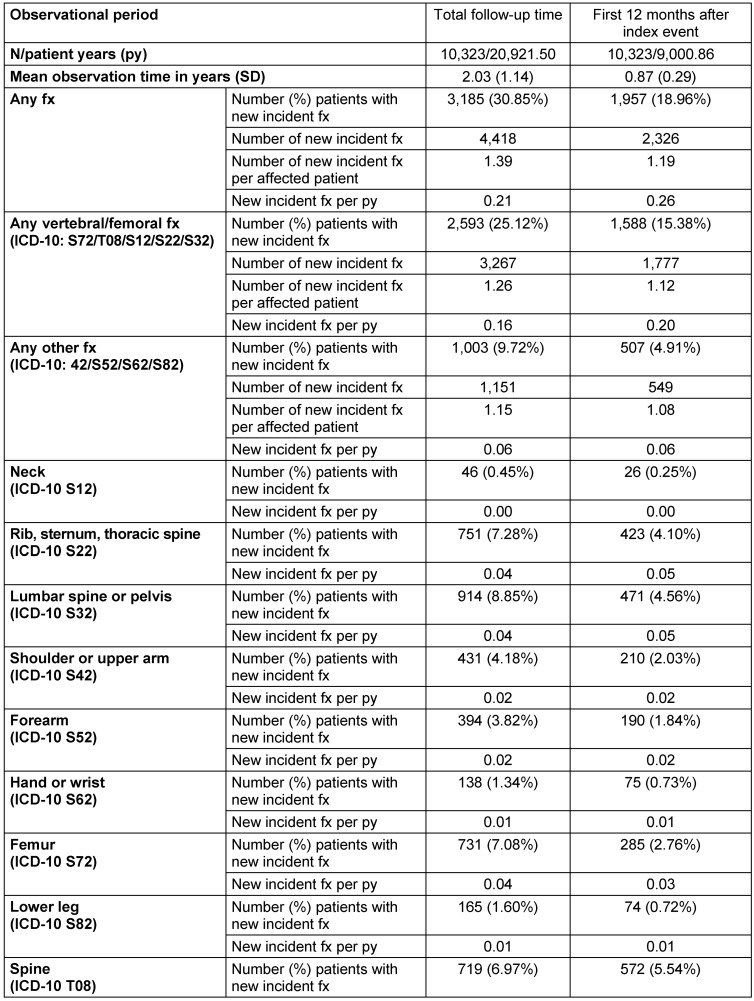
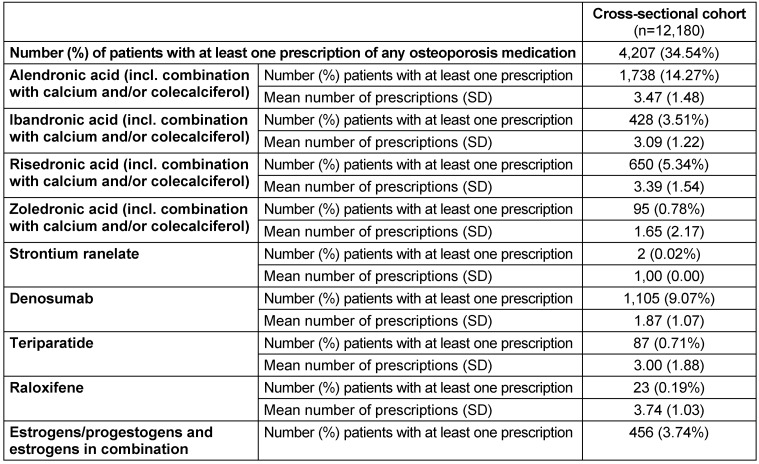
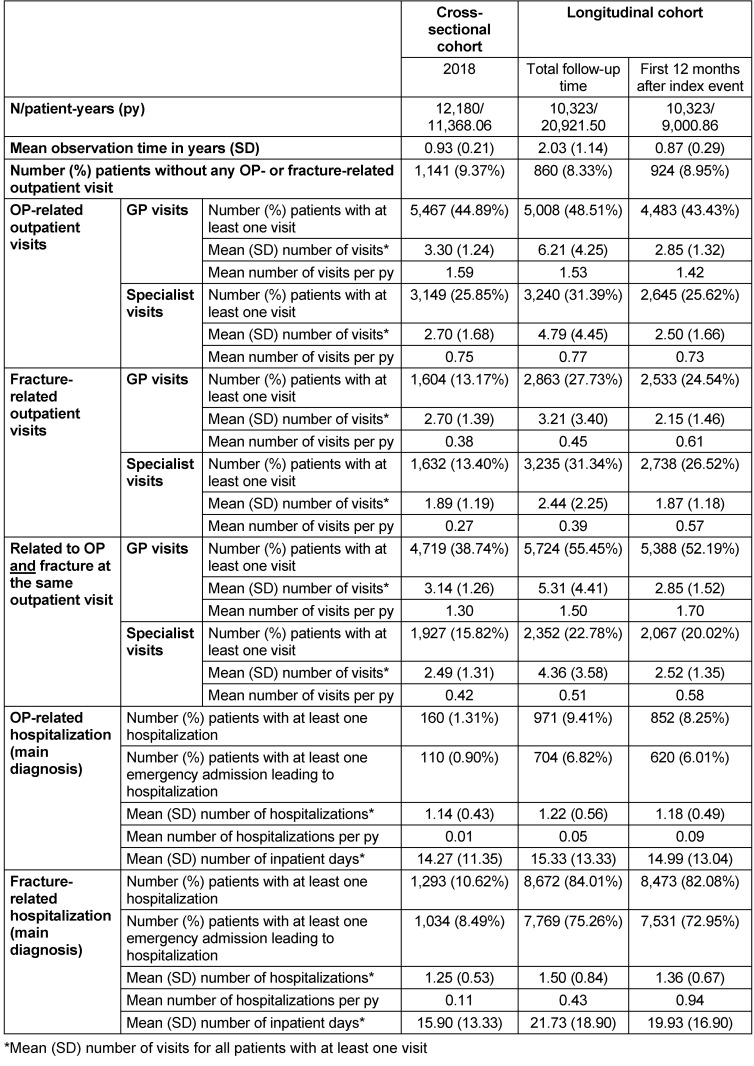
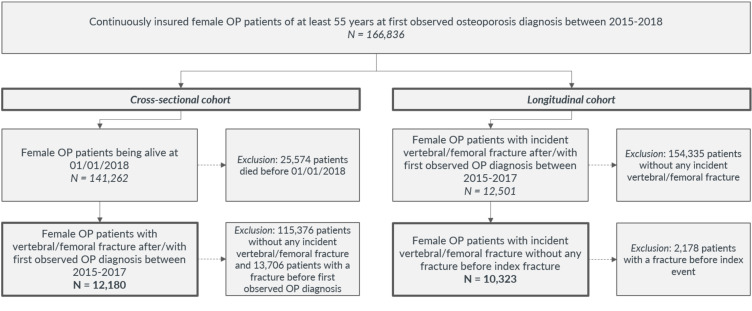
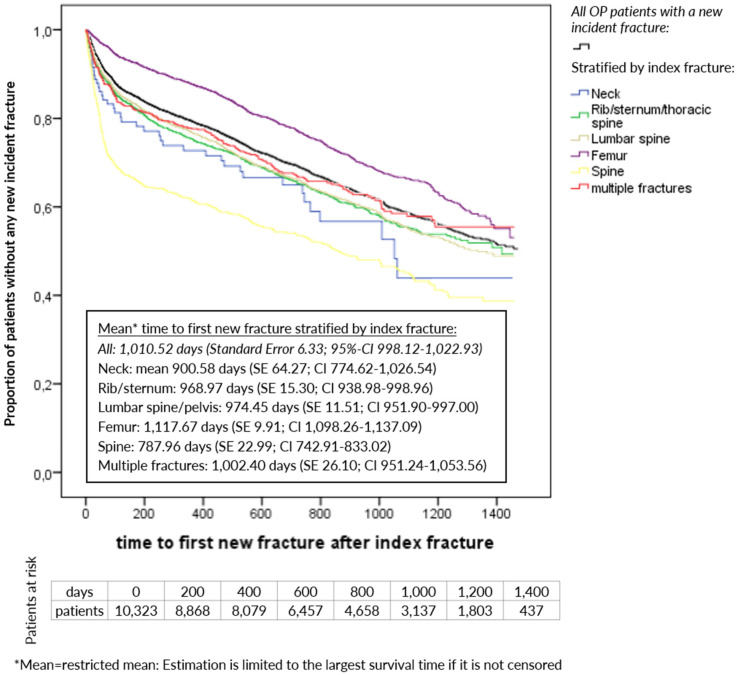
Osteoporosis (OP) and its associated fractures have a significant impact on patients' quality of life and are impacting their morbidity and mortality. For OP patients at high risk of fracture, guidelines recommend a pharmacological OP treatment. The aim of this study was to describe the real-world medication treatment of postmenopausal women with severe OP at high risk of fracture, their risk to experience a new fracture after having at least one previous fracture, and to assess the associated healthcare resource use (HCRU). This retrospective cohort study was based on anonymized German claims data (AOK PLUS). All included OP patients were female, ≥55 years old, and had a vertebral and/or femoral fracture. We conducted a cross-sectional analysis in 2018 and a longitudinal analysis, starting with an incident vertebral/femoral fracture (after or simultaneously with the first observed OP diagnosis). In both analyses, patient characteristics, rate of new incident fractures, OP treatment patterns, and HCRU associated with the treatment of patients were investigated. In the cross-sectional setting, 12,180 patients with a mean age of 83.59 years were observed. Of these patients, 14.30% sustained at least one new incident fracture and 34.54% received a pharmaceutical OP treatment during 2018. In this year, 58.50% of the patients had at least one OP-related outpatient visit, and 26.35% had a fracture-related visit. In 160 patients (1.31%), at least one OP-related hospitalization was documented, and in 1,293 patients (10.62%) a fracture-related hospitalization in 2018. In the longitudinal setting, 10,323 patients with a mean age of 83.22 years were included. Of these, 18.96% experienced at least one new incident fracture within the first 12 months after the index fracture, and in total 30.85% in the entire follow-up period (mean 2.03 years). During the 12-month baseline period, 22.12% of the patients received an OP treatment. Three months after the index fracture, the proportion of treated patients remained at 22.30%. During the total follow-up time, 35.54% were prescribed with an OP treatment. We observed a considerable proportion of untreated patients and a high rate of subsequent fractures. The awareness for a proper risk assessment and the appropriate use of available treatments should be increased.
骨质疏松症(OP)及其相关骨折对患者的生活质量有重大影响,并影响其发病率和死亡率。对于骨折风险高的 OP 患者,指南建议进行药物治疗。本研究旨在描述绝经后严重 OP 且骨折风险高的女性患者的实际药物治疗情况,她们在经历至少一次骨折后再次骨折的风险,并评估相关的医疗保健资源使用(HCRU)。这项回顾性队列研究基于匿名德国索赔数据(AOK PLUS)。所有纳入的 OP 患者均为女性,年龄≥55 岁,且有椎体和/或股骨骨折。我们于 2018 年进行了横断面分析,并进行了纵向分析,从发生椎体/股骨骨折(在首次观察到的 OP 诊断后或同时发生)开始。在这两种分析中,都对患者特征、新发生骨折的比率、OP 治疗模式以及与治疗相关的 HCRU 进行了调查。在横断面研究中,观察到 12180 名平均年龄为 83.59 岁的患者。其中,14.30%的患者发生至少一次新的骨折事件,34.54%的患者在 2018 年接受了药物治疗 OP。在这一年中,58.50%的患者至少有一次与 OP 相关的门诊就诊,26.35%的患者有与骨折相关的就诊。在 160 名患者(1.31%)中,至少有一次与 OP 相关的住院治疗被记录,1293 名患者(10.62%)在 2018 年发生了与骨折相关的住院治疗。在纵向研究中,纳入了 10323 名平均年龄为 83.22 岁的患者。其中,18.96%的患者在索引骨折后 12 个月内发生至少一次新的骨折事件,整个随访期间(平均 2.03 年)共发生 30.85%。在 12 个月的基线期内,22.12%的患者接受了 OP 治疗。在索引骨折后 3 个月,接受治疗的患者比例仍为 22.30%。在整个随访期间,35.54%的患者接受了 OP 治疗。我们观察到相当比例的未治疗患者和随后骨折的高发生率。应提高对适当风险评估和现有治疗方法的正确使用的认识。