Baraban Ezra, Cooper Kumarasen
Department of Pathology, University of Pennsylvania Perelman School of Medicine, Philadelphia, Pennsylvania, USA.
Mediastinum. 2020 Jun 30;4:12. doi: 10.21037/med-20-31. eCollection 2020.
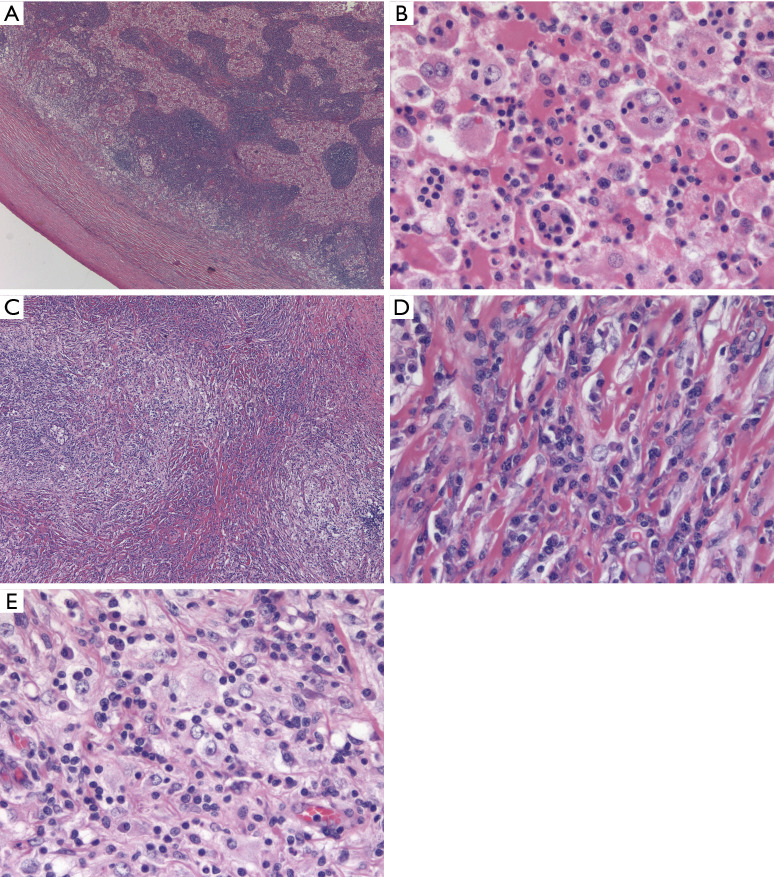
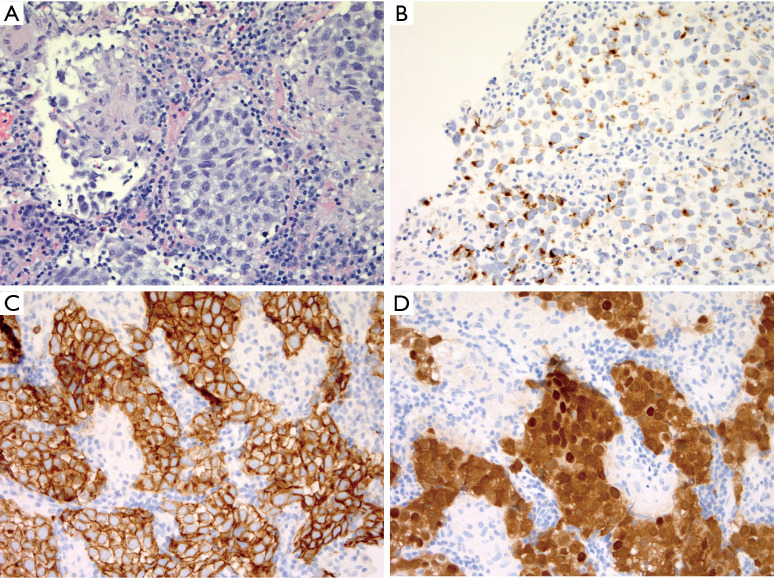
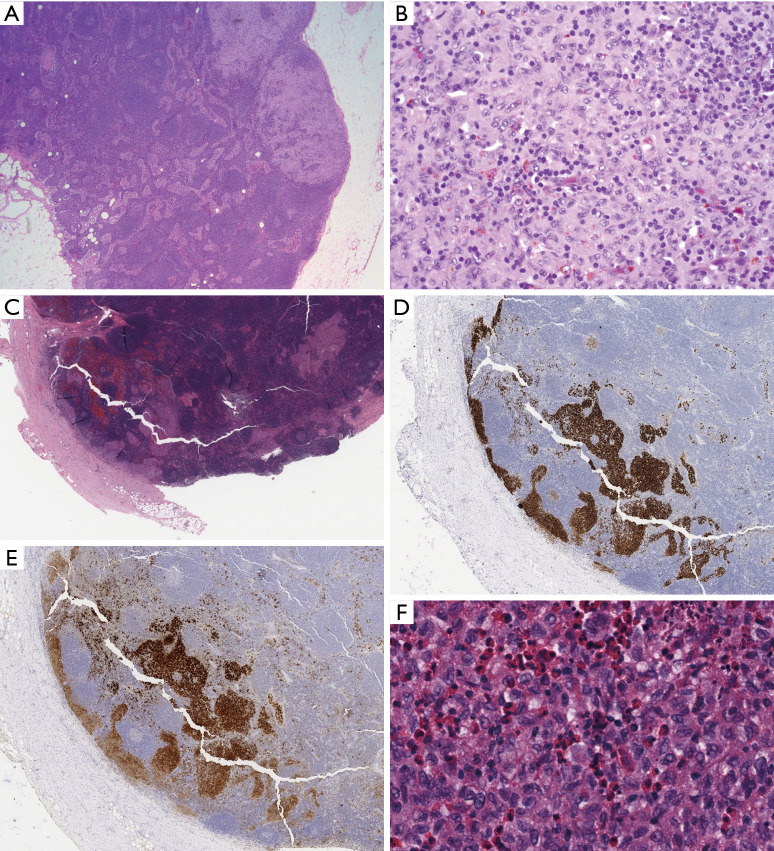
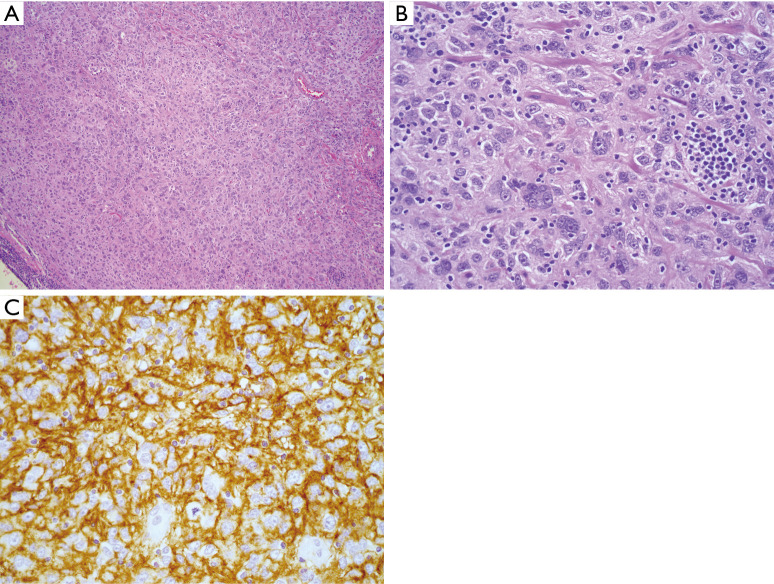
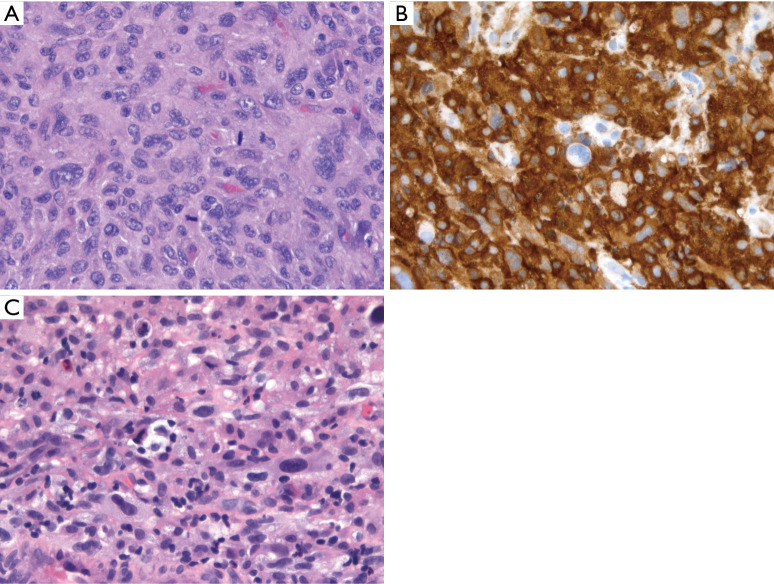
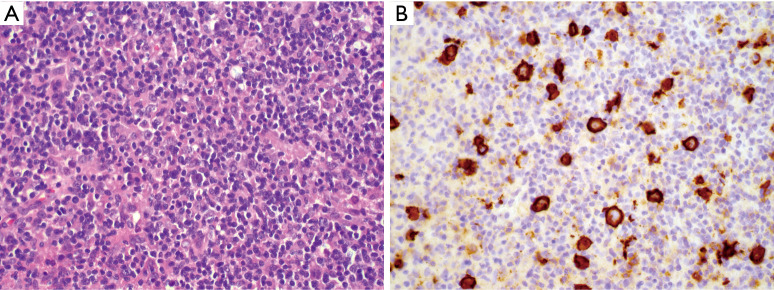
In this review, we discuss a logical approach to diagnosis of histiocytic and dendritic cell lesions of the mediastinum. We break down the differential diagnosis between true neoplasms of histiocytic and dendritic cells [Rosai-Dorfman disease (RDD), Langerhans cell histiocytosis (LCH), and follicular dendritic cell sarcoma (FDCS)] versus selected neoplasms of other lineages which frequently attract non-neoplastic histiocytes or resemble them morphologically (carcinoma, melanoma, sarcoma, germinoma, mesothelioma, and lymphoma). As neoplasms in the latter category are more common, they should be stringently excluded before diagnosing a lesion in the first group, particularly given enormous differences in clinical management. We also consider histiocytic sarcoma (HS), an extremely rare lesion which, in some cases is likely of intrinsic histiocytic differentiation, whereas in others represents clonal evolution from an underlying non-histiocytic neoplasm.
在本综述中,我们讨论了一种针对纵隔组织细胞和树突状细胞病变的诊断逻辑方法。我们剖析了组织细胞和树突状细胞的真性肿瘤[Rosai-Dorfman病(RDD)、朗格汉斯细胞组织细胞增多症(LCH)和滤泡性树突状细胞肉瘤(FDCS)]与其他谱系的特定肿瘤之间的鉴别诊断,后者常吸引非肿瘤性组织细胞或在形态上与之相似(癌、黑色素瘤、肉瘤、生殖细胞瘤、间皮瘤和淋巴瘤)。由于后一类肿瘤更为常见,在诊断第一组病变之前应严格排除,特别是考虑到临床管理存在巨大差异。我们还考虑了组织细胞肉瘤(HS),这是一种极其罕见的病变,在某些情况下可能具有内在的组织细胞分化,而在其他情况下则代表潜在的非组织细胞性肿瘤的克隆演变。