Endocannabinoid Research Group, Reproductive Sciences Section, Department of Cancer Studies and Molecular Medicine, University of Leicester, Leicester, UK.
Reprod Fertil. 2021 Apr 21;2(2):107-116. doi: 10.1530/RAF-20-0035. eCollection 2021 Apr.
To determine if models of human 'receptive' and 'non-receptive endometrium' differ in their responses to nitric oxide (NO) supplementation by measuring the levels of the enzymes of the endocannabinoid system (ECS) (fatty acid amide hydrolase (FAAH) and N-acylphosphatidylethanolamine-specific phospholipase D (NAPE-PLD)), which control the 'anandamide tone' essential for successful pregnancy.
A study of FAAH and NAPE-PLD expression (using human endometrium) through the menstrual cycle and an using a model of 'receptive' (Ishikawa) and 'non-receptive' (HEC-1A) human endometrial cell lines treated with the NO-donating compound S-nitroso-N-acetylpenicillamine (SNAP).
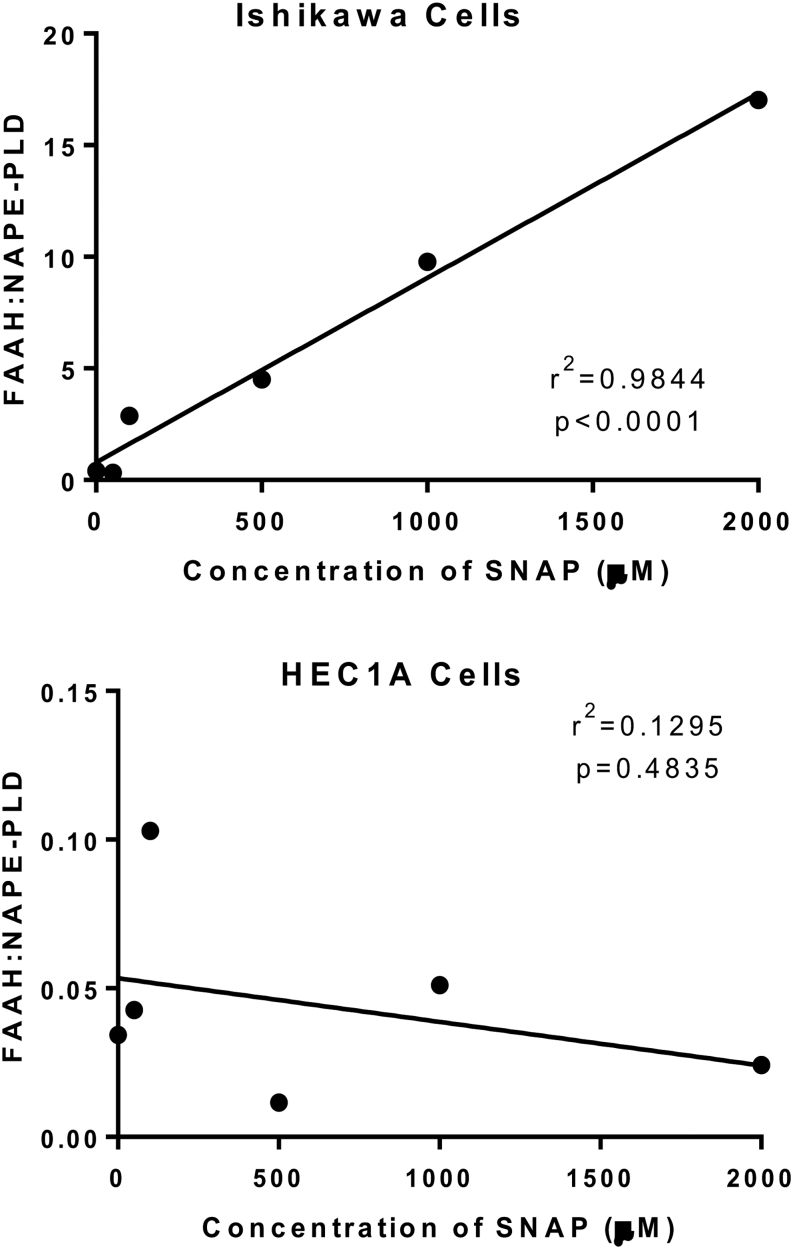
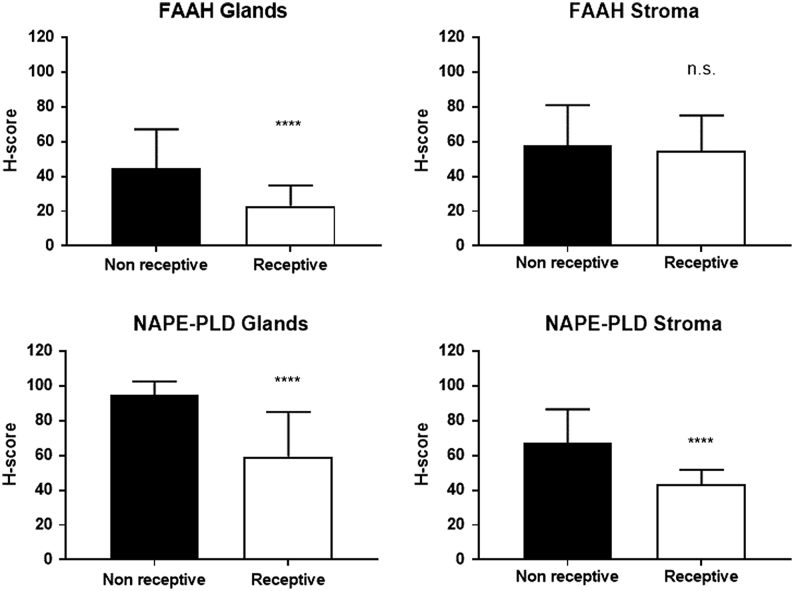
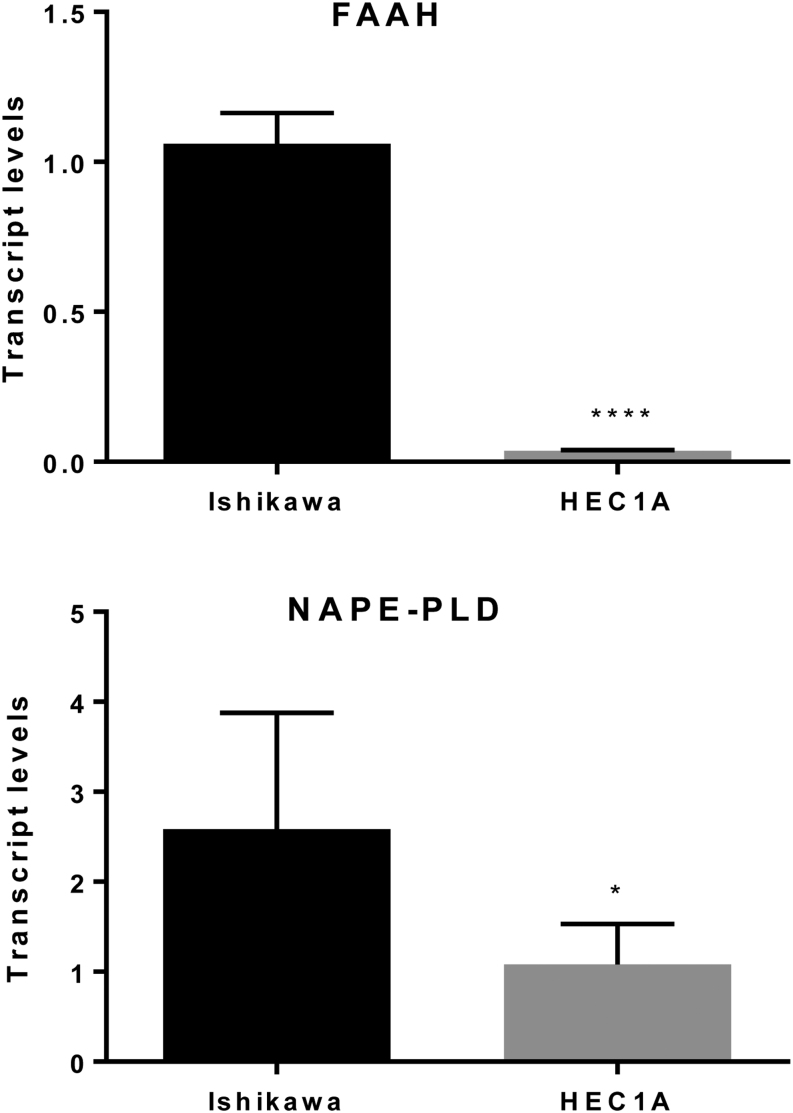
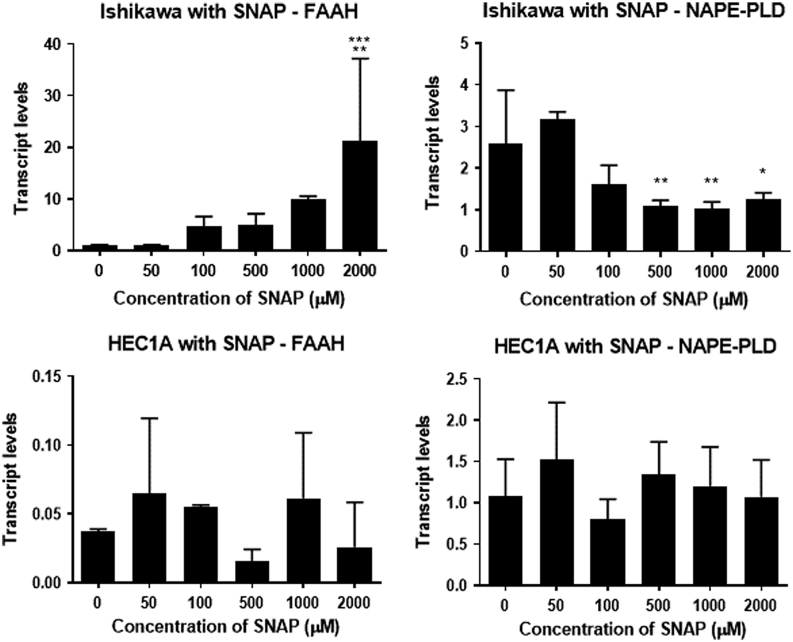
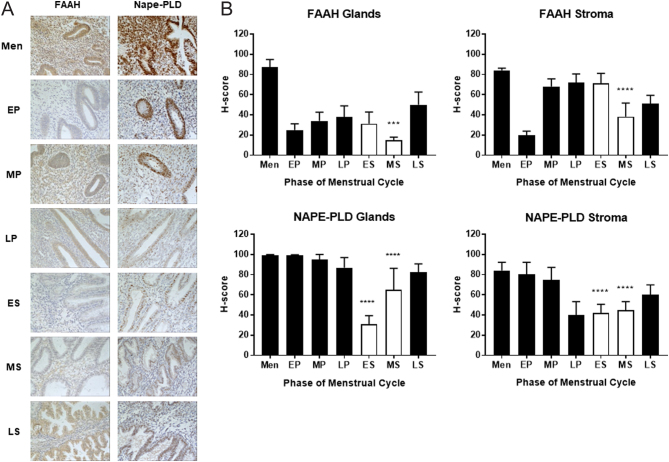
Immunoreactivity measured by optimised H-score for both FAAH and NAPE-PLD was reduced in secretory (receptive) endometrium compared to proliferative (non-receptive) endometrium ( = 0.0009 and <0.0001, respectively). and transcript levels were significantly higher in untreated Ishikawa cells than in HEC-1A cells ( = 0.0228 and 0.0001, respectively). Treatment of cultures with SNAP resulted in an increase in the amount of mRNA produced by Ishikawa cells and a decrease in mRNA. No effect of SNAP was observed in HEC-1A cells. Similarly, FAAH protein was significantly decreased in endometria representative of the receptive endometrium.
These data suggest that NO most likely affects the expression of ECS enzymes in the implantation site of a receptive endometrium; a phenomenon not seen in a non-receptive endometrium. These effects are most marked with FAAH expression, suggesting that FAAH may play the more critical role in ensuring the correct 'anandamide tone' for successful embryo implantation than NAPE-PLD.
Embryo implantation into the wall of the uterus is only successful when the inner wall of the uterus (the endometrium) is 'receptive', because if it is 'non-receptive', implantation will fail. Previous work showed that enzymes of the 'endocannabinoid system' are critical for implantation by maintaining the correct level of a fat called anandamide. This is by balancing its synthesis (by N-acylphosphatidylethanolamine specific phospholipase D, NAPE-PLD) and degradation (by fatty acid amide hydrolase, FAAH). Using immortalised cell lines as models of 'receptive' and 'non-receptive' human endometrium, we demonstrate a key stimulator of implantation, nitric oxide, has a positive effect on implantation by both increasing the mRNA levels of the degrading enzyme (FAAH) and decreasing the expression of the synthesising enzyme (NAPE-PLD). These effects are most marked with the degrading enzyme, suggesting that FAAH plays a more critical role than NAPE-PLD in ensuring the correct 'anandamide tone' for successful embryo implantation.
通过测量控制成功妊娠所必需的“大麻素(anandamide)”张力的内源性大麻素系统(endocannabinoid system,ECS)的酶(脂肪酸酰胺水解酶(fatty acid amide hydrolase,FAAH)和 N-酰基磷脂乙醇胺特异性磷酯酶 D(N-acylphosphatidylethanolamine-specific phospholipase D,NAPE-PLD))的水平,来确定人类“接受性”和“非接受性”子宫内膜的模型在对一氧化氮(NO)补充的反应上是否存在差异,这些模型旨在测量内源性大麻素系统(endocannabinoid system,ECS)的酶(脂肪酸酰胺水解酶(fatty acid amide hydrolase,FAAH)和 N-酰基磷脂乙醇胺特异性磷酯酶 D(N-acylphosphatidylethanolamine-specific phospholipase D,NAPE-PLD))的水平,这些酶控制着成功妊娠所必需的“大麻素(anandamide)”张力。
通过使用人类子宫内膜,通过研究 FAAH 和 NAPE-PLD 表达(使用人类子宫内膜)的周期,以及使用接受型(Ishikawa)和非接受型(HEC-1A)人子宫内膜细胞系的模型,研究 NO 供体化合物 S-亚硝基-N-乙酰青霉胺(S-nitroso-N-acetylpenicillamine,SNAP)的作用。
用优化的 H 评分法测量 FAAH 和 NAPE-PLD 的免疫反应性,在分泌期(接受性)子宫内膜中均低于增殖期(非接受性)子宫内膜(=0.0009 和 <0.0001)。未处理的 Ishikawa 细胞中的 和 转录水平明显高于 HEC-1A 细胞(=0.0228 和 0.0001)。用 SNAP 处理培养物导致 Ishikawa 细胞产生的 mRNA 量增加,而 mRNA 量减少。在 HEC-1A 细胞中未观察到 SNAP 的作用。同样,在代表接受性子宫内膜的子宫内膜中,FAAH 蛋白明显减少。
这些数据表明,NO 很可能影响接受性子宫内膜着床部位 ECS 酶的表达;在非接受性子宫内膜中则不会出现这种现象。FAAH 表达的变化最为显著,这表明 FAAH 可能比 NAPE-PLD 更能确保胚胎着床的正确“大麻素(anandamide)”张力,从而确保成功的胚胎着床。
胚胎植入子宫壁只有在内壁(子宫内膜)“可接受”时才会成功,因为如果它“不可接受”,植入就会失败。先前的研究表明,内源性大麻素系统(endocannabinoid system,ECS)的酶对于维持一种叫做大麻素(anandamide)的脂肪的正确水平至关重要,这对于胚胎着床是必要的。这是通过平衡其合成(由 N-酰基磷脂乙醇胺特异性磷酯酶 D,NAPE-PLD)和降解(由脂肪酸酰胺水解酶,FAAH)来实现的。通过使用永生细胞系作为“可接受”和“不可接受”的人子宫内膜模型,我们证明了胚胎着床的一个关键刺激物,一氧化氮(NO),通过增加降解酶(FAAH)的 mRNA 水平和降低合成酶(NAPE-PLD)的表达,对胚胎着床有积极作用。这些作用在降解酶中最为明显,这表明 FAAH 比 NAPE-PLD 更能确保成功胚胎着床的正确“大麻素(anandamide)”张力,在确保成功胚胎着床方面发挥着更关键的作用。