Sun Mengsha, Liu Wenjia, Zhou Minwen
Department of Ophthalmology, Shanghai East Hospital, Tongji University School of Medicine, Shanghai, China.
Department of Ophthalmology, Shanghai General Hospital (Shanghai First People's Hospital), Shanghai Jiao Tong University School of Medicine, Shanghai, China.
Cell Death Discov. 2022 Feb 8;8(1):50. doi: 10.1038/s41420-022-00847-3.
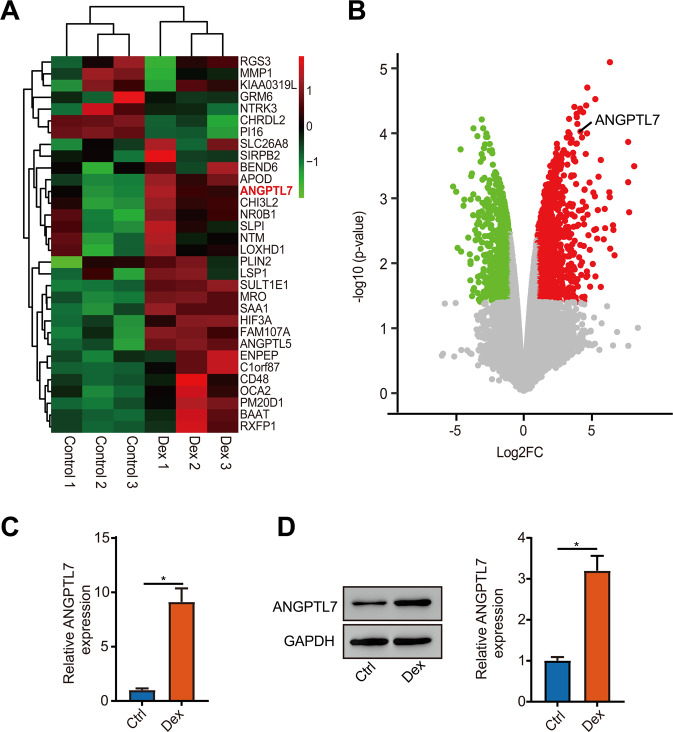
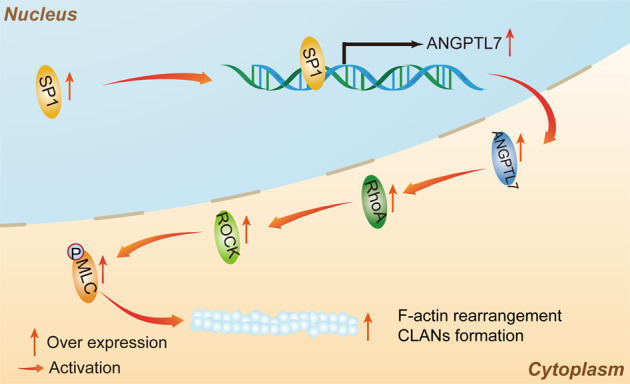
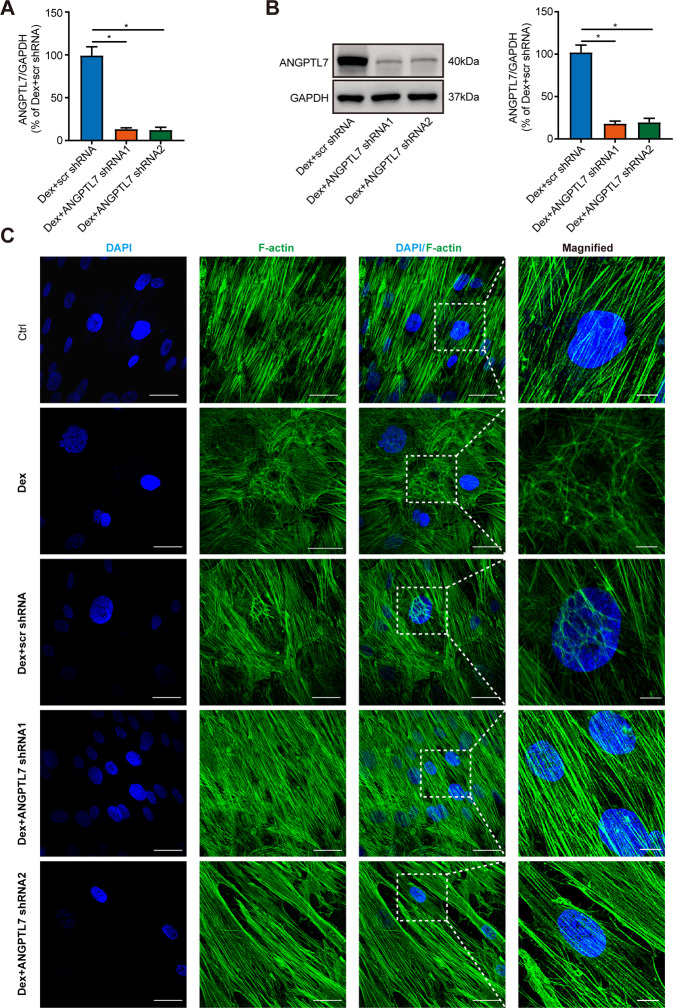
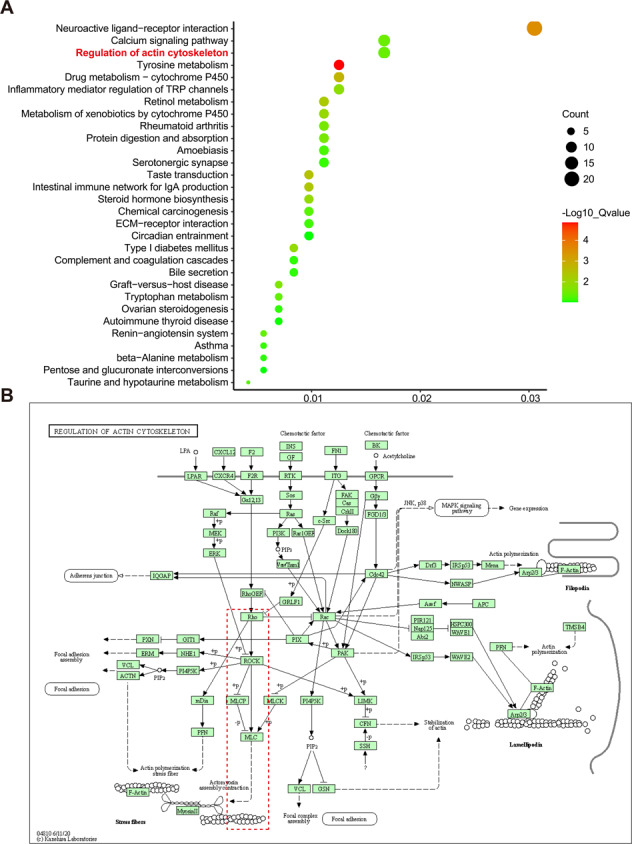
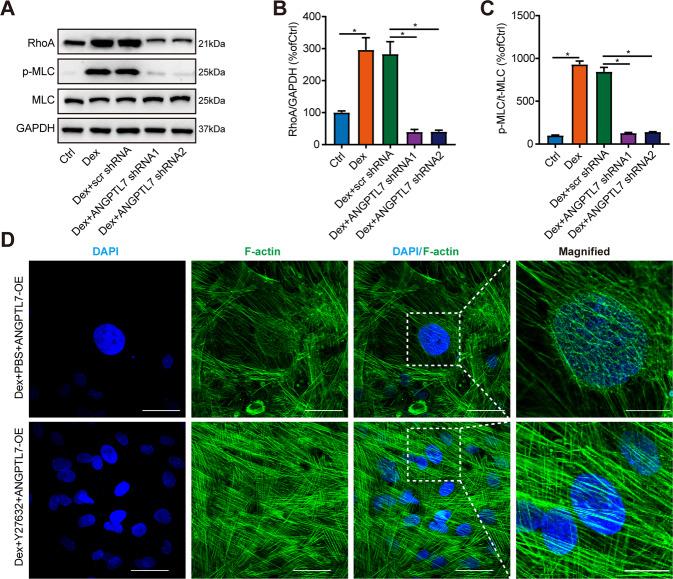
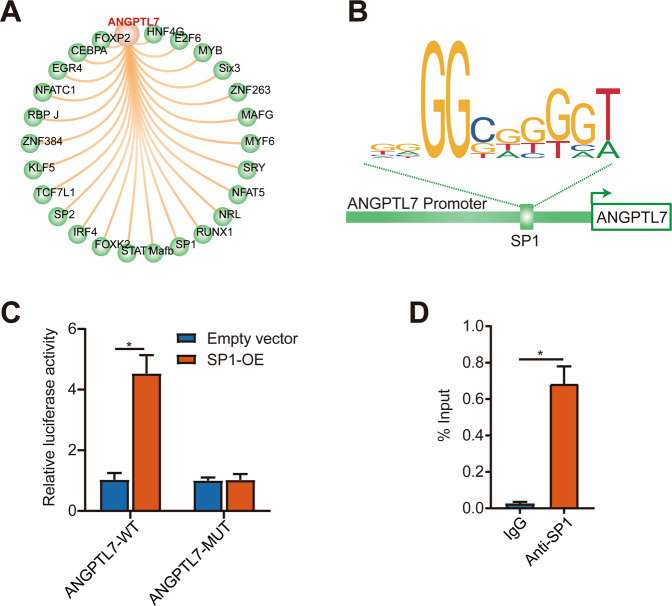
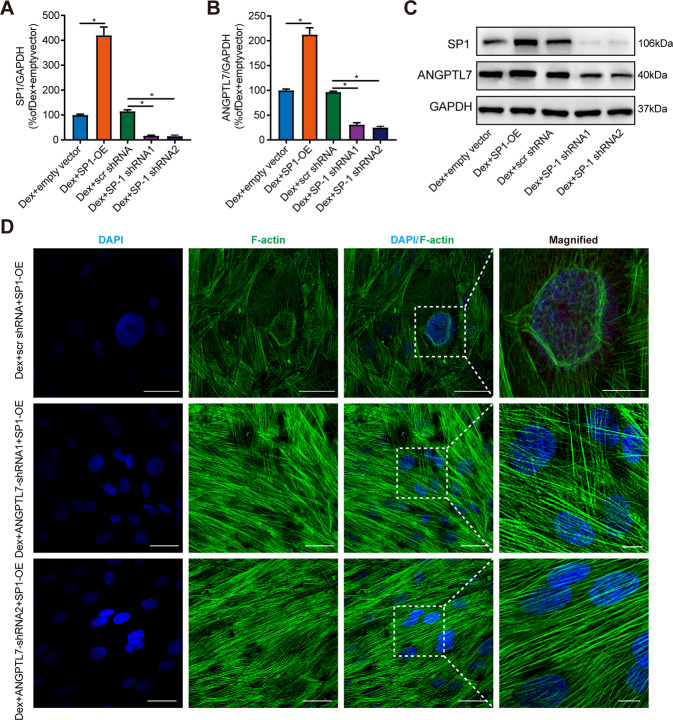
Glaucoma is one of the leading causes of worldwide irreversible blindness. Lowering elevated intraocular pressure (IOP) is currently the only effective approach for controlling the progress of glaucoma. Angiopoietin-like 7 (ANGPTL7) takes a key part in elevated outflow resistance of aqueous humor in dysfunctional trabecular meshwork (TM), along with the formation of cross-linked actin networks (CLANs), leading to high IOP. In this study, we explored the role of the ANGPTL7 signaling pathway in CLAN formation. We detected the expression of ANGPTL7 in cultured primary TM cells treated with dexamethasone (DEX) and ethanol as a control using qRT-PCR and western blotting. Actin filaments were revealed by phalloidin staining. ANGPTL7 short hairpin RNA (shRNA) was applied to TM cells to examine the effect of ANGPTL7 on DEX-induced CLAN formation. Western blotting was used to assess the effect of ANGPTL7 on the RhoA/Rho-associated kinase (Rho-kinase/ROCK) signaling pathway. Bioinformatics, dual-luciferase reporter assays, and chromatin immunoprecipitation were employed to identify the transcription factors of ANGPTL7. Transcription factor specificity protein 1 (SP1) overexpression and silencing were performed to determine their roles in the modulation of ANGPTL7 expression. We found DEX-induced ANGPTL7 expression and stress fiber rearrangement in TM cells. ANGPTL7 knockdown effectively inhibited the formation of CLANs. Moreover, it was involved in the regulation of the RhoA/ROCK signaling pathway, further affecting DEX-induced CLAN formation. SP1 was identified as a transcription factor of ANGPTL7 which regulated ANGPTL7 level to mediate CLAN formation through the RhoA/ROCK signaling pathway. This study contributes to revealing the molecular mechanisms of ANGPTL7 in CLAN formation, which is involved in TM dysfunction and glaucoma pathogenesis.
青光眼是全球不可逆性失明的主要原因之一。降低升高的眼压(IOP)是目前控制青光眼进展的唯一有效方法。血管生成素样7(ANGPTL7)在功能失调的小梁网(TM)中房水流出阻力升高以及交联肌动蛋白网络(CLANs)形成过程中起关键作用,导致眼压升高。在本研究中,我们探讨了ANGPTL7信号通路在CLAN形成中的作用。我们使用qRT-PCR和蛋白质印迹法检测了用作为对照的地塞米松(DEX)和乙醇处理的原代培养TM细胞中ANGPTL7的表达。用鬼笔环肽染色显示肌动蛋白丝。将ANGPTL7短发夹RNA(shRNA)应用于TM细胞,以研究ANGPTL7对DEX诱导的CLAN形成的影响。蛋白质印迹法用于评估ANGPTL7对RhoA/Rho相关激酶(Rho激酶/ROCK)信号通路的影响。采用生物信息学、双荧光素酶报告基因检测和染色质免疫沉淀法鉴定ANGPTL7的转录因子。进行转录因子特异性蛋白1(SP1)的过表达和沉默以确定它们在调节ANGPTL7表达中的作用。我们发现DEX诱导TM细胞中ANGPTL7表达和应激纤维重排。ANGPTL7基因敲低有效抑制了CLANs的形成。此外,它参与RhoA/ROCK信号通路的调节,进一步影响DEX诱导的CLAN形成。SP1被鉴定为ANGPTL7的转录因子,其通过RhoA/ROCK信号通路调节ANGPTL7水平以介导CLAN形成。本研究有助于揭示ANGPTL7在CLAN形成中的分子机制,这与TM功能障碍和青光眼发病机制有关。