Charles Perkins Centre, Central Clinical School, The University of Sydney, Sydney, NSW, Australia.
Department of Epidemiology and Biostatistics, Indiana University School of Public Health Bloomington, Bloomington, Indiana, USA.
F1000Res. 2021 May 17;10:391. doi: 10.12688/f1000research.52693.1. eCollection 2021.
Classic nonparametric tests (cNPTs), like Kruskal-Wallis or Mann-Whitney U, are sometimes used to detect differences in central tendency ( , means or medians). However, when the tests' assumptions are violated, such as in the presence of unequal variance and other forms of heteroscedasticity, they are no longer valid for testing differences in central tendency. Yet, sometimes researchers erroneously use cNPTs to account for heteroscedasticity.
To document the appropriateness of cNPT use in obesity literature, characterize studies that use cNPTs, and evaluate the citation and public sharing patterns of these articles.
We reviewed obesity studies published in 2017 to determine whether the authors used cNPTs: (1) to correct for heteroscedasticity (invalid); (2) when heteroscedasticity was clearly not present (correct); or (3) when it was unclear whether heteroscedasticity was present (unclear). Open science R packages were used to transparently search literature and extract data on how often papers with errors have been cited in academic literature, read in Mendeley, and disseminated in the media.
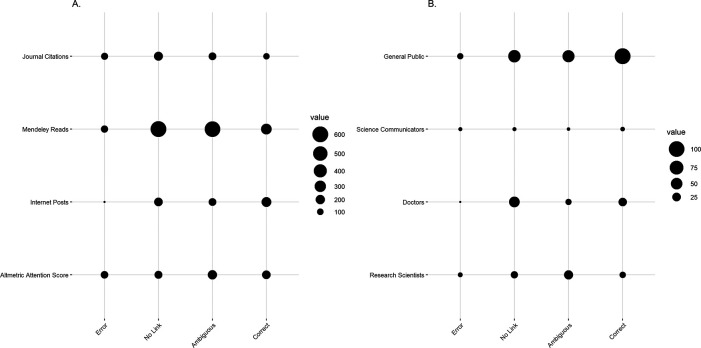
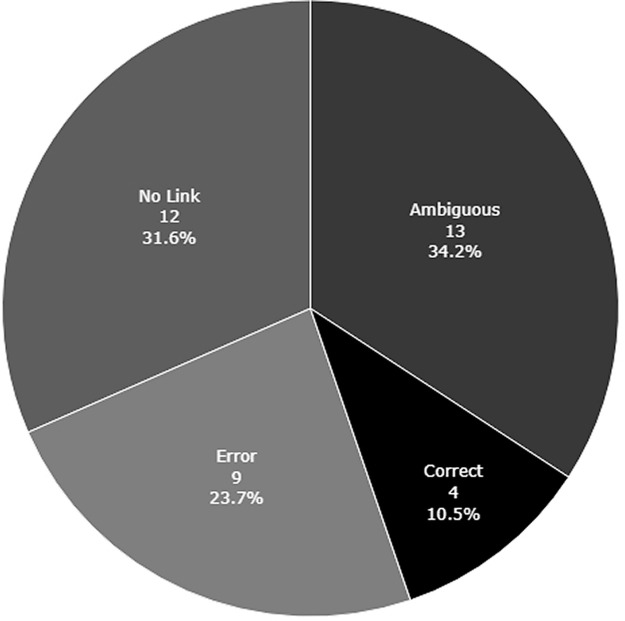
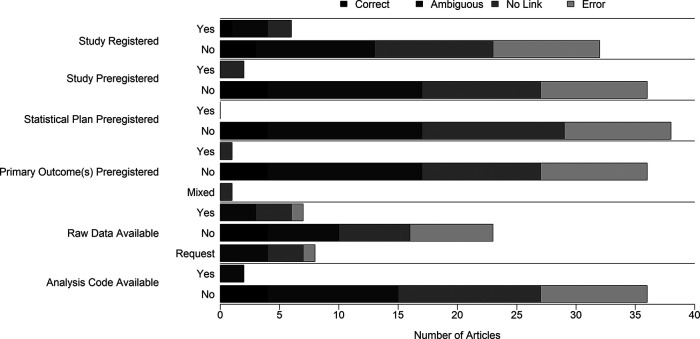
We identified nine studies that used a cNPT in the presence of heteroscedasticity (some because of the mistaken rationale that the test corrected for heteroscedasticity), 25 articles that did not explicitly state whether heteroscedasticity was present when a cNPT was used, and only four articles that appropriately reported that heteroscedasticity was not present when a cNPT was used. Errors were found in observational and interventional studies, in human and rodent studies, and only when studies were unregistered. Studies with errors have been cited 113 times, read in Mendeley 123 times, and disseminated in the media 41 times, by the public, scientists, science communicators, and doctors.
Examples of inappropriate use of cNPTs exist in the obesity literature, and those articles perpetuate the errors various audiences and dissemination platforms.
经典的非参数检验(cNPTs),如 Kruskal-Wallis 或 Mann-Whitney U 检验,有时用于检测中心趋势(均值或中位数)的差异。然而,当这些检验的假设被违反时,例如存在方差不均等和其他形式的异方差性时,它们就不再适用于检测中心趋势的差异。然而,有时研究人员错误地使用 cNPTs 来解释异方差性。
记录 cNPT 在肥胖文献中的使用是否恰当,描述使用 cNPT 的研究,并评估这些文章的引用和公开共享模式。
我们回顾了 2017 年发表的肥胖研究,以确定作者是否使用 cNPTs:(1)纠正异方差性(无效);(2)当明显不存在异方差性时(正确);或(3)当不清楚是否存在异方差性时(不清楚)。使用开放科学 R 包透明地搜索文献,并提取关于有错误的论文在学术文献中被引用的频率、在 Mendeley 中被阅读的频率以及在媒体中传播的频率的数据。
我们确定了 9 项在存在异方差性的情况下使用 cNPT 的研究(其中一些是因为错误的理由,即该检验纠正了异方差性),25 项没有明确说明在使用 cNPT 时是否存在异方差性的文章,只有 4 项恰当地报告了当使用 cNPT 时不存在异方差性。在观察性和干预性研究中,在人类和啮齿类动物研究中,以及只有在研究未注册的情况下,都发现了错误。有错误的研究论文被引用了 113 次,在 Mendeley 中被阅读了 123 次,在媒体上被公众、科学家、科学传播者和医生传播了 41 次。
在肥胖文献中存在不恰当地使用 cNPTs 的例子,这些文章在各种受众和传播平台上传播错误。