Department of Public Health, California State University, Fullerton, Fullerton, California, United States of America.
Joint Doctoral Program in Interdisciplinary Research on Substance Use, Division of Infectious Diseases and Global Public Health, Department of Medicine, University of California San Diego, La Jolla, California, United States of America.
PLoS One. 2022 Feb 10;17(2):e0263174. doi: 10.1371/journal.pone.0263174. eCollection 2022.
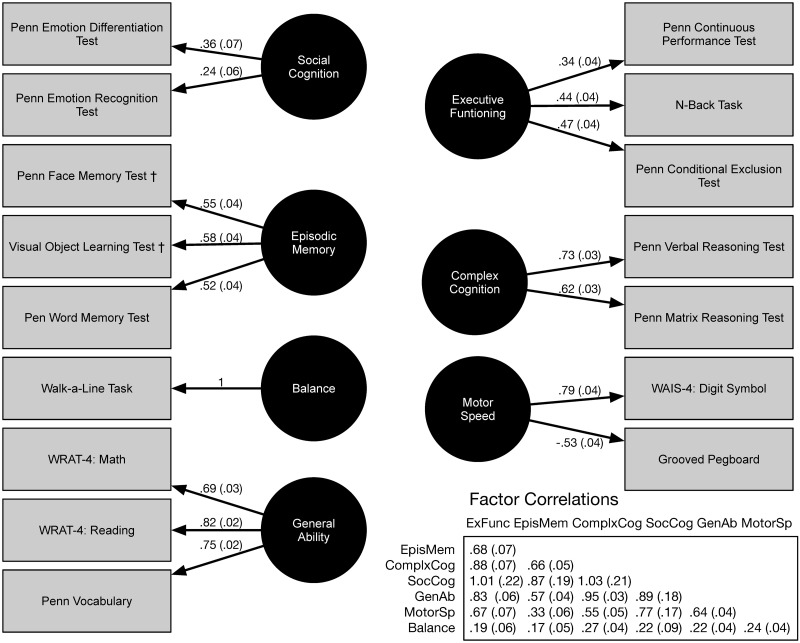
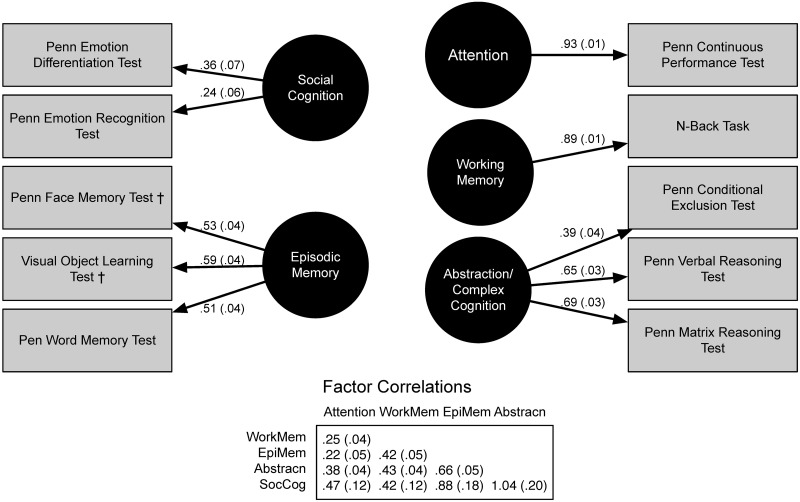
The factor structure of neuropsychological functioning among a large sample (N = 831) of American youth (ages 12-21 at baseline) was investigated in order to identify an optimal model. Candidate models were selected based on their potential to provide service to the study of adolescent development and the effects of heavy episodic alcohol consumption. Data on neuropsychological functioning were obtained from the NCANDA study. This is a longitudinal community study of the effects of alcohol exposure on neurodevelopment. Three conceptually motivated and one empirically motivated factor analysis model of neuropsychological domains were compared based on penalized-likelihood selection criteria and model fit statistics. Two conceptually-motivated models were found to have adequate fit and pattern invariance to function as a measurement model for the Penn Computerized Neurocognitive Battery (Penn CNB) anchored neuropsychological battery in NCANDA. Corroboration of previous factor analysis models was obtained, in addition to the identification of an alternative factor model that has higher discriminant capacity for neuropsychological domains hypothesized to be most sensitive to alcohol exposure in human adolescents. The findings support the use of a factor model developed originally for the Penn CNB and a model developed specifically for the NCANDA project. The NCANDA 8-Factor Model has conceptual and empirical advantages that were identified in the current and prior studies. These advantages are particularly valuable when applied in alcohol research settings.
为了确定一个最佳模型,我们对一个大型样本(N=831)美国青少年(基线时年龄为 12-21 岁)的神经心理功能的因子结构进行了研究。候选模型是基于它们为青少年发展研究和重度间歇性酒精消费的影响提供服务的潜力选择的。神经心理功能的数据来自 NCANDA 研究。这是一项关于酒精暴露对神经发育影响的纵向社区研究。基于惩罚似然选择标准和模型拟合统计,对三种基于概念动机和一种基于经验动机的神经心理领域因子分析模型进行了比较。发现两个基于概念动机的模型具有足够的拟合度和模式不变性,可以作为 NCANDA 中Penn 计算机化神经认知电池(Penn CNB)锚定神经心理电池的测量模型。除了确定另一个具有更高判别能力的因子模型外,还验证了以前的因子分析模型,该模型假设对人类青少年酒精暴露最敏感的神经心理领域。研究结果支持使用最初为 Penn CNB 开发的因子模型和专门为 NCANDA 项目开发的因子模型。NCANDA 8 因子模型具有概念和经验优势,这些优势在当前和先前的研究中得到了证实。当应用于酒精研究环境时,这些优势特别有价值。