Department of Gynecology, Woman Health Research Center, Mashhad University of Medical Sciences, Mashhad, Iran.
Department of Immunology and Allergy, School of Medicine, Mashhad University of Medical Sciences, Mashhad, Iran; Research Center for HIV/AIDS, HTLV and Viral Hepatitis, Iranian Academic Center for Education, Culture and Research (ACECR), Mashhad Branch, Mashhad, Iran; Inflammation and Inflammatory Diseases Research Center, School of Medicine, Mashhad University of Medical Sciences, Mashhad, Iran.
Life Sci. 2022 Apr 1;294:120392. doi: 10.1016/j.lfs.2022.120392. Epub 2022 Feb 8.
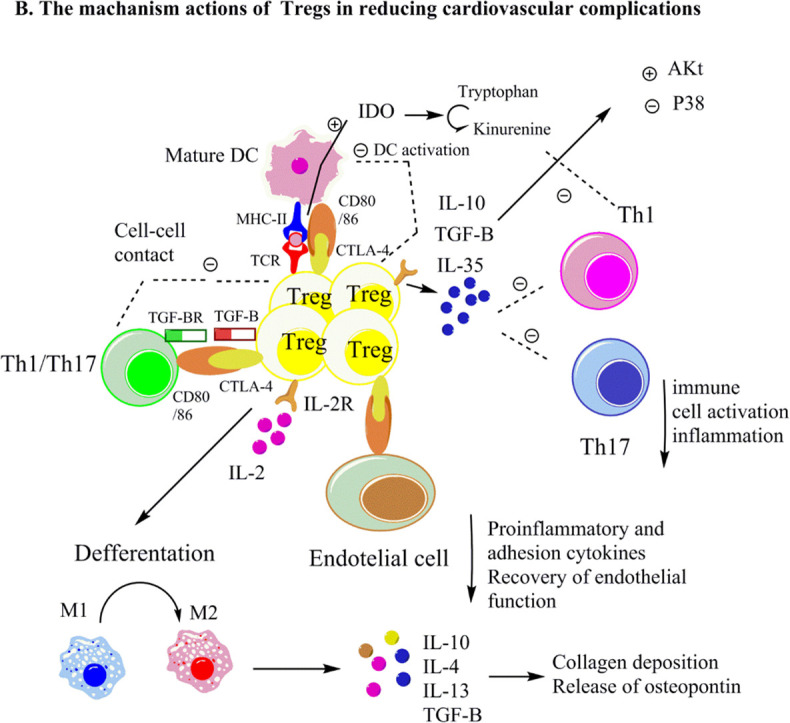
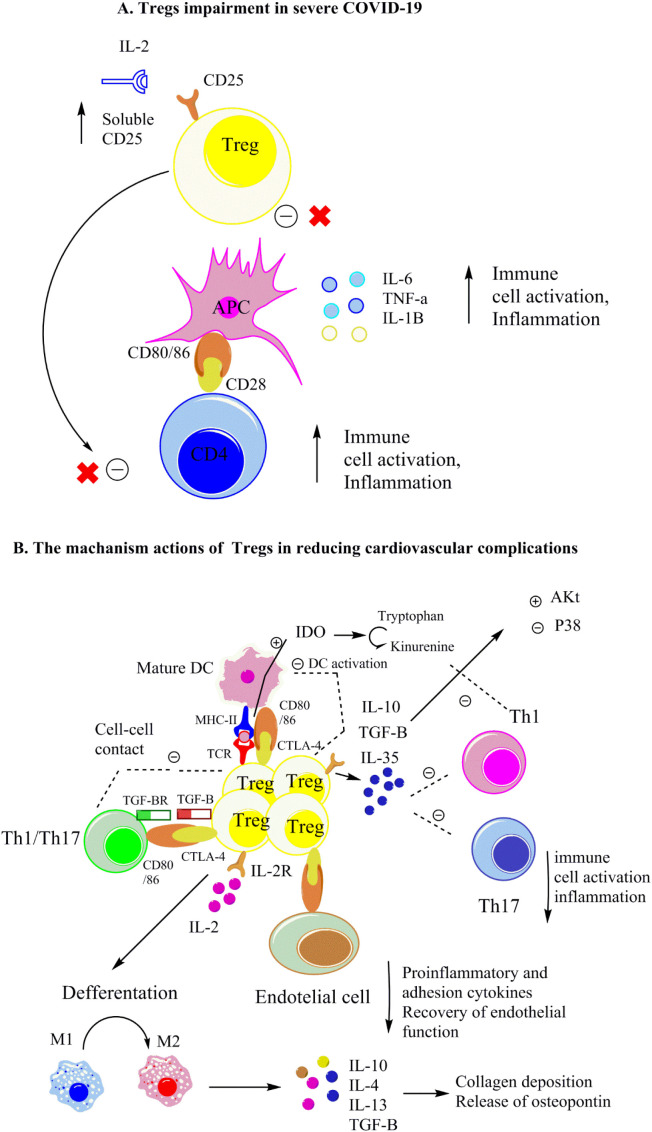
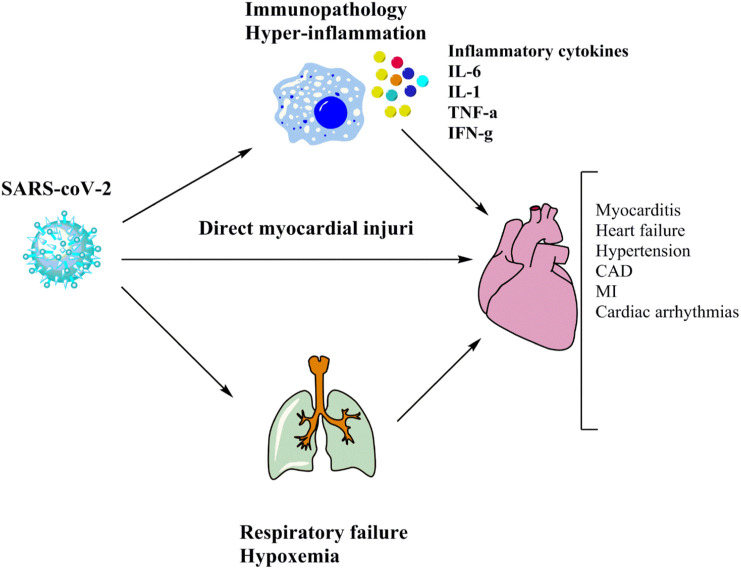
The SARS coronavirus 2 (SARS CoV-2) causes Coronavirus Disease (COVID-19), is an emerging viral infection. SARS CoV-2 infects target cells by attaching to Angiotensin-Converting Enzyme (ACE2). SARS CoV-2 could cause cardiac damage in patients with severe COVID-19, as ACE2 is expressed in cardiac cells, including cardiomyocytes, pericytes, and fibroblasts, and coronavirus could directly infect these cells. Cardiovascular disorders are the most frequent comorbidity found in COVID-19 patients. Immune cells such as monocytes, macrophages, and T cells may produce inflammatory cytokines and chemokines that contribute to COVID-19 pathogenesis if their functions are uncontrolled. This causes a cytokine storm in COVID-19 patients, which has been associated with cardiac damage. Tregs are a subset of immune cells that regulate immune and inflammatory responses. Tregs suppress inflammation and improve cardiovascular function through a variety of mechanisms. This is an exciting research area to explore the cellular, molecular, and immunological mechanisms related to reducing risks of cardiovascular complications in severe COVID-19. This review evaluated whether Tregs can affect COVID-19-related cardiovascular complications, as well as the mechanisms through which Tregs act.
严重急性呼吸综合征冠状病毒 2(SARS-CoV-2)引起冠状病毒病(COVID-19),是一种新兴的病毒感染。SARS-CoV-2 通过附着血管紧张素转化酶(ACE2)感染靶细胞。SARS-CoV-2 可导致重症 COVID-19 患者的心脏损伤,因为 ACE2 在心肌细胞、周细胞和成纤维细胞中表达,冠状病毒可以直接感染这些细胞。心血管疾病是 COVID-19 患者最常见的合并症。如果免疫细胞(如单核细胞、巨噬细胞和 T 细胞)的功能不受控制,它们可能会产生炎症细胞因子和趋化因子,导致 COVID-19 发病机制。这会导致 COVID-19 患者的细胞因子风暴,与心脏损伤有关。调节性 T 细胞(Tregs)是免疫细胞的一个亚群,可通过多种机制调节免疫和炎症反应。Tregs 通过抑制炎症和改善心血管功能来降低重症 COVID-19 患者心血管并发症的风险。这是一个令人兴奋的研究领域,旨在探索与降低重症 COVID-19 患者心血管并发症风险相关的细胞、分子和免疫学机制。本综述评估了 Tregs 是否会影响 COVID-19 相关的心血管并发症,以及 Tregs 发挥作用的机制。