Center for Cancer and Immunology Research, Children's National Hospital, Washington, DC, USA.
GW Cancer Center, George Washington University, Washington, DC, USA.
Mol Ther. 2022 Jun 1;30(6):2130-2152. doi: 10.1016/j.ymthe.2022.02.002. Epub 2022 Feb 9.
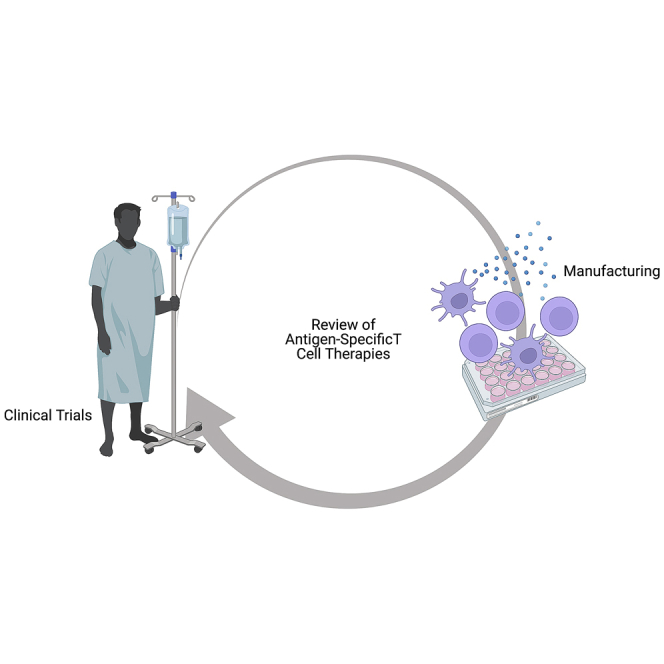
Immunotherapy with antigen-specific T cells is a promising, targeted therapeutic option for patients with cancer as well as for immunocompromised patients with virus infections. In this review, we characterize and compare current manufacturing protocols for the generation of T cells specific to viral and non-viral tumor-associated antigens. Specifically, we discuss: (1) the different methodologies to expand virus-specific T cell and non-viral tumor-associated antigen-specific T cell products, (2) an overview of the immunological principles involved when developing such manufacturing protocols, and (3) proposed standardized methodologies for the generation of polyclonal, polyfunctional antigen-specific T cells irrespective of donor source. Ex vivo expanded cells have been safely administered to treat numerous patients with virus-associated malignancies, hematologic malignancies, and solid tumors. Hence, we have performed a comprehensive review of the clinical trial results evaluating the safety, feasibility, and efficacy of these products in the clinic. In summary, this review seeks to provide new insights regarding antigen-specific T cell technology to benefit a rapidly expanding T cell therapy field.
抗原特异性 T 细胞免疫疗法是一种有前途的靶向治疗选择,适用于癌症患者以及病毒感染免疫功能低下的患者。在这篇综述中,我们对用于产生针对病毒和非病毒肿瘤相关抗原的 T 细胞的当前制造方案进行了描述和比较。具体而言,我们讨论了:(1)扩增病毒特异性 T 细胞和非病毒肿瘤相关抗原特异性 T 细胞产品的不同方法,(2)开发此类制造方案所涉及的免疫学原理概述,以及(3)提出了用于产生多克隆、多能性抗原特异性 T 细胞的标准化方法,而与供体来源无关。体外扩增的细胞已被安全地用于治疗许多患有病毒相关性恶性肿瘤、血液系统恶性肿瘤和实体瘤的患者。因此,我们对评估这些产品在临床上的安全性、可行性和疗效的临床试验结果进行了全面回顾。总之,本综述旨在为抗原特异性 T 细胞技术提供新的见解,以造福于迅速发展的 T 细胞治疗领域。