Anesthesiology & Perioperative Medicine, Oregon Health & Science University, Portland, Oregon, USA.
Operative Care Division, Portland Veterans Affairs Medical Center, Portland, Oregon, USA.
Physiol Rep. 2022 Feb;10(3):e15173. doi: 10.14814/phy2.15173.
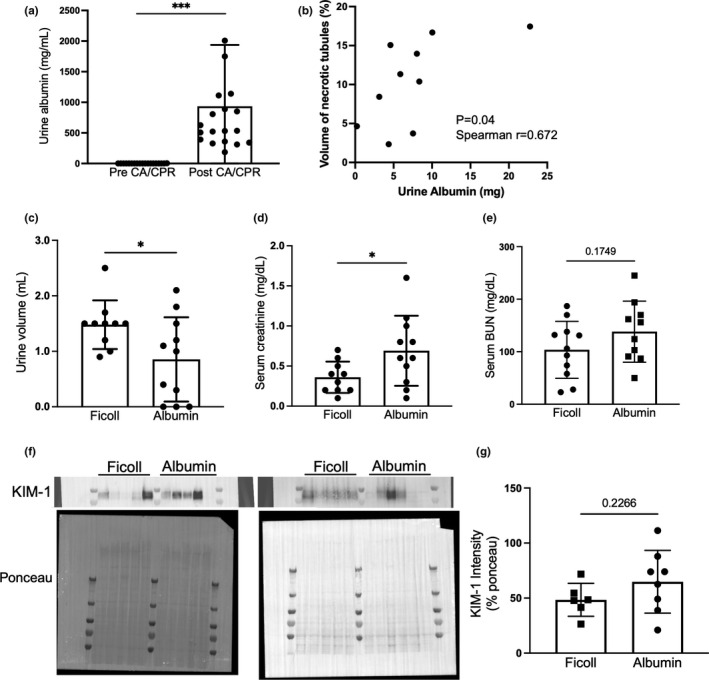
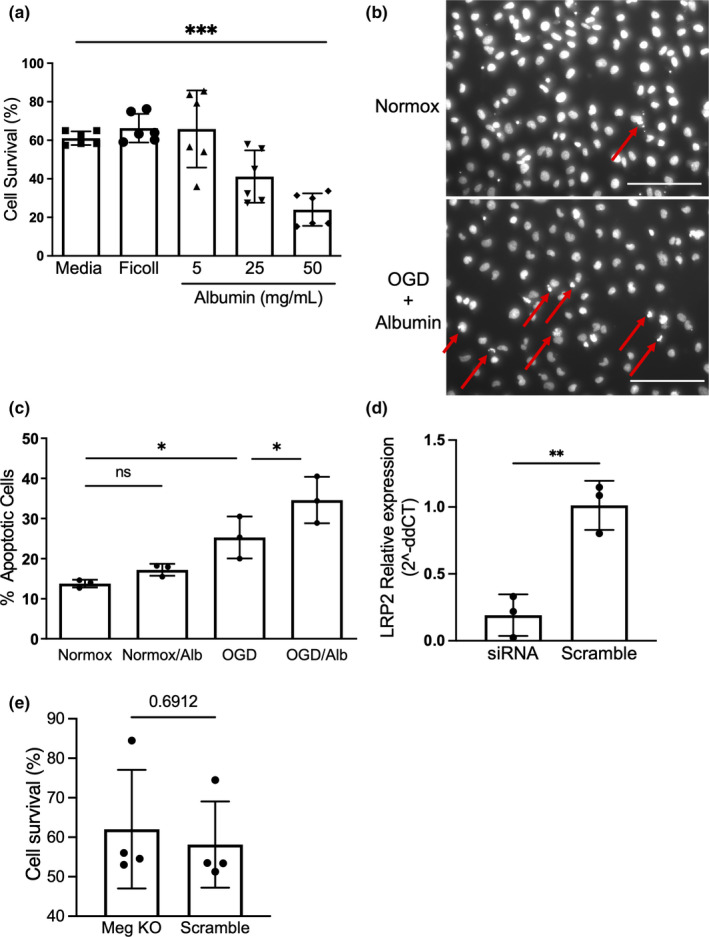
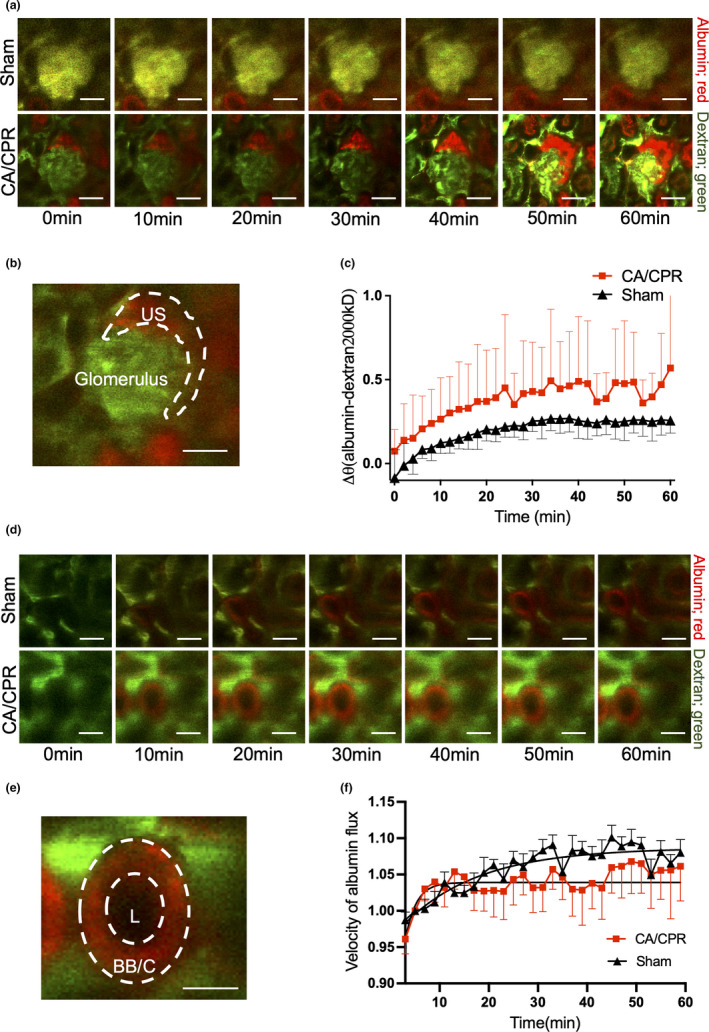
Cardiorenal syndrome type 1 (CRS-1) acute kidney injury (AKI) is a critical complication of acute cardiovascular disease but is poorly understood. AKI induces acute albuminuria. As chronic albuminuria is associated with worsening kidney disease and albumin has been implicated in tubular epithelial injury, we investigated whether albumin participates in CRS-1, and whether CRS-1 alters renal albumin handling. We report the role of albumin in in vivo and in vitro CRS-1 models. An established translational model, cardiac arrest and cardiopulmonary resuscitation (CA/CPR) induced severe acute albuminuria which correlated with tubular epithelial cell death. In vivo microscopy demonstrated CA/CPR-induced glomerular filtration of exogenous albumin, while administration of exogenous albumin after CA/CPR worsened AKI compared to iso-oncotic control. Increased albumin signal was observed in the proximal tubules of CA/CPR mice compared to sham. Comparison of albumin flux from tubular lumen to epithelial cells revealed saturated albumin transport within minutes of albumin injection after CA/CPR. In vitro, HK2 cells (human kidney tubular epithelial cells), exposed to oxygen-glucose deprivation were injured by albumin in a dose dependent fashion. This interference was unchanged by the tubular endocytic receptor megalin. In conclusion, CRS-1 alters albumin filtration and tubular uptake, leading to increased tubular exposure to albumin, which is injurious to tubular epithelial cells, worsening AKI. Our findings shed light on the pathophysiology of renal albumin and may guide interventions such as albumin resuscitation to improve CRS-1 outcomes. This investigation may have important translational relevance for patients that receive exogenous albumin as part of their CRS-1 treatment regimen.
心脏肾脏综合征 1 型(CRS-1)急性肾损伤(AKI)是急性心血管疾病的严重并发症,但尚未被充分认识。AKI 可导致急性白蛋白尿。由于慢性白蛋白尿与肾脏疾病恶化有关,且白蛋白与肾小管上皮损伤有关,我们研究了白蛋白是否参与 CRS-1,以及 CRS-1 是否改变肾脏白蛋白处理。我们报告了白蛋白在体内和体外 CRS-1 模型中的作用。一个已建立的转化模型,心脏骤停和心肺复苏(CA/CPR)导致严重的急性白蛋白尿,与肾小管上皮细胞死亡相关。体内显微镜检查显示 CA/CPR 诱导的外源性白蛋白肾小球滤过,而 CA/CPR 后给予外源性白蛋白与等渗对照相比使 AKI 恶化。与假手术相比,CA/CPR 小鼠的近端小管中观察到白蛋白信号增加。与管状腔到上皮细胞的白蛋白通量比较显示,CA/CPR 后白蛋白注射数分钟内白蛋白转运即达到饱和。在体外,缺氧葡萄糖剥夺后暴露于 HK2 细胞(人肾小管上皮细胞)的白蛋白以剂量依赖的方式损伤细胞。这种干扰在肾小管内吞受体 megalin 存在的情况下没有改变。总之,CRS-1 改变白蛋白滤过和肾小管摄取,导致肾小管暴露于白蛋白增加,从而损伤肾小管上皮细胞,使 AKI 恶化。我们的研究结果阐明了肾脏白蛋白的病理生理学,可能为改善 CRS-1 结果的白蛋白复苏等干预措施提供指导。对于接受外源性白蛋白作为其 CRS-1 治疗方案一部分的患者,该研究可能具有重要的转化相关性。