Achira Satoshi, Abe Yohei, Mori Ken-Ichiro
Department of Mechanical Engineering, Toyohashi University of Technology, Toyohashi 441-8580, Japan.
Materials (Basel). 2022 Jan 28;15(3):1010. doi: 10.3390/ma15031010.
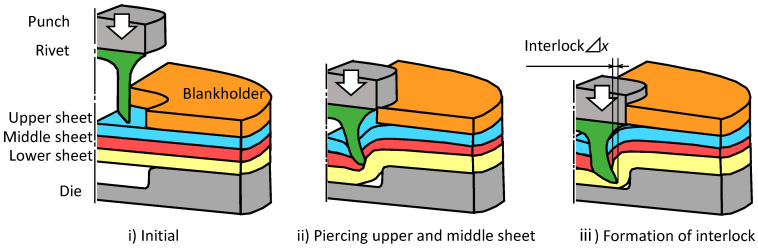
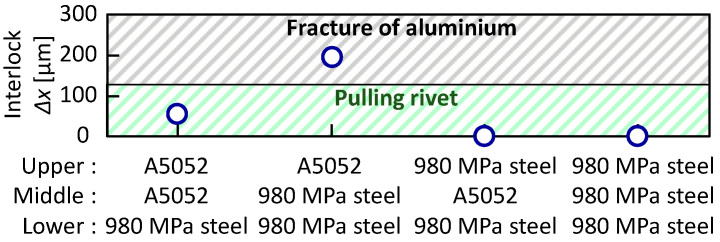
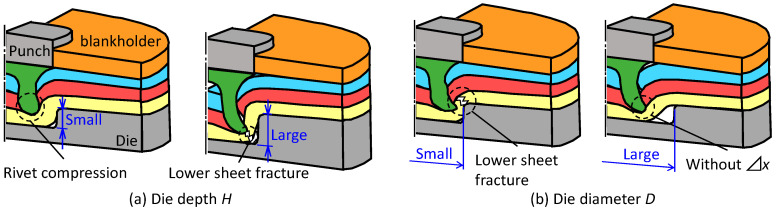
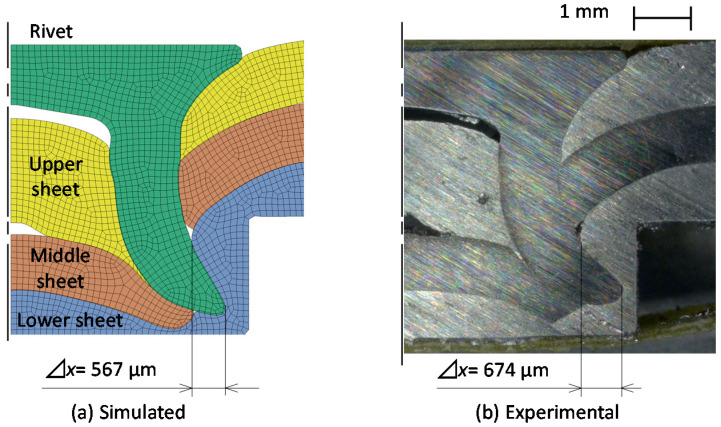
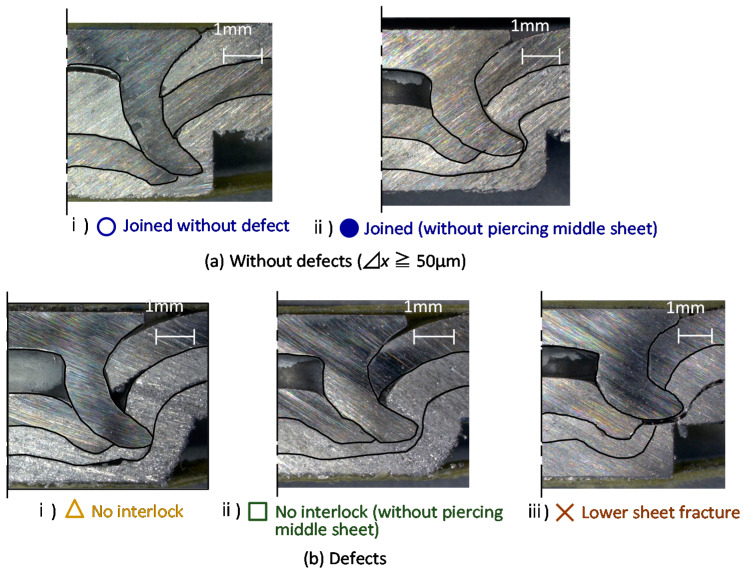
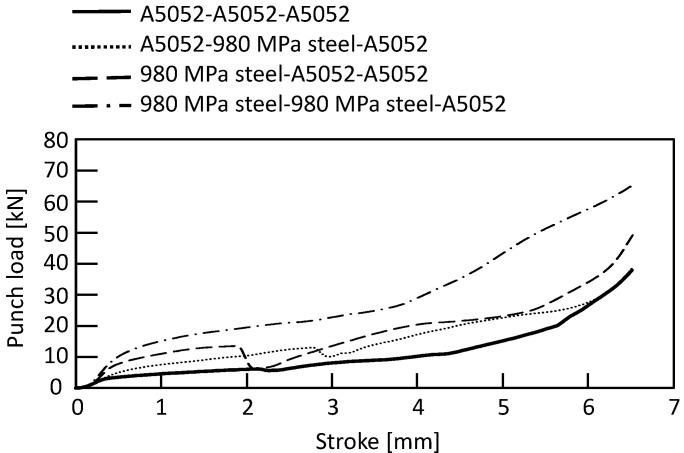
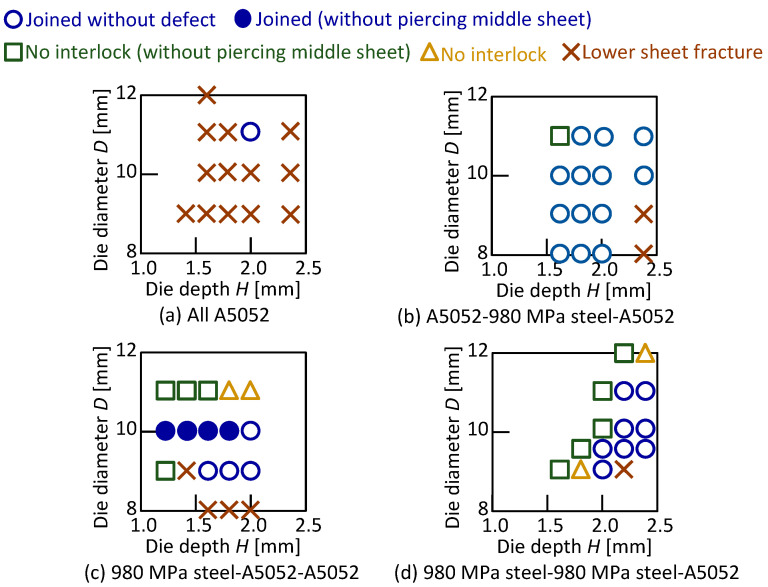
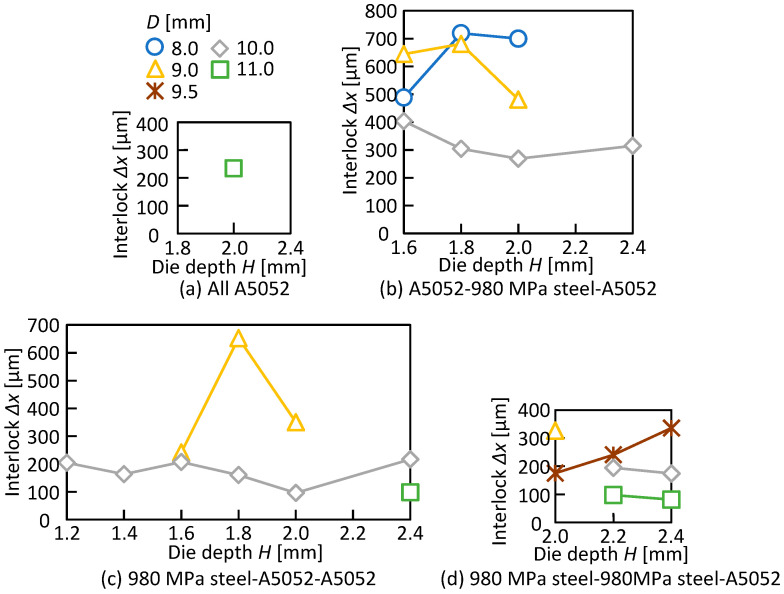
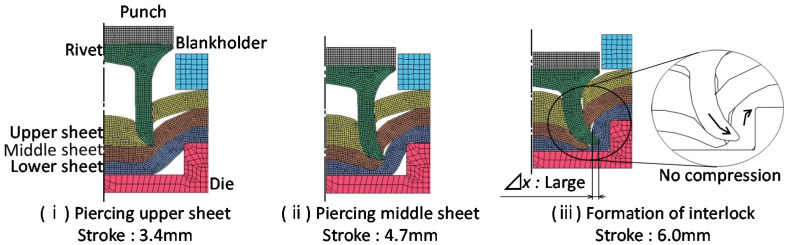
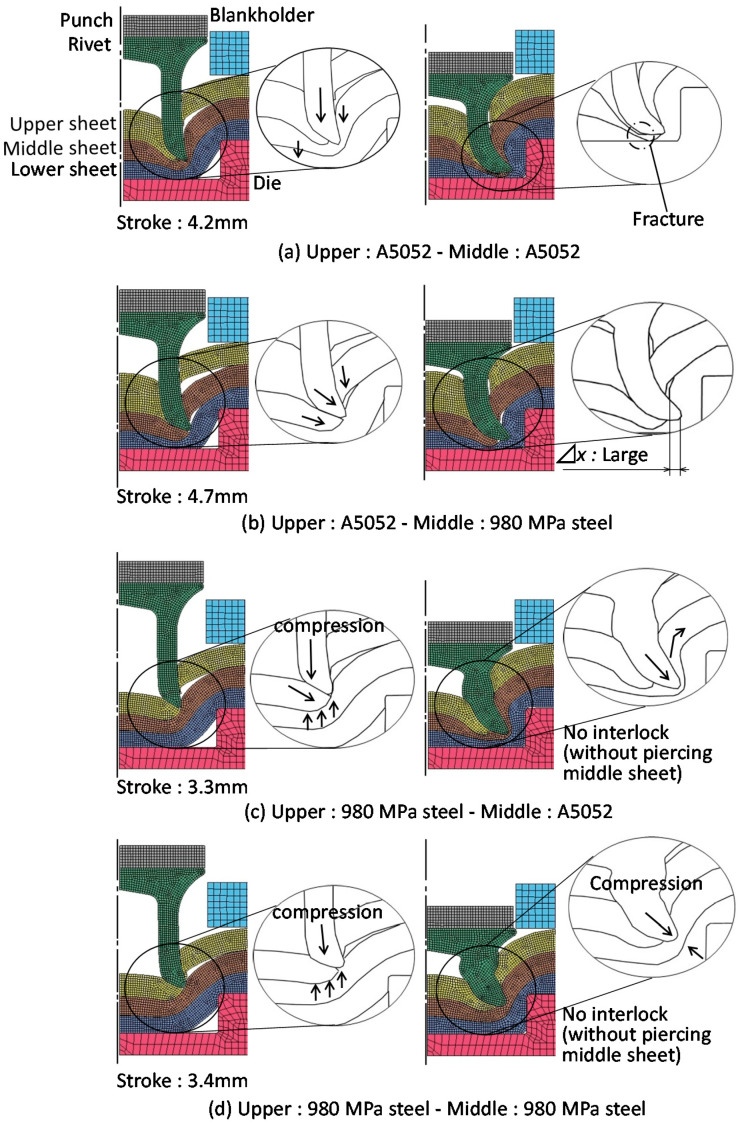
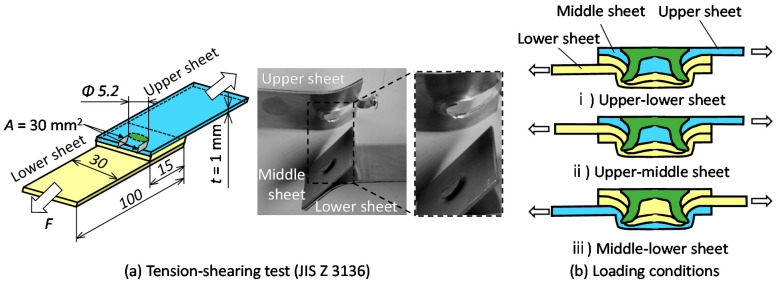
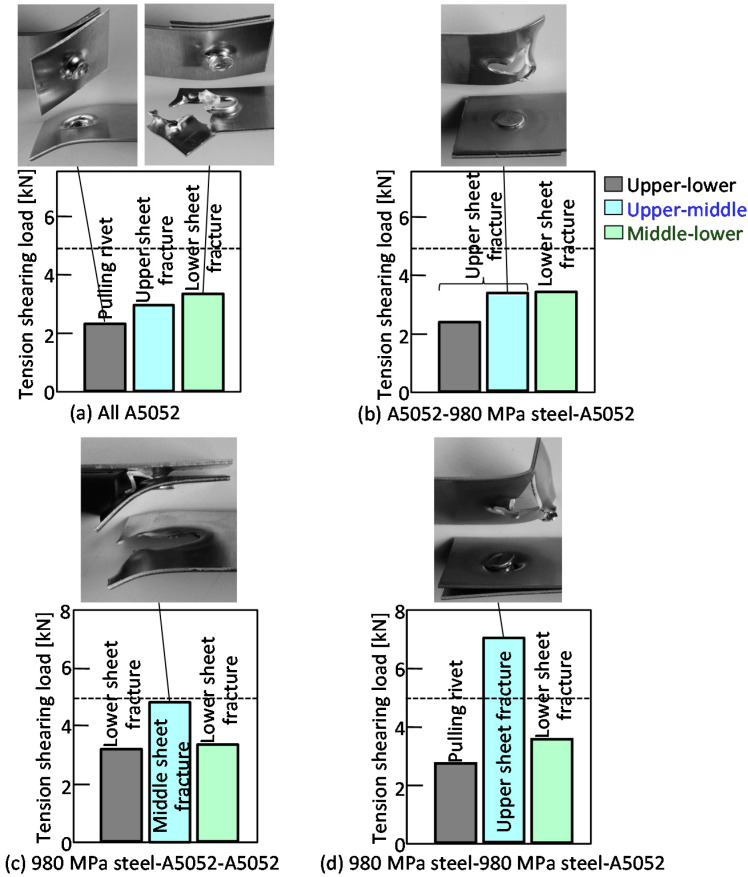
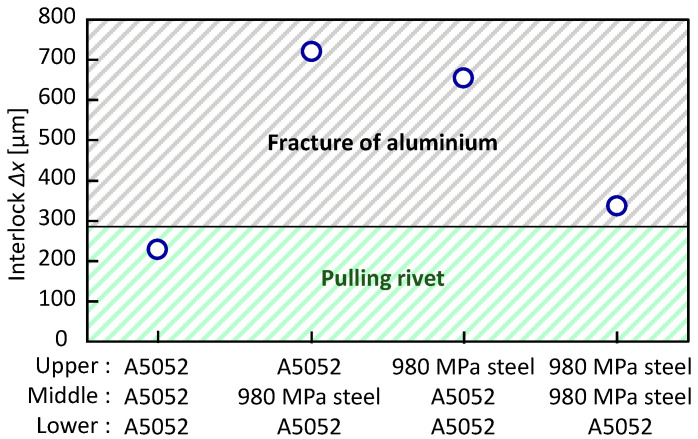
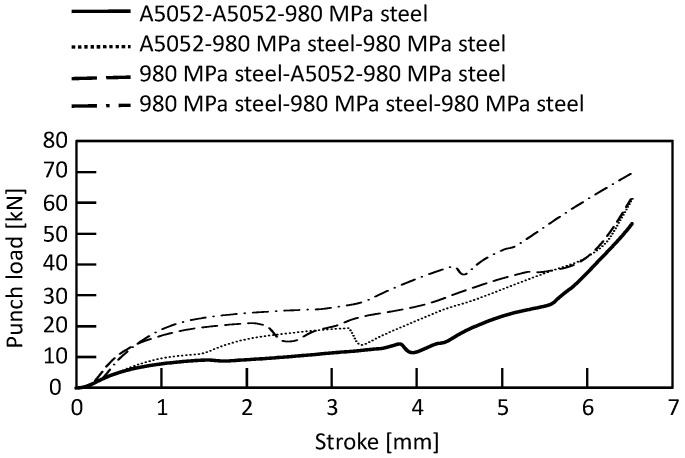
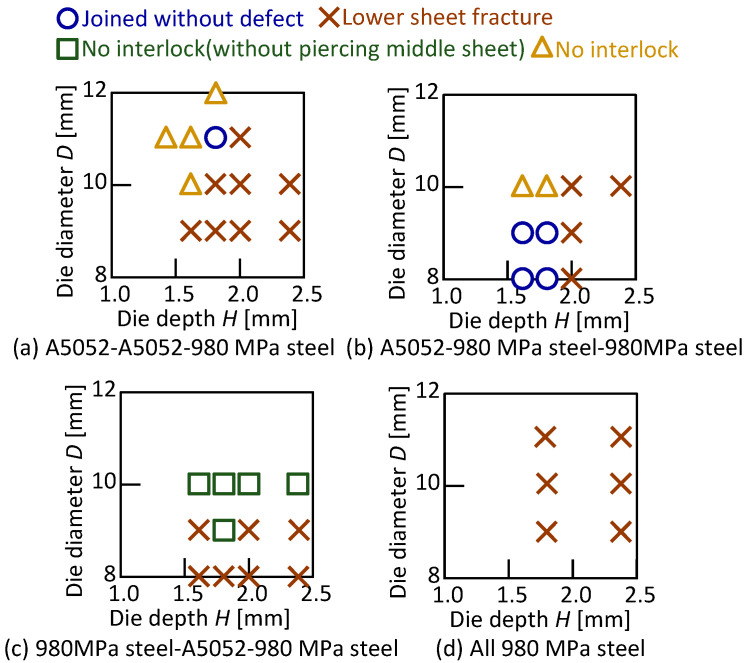
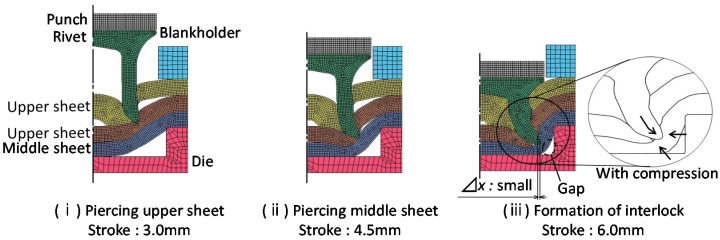
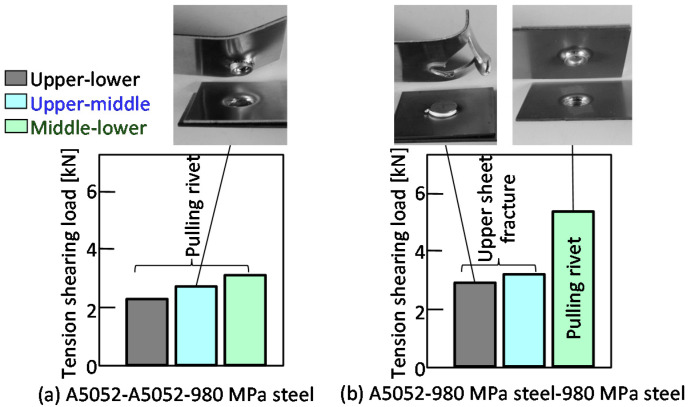
Self-pierce riveting of three thin sheets of 980 MPa steel and 5052 aluminum alloy was performed to investigate the effect of sheet configuration on the deforming behaviors of the sheets and the rivet and joint strength. When the lower sheet was aluminum alloy, the joining range was relatively wide, i.e., the interlock hooking the rivet leg tended to be large. In the sheet configuration in which the upper and lower sheets were A5052 and the middle sheet was 980 MPa steel, the rivet leg spread out moderately and the joint without defects was obtained. In the lower 980 MPa steel sheet, fracture tended to occur due to the low ductility of the lower sheet, and the joining range was narrow with the small interlock although the three sheets were joined by an appropriate die shape. In joint strength of joined three sheets, fracture occurred in the lower-strength aluminum alloy sheet if interlocks of about 300 μm and 150 μm could be formed in the lower aluminum alloy sheet and 980 MPa steel sheet, respectively.
对980MPa钢和5052铝合金的三张薄板进行自冲铆接,以研究板材配置对板材变形行为、铆钉和接头强度的影响。当下层板材为铝合金时,连接范围相对较宽,即铆钉腿的互锁倾向较大。在上层和下层板材为A5052且中间板材为980MPa钢的板材配置中,铆钉腿适度展开,获得了无缺陷的接头。在下层980MPa钢板中,由于下层板材的低延展性,容易发生断裂,并且尽管通过合适的模具形状连接了三张板材,但连接范围较窄且互锁较小。在连接的三张板材的接头强度方面,如果在下层铝合金板材和980MPa钢板中分别形成约300μm和150μm的互锁,则在强度较低的铝合金板材中会发生断裂。