Nieto Steven, Toro Norman, Robles Pedro, Gálvez Edelmira, Gallegos Sandra, Jeldres Ricardo I
Departamento de Ingeniería Química y Procesos de Minerales, Facultad de Ingeniería, Universidad de Antofagasta, P.O. Box 170, Antofagasta 1240000, Chile.
Faculty of Engineering and Architecture, Arturo Prat University, Iquique 1100000, Chile.
Materials (Basel). 2022 Feb 2;15(3):1156. doi: 10.3390/ma15031156.
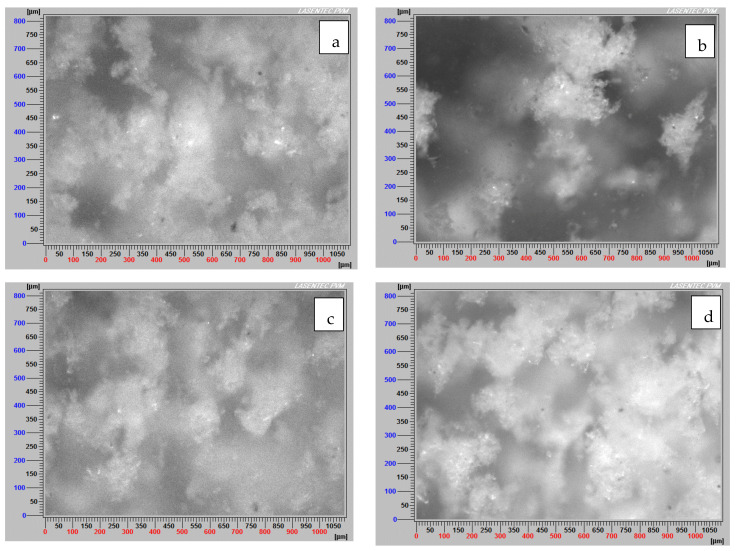
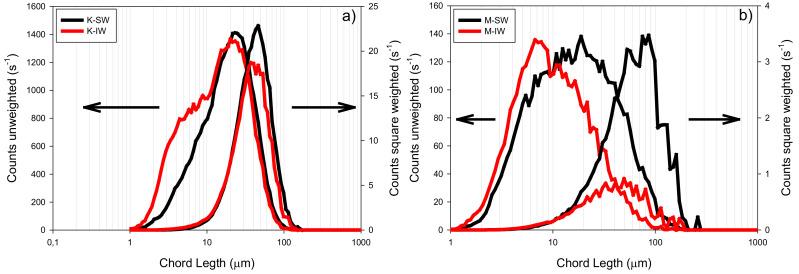
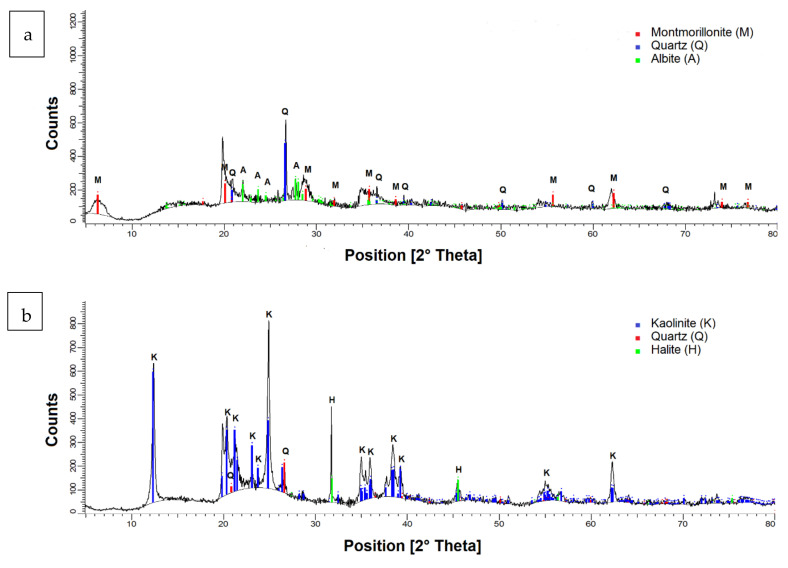
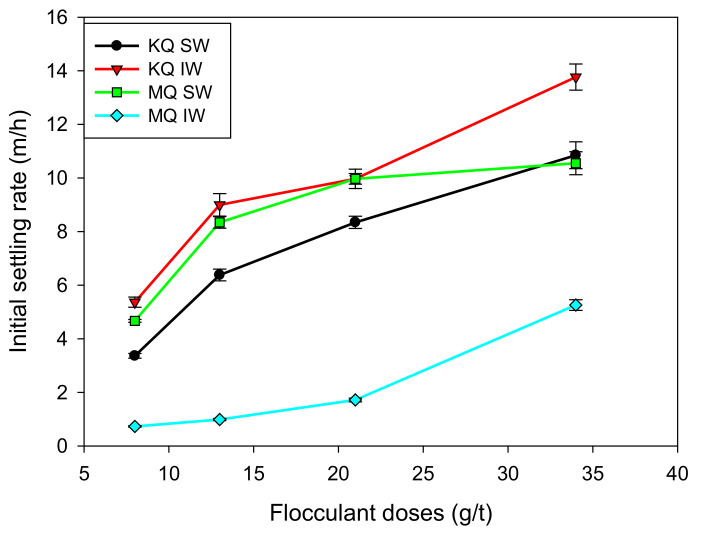
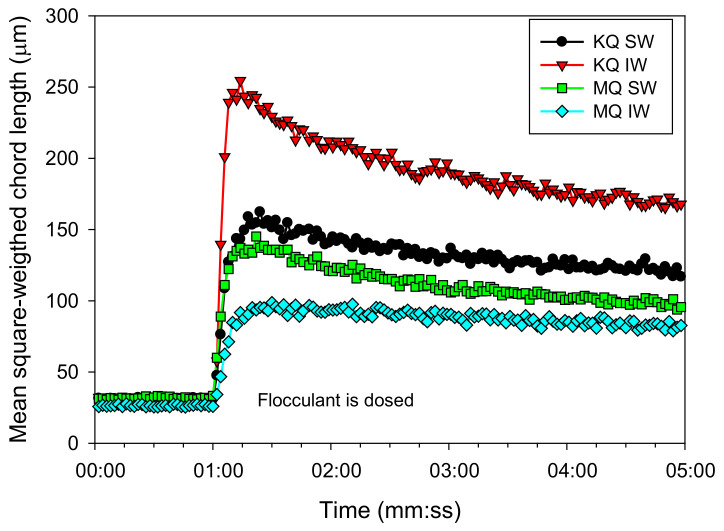
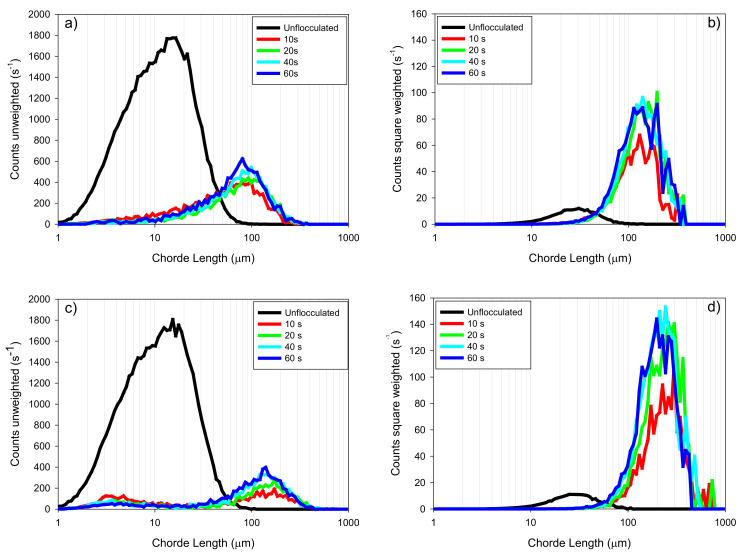
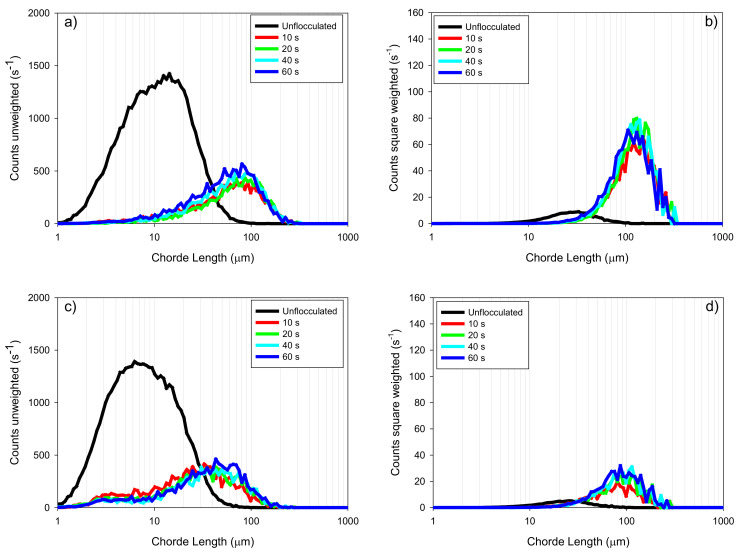
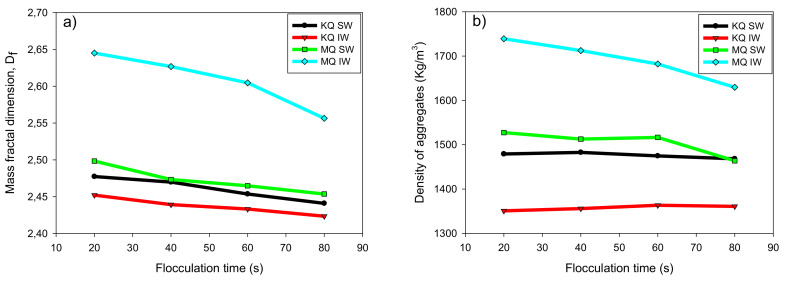
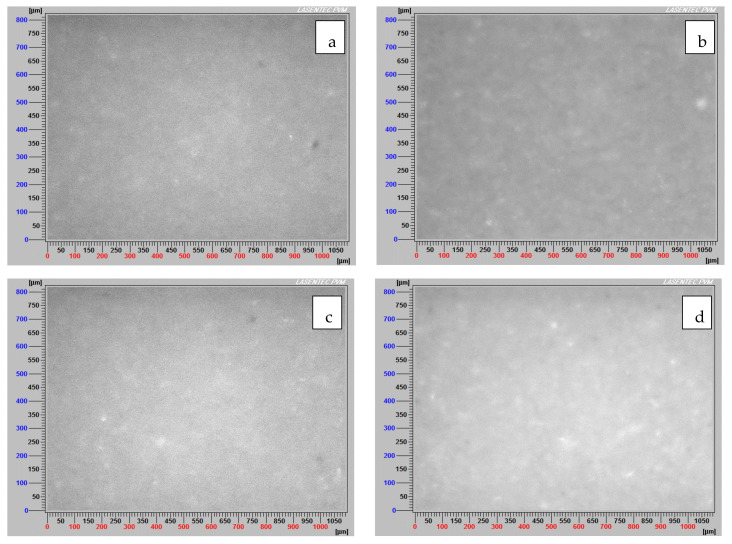
Complex gangues and low-quality waters are a concern for the mining industries, particularly in water shortage areas, where the closure of hydric circuits and reduction in water use are essential to maintain the economic and environmental sustainability of mineral processing. This study analyzes the phenomena involved in the water recovery stage, such as sedimentation of clay-based tailings flocculated with anionic polyelectrolyte in industrial water and seawater. Flocculation-sedimentation batch tests were performed to ascertain the aggregate size distribution, the hindered settling rate, and the structure of flocs expressed through their fractal dimension and density. The aggregates' properties were characterized by the Focused Beam Reflectance Measurement (FBRM) and Particle Vision Microscope (PVM) techniques. The impact of the type of water depends on the type of clay that constitutes the suspension. For quartz/kaolin, the highest performance was obtained in industrial water, with bigger aggregates and faster settling rates. However, the tailings composed of quartz/Na-montmorillonite reversed this trend. The type of water impacted the efficiency of primary-particle aggregation. The trials in industrial water generated a portion of non-flocculated particles, which was observed through a bimodal distribution in the unweighted chord-length distribution. This behavior was not observed in seawater, where a perceptible fraction of non-flocculated particles was not found. The additional cationic bonds that offer seawater favor finer primary-particle agglomeration for all tailings types.
复杂的脉石和劣质水是采矿业关注的问题,特别是在缺水地区,在这些地区,关闭水循环和减少用水对于维持矿物加工的经济和环境可持续性至关重要。本研究分析了水回收阶段所涉及的现象,例如在工业用水和海水中用阴离子聚电解质絮凝的粘土基尾矿的沉降。进行了絮凝 - 沉降间歇试验,以确定聚集体尺寸分布、受阻沉降速率以及通过其分形维数和密度表示的絮体结构。通过聚焦光束反射测量(FBRM)和粒子视觉显微镜(PVM)技术对聚集体的性质进行了表征。水的类型的影响取决于构成悬浮液的粘土类型。对于石英/高岭土,在工业用水中获得了最高性能,聚集体更大且沉降速率更快。然而,由石英/钠蒙脱石组成的尾矿则相反。水的类型影响了一次颗粒聚集的效率。在工业用水中的试验产生了一部分未絮凝的颗粒,这通过未加权弦长分布中的双峰分布观察到。在海水中未观察到这种行为,在海水中未发现明显比例的未絮凝颗粒。海水中额外的阳离子键有利于所有尾矿类型的更细的一次颗粒团聚。