Polytechnic Department of Engineering and Architecture, University of Udine, Via delle Scienze 206, 33100 Udine, Italy.
Sensors (Basel). 2022 Jan 26;22(3):939. doi: 10.3390/s22030939.
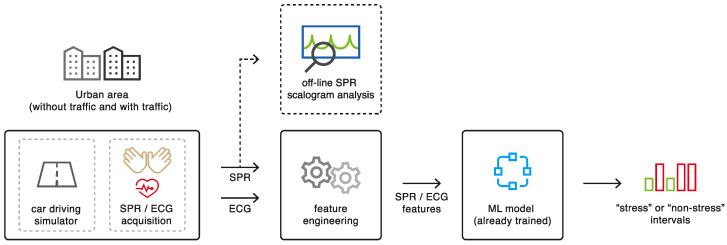
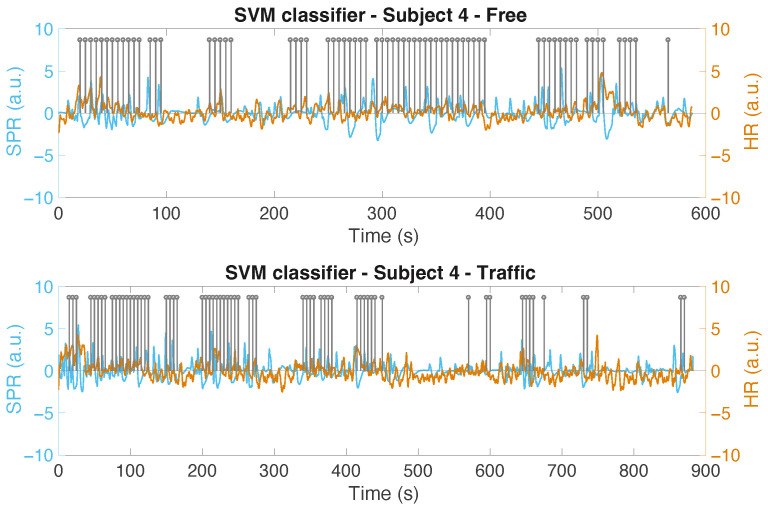
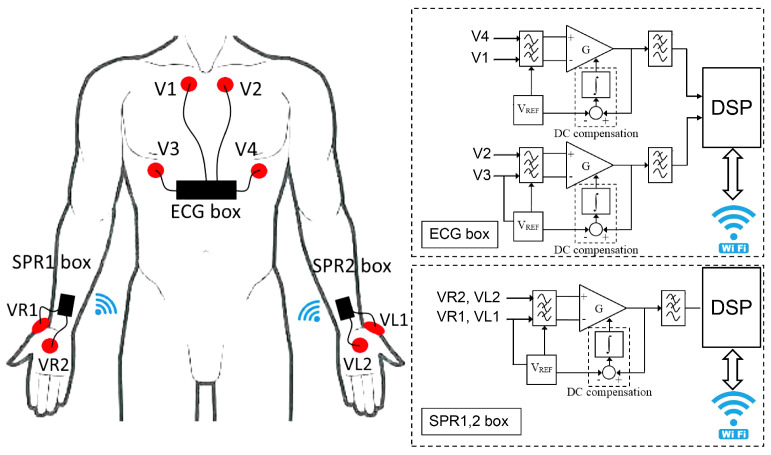
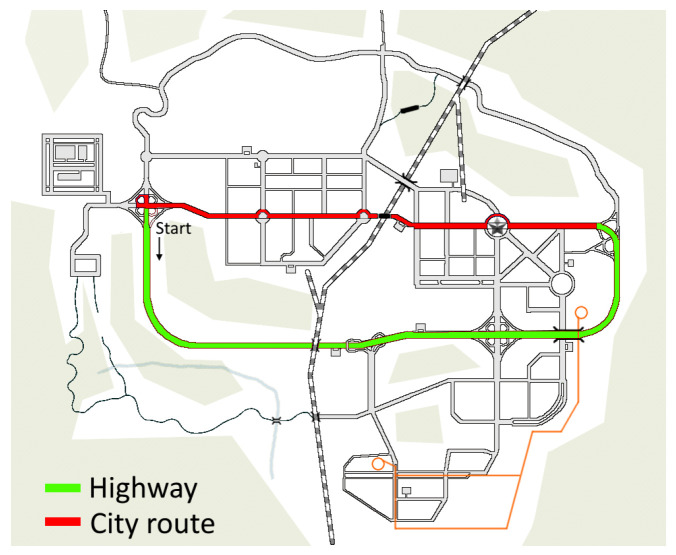
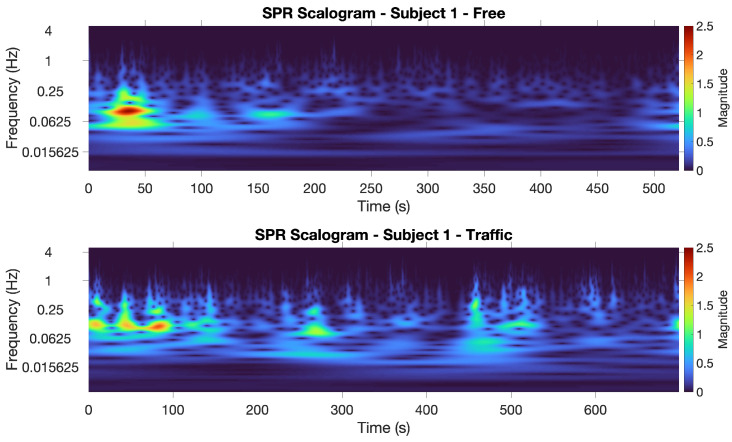
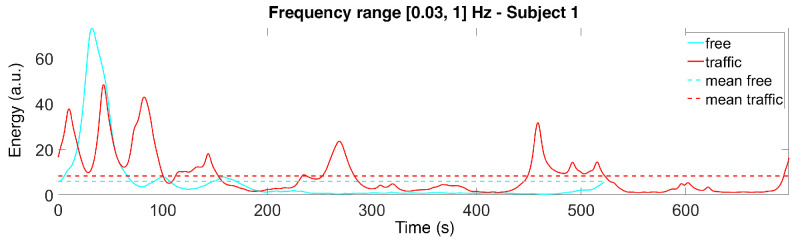
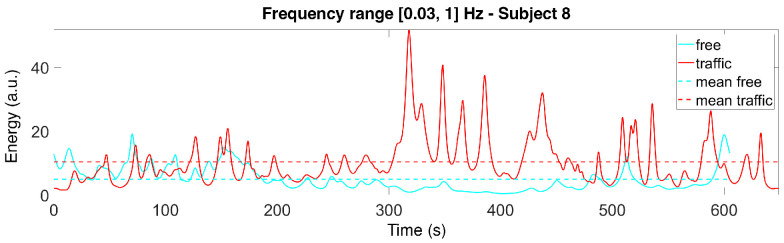
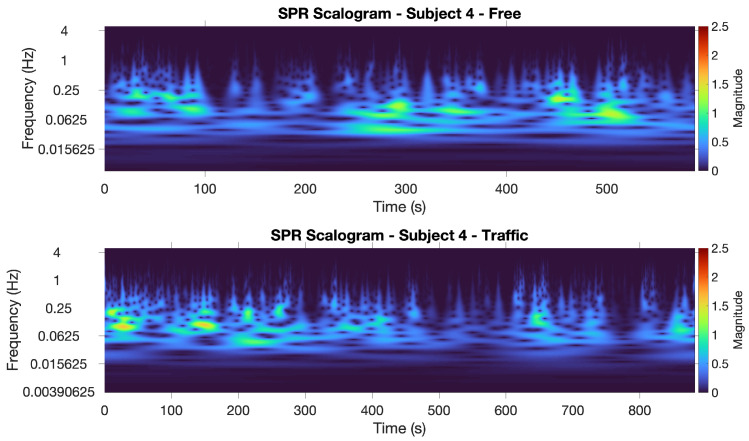
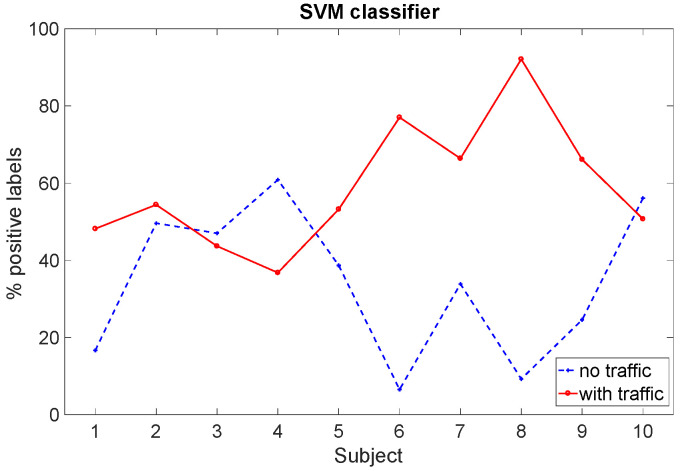
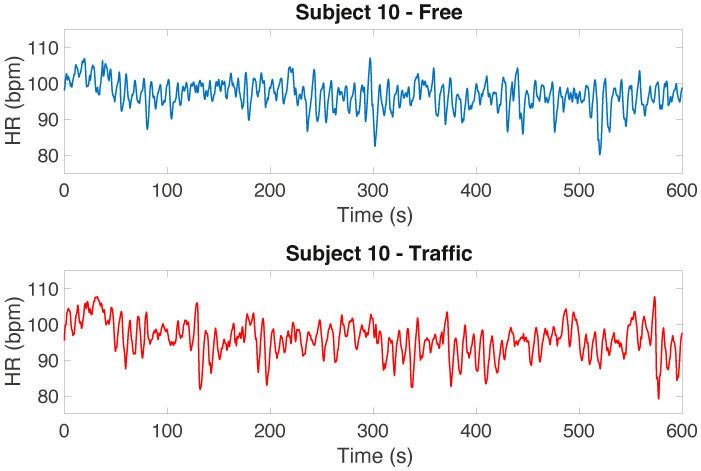
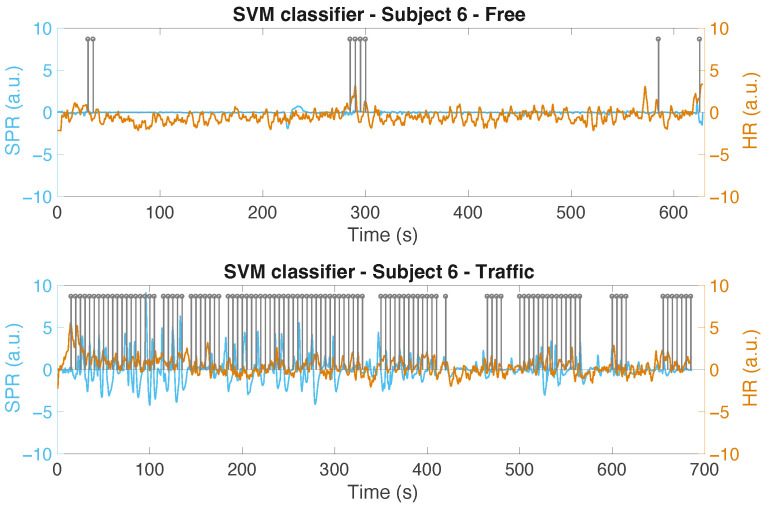
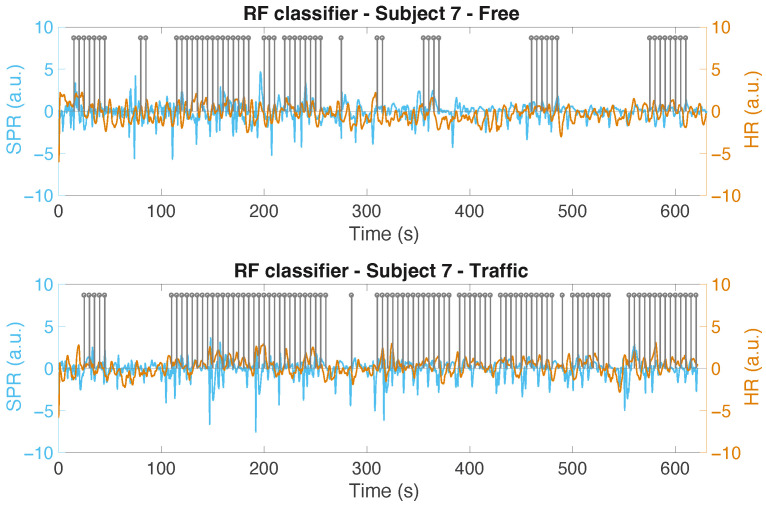
In this paper, we propose a relatively noninvasive system that can automatically assess the impact of traffic conditions on drivers. We analyze the physiological signals recorded from a set of individuals while driving in a simulated urban scenario in two different traffic scenarios, i.e., with traffic and without traffic. The experiments were carried out in a laboratory located at the University of Udine, employing a driving simulator equipped with a moving platform. We acquired two Skin Potential Response (SPR) signals from the hands of the drivers, and an electrocardiogram (ECG) signal from their chest. In the proposed scheme, the SPR signals are then processed through a Motion Artifact (MA) removal algorithm such that possible motion artifacts arising during the drive are reduced. An analysis considering the scalogram of the single cleaned SPR signal is presented. This signal, along with the ECG, is then fed to various Machine Learning (ML) algorithms. More specifically, some statistical features are extracted from each signal segment which, after being analyzed through a binary ML model, are labeled as corresponding to a stressful situation or not. Our results confirm the applicability of the proposed approach to identify stress in the two scenarios. This is also in accordance with our findings considering the SPR signal scalograms.
在本文中,我们提出了一个相对非侵入式的系统,可以自动评估交通状况对驾驶员的影响。我们分析了在两个不同交通场景(有交通和无交通)中驾驶模拟城市场景时从一组个体记录的生理信号。实验在位于乌迪内大学的实验室中进行,使用配备移动平台的驾驶模拟器。我们从驾驶员的手部采集了两个皮肤电位反应(SPR)信号,以及来自他们胸部的心电图(ECG)信号。在所提出的方案中,SPR 信号通过运动伪影(MA)去除算法进行处理,以减少驾驶过程中可能出现的运动伪影。提出了一种考虑单个清洁 SPR 信号的标度图的分析。然后,将该信号与 ECG 一起馈送到各种机器学习(ML)算法中。更具体地说,从每个信号段中提取一些统计特征,然后通过二进制 ML 模型进行分析,将其标记为对应于压力情况或非压力情况。我们的结果证实了该方法在两种情况下识别压力的适用性。这也与我们考虑 SPR 信号标度图的发现一致。