Faculty of Electrical Engineering, University of Ljubljana, 1000 Ljubljana, Slovenia.
Research Centre of the Slovenian Academy of Sciences and Arts, Anton Melik Geographical Institute, 1000 Ljubljana, Slovenia.
Sensors (Basel). 2022 Feb 8;22(3):1288. doi: 10.3390/s22031288.
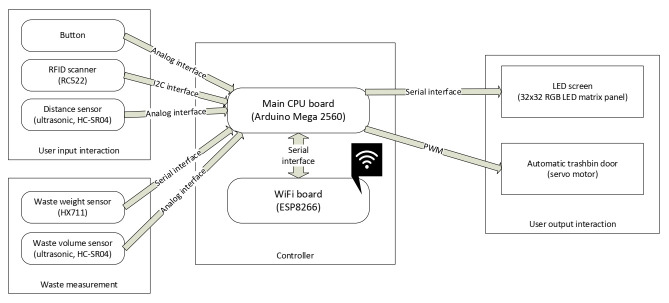
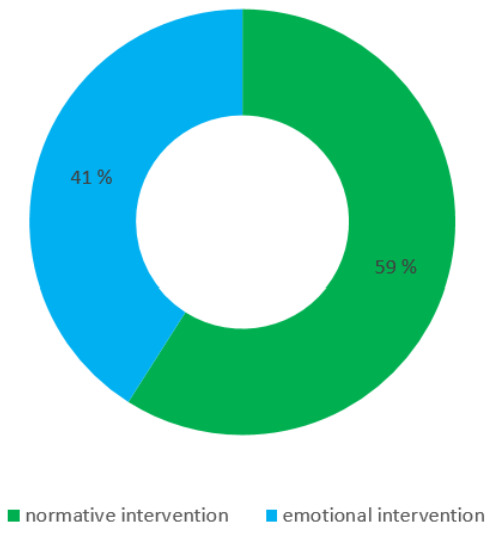
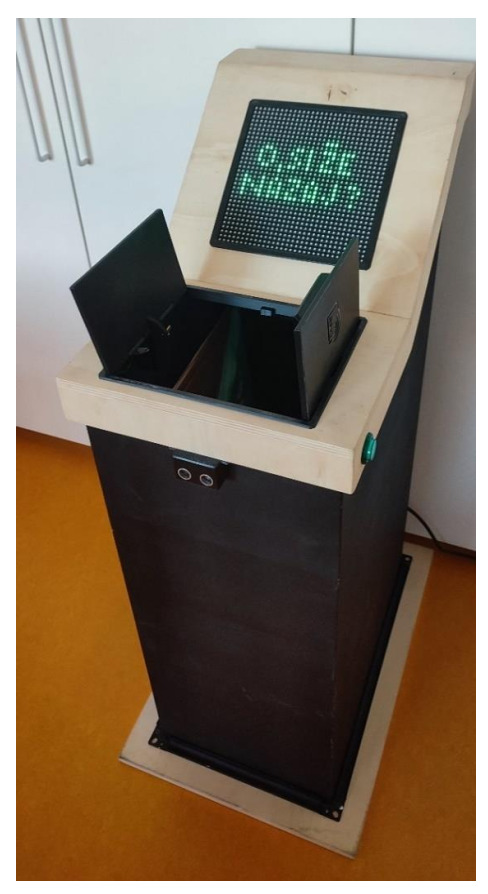
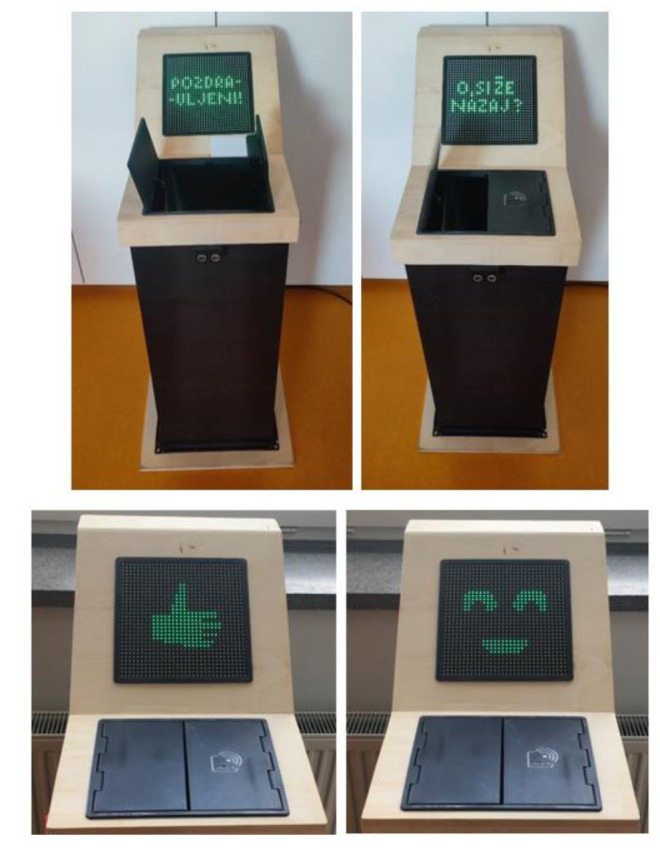
The study presented in this article focuses on the role of a smart waste bin (waste container) designed for waste management and explores what types of interventions people consider more appropriate in promoting environmentally responsible behaviour-based on norms or on an individual's emotions. The smart waste bin development process was people-centred and paid particular attention to human experiences, allowing for various interaction modalities. By incorporating various sensors for waste volume and weight measurement in conjunction with presence and user identification capabilities, the experience was personalised. User feedback was collected by an extensive survey, consisting of four systematic sections, where values, attitudes, norms, perceived behavioural control, behavioural intention and actual behaviour were examined. The survey was completed by 194 respondents. The results showed that participants at the declarative level show a high level of environmental awareness and are very much willing to handle waste appropriately. Additionally, the results of the R&D process indicated that relatively cheap and efficient technological solutions can be developed to support waste management and sustainable lifestyles if the human-centred approach is taken into account.
本文研究的重点是一款智能垃圾桶(废物容器)在废物管理方面的作用,并探讨了人们认为基于规范或个人情感的哪种干预措施更适合促进负责任的环境行为。智能垃圾桶的开发过程以人为中心,特别关注人类体验,允许各种交互模式。通过结合各种用于测量废物体积和重量的传感器以及存在和用户识别功能,实现了个性化体验。通过一项由 194 名受访者参与的广泛调查收集了用户反馈,该调查由四个系统部分组成,分别考察了价值观、态度、规范、感知行为控制、行为意图和实际行为。结果表明,在声明性层面上,参与者表现出较高的环境意识,并非常愿意妥善处理废物。此外,研发过程的结果表明,如果考虑到以人为本的方法,相对便宜和高效的技术解决方案可以被开发出来,以支持废物管理和可持续的生活方式。