Department of Pediatrics, Neurological Rehabilitation Center, the First Affiliated Hospital of Anhui Medical University, Hefei, China.
Department of Pediatrics, the First Affiliated Hospital of Anhui Medical University, Hefei, China.
Mol Genet Genomic Med. 2022 Apr;10(4):e1898. doi: 10.1002/mgg3.1898. Epub 2022 Feb 16.
Hypomagnesemia, seizures, and mental retardation (HSMR) syndrome is a rare genetic disease. Presently, only 24 cases have been reported and the clinical features of the disease are yet to be fully described, thereby making diagnosis challenging.
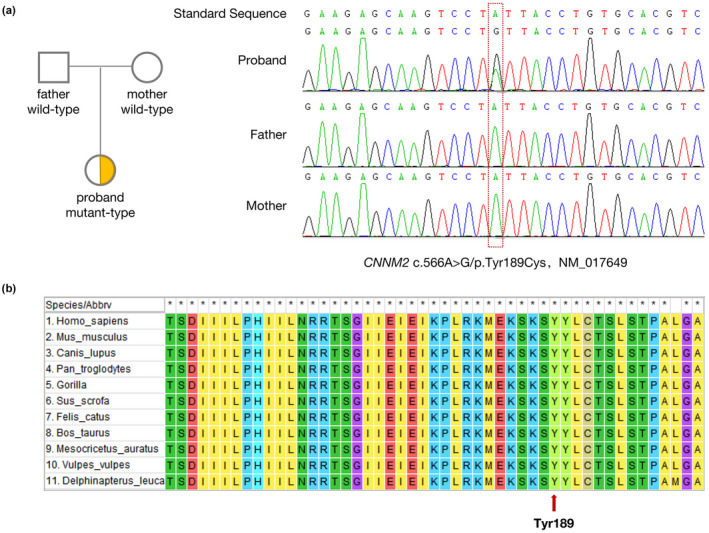
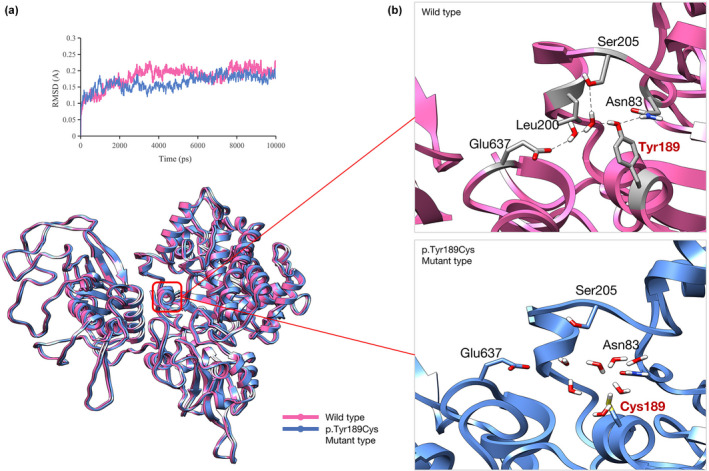
Trio-whole-exome sequencing was used for the patient and her parents, and the structure of the variant protein was analyzed by molecular dynamics. Finally, the characteristics of HSMR were summarized by reviewing the previous literature.
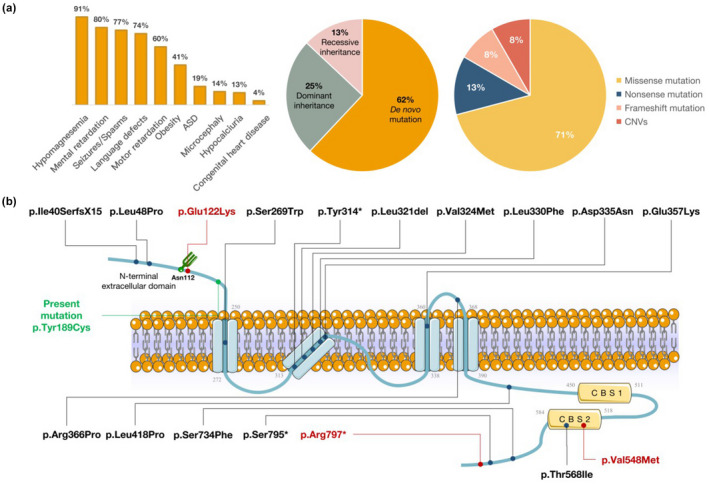
The main disease manifestations in the patient were seizures, liver function damage, hypomagnesemia, atrial septal defect, and sinus arrhythmia. A novel mutation in CNNM2 (c.566A>G/p.Tyr189Cys) was identified by genetic detection. The parents were wild type, and the mutation was rated as pathogenic by American College of Medical Genetics and Genomics guidelines. Ab initio modeling and molecular dynamics simulation show that the mutation destroys the surrounding hydrogen bonds, which may reduce the local stability of the protein structure. In the previous literature, only 24 children with HSMR have been reported, mainly manifested as hypomagnesemia, mental retardation, seizures, and language and motor impairment.
We have reported the second case of HSMR in the Chinese population, which further expands the phenotypic spectrum of congenital heart disease and the variation spectrum of CNNM2.
低镁血症、癫痫和智力迟钝(HSMR)综合征是一种罕见的遗传性疾病。目前仅报道了 24 例病例,且该疾病的临床特征尚未完全描述,这使得诊断具有挑战性。
对患者及其父母进行三代全外显子组测序,并通过分子动力学分析变异蛋白的结构。最后,通过复习文献总结 HSMR 的特征。
患者的主要疾病表现为癫痫、肝功能损伤、低镁血症、房间隔缺损和窦性心律失常。通过基因检测发现 CNNM2 中的一个新突变(c.566A>G/p.Tyr189Cys)。父母均为野生型,根据美国医学遗传学与基因组学学院的指南,该突变被评为致病性突变。从头建模和分子动力学模拟表明,该突变破坏了周围的氢键,可能降低了蛋白质结构的局部稳定性。在以往的文献中,仅报道了 24 例 HSMR 患儿,主要表现为低镁血症、智力迟钝、癫痫发作以及语言和运动障碍。
我们报道了中国人群中的第二例 HSMR 病例,进一步扩展了先天性心脏病的表型谱和 CNNM2 的变异谱。