Department of Human Evolutionary Biology, Harvard University.
Department of Anthropology, University of California-Santa Barbara.
Top Cogn Sci. 2023 Jan;15(1):187-212. doi: 10.1111/tops.12602. Epub 2022 Feb 16.
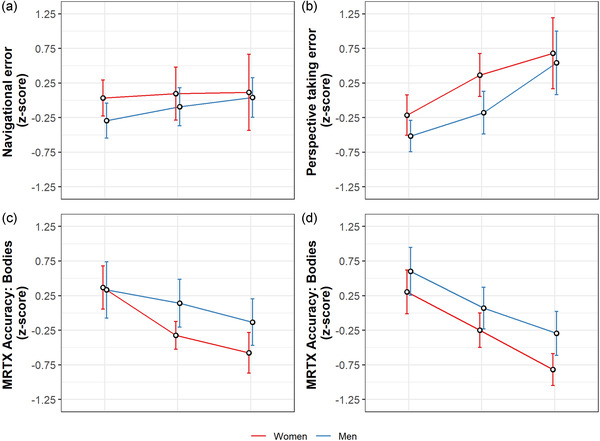
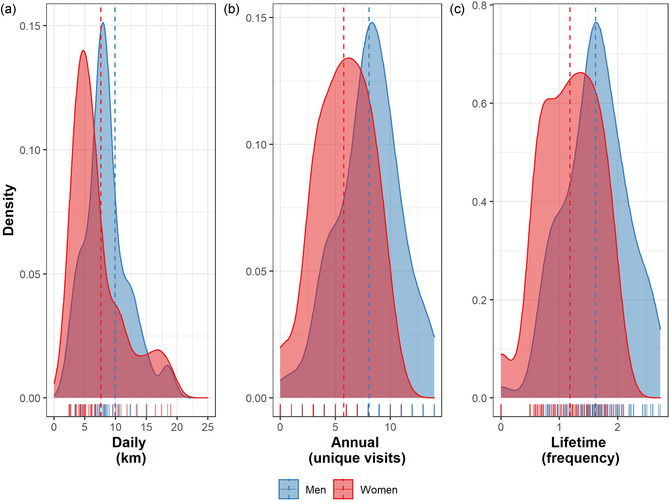
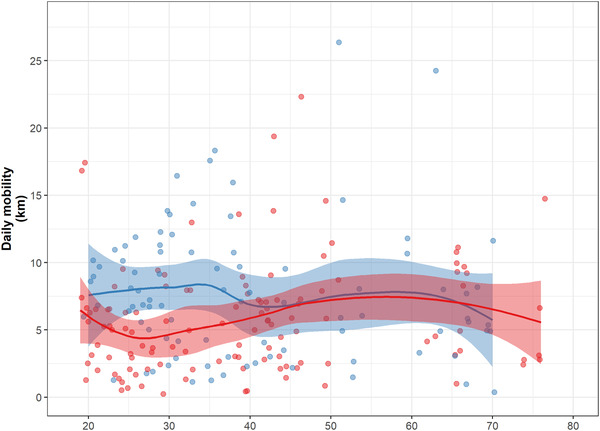
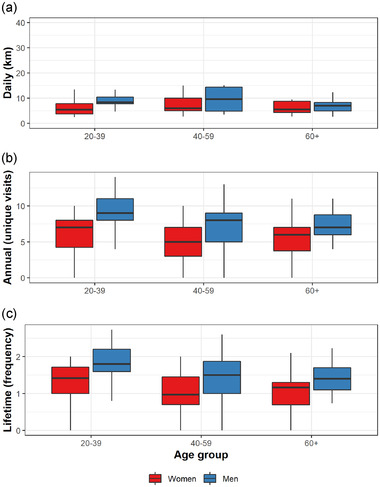
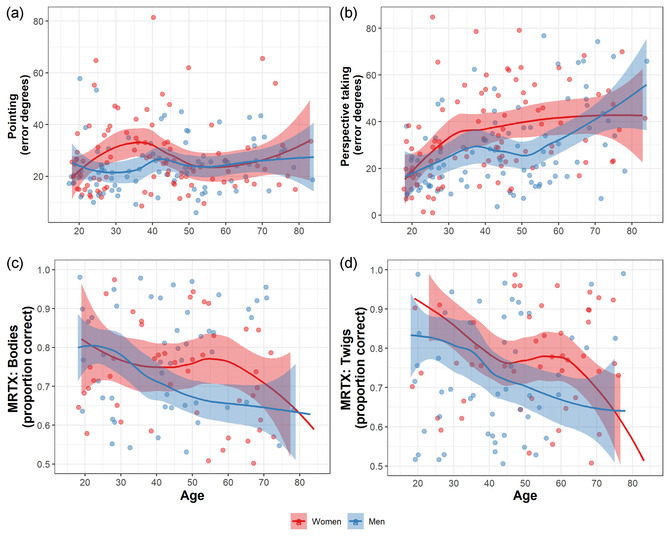
Navigational performance responds to navigational challenges, and both decline with age in Western populations as older people become less mobile. But mobility does not decline everywhere; Tsimané forager-farmers in Bolivia remain highly mobile throughout adulthood, traveling frequently by foot and dugout canoe for subsistence and social visitation. We, therefore, measured both natural mobility and navigational performance in 305 Tsimané adults, to assess differences with age and to test whether greater mobility was related to better navigational performance across the lifespan. Daily mobility was measured by GPS tracking, regional mobility through interview, navigational performance through pointing accuracy and perspective taking in environmental space, and mental rotation by a computerized task. Although mental rotation and spatial perspective taking declined with age, mobility and pointing accuracy remained high from mid-life through old age. Greater regional mobility was associated with greater accuracy at pointing and perspective taking, suggesting that spatial experience at environmental scales may help maintain navigational performance in later adulthood.
导航性能对导航挑战做出反应,而在西方人口中,随着年龄的增长,老年人的活动能力下降,导航性能也随之下降。但并非所有地方的活动能力都在下降;玻利维亚的采猎农民西米安人在整个成年期仍然保持着高度的活动能力,他们经常步行和乘坐独木舟进行生存和社交访问。因此,我们对 305 名西米安成年人进行了自然活动能力和导航性能的测量,以评估年龄差异,并测试在整个生命周期中,更大的活动能力是否与更好的导航性能相关。日常活动能力通过 GPS 追踪测量,区域活动能力通过访谈测量,导航性能通过指向准确性和环境空间透视测量,心理旋转通过计算机任务测量。尽管心理旋转和空间透视能力随着年龄的增长而下降,但从中年到老年,活动能力和指向准确性仍然很高。更大的区域活动能力与更高的指向准确性和透视能力相关,这表明在环境尺度上的空间体验可能有助于维持成年后期的导航性能。