Angstadt Shantel, Zhu Qingfeng, Jaffee Elizabeth M, Robinson Douglas N, Anders Robert A
Department of Pathology Johns Hopkins University School of Medicine, Baltimore, MD, United States.
Department of Oncology, Johns Hopkins University School of Medicine, Baltimore, MD, United States.
Front Oncol. 2022 Jan 31;12:809179. doi: 10.3389/fonc.2022.809179. eCollection 2022.
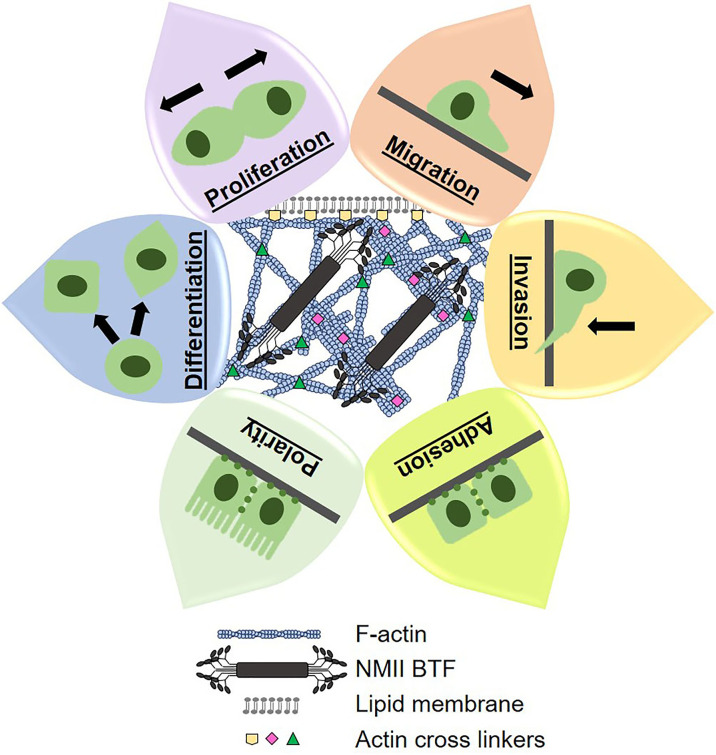
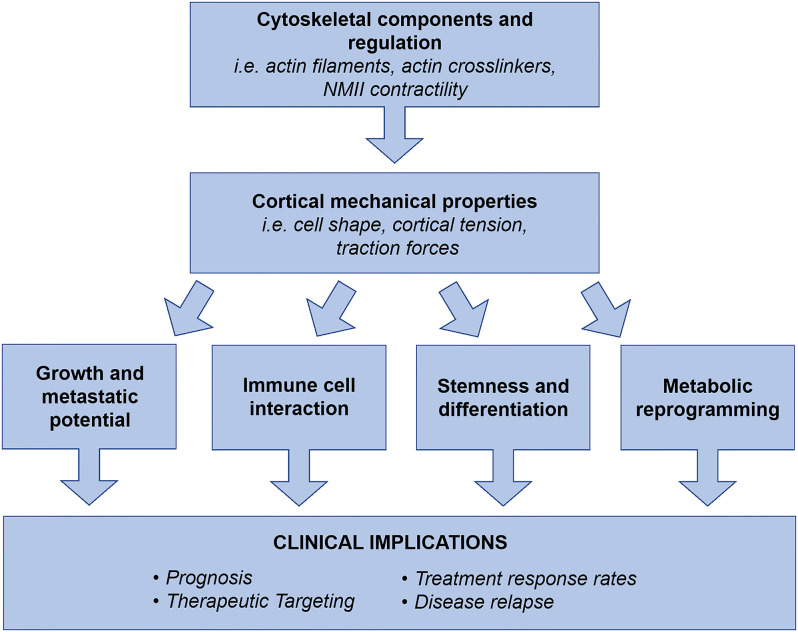
Pancreatic ductal adenocarcinoma (PDAC) remains one of the deadliest cancers due to low therapeutic response rates and poor prognoses. Majority of patients present with symptoms post metastatic spread, which contributes to its overall lethality as the 4th leading cause of cancer-related deaths. Therapeutic approaches thus far target only one or two of the cancer specific hallmarks, such as high proliferation rate, apoptotic evasion, or immune evasion. Recent genomic discoveries reveal that genetic heterogeneity, early micrometastases, and an immunosuppressive tumor microenvironment contribute to the inefficacy of current standard treatments and specific molecular-targeted therapies. To effectively combat cancers like PDAC, we need an innovative approach that can simultaneously impact the multiple hallmarks driving cancer progression. Here, we present the mechanical properties generated by the cell's cortical cytoskeleton, with a spotlight on PDAC, as an ideal therapeutic target that can concurrently attack multiple systems driving cancer. We start with an introduction to cancer cell mechanics and PDAC followed by a compilation of studies connecting the cortical cytoskeleton and mechanical properties to proliferation, metastasis, immune cell interactions, cancer cell stemness, and/or metabolism. We further elaborate on the implications of these findings in disease progression, therapeutic resistance, and clinical relapse. Manipulation of the cancer cell's mechanical system has already been shown to prevent metastasis in preclinical models, but it has greater potential for target exploration since it is a foundational property of the cell that regulates various oncogenic behaviors.
胰腺导管腺癌(PDAC)由于治疗反应率低和预后差,仍然是最致命的癌症之一。大多数患者在发生转移后才出现症状,这导致其成为癌症相关死亡的第四大主要原因,从而增加了总体致死率。迄今为止的治疗方法仅针对一两种癌症特异性特征,例如高增殖率、凋亡逃避或免疫逃避。最近的基因组学发现表明,基因异质性、早期微转移和免疫抑制性肿瘤微环境导致了当前标准治疗和特定分子靶向治疗的无效性。为了有效对抗像PDAC这样的癌症,我们需要一种创新方法,能够同时影响驱动癌症进展的多个特征。在此,我们介绍由细胞皮质细胞骨架产生的力学特性,重点关注PDAC,将其作为一个理想的治疗靶点,它可以同时攻击驱动癌症的多个系统。我们首先介绍癌细胞力学和PDAC,然后汇编一系列研究,这些研究将皮质细胞骨架和力学特性与增殖、转移、免疫细胞相互作用、癌细胞干性和/或代谢联系起来。我们进一步阐述这些发现对疾病进展、治疗耐药性和临床复发的影响。在临床前模型中,操纵癌细胞的力学系统已被证明可以预防转移,但由于它是调节各种致癌行为的细胞基本特性,因此在靶点探索方面具有更大的潜力。