State Key Laboratory of Veterinary Biotechnology, Harbin Veterinary Research Institute, Chinese Academy of Agricultural Sciences, Harbin, People's Republic of China.
Jiangsu Co-innovation Center for Prevention and Control of Important Animal Infectious Diseases and Zoonoses, Yangzhou University, Yangzhou, P. R. China.
PLoS Pathog. 2022 Feb 17;18(2):e1010343. doi: 10.1371/journal.ppat.1010343. eCollection 2022 Feb.
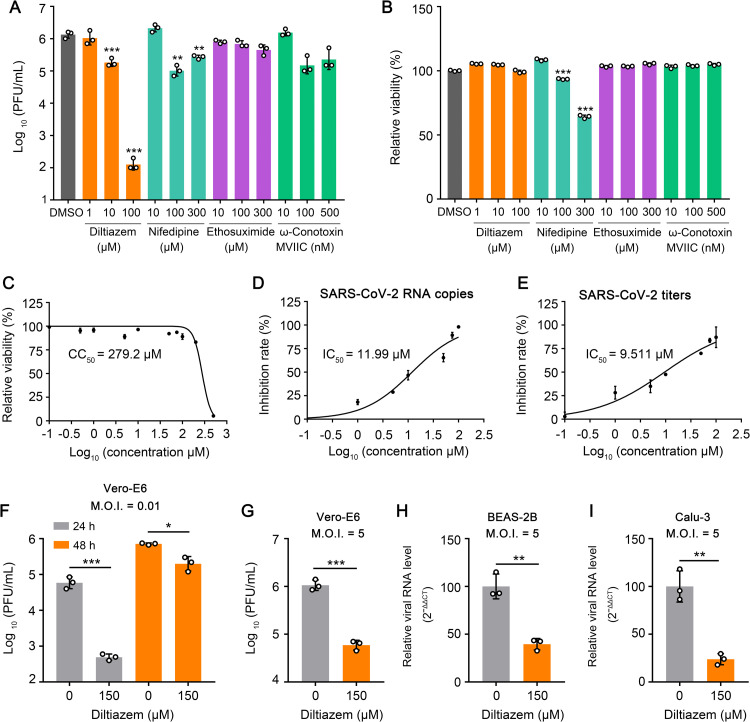
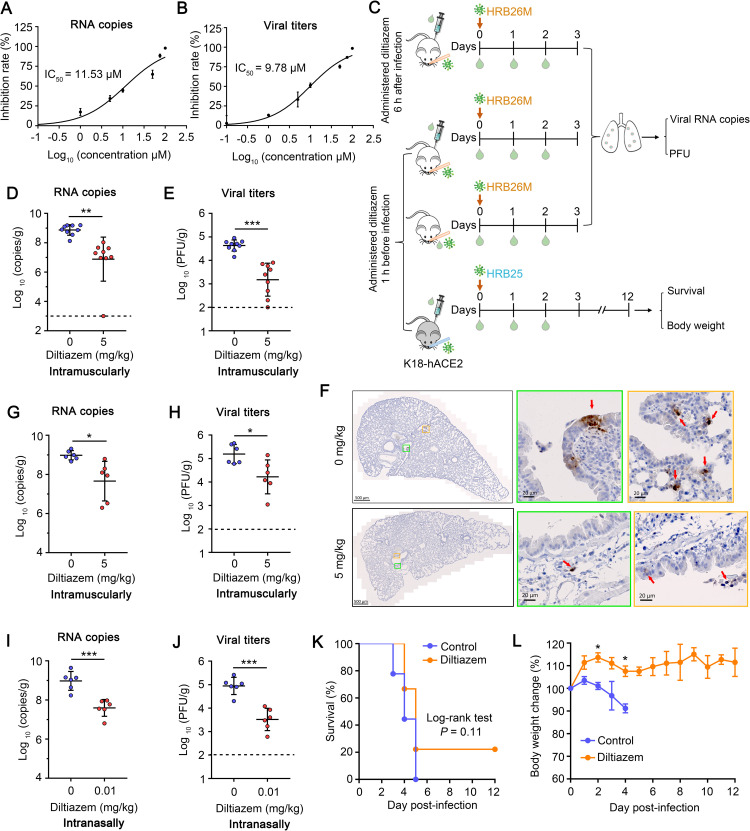
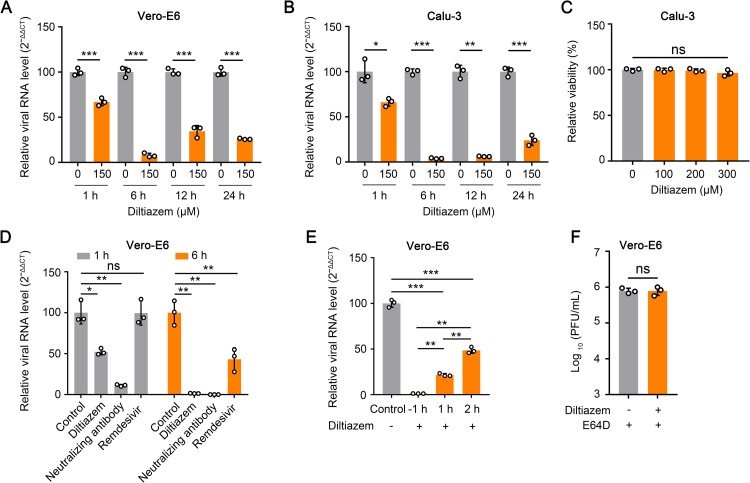
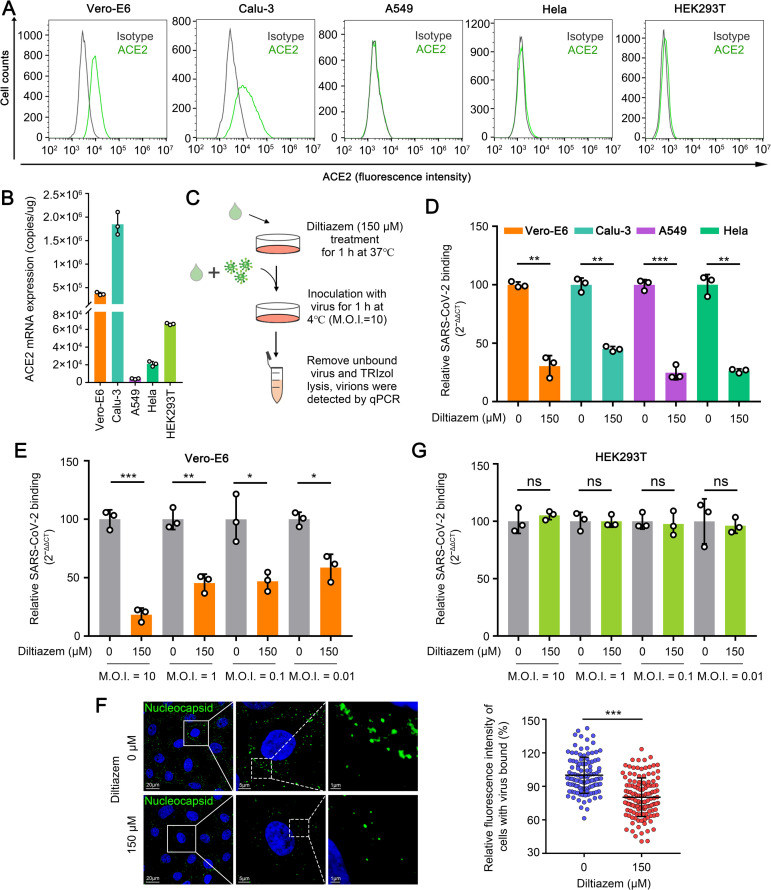
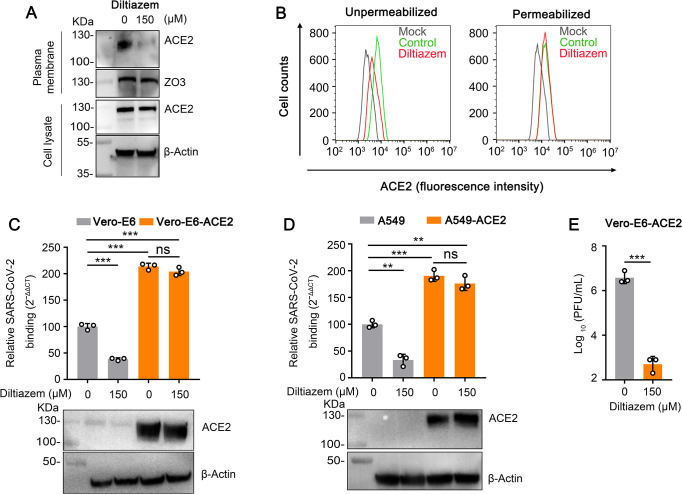
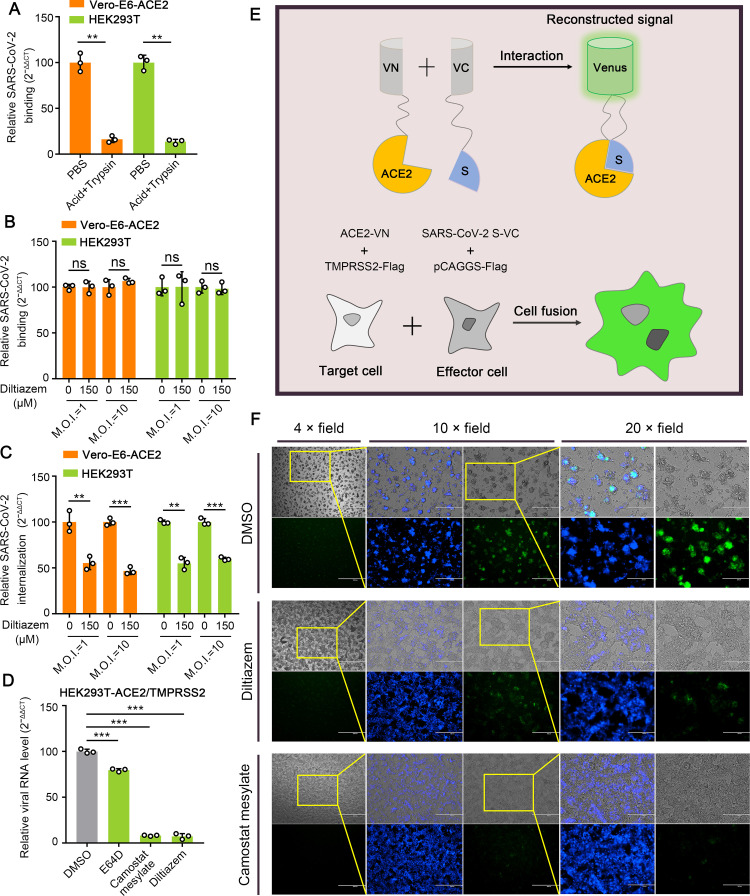
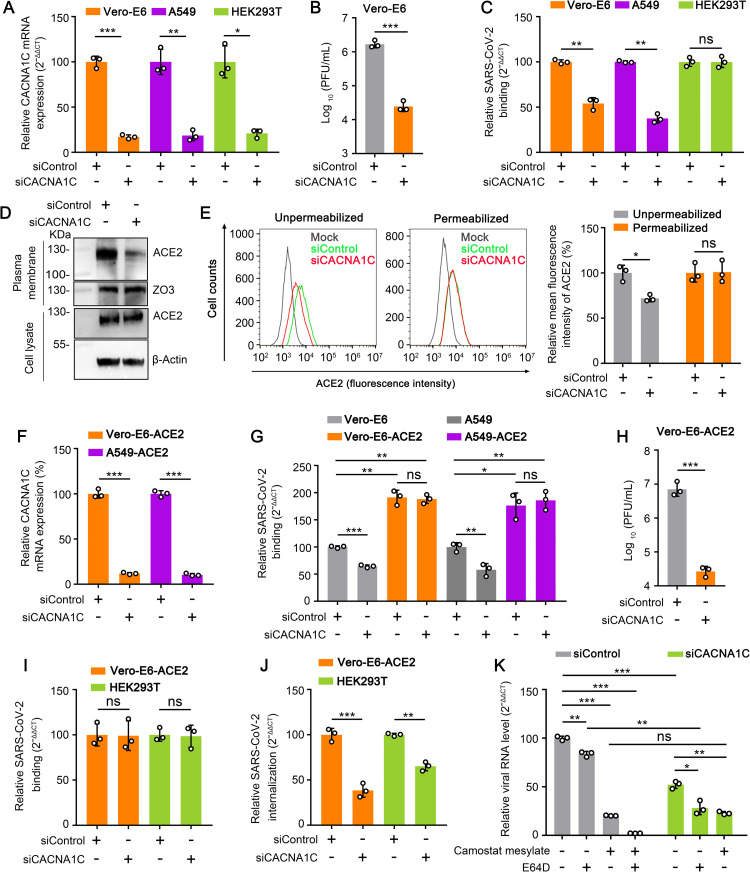
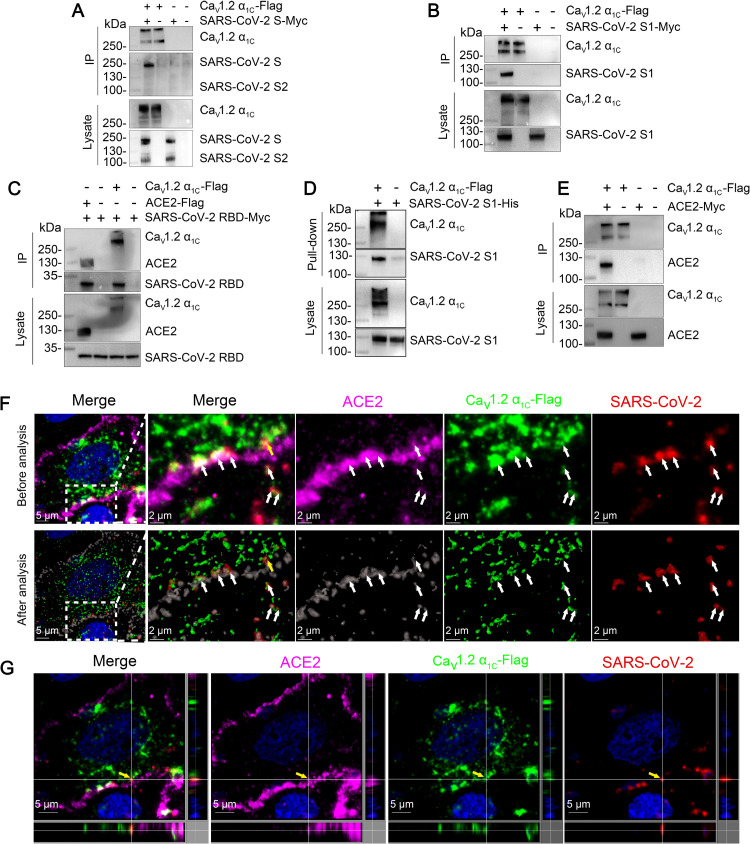
The continuous emergence of severe acute respiratory coronavirus 2 (SARS-CoV-2) variants and the increasing number of breakthrough infection cases among vaccinated people support the urgent need for research and development of antiviral drugs. Viral entry is an intriguing target for antiviral drug development. We found that diltiazem, a blocker of the L-type calcium channel Cav1.2 pore-forming subunit (Cav1.2 α1c) and an FDA-approved drug, inhibits the binding and internalization of SARS-CoV-2, and decreases SARS-CoV-2 infection in cells and mouse lung. Cav1.2 α1c interacts with SARS-CoV-2 spike protein and ACE2, and affects the attachment and internalization of SARS-CoV-2. Our finding suggests that diltiazem has potential as a drug against SARS-CoV-2 infection and that Cav1.2 α1c is a promising target for antiviral drug development for COVID-19.
严重急性呼吸综合征冠状病毒 2 (SARS-CoV-2) 变体的持续出现,以及接种疫苗人群中突破性感染病例的增加,都支持对抗病毒药物研发的迫切需求。病毒进入是抗病毒药物研发的一个有趣目标。我们发现,地尔硫卓是一种 L 型钙通道 Cav1.2 孔形成亚基 (Cav1.2α1c) 的阻滞剂,也是一种 FDA 批准的药物,可抑制 SARS-CoV-2 的结合和内化,并降低细胞和小鼠肺中的 SARS-CoV-2 感染。Cav1.2α1c 与 SARS-CoV-2 刺突蛋白和 ACE2 相互作用,并影响 SARS-CoV-2 的附着和内化。我们的发现表明,地尔硫卓有可能成为治疗 SARS-CoV-2 感染的药物,Cav1.2α1c 是针对 COVID-19 的抗病毒药物研发的有前途的靶点。