Department of Medicine, University of North Carolina at Chapel Hill, Chapel Hill, North Carolina; Center for Gastrointestinal Biology and Disease, University of North Carolina at Chapel Hill, Chapel Hill, North Carolina.
Joint Department of Biomedical Engineering, University of North Carolina at Chapel Hill/North Carolina State University, Chapel Hill, North Carolina.
Cell Mol Gastroenterol Hepatol. 2022;13(5):1554-1589. doi: 10.1016/j.jcmgh.2022.02.007. Epub 2022 Feb 15.
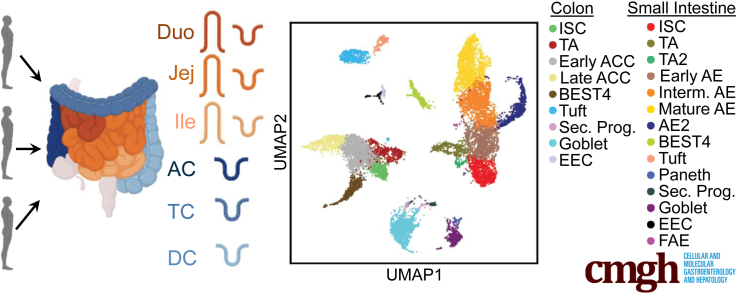
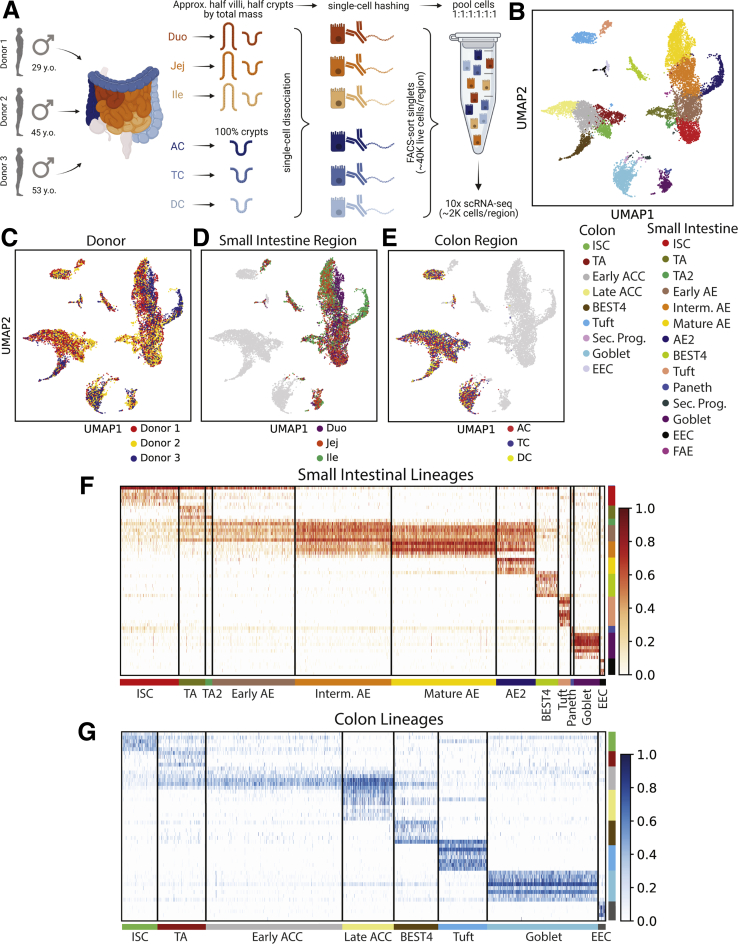
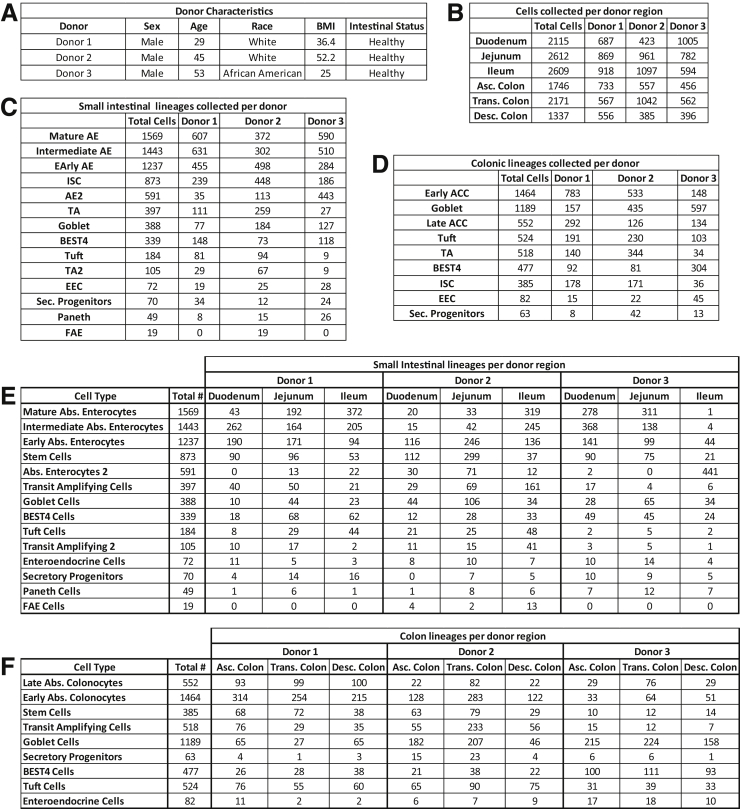
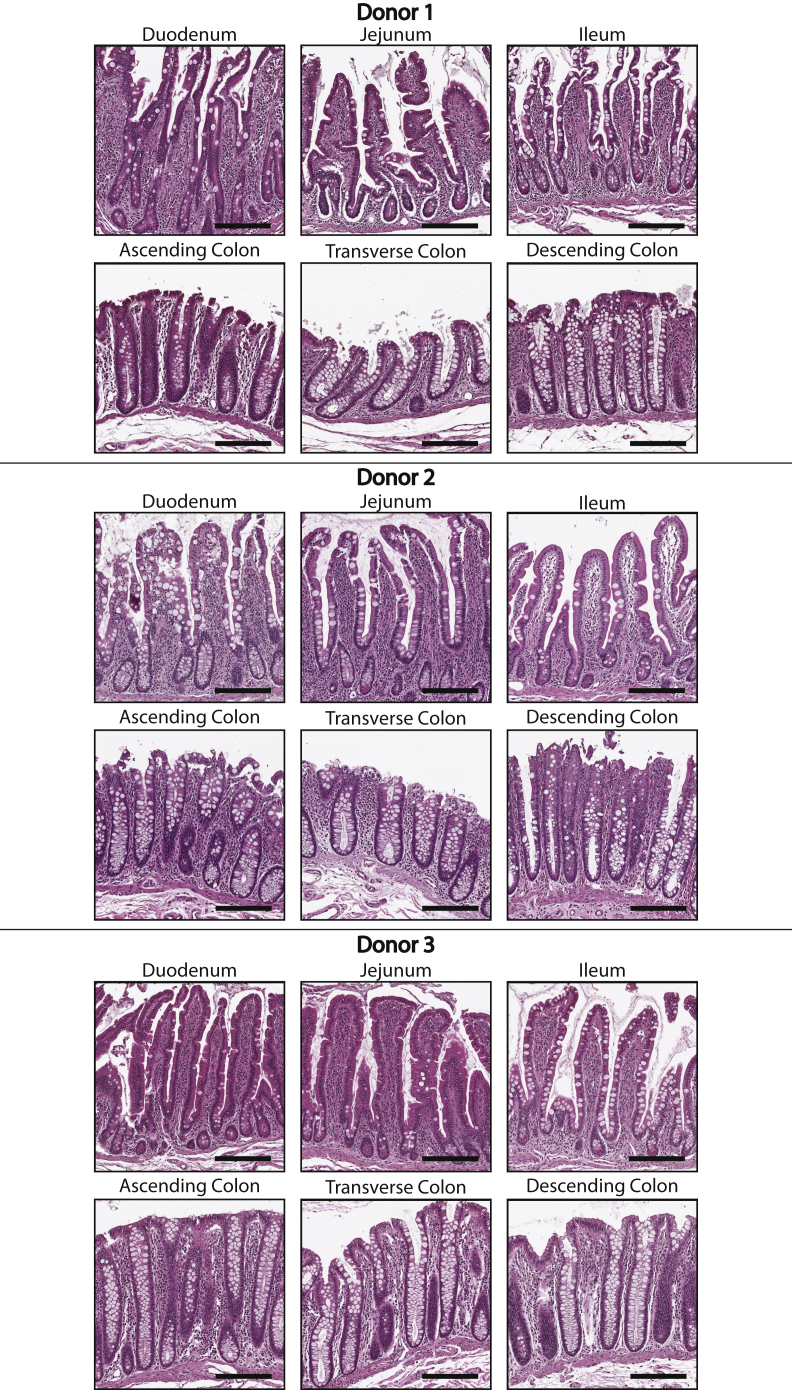
BACKGROUND & AIMS: Single-cell transcriptomics offer unprecedented resolution of tissue function at the cellular level, yet studies analyzing healthy adult human small intestine and colon are sparse. Here, we present single-cell transcriptomics covering the duodenum, jejunum, ileum, and ascending, transverse, and descending colon from 3 human beings.
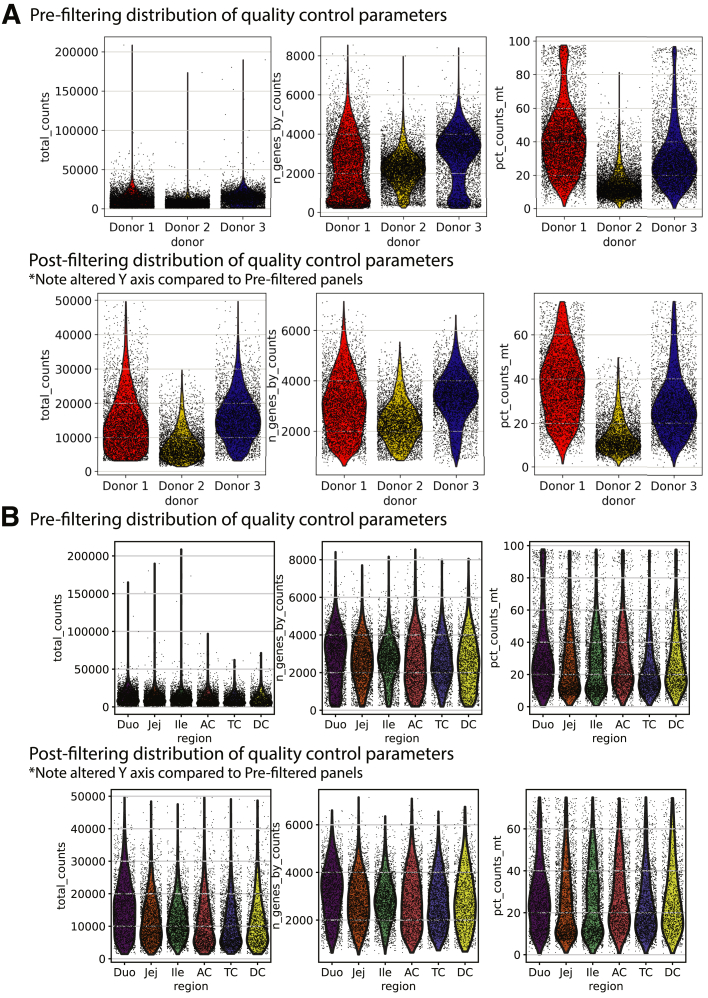
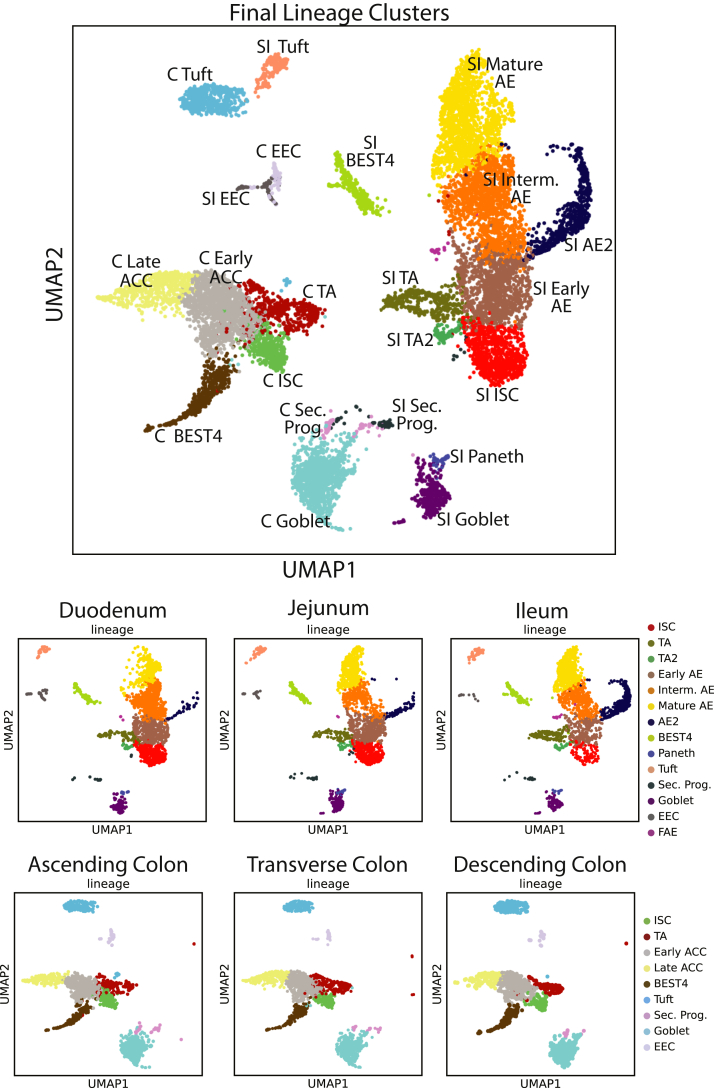
A total of 12,590 single epithelial cells from 3 independently processed organ donors were evaluated for organ-specific lineage biomarkers, differentially regulated genes, receptors, and drug targets. Analyses focused on intrinsic cell properties and their capacity for response to extrinsic signals along the gut axis across different human beings.
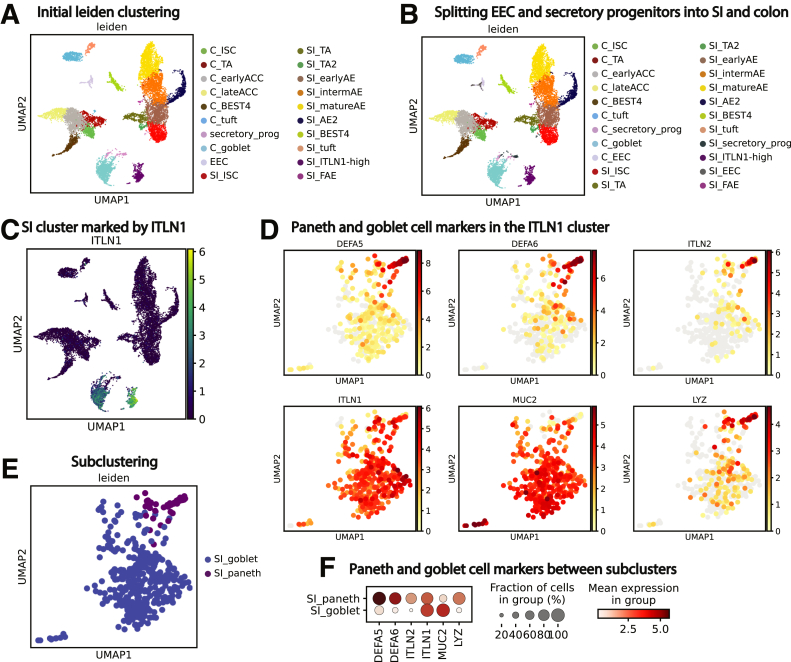
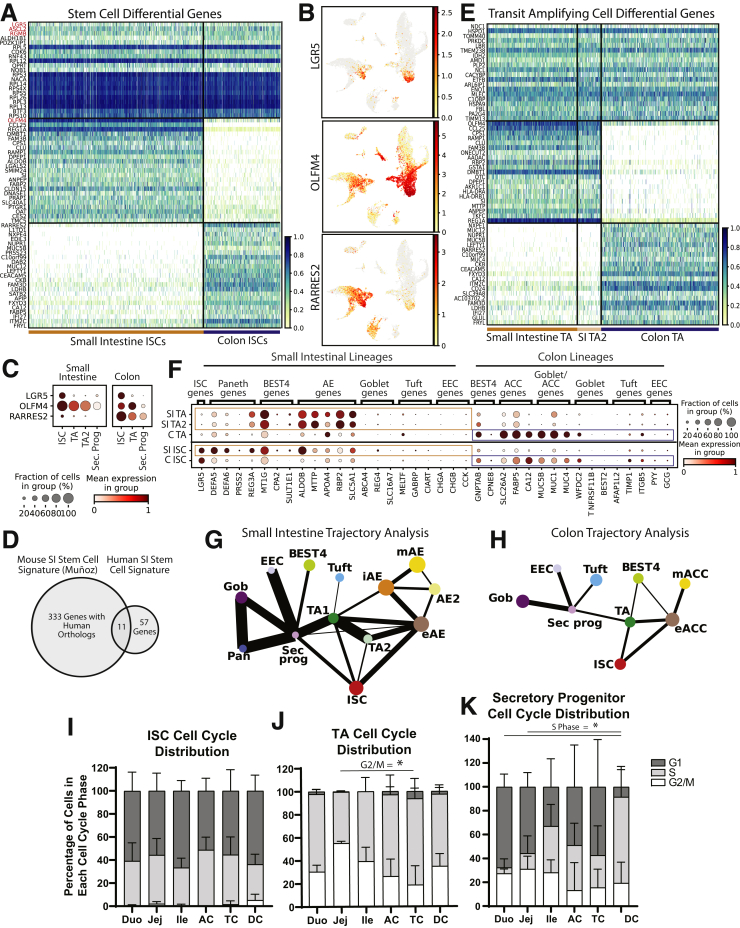
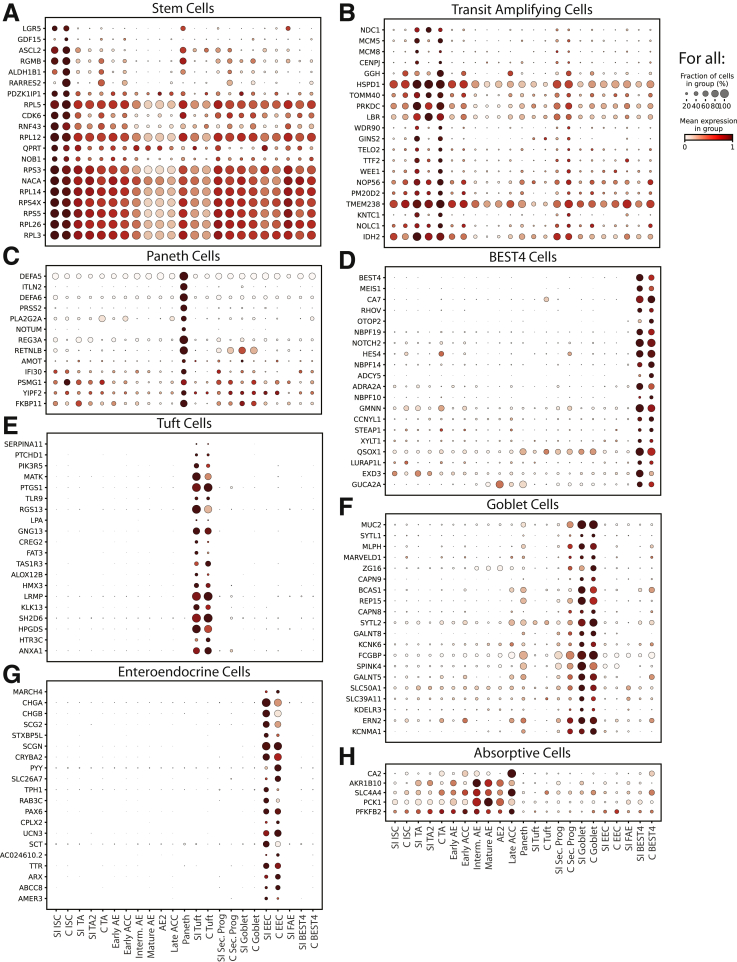
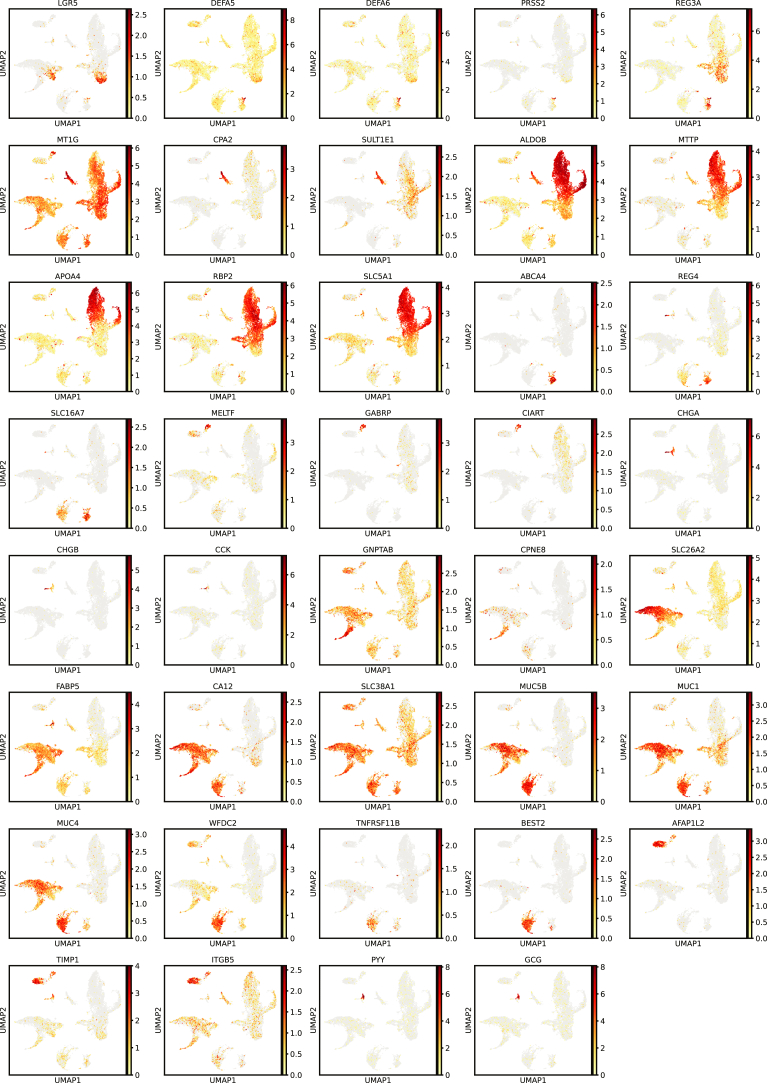
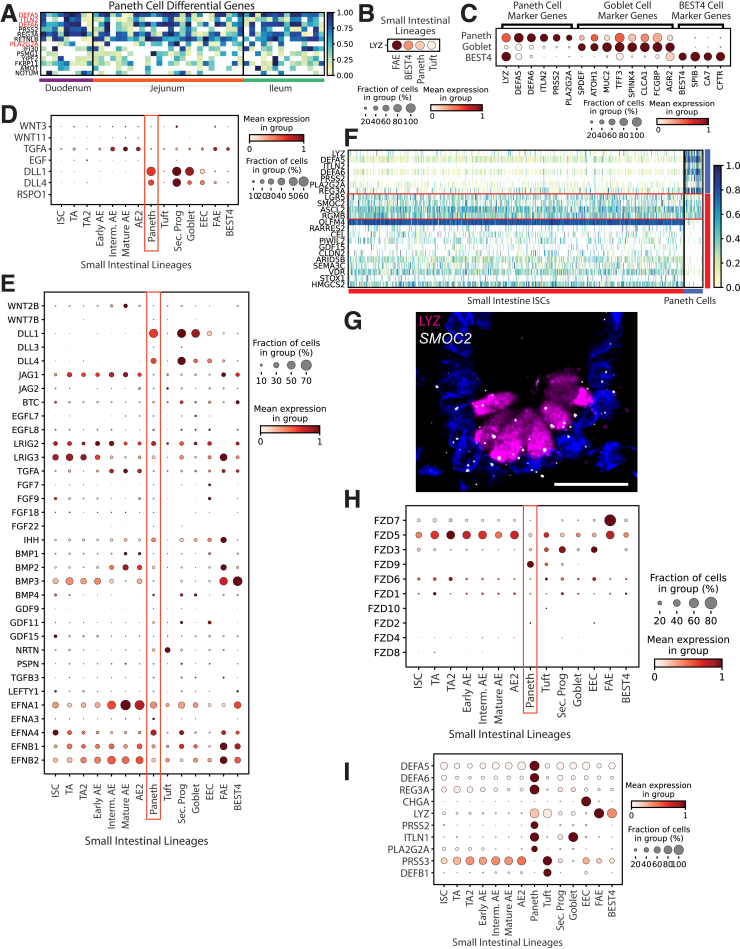
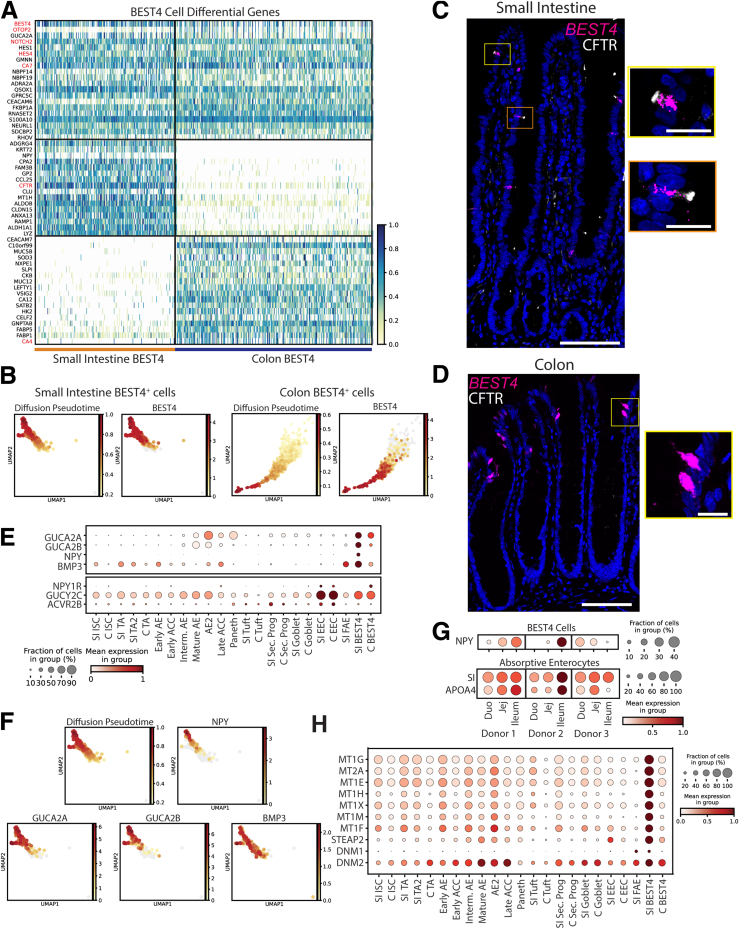
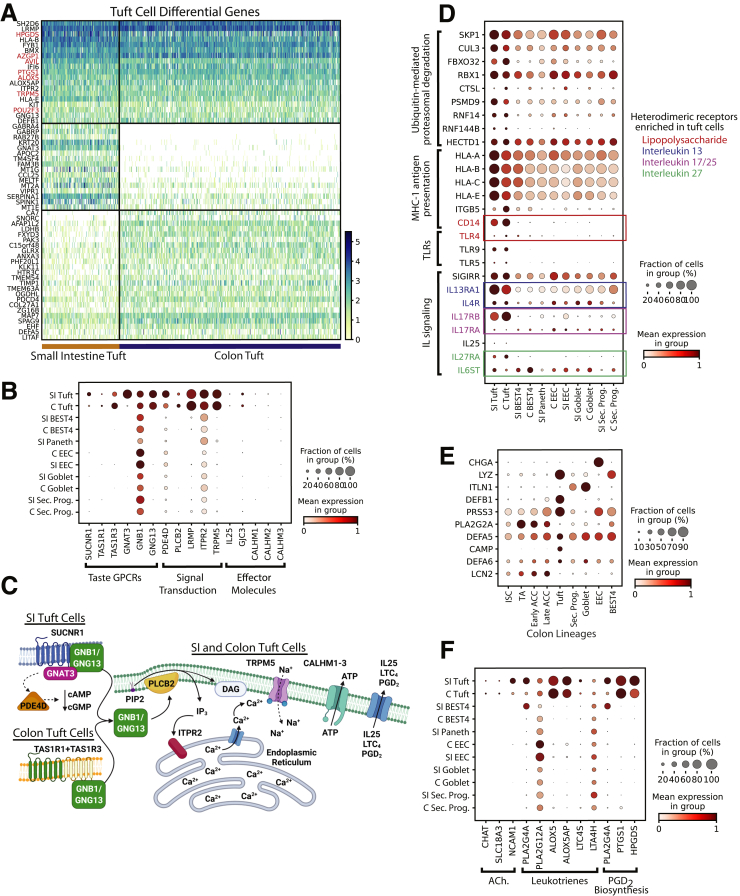
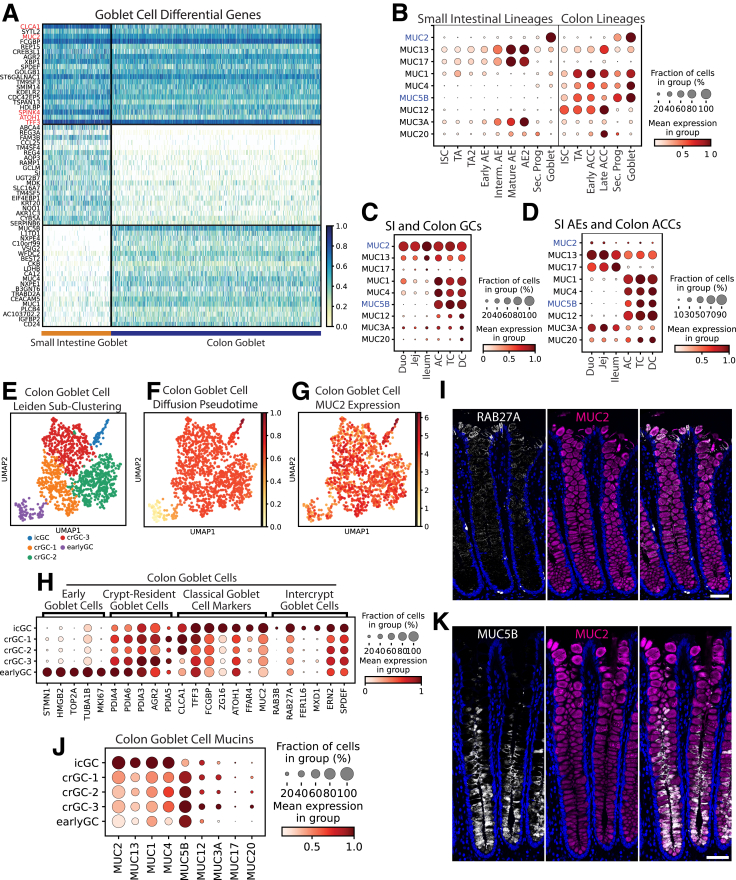
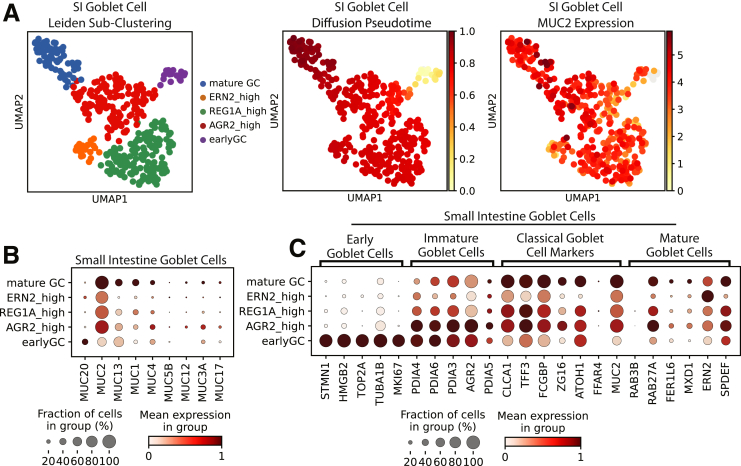
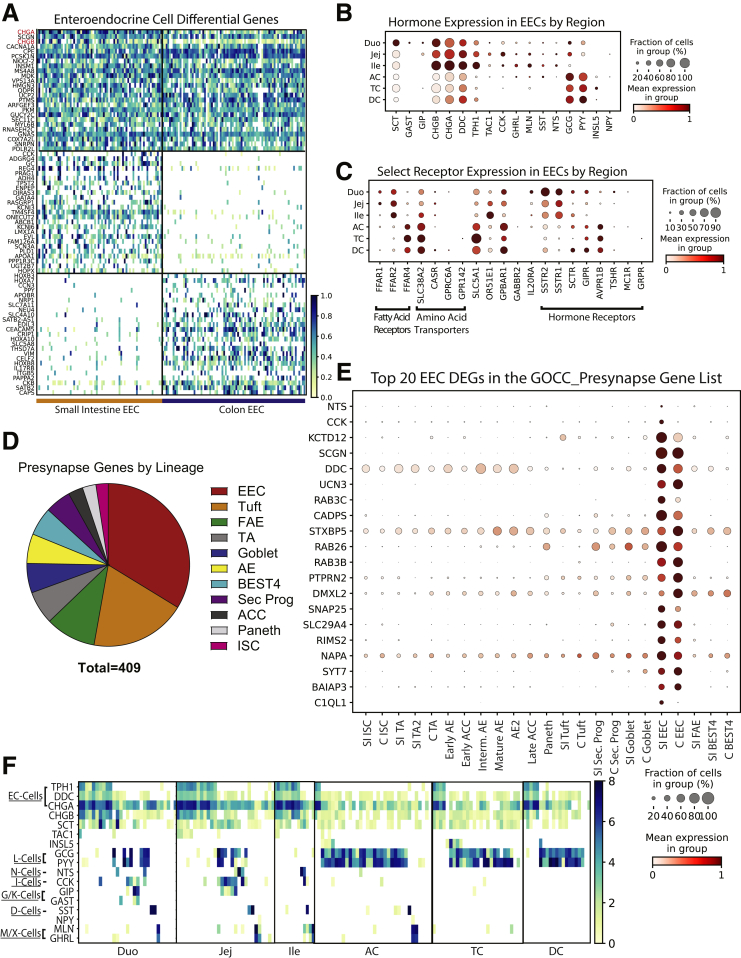
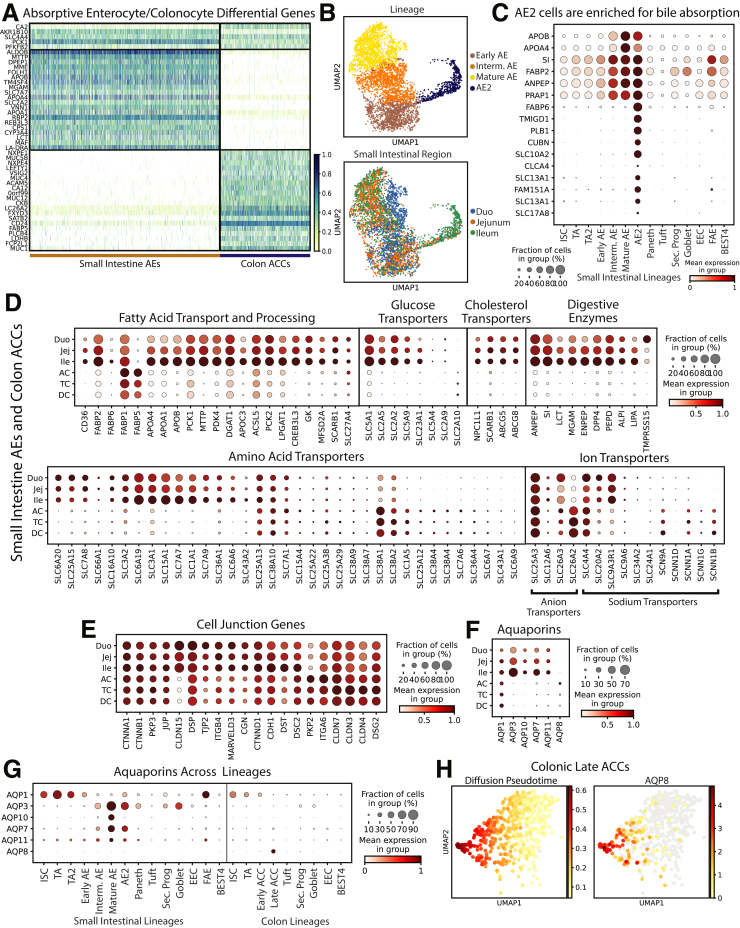
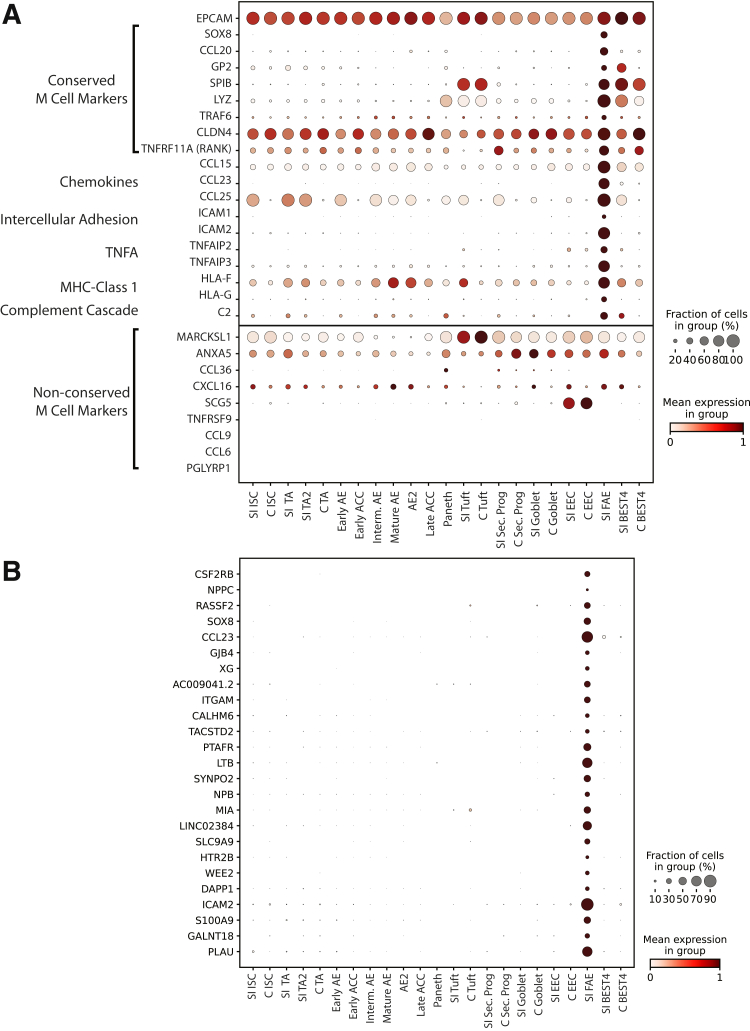
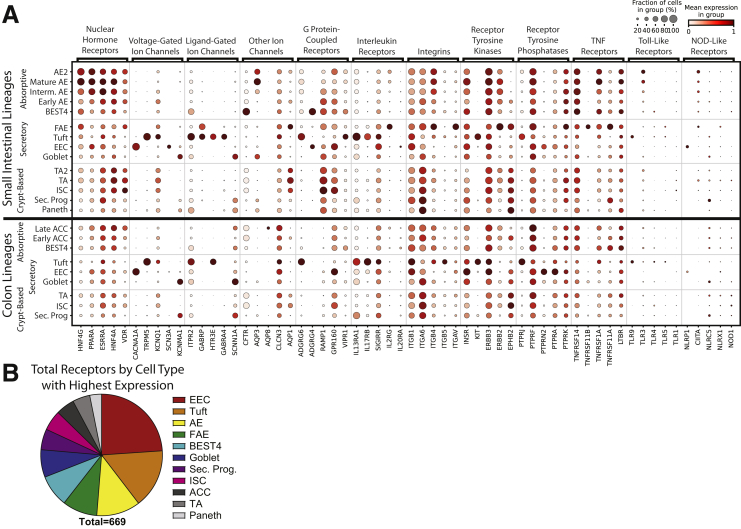
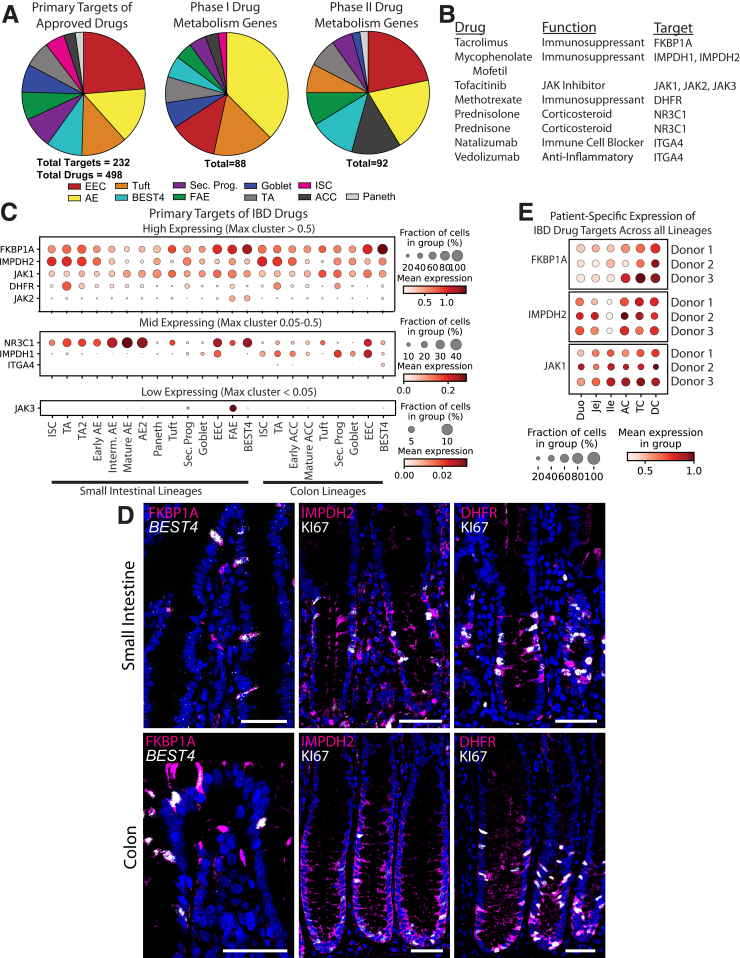
Cells were assigned to 25 epithelial lineage clusters. Multiple accepted intestinal stem cell markers do not specifically mark all human intestinal stem cells. Lysozyme expression is not unique to human Paneth cells, and Paneth cells lack expression of expected niche factors. Bestrophin 4 (BEST4) cells express Neuropeptide Y (NPY) and show maturational differences between the small intestine and colon. Tuft cells possess a broad ability to interact with the innate and adaptive immune systems through previously unreported receptors. Some classes of mucins, hormones, cell junctions, and nutrient absorption genes show unappreciated regional expression differences across lineages. The differential expression of receptors and drug targets across lineages show biological variation and the potential for variegated responses.
Our study identifies novel lineage marker genes, covers regional differences, shows important differences between mouse and human gut epithelium, and reveals insight into how the epithelium responds to the environment and drugs. This comprehensive cell atlas of the healthy adult human intestinal epithelium resolves likely functional differences across anatomic regions along the gastrointestinal tract and advances our understanding of human intestinal physiology.
单细胞转录组学在细胞水平上提供了前所未有的组织功能分辨率,但分析健康成人小肠和结肠的研究却很少。在这里,我们展示了涵盖 3 个人的十二指肠、空肠、回肠以及升结肠、横结肠和降结肠的单细胞转录组学。
从 3 个独立处理的器官供体中评估了总共 12590 个上皮单细胞,以确定器官特异性谱系生物标志物、差异调节基因、受体和药物靶点。分析集中于内在细胞特性及其对沿肠道轴的外在信号的反应能力,跨越不同的个体。
细胞被分配到 25 个上皮谱系簇中。多个公认的肠干细胞标记物并不专门标记所有人类肠干细胞。溶菌酶的表达并不独特于人类潘氏细胞,而潘氏细胞缺乏预期的龛位因子表达。BEST4 细胞表达神经肽 Y(NPY),并且在小肠和结肠之间表现出成熟差异。微绒毛细胞通过以前未报道的受体具有与先天和适应性免疫系统广泛相互作用的能力。一些类别的粘蛋白、激素、细胞连接和营养吸收基因在谱系之间表现出未被认识到的区域表达差异。受体和药物靶点的差异表达在谱系之间显示出生物学变异性和潜在的多样性反应。
我们的研究确定了新的谱系标记基因,涵盖了区域差异,显示了小鼠和人类肠道上皮之间的重要差异,并揭示了上皮对环境和药物的反应方式。这份健康成人肠道上皮的全面细胞图谱解决了沿胃肠道解剖区域的可能功能差异,并增进了我们对人类肠道生理学的理解。