Dong Menglu, Shen Wenzhuang, Yang Guang, Yang Zhifang, Li Xingrui
Department of Thyroid and Breast Surgery, Tongji Hospital, Tongji Medical College of Huazhong University of Science and Technology, Wuhan, China.
Department of Thoracic Surgery, Tongji Hospital, Tongji Medical College, Huazhong University of Science and Technology, Wuhan, China.
Front Cell Dev Biol. 2022 Feb 1;10:785058. doi: 10.3389/fcell.2022.785058. eCollection 2022.
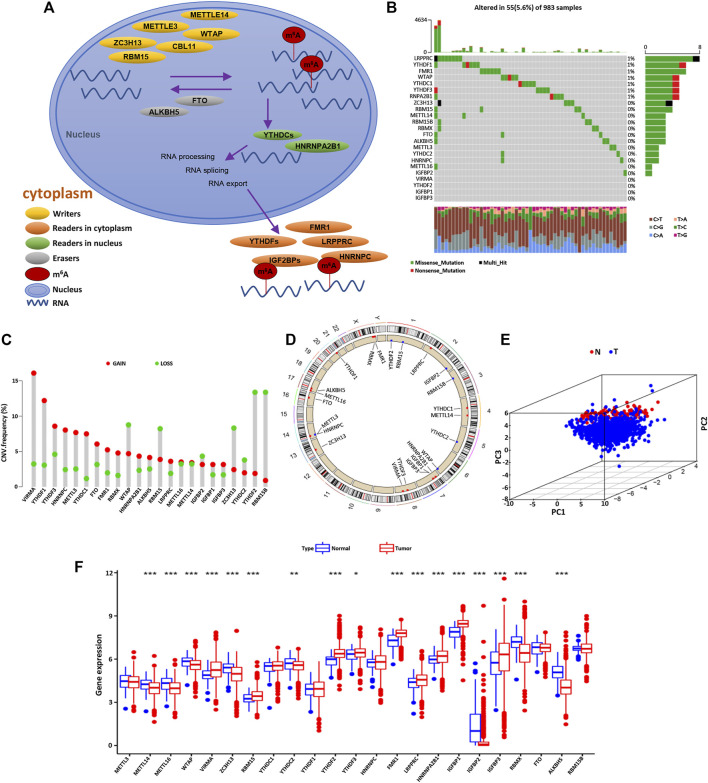
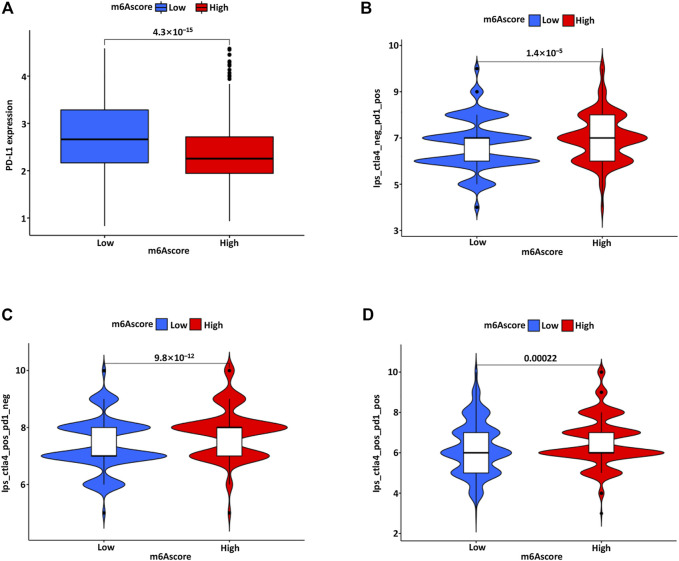
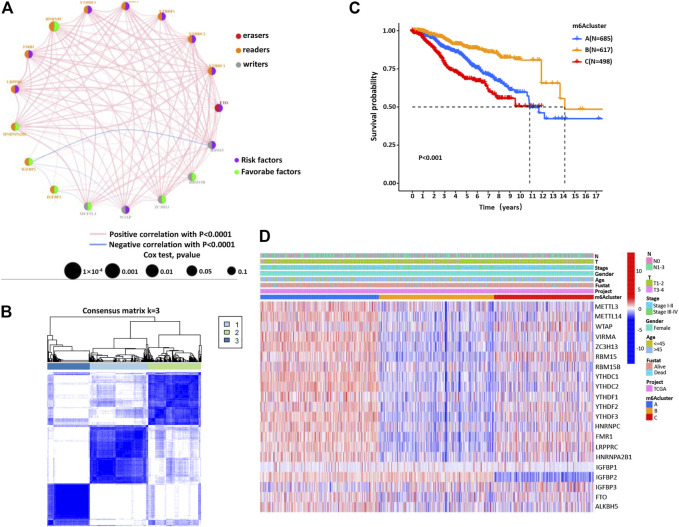
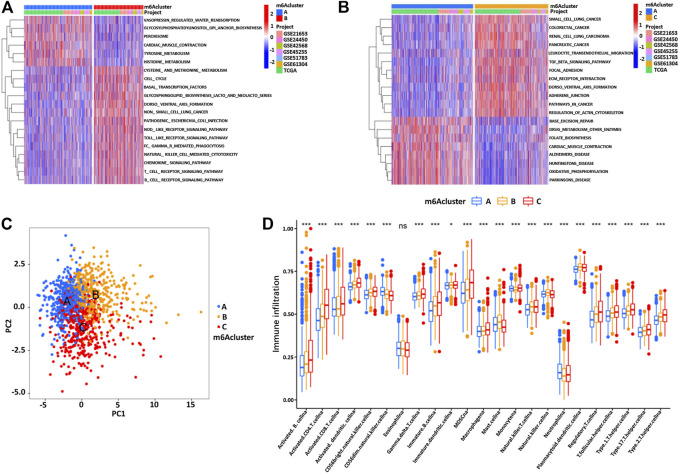
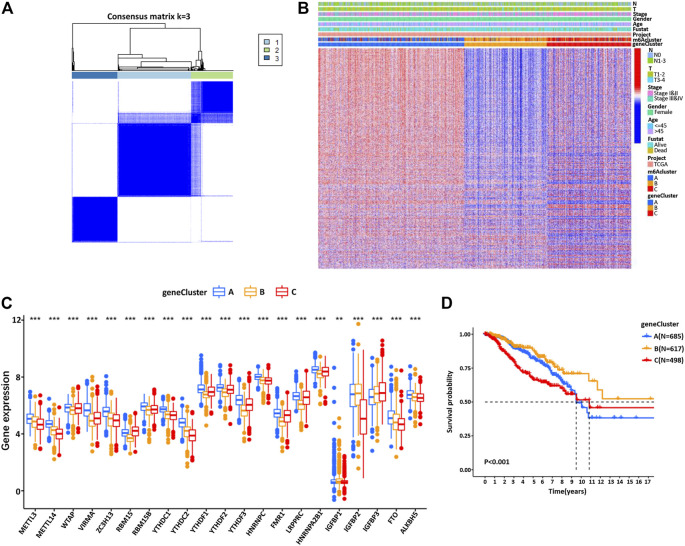
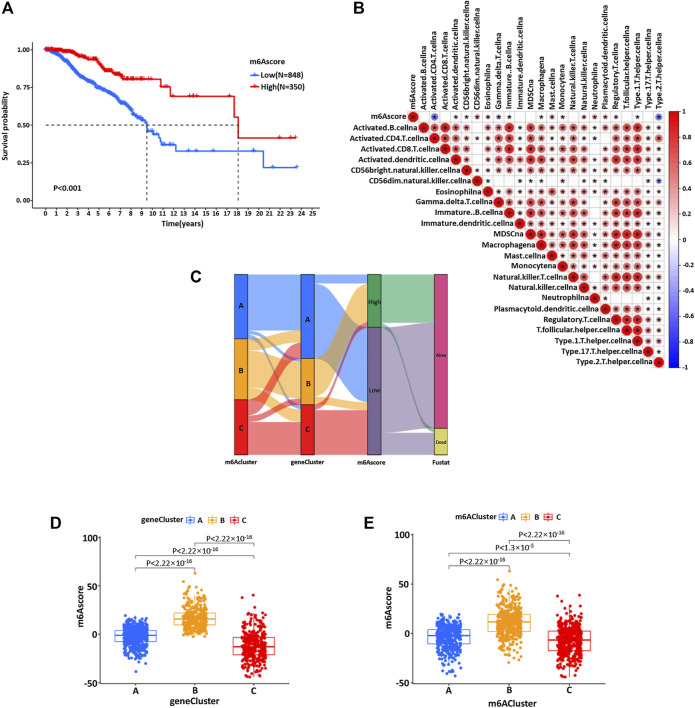
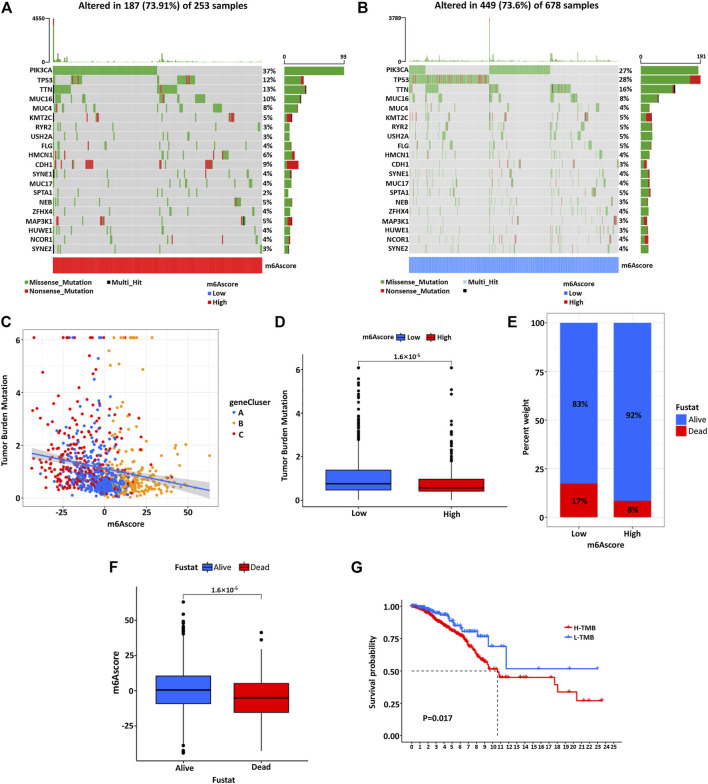
Increasing evidence indicates that the abnormal expression of N6-methyladenosine (m6A) modification is closely related to the epigenetic regulation of immune response in breast cancer (BC). However, the potential roles of m6A modification in the tumor microenvironment (TME) of BC remain unclear. For addressing this issue, we comprehensively analyzed the m6A modification patterns in 983 samples and correlated these modification patterns with TME immune cell infiltration, based on 23 kinds of m6A regulators. Principal component analysis (PCA) was used to construct the m6A scoring system to quantify the modification pattern of m6A of BC individuals. Consequently, three different m6A modification patterns were identified, and the infiltrating characteristics of TME cells were consistent with the three immune phenotypes, including immune rejection, immune inflammation, and immune desert. Besides, our analysis showed that the prognosis of patients could be predicted by evaluating the m6A modification pattern in the tumor. The low m6Ascore corresponded to increased mutation burden and immune activation, while stroma activation and lack of immune infiltration were observed in high m6Ascore subtypes. In addition, a low m6Ascore was associated with enhanced response to anti-PD-1/PD-L1 immunotherapy. In conclusion, the m6A modification pattern was closely related to the BC immune landscape. This well-validated score model of the m6A modification patterns will provide a valuable tool to depict the tumor immune state and guide effective tumor immunotherapy for combating BC.
越来越多的证据表明,N6-甲基腺苷(m6A)修饰的异常表达与乳腺癌(BC)免疫反应的表观遗传调控密切相关。然而,m6A修饰在BC肿瘤微环境(TME)中的潜在作用仍不清楚。为了解决这个问题,我们基于23种m6A调节因子,全面分析了983个样本中的m6A修饰模式,并将这些修饰模式与TME免疫细胞浸润相关联。主成分分析(PCA)用于构建m6A评分系统,以量化BC个体的m6A修饰模式。结果,鉴定出三种不同的m6A修饰模式,并且TME细胞的浸润特征与三种免疫表型一致,包括免疫排斥、免疫炎症和免疫沙漠。此外,我们的分析表明,可以通过评估肿瘤中的m6A修饰模式来预测患者的预后。低m6A评分对应于增加的突变负担和免疫激活,而在高m6A评分亚型中观察到基质激活和免疫浸润缺乏。此外,低m6A评分与对抗PD-1/PD-L1免疫疗法的增强反应相关。总之,m6A修饰模式与BC免疫格局密切相关。这种经过充分验证的m6A修饰模式评分模型将为描绘肿瘤免疫状态和指导对抗BC的有效肿瘤免疫治疗提供有价值的工具。