Department of Neurorehabilitation, Graduate School of Health Science, Kio University, 4-2-2 Umaminaka, Koryo-cho, Kitakatsuragi-gun, Nara, 635-0832, Japan.
Department of Rehabilitation, Medical Corporation Tanakakai, Musashigaoka Hospital, 7-15-1 Kusunoki, Kita-ku, Kumamoto-shi, Kumamoto, 861-8003, Japan.
BMC Musculoskelet Disord. 2022 Feb 18;23(1):161. doi: 10.1186/s12891-022-05118-x.
Pain-related fear influences impaired trunk movement (e.g., limited movement of range and velocity), but it is unclear how fear relates to trunk motor coordination (e.g., a more "in-phase" upper-lower trunk motion pattern). We conducted the present study to: (1) identify the motor coordination pattern of the in-phase upper-lower lumbar movements during the lifting, and (2) determine how pain-related fear is related to the trunk coordination pattern in workers with chronic low back pain (CLBP).
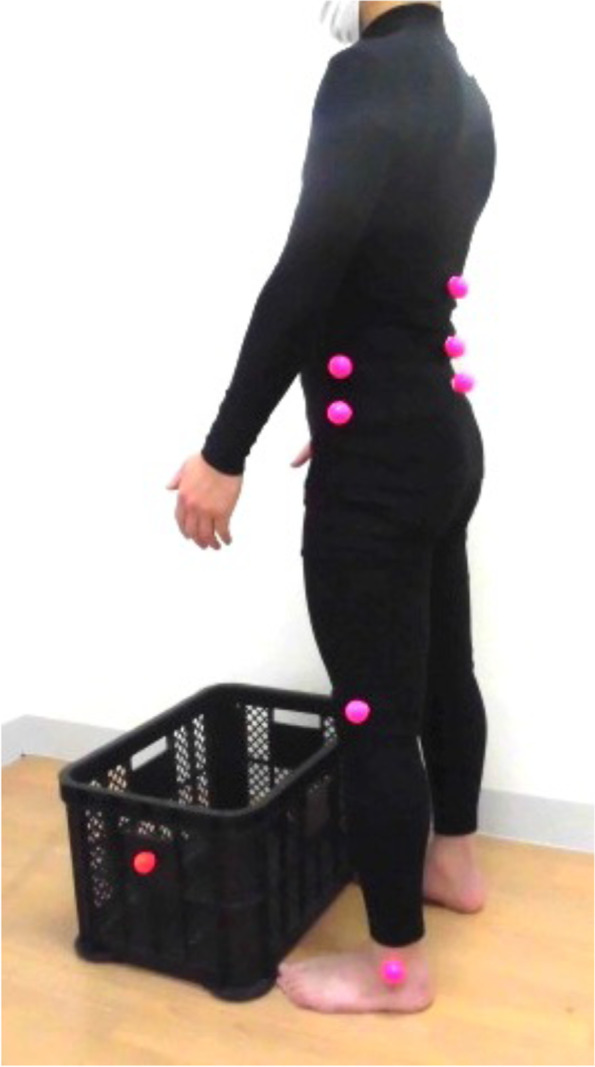
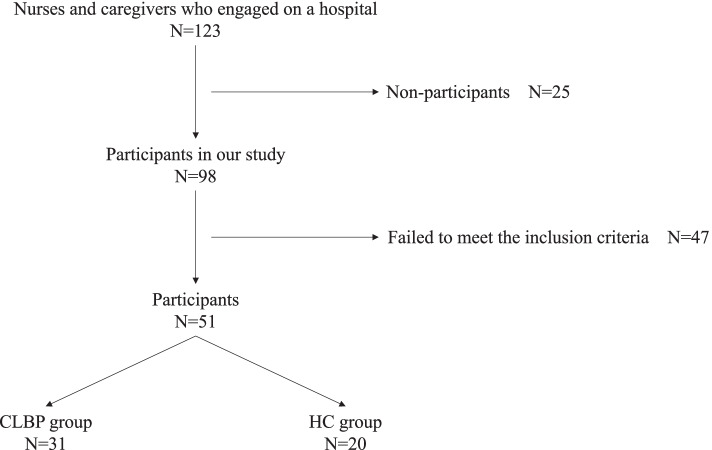
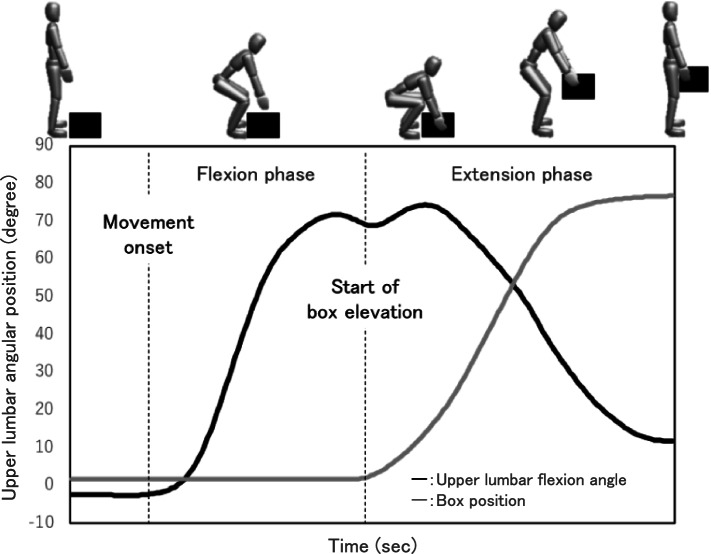
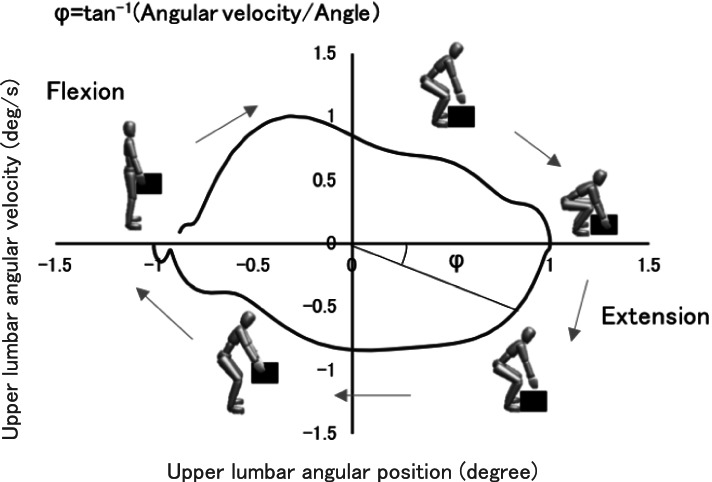
We examined 31 male workers with CLBP (CLBP group) and 20 healthy controls with no history of CLBP (HC group). The movement task was lifting a box, the weight of which was 10, 30%, or 50% of the subject's body weight. We used a 3D motion capture system to calculate the mean absolute relative phase angle (MARP) angle as an index of coordination and the mean deviation phase (DP) as an index of variability. We used a numerical rating scale to assess the subjects' task-specific fear.
The MARP angle during trunk extension movement in the 50% condition was significantly decreased in the CLBP group compared to the HCs; i.e., the upper lumbar movement was more in-phase with the lower lumbar movement. The hierarchical multiple regression analysis results demonstrated that a decreased MARP angle was associated with high task-specific fear.
A more 'in-phase' upper-lower lumbar movement pattern was predicted by task-specific fear evoked when performing a work-related activity. Our findings suggest that an intervention for task-specific fear may be necessary to improve an individual's impaired trunk motor coordination.
疼痛相关恐惧会影响躯干运动受限(例如,运动幅度和速度受限),但目前尚不清楚恐惧与躯干运动协调性(例如,更“同相”的上下躯干运动模式)有何关系。本研究旨在:(1)确定在举重过程中同相上下腰椎运动的运动协调模式,(2)确定慢性下背痛(CLBP)患者的疼痛相关恐惧与躯干协调模式有何关系。
我们检查了 31 名患有 CLBP 的男性工人(CLBP 组)和 20 名无 CLBP 病史的健康对照者(HC 组)。运动任务是举起一个盒子,盒子的重量分别为受试者体重的 10%、30%或 50%。我们使用 3D 运动捕捉系统计算平均绝对相对相位角(MARP)角作为协调指标和平均偏离相位(DP)作为变异性指标。我们使用数字评分量表评估受试者的特定于任务的恐惧。
CLBP 组在 50%条件下躯干伸展运动的 MARP 角明显低于 HC 组,即上腰椎运动与下腰椎运动更同步。层次多重回归分析结果表明,MARP 角的减小与特定任务的恐惧增加有关。
在执行与工作相关的活动时,特定任务的恐惧会导致更“同相”的上下腰椎运动模式。我们的研究结果表明,可能需要针对特定任务的恐惧进行干预,以改善个体受损的躯干运动协调性。