Department of Medical Specialties, Pneumology Unit, Arcispedale Santa Maria Nuova, Azienda USL di Reggio Emilia-IRCCS, Reggio Emilia, Italy.
Respiratory Diseases and Lung Transplantation, Department of Medical and Surgical Sciences and Neurosciences, Siena University Hospital, Siena, Italy.
Respir Res. 2022 Feb 19;23(1):36. doi: 10.1186/s12931-022-01952-8.
Data from phase 3 trials have demonstrated the efficacy and safety of benralizumab in patients with severe eosinophilic asthma (SEA). We conducted a real-world study examining the baseline characteristics of a large SEA population treated with benralizumab in clinical practice and assessed therapy effectiveness.
ANANKE is an Italian multi-center, retrospective cohort study including consecutive SEA patients who had started benralizumab therapy ≥ 3 months before enrolment (between December 2019 and July 2020), in a real-world setting. Data collection covered (1) key patient features at baseline, including blood eosinophil count (BEC), number and severity of exacerbations and oral corticosteroid (OCS) use; (2) clinical outcomes during benralizumab therapy. We also conducted two post-hoc analyses in patients grouped by body mass index and allergic status. Analyses were descriptive only.
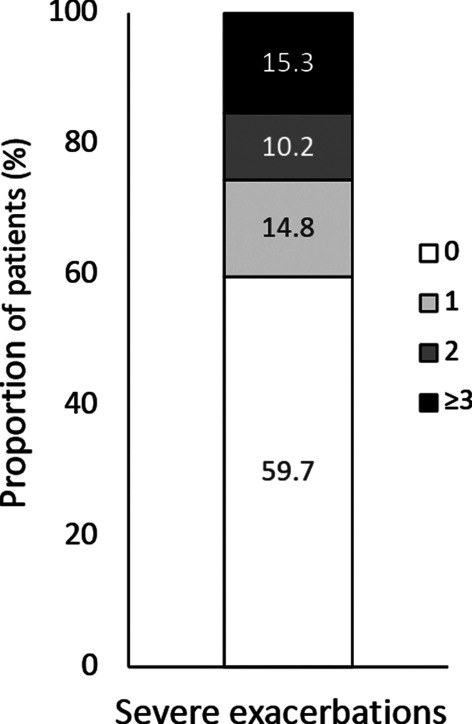
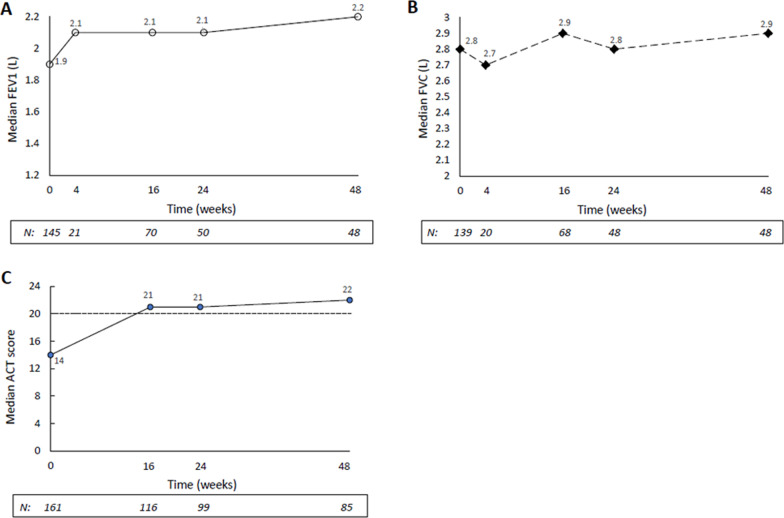
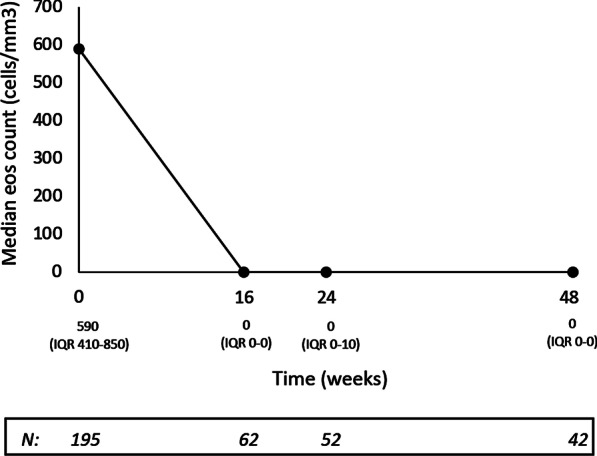
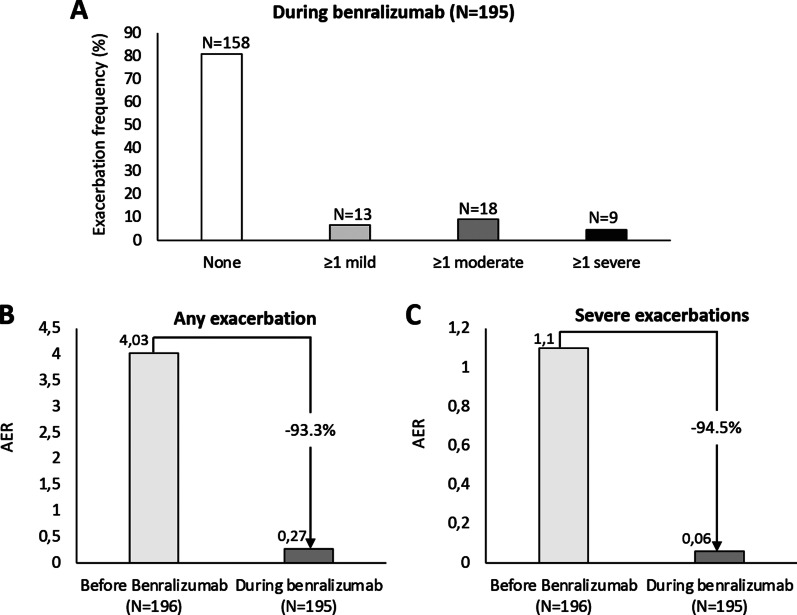
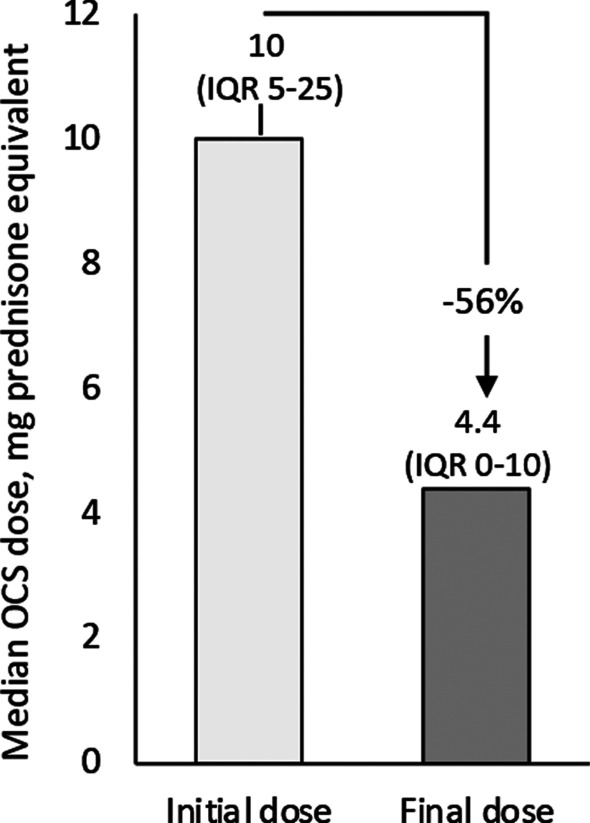
Of 218 patients with SEA enrolled in 21 Centers, 205 were evaluable (mean age, 55.8 ± 13.3 years, 61.5% females). At treatment start, the median BEC was 580 cells/mm (interquartile range [IQR]: 400-850); all patients were on high-dose inhaled controller therapy and 25.9% were on chronic OCS (median dose: 10 mg/die prednisone-equivalent [IQR: 5-25]); 92.9% experienced ≥ 1 exacerbation within the past 12 months (annualized exacerbation rate [AER] 4.03) and 40.3% reported ≥ 1 severe exacerbation (AER 1.10). During treatment (median duration: 9.8 months [IQR 6.1-13.9]; ≥ 12 months for 34.2% of patients), complete eosinophil depletion was observed; exacerbation-free patients increased to 81% and only 24.3% reported ≥ 1 severe event. AER decreased markedly to 0.27 for exacerbations of any severity (- 93.3%) and to 0.06 for severe exacerbations (- 94.5%). OCS therapy was interrupted in 43.2% of cases and the dose reduced by 56% (median: 4.4 mg/die prednisone-equivalent [IQR: 0.0-10.0]). Lung function and asthma control also improved. The effectiveness of benralizumab was independent of allergic status and body mass index.
We described the set of characteristics of a large cohort of patients with uncontrolled SEA receiving benralizumab in clinical practice, with a dramatic reduction in exacerbations and significant sparing of OCS. These findings support benralizumab as a key phenotype-specific therapeutic strategy that could help physicians in decision-making when prescribing biologics in patients with SEA. Trial registration ClinicalTrials.gov Identifier: NCT04272463.
来自 3 期临床试验的数据表明,贝那鲁肽在重度嗜酸性粒细胞性哮喘(SEA)患者中具有疗效和安全性。我们进行了一项真实世界研究,研究了在临床实践中接受贝那鲁肽治疗的大量 SEA 患者的基线特征,并评估了治疗效果。
ANANKE 是一项意大利多中心、回顾性队列研究,纳入了在登记前(2019 年 12 月至 2020 年 7 月)开始接受贝那鲁肽治疗且时间≥3 个月的连续 SEA 患者。数据收集包括(1)患者基线时的关键特征,包括血嗜酸性粒细胞计数(BEC)、哮喘加重次数和严重程度以及口服皮质类固醇(OCS)的使用情况;(2)贝那鲁肽治疗期间的临床结局。我们还对按体重指数和过敏状态分组的患者进行了两项事后分析。分析仅为描述性。
21 个中心共纳入 218 例 SEA 患者,205 例患者可评估(平均年龄 55.8±13.3 岁,61.5%为女性)。治疗开始时,中位 BEC 为 580 个细胞/mm³(四分位距[IQR]:400-850);所有患者均接受高剂量吸入性控制药物治疗,25.9%患者接受慢性 OCS(中位剂量:10mg/d 泼尼松等效剂量[IQR:5-25]);92.9%患者在过去 12 个月内经历了≥1 次哮喘加重(年加重率[AER]为 4.03),40.3%患者报告了≥1 次严重加重(AER 为 1.10)。在治疗期间(中位治疗时间:9.8 个月[IQR 6.1-13.9];34.2%的患者治疗时间≥12 个月),观察到完全嗜酸性粒细胞耗竭;无哮喘加重的患者增加至 81%,仅有 24.3%患者报告了≥1 次严重事件。任何严重程度的哮喘加重发生率显著降低(AER 降低了 93.3%),严重哮喘加重发生率显著降低(AER 降低了 94.5%),分别为 0.27 和 0.06。43.2%的患者中断了 OCS 治疗,OCS 剂量减少了 56%(中位剂量:4.4mg/d 泼尼松等效剂量[IQR:0.0-10.0])。肺功能和哮喘控制也得到了改善。贝那鲁肽的疗效与过敏状态和体重指数无关。
我们描述了在临床实践中接受贝那鲁肽治疗的大量未控制的 SEA 患者的一系列特征,哮喘加重显著减少,OCS 显著减少。这些发现支持贝那鲁肽作为一种关键的表型特异性治疗策略,有助于医生在为 SEA 患者开具生物制剂时做出决策。临床试验注册:ClinicalTrials.gov 标识符:NCT04272463。