Institute of Cellular and System Medicine, National Health Research Institutes, No. 35, Keyan Road, Zhunan Town, 35053, Miaoli County, Taiwan.
Department of Biochemistry, Kaohsiung Medical University, Kaohsiung, Taiwan.
J Biomed Sci. 2022 Feb 23;29(1):16. doi: 10.1186/s12929-022-00797-z.
Docetaxel has been approved by USFDA as a first-line treatment for castration-resistant prostate cancer (CRPC) patients. Patients receiving androgen deprivation therapy along with docetaxel result in superior survival, lower serum prostate specific antigen (PSA) level, and better quality of life. However, a significant proportion of these patients ultimately develop resistance to docetaxel within months. Caffeic acid phenethyl ester (CAPE), one of the main bioactive components extracted from the propolis, has been reported to be effective for repressing the tumor growth, the migration and invasion of prostate cancer (PCa) cells, as well as the downstream signaling and stability of androgen receptor (AR). We hence determined if combination treatment of docetaxel with CAPE can suppress the proliferation and the survival of docetaxel-resistant PCa cells.
We established docetaxel-resistant PC/DX25 and DU/DX50 CRPC cell lines from PC-3 and DU-145 human PCa cells, respectively. Proliferation assay, MTT assay, flow cytometry with Annexin V staining, Comet Assay, and nude mice xenograft model were applied to determine the effects of combination treatment on cell proliferation and survival of the docetaxel-resistant PCa cells. Micro-Western Array (MWA) and qRT-PCR were used to investigate the molecular mechanism lying underneath.
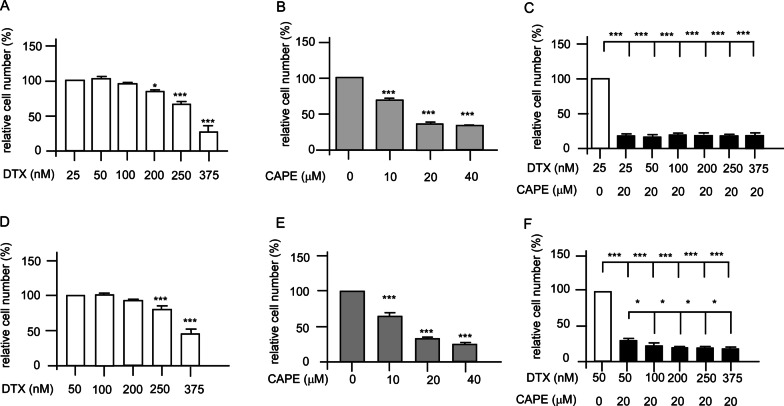
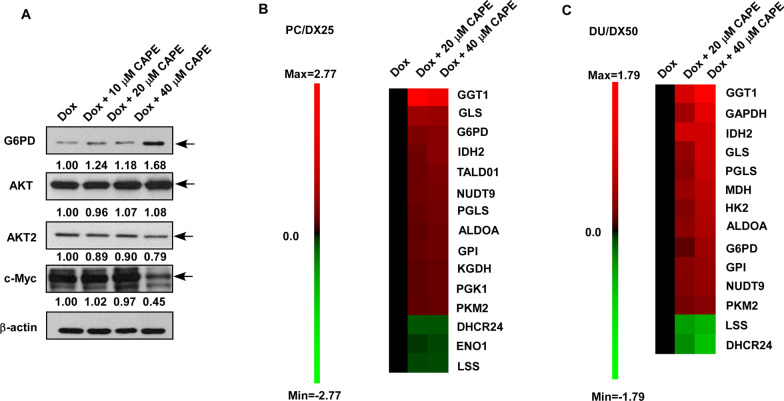
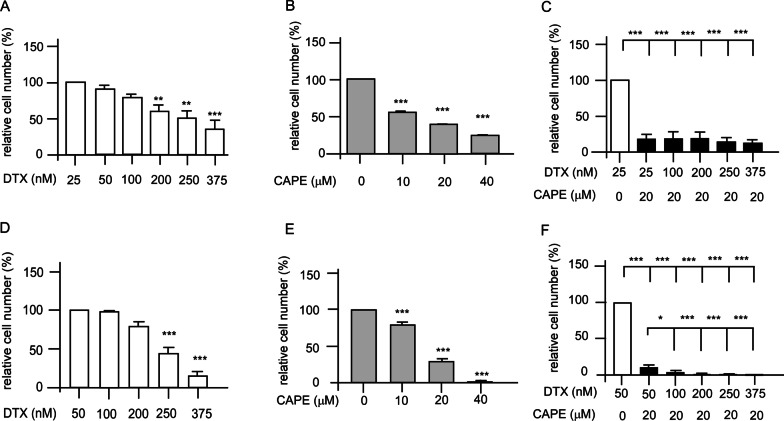
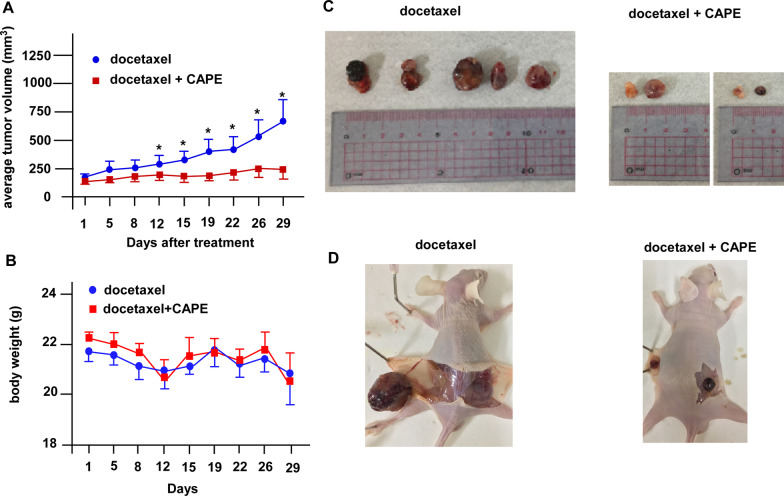
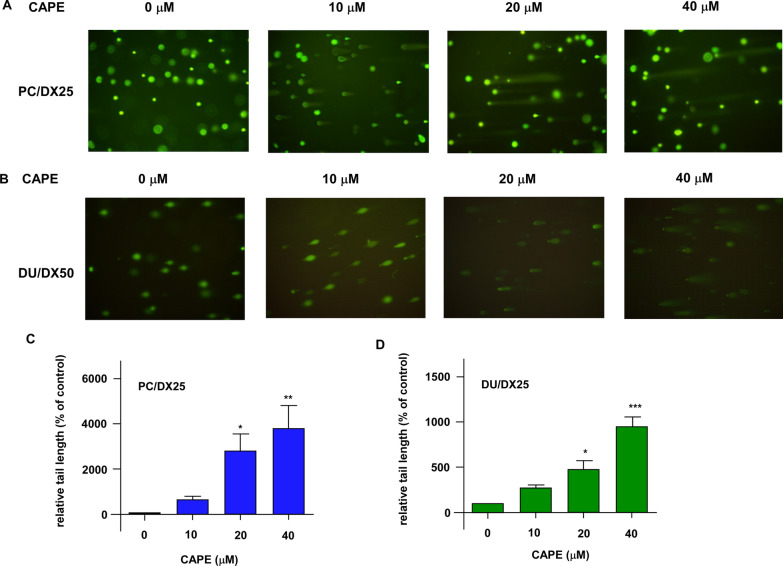
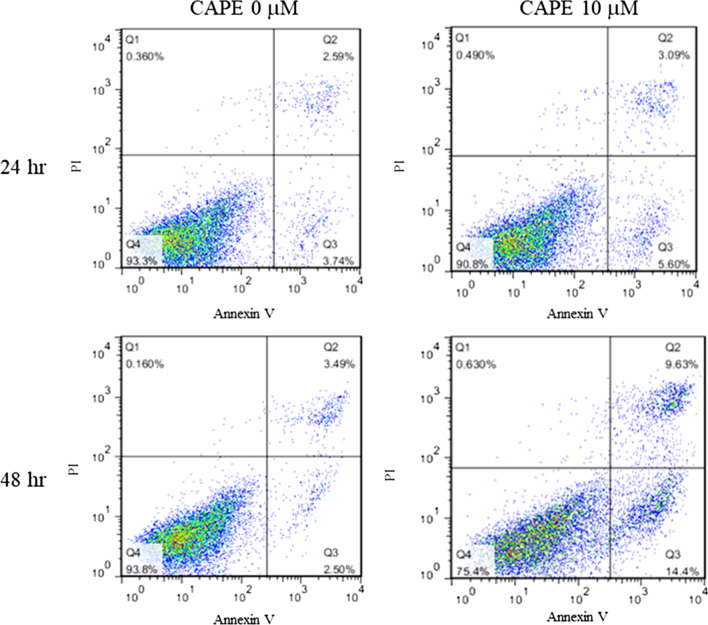
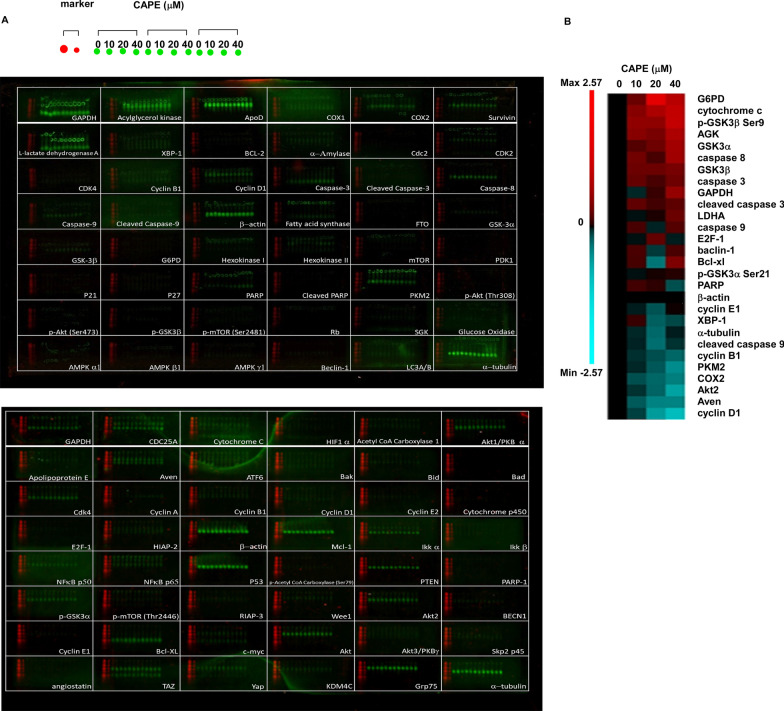
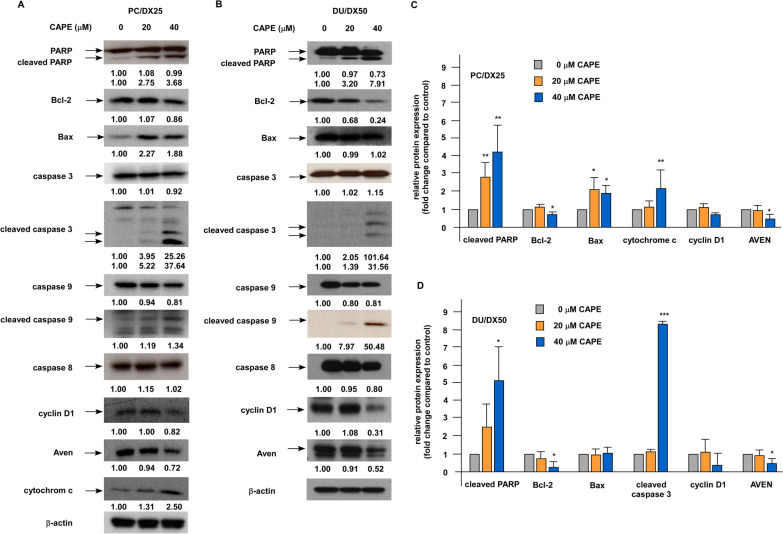
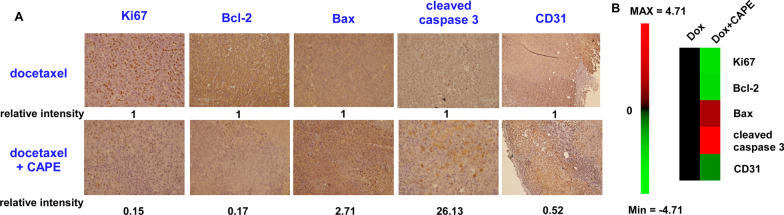
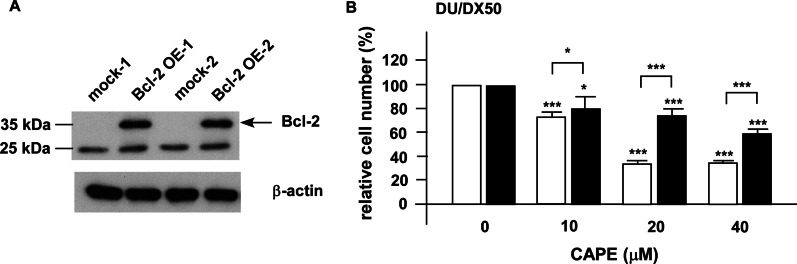
Combination treatment effectively suppressed the proliferation, survival and tumor growth of docetaxel-resistant PCa cells both in vitro and in nude mice. Comet assay and flow cytometry indicated that combination treatment induced apoptosis in docetaxel-resistant PCa cells. MWA and Western blotting assay revealed that combination treatment suppressed protein expression of Bcl-2, AKT2, c-Myc, apoptosis and caspase activation inhibitor (AVEN), pyruvate kinase M2 (PKM2) but increased protein expression of Bax, caspase 3, cytochrome c, glucose-6-phosphate dehydrogenase (G6PD) and acylglycerol kinase (AGK). Overexpression of Bcl-2 in the docetaxel-resistant PCa cells enhanced cell proliferation of docetaxel-resistant PCa cells under combination treatment. Analysis with qRT-PCR suggested that combination treatment decreased cholesterol biosynthesis genes DHCR24 (24-dehydrocholesterol reductase) and LSS (lanosterol synthase) but increased genes involved in glycolysis and TCA cycle.
Combination treatment of docetaxel with CAPE effectively suppressed the proliferation and survival of docetaxel-resistant PCa cells via inhibition of Bcl-2 and c-Myc as well as induction of metabolism interference. Combination treatment can be beneficial for patients with docetaxel-resistant PCa.
多西他赛已被美国食品和药物管理局批准为去势抵抗性前列腺癌(CRPC)患者的一线治疗药物。接受去势治疗联合多西他赛治疗的患者的生存率更高,血清前列腺特异性抗原(PSA)水平更低,生活质量更好。然而,这些患者中有相当大的一部分在几个月内最终对多西他赛产生耐药性。咖啡酸苯乙酯(CAPE)是从蜂胶中提取的主要生物活性成分之一,已被报道可有效抑制肿瘤生长、前列腺癌(PCa)细胞的迁移和侵袭,以及雄激素受体(AR)的下游信号和稳定性。因此,我们确定多西他赛与 CAPE 的联合治疗是否能抑制多西他赛耐药性 PCa 细胞的增殖和存活。
我们从 PC-3 和 DU-145 人前列腺癌细胞中分别建立了多西他赛耐药性 PC/DX25 和 DU/DX50 CRPC 细胞系。应用增殖试验、MTT 试验、Annexin V 染色流式细胞术、彗星试验和裸鼠异种移植模型来确定联合治疗对多西他赛耐药性 PCa 细胞增殖和存活的影响。采用微西方阵列(MWA)和 qRT-PCR 来研究潜在的分子机制。
联合治疗在体外和裸鼠体内均能有效抑制多西他赛耐药性 PCa 细胞的增殖、存活和肿瘤生长。彗星试验和流式细胞术表明,联合治疗诱导多西他赛耐药性 PCa 细胞凋亡。MWA 和 Western blot 分析显示,联合治疗抑制了 Bcl-2、AKT2、c-Myc、凋亡和半胱天冬酶激活抑制剂(AVEN)、丙酮酸激酶 M2(PKM2)的蛋白表达,但增加了 Bax、caspase 3、细胞色素 c、葡萄糖-6-磷酸脱氢酶(G6PD)和酰基甘油激酶(AGK)的蛋白表达。在多西他赛耐药性 PCa 细胞中转染 Bcl-2 后,细胞增殖能力增强。qRT-PCR 分析表明,联合治疗降低了胆固醇生物合成基因 DHCR24(24-脱氢胆固醇还原酶)和 LSS(羊毛甾醇合酶)的表达,但增加了糖酵解和 TCA 循环相关基因的表达。
多西他赛与 CAPE 的联合治疗通过抑制 Bcl-2 和 c-Myc 以及诱导代谢干扰,有效抑制了多西他赛耐药性 PCa 细胞的增殖和存活。联合治疗可能对多西他赛耐药性 PCa 患者有益。