Jha Shikha
Internal Medicine, Saint Peter's University Hospital, New Brunswick, USA.
Cureus. 2022 Jan 19;14(1):e21421. doi: 10.7759/cureus.21421. eCollection 2022 Jan.
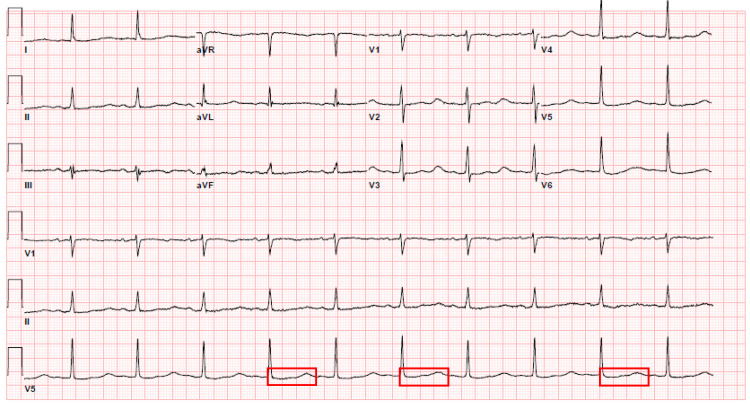
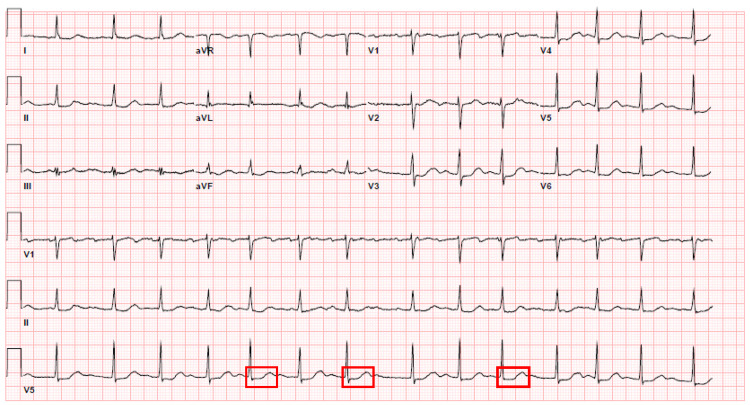
Prolonged QTc interval is one of the critical risk factors for sudden cardiac death. We all know that sudden cardiac death is often caused by acute onset ventricular arrhythmia, and QTc prolongation is one of the potential risk factors. It can be congenital or acquired. The acquired ones are commonly witnessed in day-to-day clinical practice. Several classes of mediations are well known to cause these conditions. Among many antiarrhythmic agents, especially amiodarone, is a critical drug to be monitored, as it strongly potentiates QTc prolongation. Especially in combination with metabolic abnormalities, this abnormality can occur rapidly with notable clinical presentation. This case report elicits an interesting clinical scenario in which a 79-year-old pleasant lady with multiple comorbidities presents with a syncopal episode. Missing the cardiologist's appointment for dose adjustments of her medication, amiodarone was noteworthy. Also, an acute electrolyte imbalance from the possibly recent use of diuretics aggravated the clinical situation. On presentation, the electrocardiogram showed a remarkably prolonged QTc, which was way more compared to the prior ones available. Discontinuation of amiodarone and repletion of the electrolytes brought down the QTc interval to almost a normal range and no syncopal episode within two days. Hence, understanding the medications' potential risks and having a close watch on the possible side effects is key to avoiding dreadful complications of arrhythmia and sudden cardiac death from the same. This case report cumulatively covers this essential medical knowledge and practical, vital points.
QTc间期延长是心源性猝死的关键危险因素之一。我们都知道,心源性猝死通常由急性发作的室性心律失常引起,而QTc延长是潜在危险因素之一。它可以是先天性的,也可以是后天获得性的。后天获得性QTc延长在日常临床实践中较为常见。几类药物已知可导致这种情况。在众多抗心律失常药物中,尤其是胺碘酮,是一种需要密切监测的关键药物,因为它会显著增强QTc延长。特别是在合并代谢异常的情况下,这种异常可能迅速出现并伴有明显的临床表现。本病例报告引出了一个有趣的临床案例,一名79岁、患有多种合并症的和蔼女士出现了晕厥发作。她错过了心脏病专家对其药物胺碘酮进行剂量调整的预约,这一点值得注意。此外,近期可能使用利尿剂导致的急性电解质失衡使临床情况恶化。就诊时,心电图显示QTc显著延长,与之前的心电图相比延长幅度很大。停用胺碘酮并补充电解质后,QTc间期降至几乎正常范围,且两天内未再出现晕厥发作。因此,了解药物的潜在风险并密切关注可能的副作用是避免心律失常和心源性猝死可怕并发症的关键。本病例报告全面涵盖了这一重要的医学知识和实用要点。