Broome Sarah Thomas, Musumeci Giuseppe, Castorina Alessandro
Laboratory of Cellular and Molecular Neuroscience (LCMN), School of Life Sciences, Faculty of Science, University of Technology Sydney, PO Box 123, Broadway, NSW, 2007, Australia.
Section of Human Anatomy, Histology and Movement Science, Department of Biomedical and Biotechnological Sciences, University of Catania, via S. Sofia, 87, 95123, Catania, Italy.
J Mol Neurosci. 2022 Nov;72(11):2163-2175. doi: 10.1007/s12031-022-01968-1. Epub 2022 Feb 24.
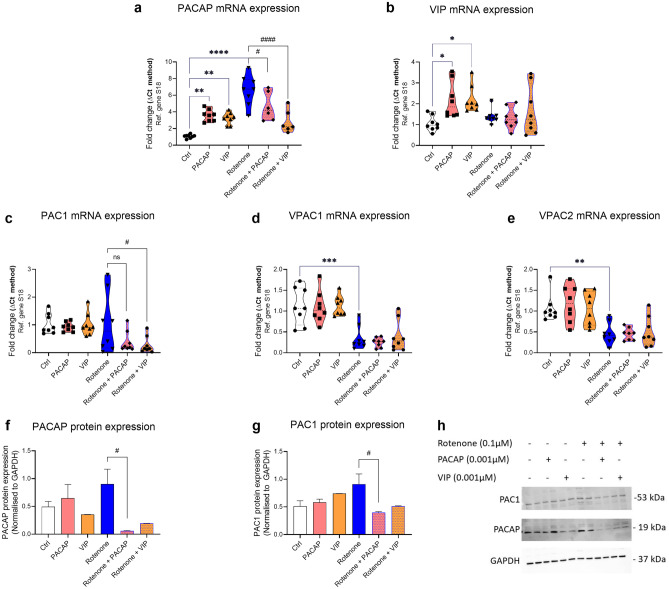
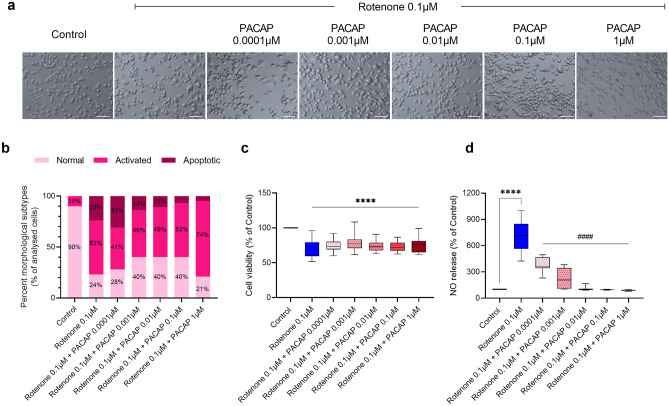
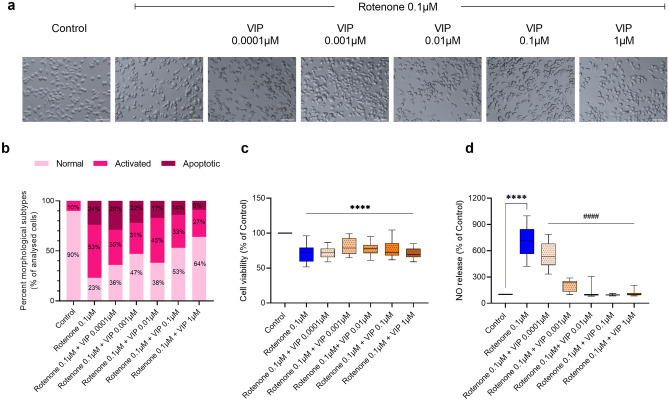
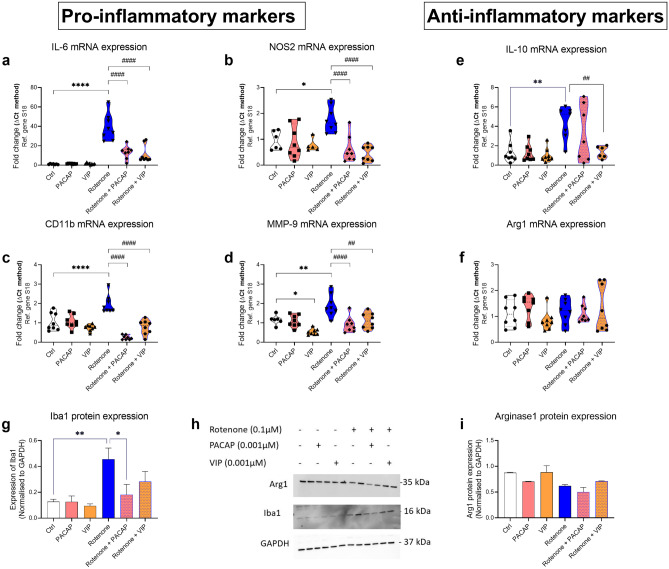
Rotenone is a commercial pesticide commonly used to model Parkinson's disease (PD) due to its ability to induce dopaminergic degeneration. Studies have confirmed that rotenone causes microglial activation, which seems to contribute to the toxic effects seen in rodent models. Pituitary adenylate cyclase-activating polypeptide (PACAP) and vasoactive intestinal peptide (VIP) are two structurally related neuropeptides that have robust neuroprotective and anti-inflammatory properties. However, their ability to regulate microglial activity in response to rotenone is not fully understood. Using rotenone as an inflammatory stimulus, we tested whether PACAP or VIP could mitigate microglial activation in BV2 microglial cells. Rotenone dose-dependently reduced cell viability and the percentage of apoptotic cells. It also increased the release of nitric oxide (NO) in culture media and the expression of microglial activation markers and pro-inflammatory markers, including CD11b, MMP-9 and IL-6, and heightened the endogenous levels of PACAP and its preferring receptor PAC1. Co-treatment with PACAP or VIP prevented rotenone-induced increase of NO, CD11b, MMP-9 and IL-6. These results indicate that both PACAP and VIP are able to prevent the pro-inflammatory effects of rotenone in BV2 cells, supporting the idea that these molecules can have therapeutic value in slowing down PD progression.
鱼藤酮是一种常用的商业杀虫剂,因其能够诱导多巴胺能神经元变性,常用于帕金森病(PD)模型的研究。研究证实,鱼藤酮会导致小胶质细胞活化,这似乎是啮齿动物模型中所见毒性作用的原因之一。垂体腺苷酸环化酶激活多肽(PACAP)和血管活性肠肽(VIP)是两种结构相关的神经肽,具有强大的神经保护和抗炎特性。然而,它们在鱼藤酮作用下调节小胶质细胞活性的能力尚未完全明确。以鱼藤酮作为炎症刺激物,我们测试了PACAP或VIP是否能减轻BV2小胶质细胞中的小胶质细胞活化。鱼藤酮剂量依赖性地降低细胞活力和凋亡细胞百分比。它还增加了培养基中一氧化氮(NO)的释放以及小胶质细胞活化标志物和促炎标志物的表达,包括CD11b、基质金属蛋白酶-9(MMP-9)和白细胞介素-6(IL-6),并提高了PACAP及其优先受体PAC1的内源性水平。与PACAP或VIP共同处理可防止鱼藤酮诱导的NO、CD11b、MMP-9和IL-6的增加。这些结果表明,PACAP和VIP都能够预防鱼藤酮对BV2细胞的促炎作用,支持了这些分子在减缓PD进展方面具有治疗价值的观点。