School of Traditional Chinese Medicine, Southern Medical University, Guangzhou, Guangdong, China.
Shenzhen Traditional Chinese Medicine Hospital, Shenzhen, China.
Cell Mol Gastroenterol Hepatol. 2022;13(6):1649-1672. doi: 10.1016/j.jcmgh.2022.02.009. Epub 2022 Feb 21.
BACKGROUND & AIMS: Acute liver failure (ALF) is a condition with high mortality and morbidity, characterized by glutathione depletion, oxidative stress, and mitochondrial dysfunction. Ferroptosis may be involved in ALF. Indeed, emerging studies have shown that ferroptosis plays a significant role in ALF. However, the mechanism of ferroptosis in hepatocytes during ALF remains unknown.
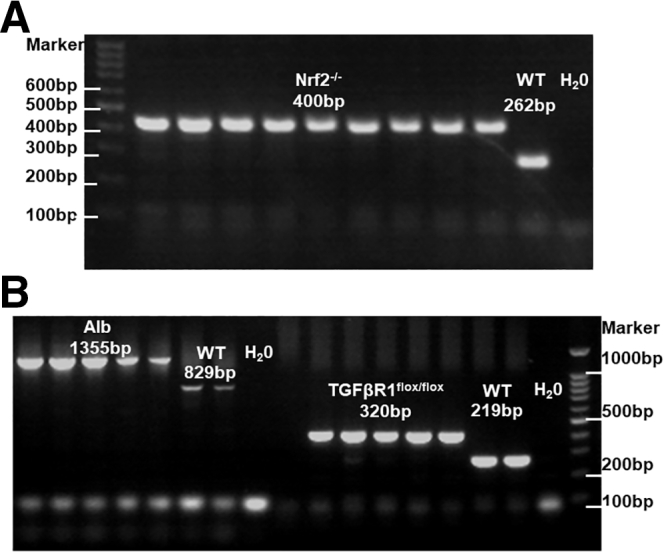
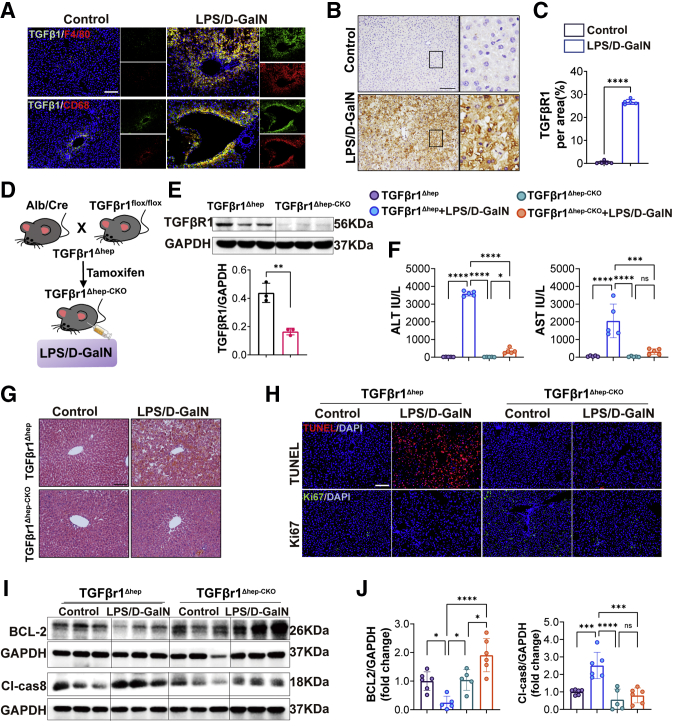
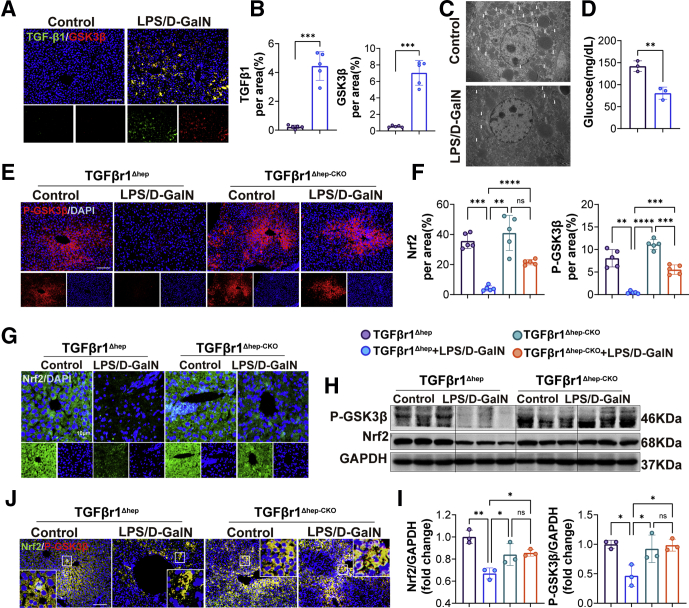
Hepatic-specific transforming growth factor β receptor 1 knockout (TGFβr1) mice and nuclear factor erythroid 2-related factor 2 knockout (Nrf2) mice were generated and subjected to ALF. Electron microscopy was used to detect mitochondrial and other cell substructure changes during ALF.
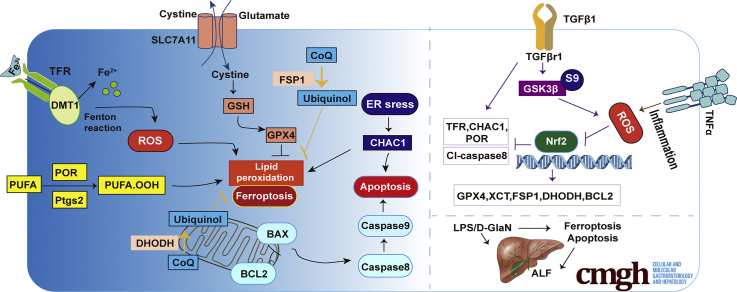
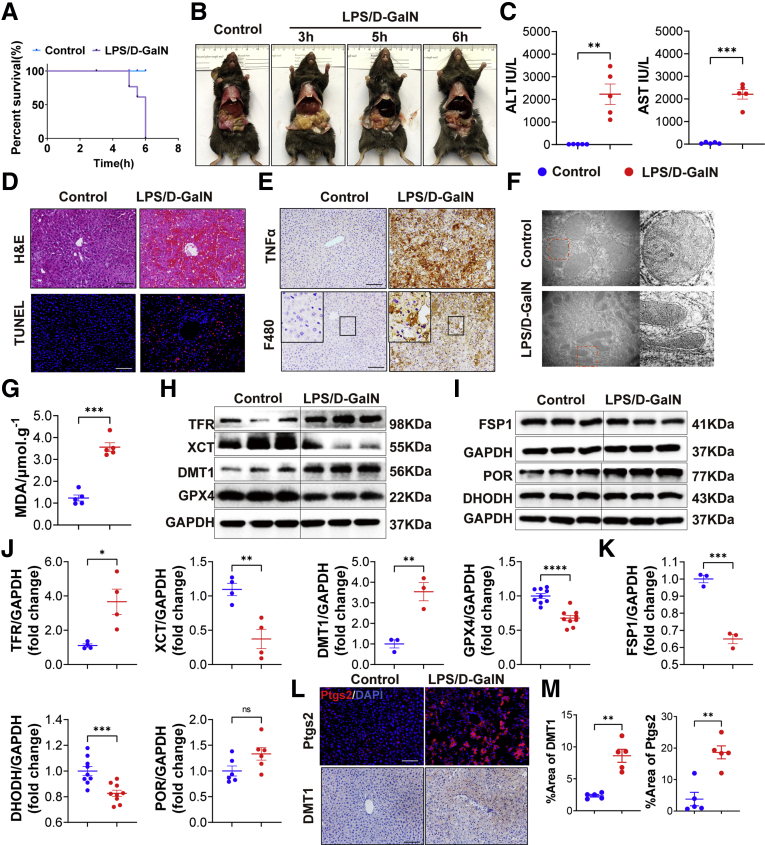
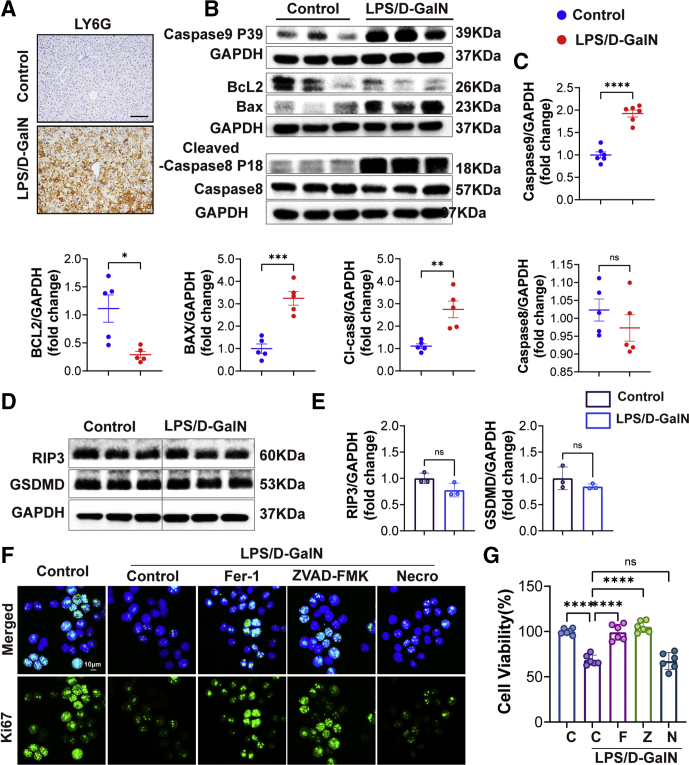
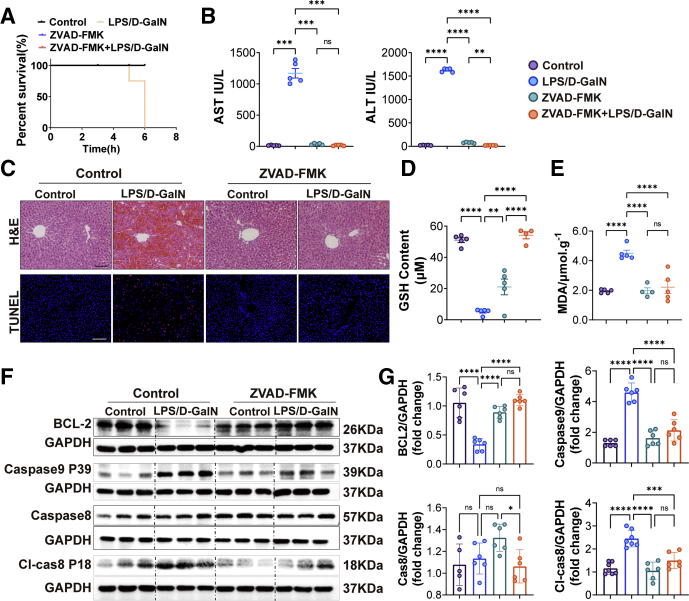
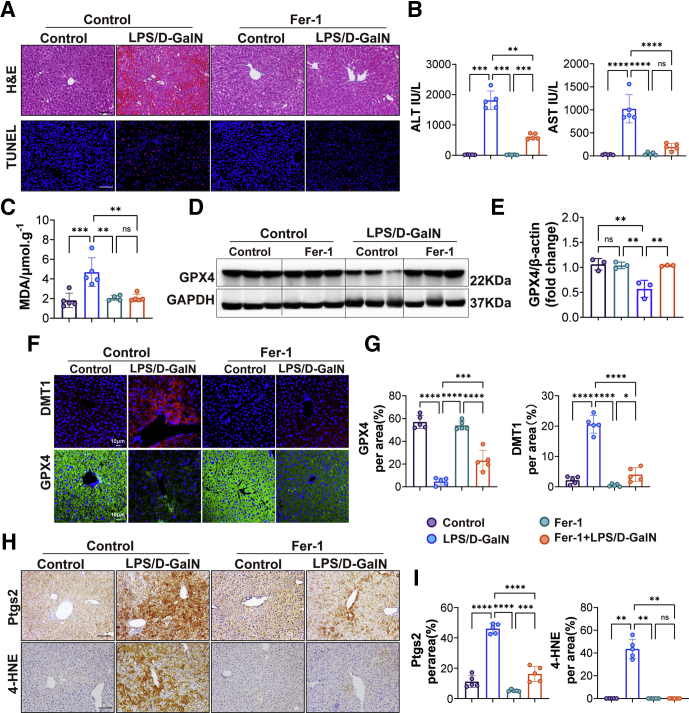
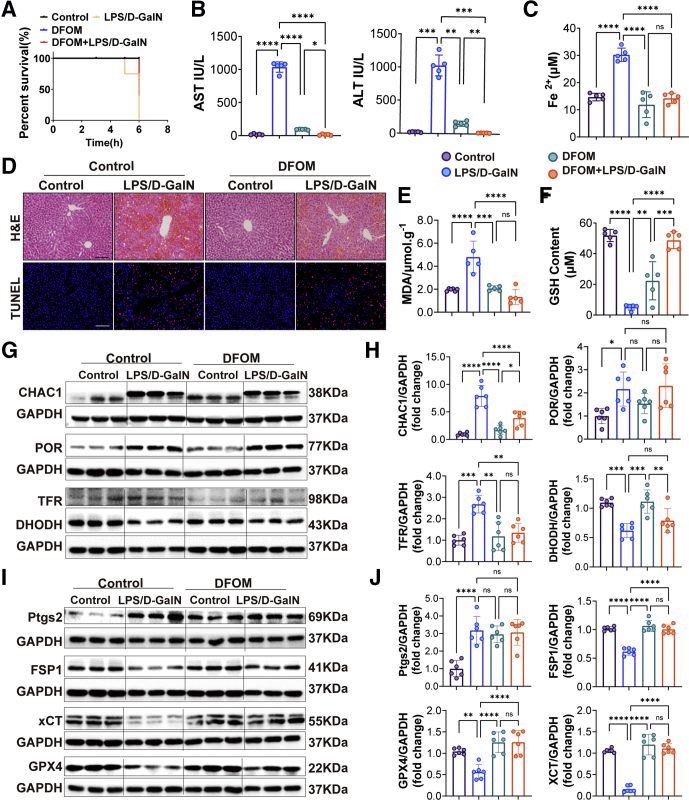
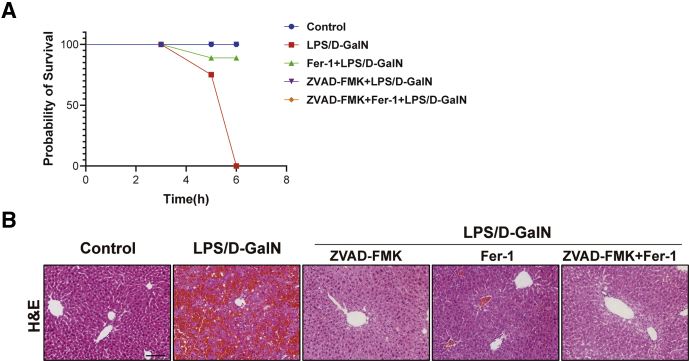
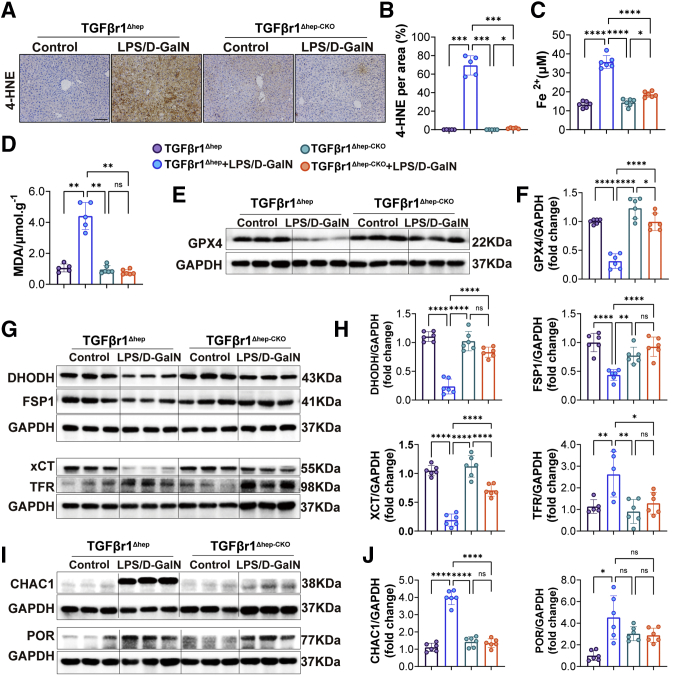
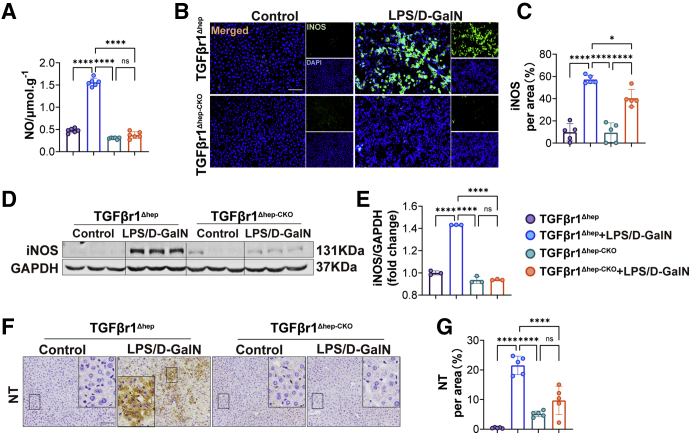
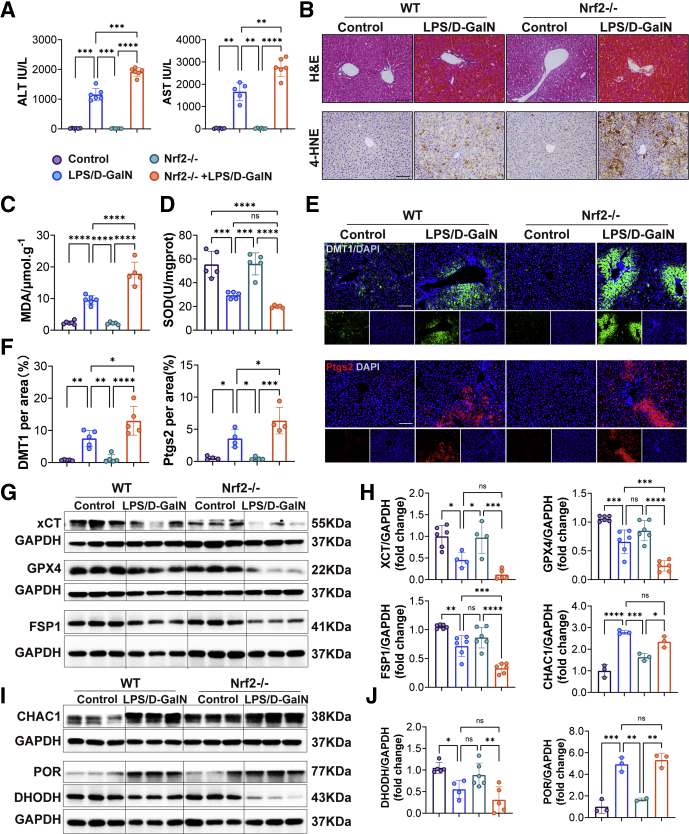
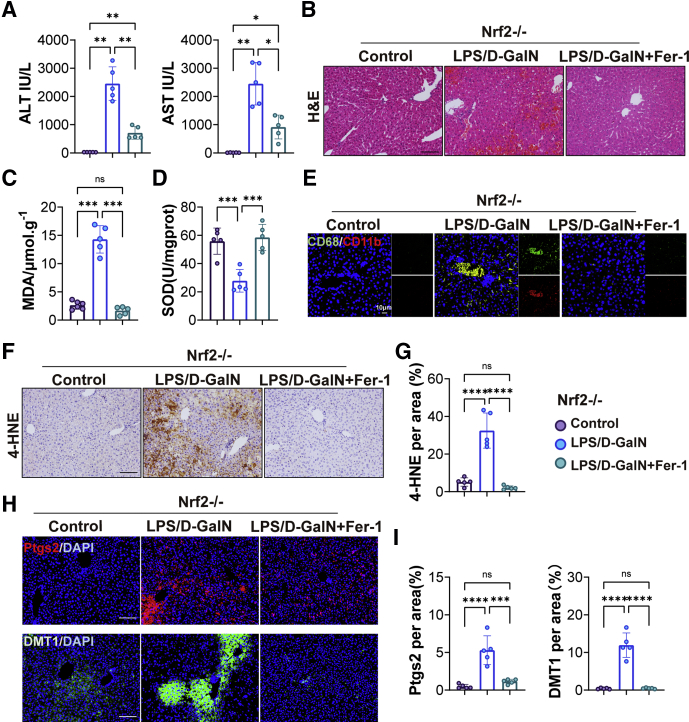
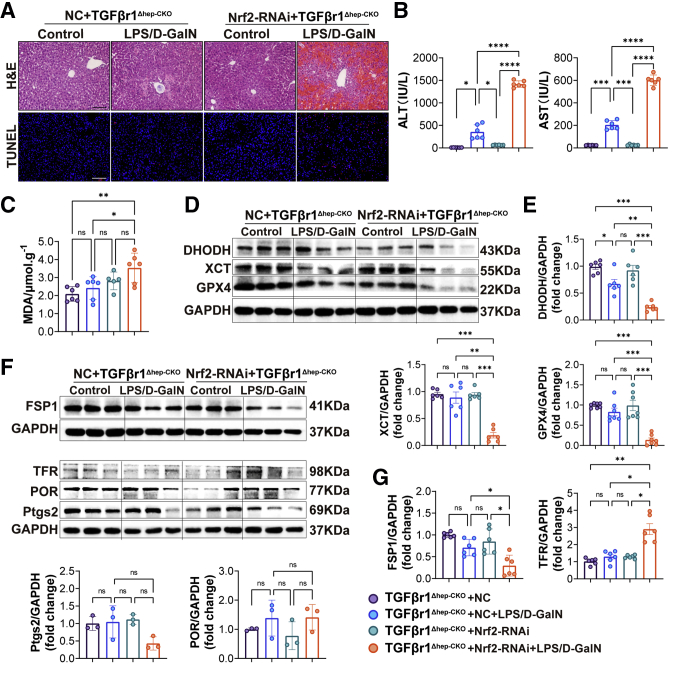
In this study, we noticed that lipopolysaccharide (LPS)/D-galactosamine (D-GalN) induced caspases-mediated apoptosis as current research reported, we also found lipid peroxidation, reactive oxygen species accumulation, and glutathione, co-enzyme Q10 system inhibition mediated ferroptosis during LPS/D-GalN-induced ALF. Rescue studies have shown that ferrostatin-1 (Fer-1) and deferoxamine mesylate (DFOM), the inhibitor of ferroptosis, could alleviate LPS/D-GalN-induced ALF. In addition, we noticed that TGFβ1 was increased during ALF, while ALF was relieved in TGFβr1 mice. We also noticed that liver TGFβr1 deficiency alleviated LPS/D-GalN-induced apoptosis and ferroptosis by affecting the phosphorylation of glycogen synthase kinase 3β and Nrf2, a key antioxidant factor, by up-regulating the levels of glutathione peroxidase 4 (GPX4), glutamine antiporter xCT (XCT), dihydroorotate dehydrogenase (DHODH), and ferroptosis suppressor protein 1 (FSP1), and down-regulating transferrin receptor (TFR), prostaglandin-endoperoxide synthase (Ptgs2), chaC glutathione specific gamma-glutamylcyclotransferase 1 (CHAC1), and cytochrome P450 reductase (POR) expression. The further supplemental experiment showed that ferroptosis was aggravated significantly in Nrf2 mice compared with its wild-type controls and reversed by ferrostatin-1.
This study shows that TGFβr1 plays a critical role in mediating LPS/D-GalN-induced ALF by promoting apoptosis and ferroptosis.
急性肝衰竭(ALF)是一种死亡率和发病率都很高的疾病,其特征是谷胱甘肽耗竭、氧化应激和线粒体功能障碍。铁死亡可能与 ALF 有关。事实上,新的研究表明,铁死亡在 ALF 中起着重要作用。然而,ALF 期间肝细胞中铁死亡的机制尚不清楚。
生成肝特异性转化生长因子β受体 1 敲除(TGFβr1)小鼠和核因子红细胞 2 相关因子 2 敲除(Nrf2)小鼠,并进行 ALF 实验。电子显微镜用于检测 ALF 期间线粒体和其他细胞亚结构的变化。
在这项研究中,我们注意到脂多糖(LPS)/D-半乳糖胺(D-GalN)诱导了当前研究报道的 caspase 介导的细胞凋亡,我们还发现了脂质过氧化、活性氧积累和谷胱甘肽、辅酶 Q10 系统抑制介导的 LPS/D-GalN 诱导的 ALF 中铁死亡。挽救研究表明,铁死亡抑制剂 ferrostatin-1(Fer-1)和甲磺酸去铁胺(DFOM)可缓解 LPS/D-GalN 诱导的 ALF。此外,我们注意到,TGFβ1 在 ALF 期间增加,而 TGFβr1 小鼠的 ALF 得到缓解。我们还注意到,肝 TGFβr1 缺乏通过影响糖原合酶激酶 3β和关键抗氧化因子 Nrf2 的磷酸化,上调谷胱甘肽过氧化物酶 4(GPX4)、谷氨酰胺载体 xCT(XCT)、二氢乳清酸脱氢酶(DHODH)和铁死亡抑制蛋白 1(FSP1)的水平,下调转铁蛋白受体(TFR)、前列腺素内过氧化物合酶(Ptgs2)、chaC 谷胱甘肽特异性γ-谷氨酰环转移酶 1(CHAC1)和细胞色素 P450 还原酶(POR)的表达,从而减轻 LPS/D-GalN 诱导的凋亡和铁死亡。进一步的补充实验表明,与野生型对照相比,Nrf2 小鼠的铁死亡明显加重,并用 ferrostatin-1 逆转。
本研究表明,TGFβr1 通过促进细胞凋亡和铁死亡在介导 LPS/D-GalN 诱导的 ALF 中起关键作用。