Thompson Morgan N, Medina Raul F, Helms Anjel M, Bernal Julio S
Department of Entomology, Texas A&M University, College Station, TX 77840, USA.
Ecology and Evolutionary Biology Program, Texas A&M University, College Station, TX 77840, USA.
Insects. 2022 Feb 2;13(2):160. doi: 10.3390/insects13020160.
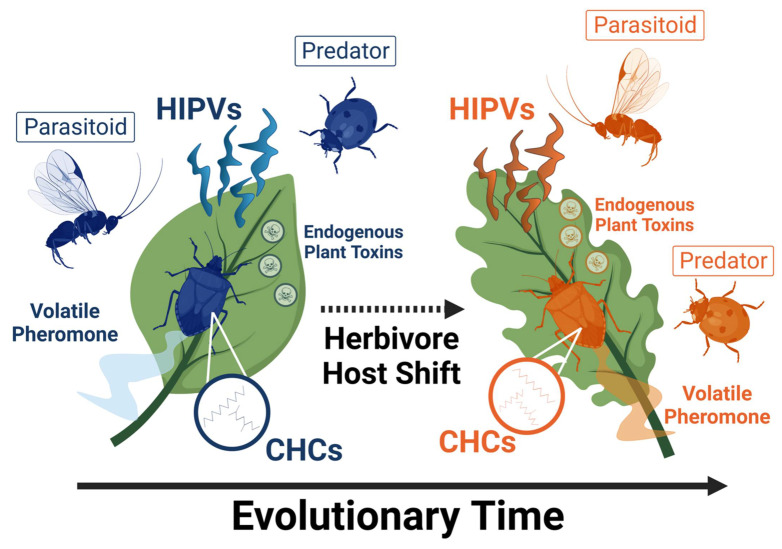
Host-associated differentiation (HAD) refers to cases in which genetically distinct populations of a species (e.g., herbivores or natural enemies) preferentially reproduce or feed on different host species. In agroecosystems, HAD often results in unique strains or biotypes of pest species, each attacking different species of crops. However, HAD is not restricted to pest populations, and may cascade to the third trophic level, affecting host selection by natural enemies, and ultimately leading to HAD within natural enemy species. Natural enemy HAD may affect the outcomes of biological control efforts, whether classical, conservation, or augmentative. Here, we explore the potential effects of pest and natural enemy HAD on biological control in agroecosystems, with emphases on current knowledge gaps and implications of HAD for selection of biological control agents. Additionally, given the importance of semiochemicals in mediating interactions between trophic levels, we emphasize the role of chemical ecology in interactions between pests and natural enemies, and suggest areas of consideration for biological control. Overall, we aim to jump-start a conversation concerning the relevance of HAD in biological control by reviewing currently available information on natural enemy HAD, identifying challenges to incorporating HAD considerations into biological control efforts, and proposing future research directions on natural enemy selection and HAD.
宿主关联分化(HAD)是指一个物种(如食草动物或天敌)中基因不同的种群优先在不同宿主物种上繁殖或取食的情况。在农业生态系统中,HAD常常导致害虫物种出现独特的菌株或生物型,每种都攻击不同种类的作物。然而,HAD并不局限于害虫种群,它可能会级联到第三营养级,影响天敌的宿主选择,并最终导致天敌物种内部出现HAD。天敌的HAD可能会影响生物防治工作的效果,无论是经典生物防治、保护型生物防治还是增强型生物防治。在这里,我们探讨害虫和天敌的HAD对农业生态系统中生物防治的潜在影响,重点关注当前的知识空白以及HAD对生物防治剂选择的影响。此外,鉴于化感物质在介导营养级之间相互作用中的重要性,我们强调化学生态学在害虫与天敌相互作用中的作用,并提出生物防治需要考虑的方面。总体而言,我们旨在通过回顾目前关于天敌HAD的可用信息、确定将HAD考虑因素纳入生物防治工作的挑战以及提出关于天敌选择和HAD的未来研究方向,开启一场关于HAD在生物防治中的相关性的讨论。