Ávila-Gómez Paulo, Pérez-Mato María, Hervella Pablo, Dopico-López Antonio, Silva-Candal Andrés da, Bugallo-Casal Ana, López-Amoedo Sonia, Candamo-Lourido María, Sobrino Tomás, Iglesias-Rey Ramón, Castillo José, Campos Francisco
Clinical Neurosciences Research Laboratory (LINC), Health Research Institute of Santiago de Compostela (IDIS), 15706 Santiago de Compostela, Spain.
Neurological Sciences and Cerebrovascular Research Laboratory, Department of Neurology and Stroke Center, La Paz University Hospital, Neuroscience Area of IdiPAZ Health Research Institute, Universidad Autónoma de Madrid, Paseo de la Castellana 261, 28046 Madrid, Spain.
J Clin Med. 2022 Feb 11;11(4):949. doi: 10.3390/jcm11040949.
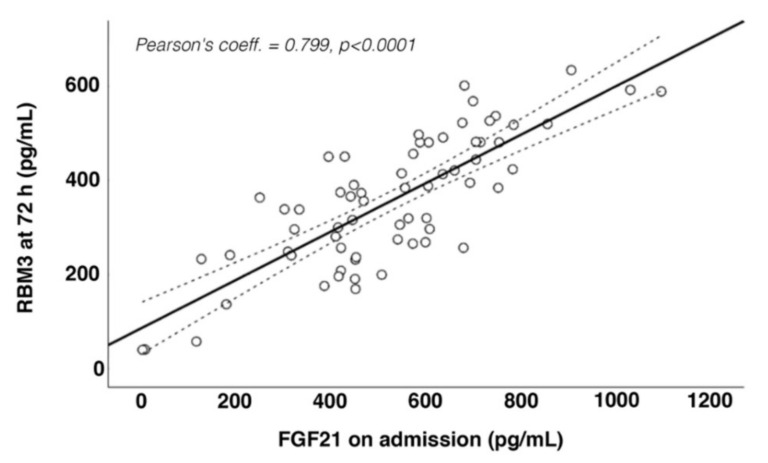
RNA-binding motif protein 3 (RBM3) is a cold-induced marker of good functional outcome of ischemic stroke that is promising as a protective target. Fibroblast growth factor 21 (FGF21) is an obesity- and temperature-related hormone that upregulates the expression of RBM3, which is beneficial as a recombinant treatment and has been tested under different experimental pathological conditions, including stroke. However, the interaction between RBM3 and FGF21 has not yet been tested for clinical stroke conditions.
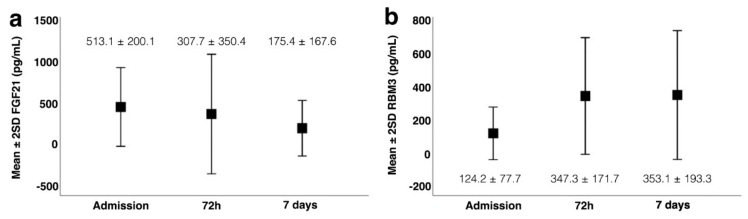
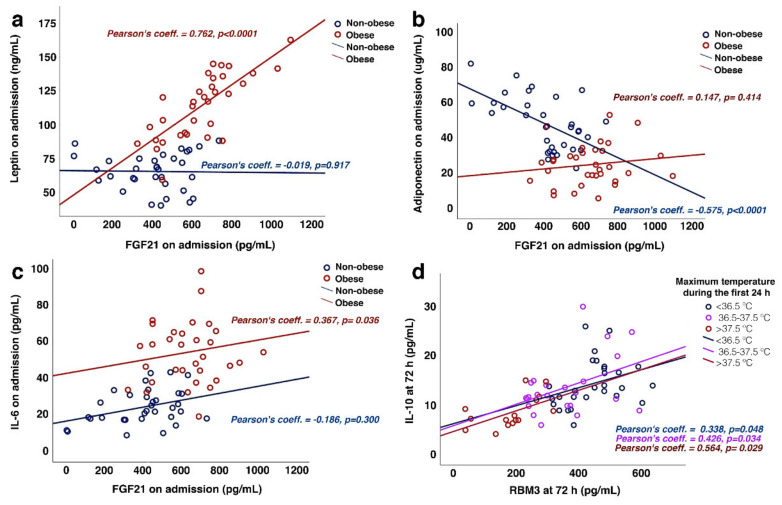
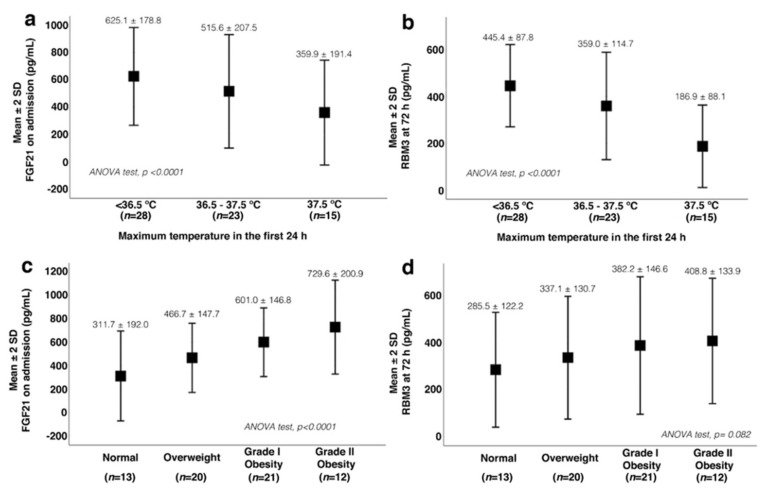
In a sample of 66 stroke patients, we analyzed the associations between the FGF21 and RBM3 serum concentrations on admission and at 72 h, body weight, maximum temperature during the first 24 h, and the outcome of patients at 3 months. We also analyzed their association with biomarkers of obesity (adiponectin and leptin) and inflammation (interleukin-6 (IL-6) and interleukin (IL-10)).
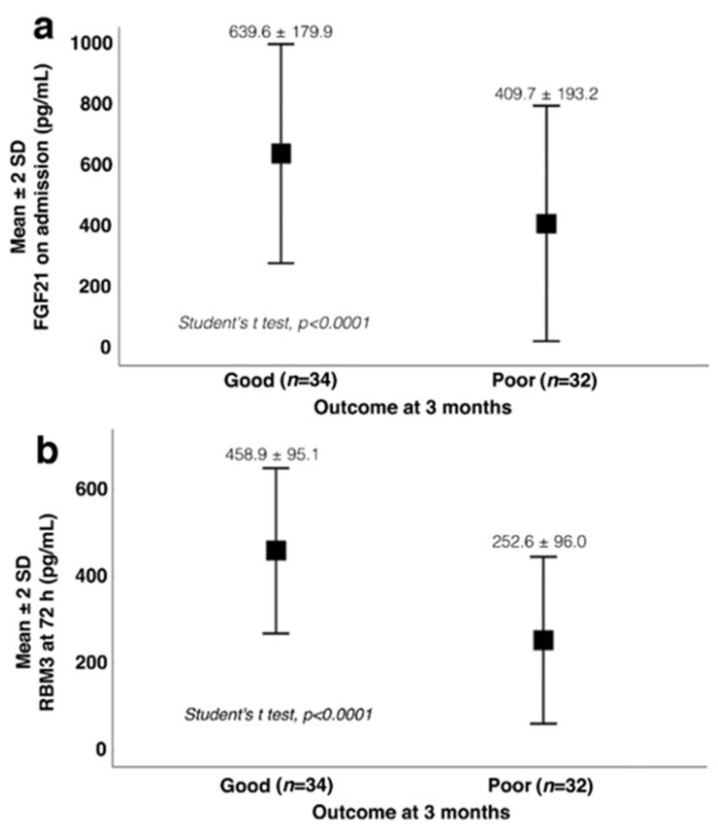
Higher concentrations of FGF21 on admission and RBM3 at 72 h were associated with good outcomes. Serum FGF21 and RBM3 were directly related to body mass index and inversely related to the maximum temperature during the first 24 h. We found a positive association between the FGF21 concentrations in obese patients with leptin and a negative correlation with adiponectin in non-obese participants.
This clinical study demonstrates the association between RBM3 and FGF21 levels and the outcome of stroke patients. Although further investigations are required, these data support the pharmacological induction of RBM3 as a promising protective therapy.
RNA结合基序蛋白3(RBM3)是缺血性中风功能良好预后的冷诱导标志物,有望成为一个保护性靶点。成纤维细胞生长因子21(FGF21)是一种与肥胖和温度相关的激素,可上调RBM3的表达,作为一种重组治疗具有益处,并且已在包括中风在内的不同实验病理条件下进行了测试。然而,RBM3与FGF21之间的相互作用尚未在临床中风情况下进行测试。
在66例中风患者的样本中,我们分析了入院时和72小时时FGF21与RBM3血清浓度、体重、最初24小时内的最高体温以及患者3个月时的预后之间的关联。我们还分析了它们与肥胖生物标志物(脂联素和瘦素)以及炎症生物标志物(白细胞介素-6(IL-6)和白细胞介素(IL-10))之间的关联。
入院时较高浓度的FGF21和72小时时较高浓度的RBM3与良好预后相关。血清FGF21和RBM3与体重指数直接相关,与最初24小时内的最高体温呈负相关。我们发现肥胖患者中FGF21浓度与瘦素呈正相关,在非肥胖参与者中与脂联素呈负相关。
这项临床研究证明了RBM3和FGF21水平与中风患者预后之间的关联。尽管需要进一步研究,但这些数据支持将RBM3的药物诱导作为一种有前景的保护性治疗方法。