Laas Peeter, Ugarelli Kelly, Travieso Rafael, Stumpf Sandro, Gaiser Evelyn E, Kominoski John S, Stingl Ulrich
Fort Lauderdale Research and Education Center, Department of Microbiology & Cell Science, Institute of Food and Agricultural Sciences, University of Florida, Davie, FL 32611, USA.
Department of Marine Systems, School of Science, Tallinn University of Technology, 12618 Tallinn, Estonia.
Microorganisms. 2022 Jan 20;10(2):215. doi: 10.3390/microorganisms10020215.
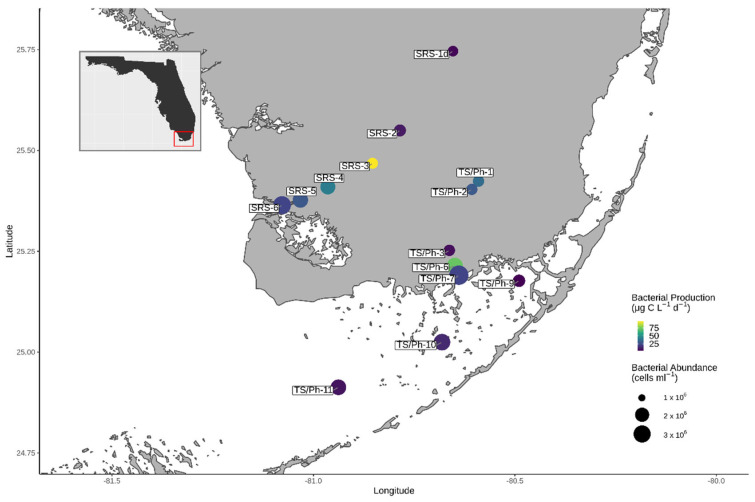
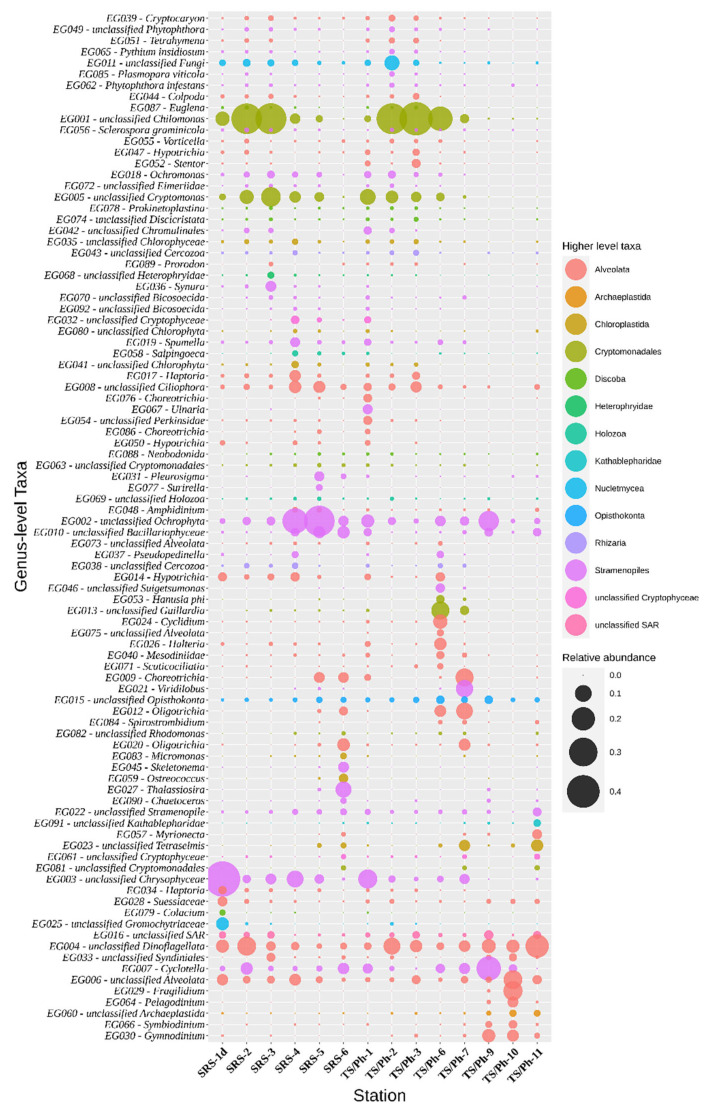
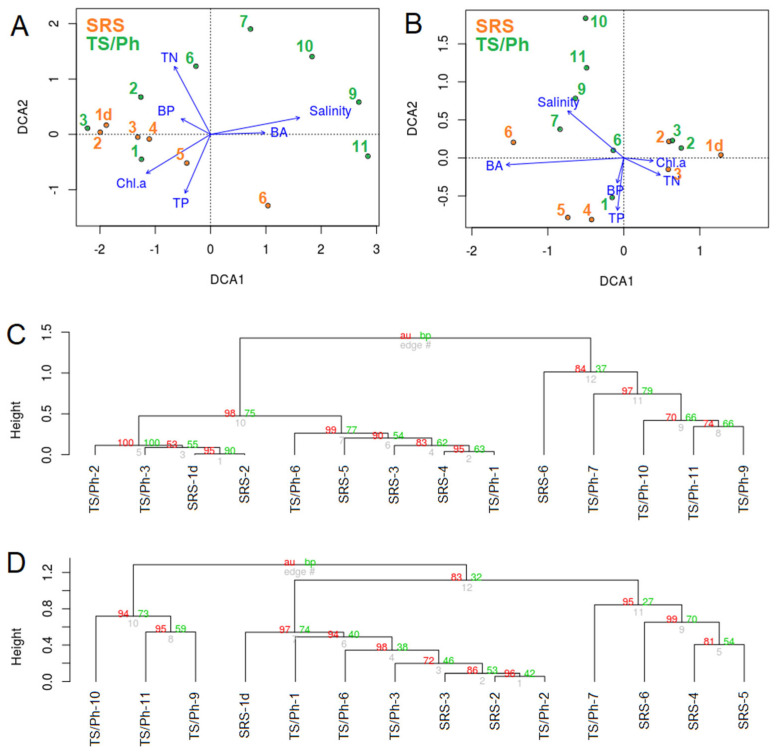
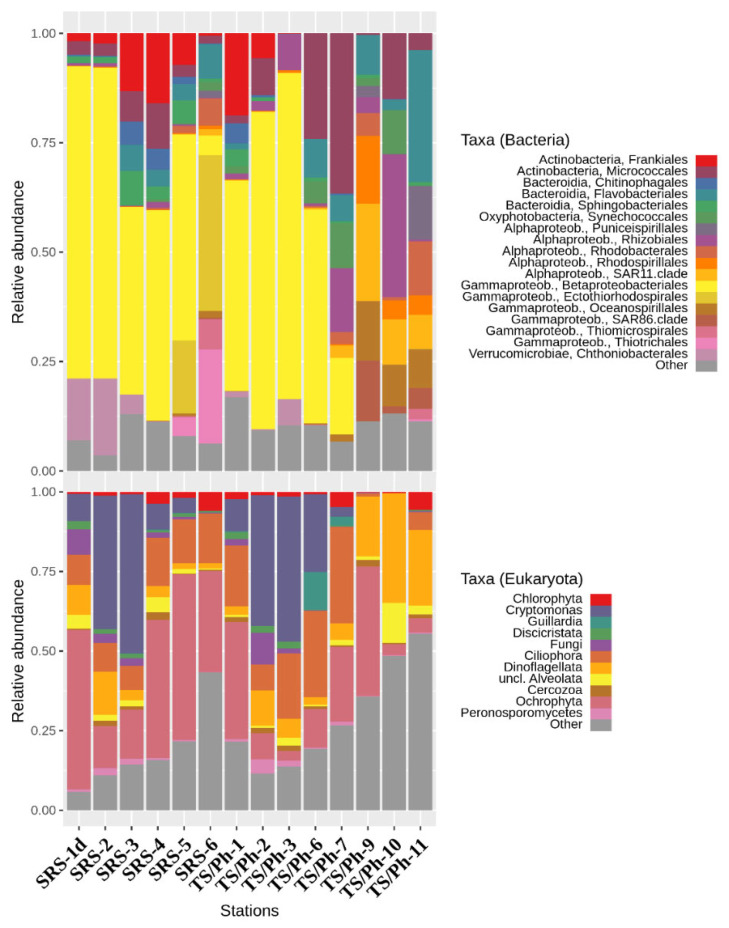
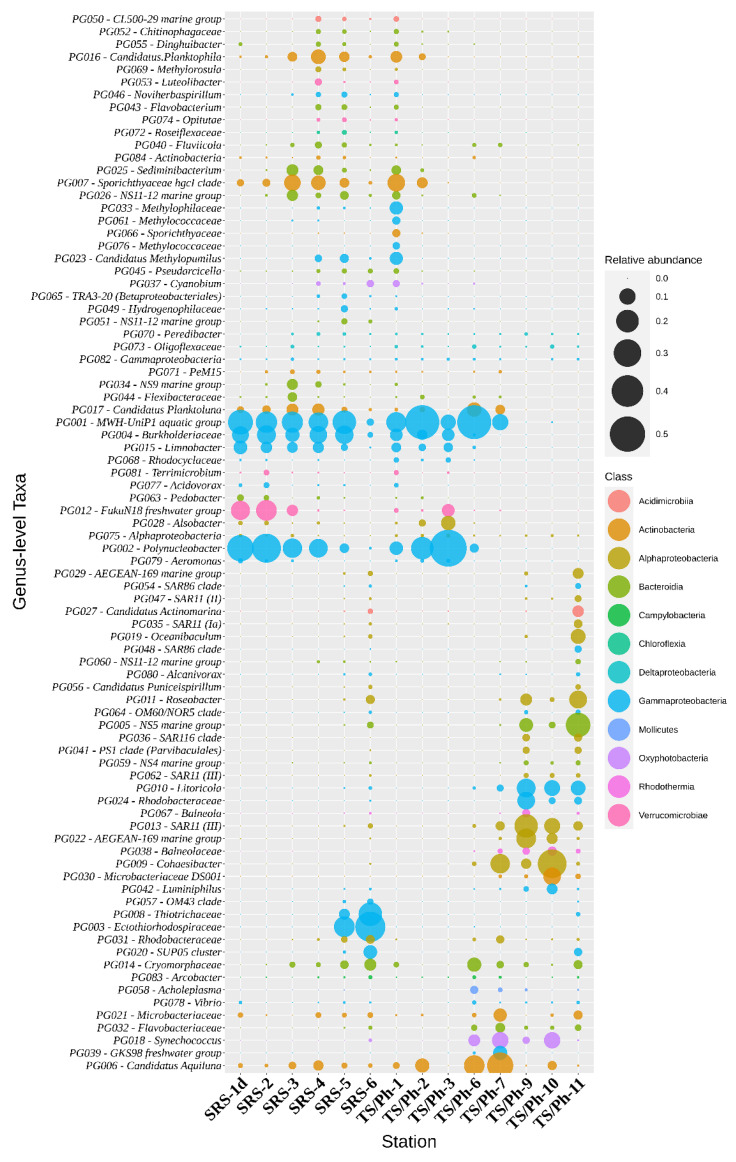
Planktonic microbial communities mediate many vital biogeochemical processes in wetland ecosystems, yet compared to other aquatic ecosystems, like oceans, lakes, rivers or estuaries, they remain relatively underexplored. Our study site, the Florida Everglades (USA)-a vast iconic wetland consisting of a slow-moving system of shallow rivers connecting freshwater marshes with coastal mangrove forests and seagrass meadows-is a highly threatened model ecosystem for studying salinity and nutrient gradients, as well as the effects of sea level rise and saltwater intrusion. This study provides the first high-resolution phylogenetic profiles of planktonic bacterial and eukaryotic microbial communities (using 16S and 18S rRNA gene amplicons) together with nutrient concentrations and environmental parameters at 14 sites along two transects covering two distinctly different drainages: the peat-based Shark River Slough (SRS) and marl-based Taylor Slough/Panhandle (TS/Ph). Both bacterial as well as eukaryotic community structures varied significantly along the salinity gradient. Although freshwater communities were relatively similar in both transects, bacterioplankton community composition at the ecotone (where freshwater and marine water mix) differed significantly. The most abundant taxa in the freshwater marshes include heterotrophic sp. and potentially phagotrophic cryptomonads of the genus , both of which could be key players in the transfer of detritus-based biomass to higher trophic levels.
浮游微生物群落介导湿地生态系统中的许多重要生物地球化学过程,但与海洋、湖泊、河流或河口等其他水生生态系统相比,它们仍相对未得到充分研究。我们的研究地点是美国佛罗里达大沼泽地——一个广阔的标志性湿地,由连接淡水沼泽与沿海红树林和海草草甸的缓慢流动的浅河系统组成,是研究盐度和养分梯度以及海平面上升和海水入侵影响的高度受威胁的模型生态系统。本研究提供了浮游细菌和真核微生物群落的首个高分辨率系统发育图谱(使用16S和18S rRNA基因扩增子),以及沿两条样带的14个地点的养分浓度和环境参数,这两条样带覆盖了两个截然不同的排水区域:以泥炭为基础的鲨鱼河浅滩(SRS)和以泥灰岩为基础的泰勒浅滩/狭长地带(TS/Ph)。细菌和真核生物群落结构均沿盐度梯度有显著变化。尽管两个样带中的淡水群落相对相似,但生态交错带(淡水和海水混合处)的浮游细菌群落组成差异显著。淡水沼泽中最丰富的类群包括异养菌属和可能为吞噬营养型的隐藻属,这两者都可能是基于碎屑的生物量向更高营养级转移的关键参与者。