Department of Surgery, The University of Melbourne, Melbourne, Australia.
BMC Musculoskelet Disord. 2022 Feb 24;23(1):179. doi: 10.1186/s12891-022-05123-0.
Approximately 1 in 5 patients feel unsatisfied after total knee arthroplasty (TKA). Prognostic tools may aid in the patient selection process and reduce the proportion of patients who experience unsatisfactory surgery. This study uses the prognostic tool SMART Choice (Patient Prognostic Tool for Total Knee Arthroplasty) to predict patient improvement after TKA. The tool aims to be used by the patient without clinician input and does not require clinical data such as X-ray findings or blood results. The objective of this study is to evaluate the SMART Choice tool on patient decision making, particularly willingness for surgery. We hypothesise that the use of the SMART Choice tool will influence willingness to undergo surgery, especially when used earlier in the patient TKA journey.
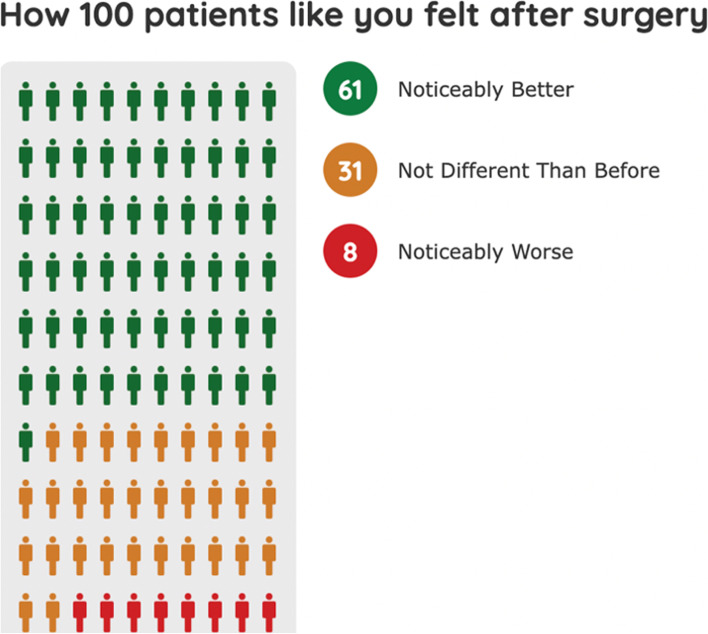
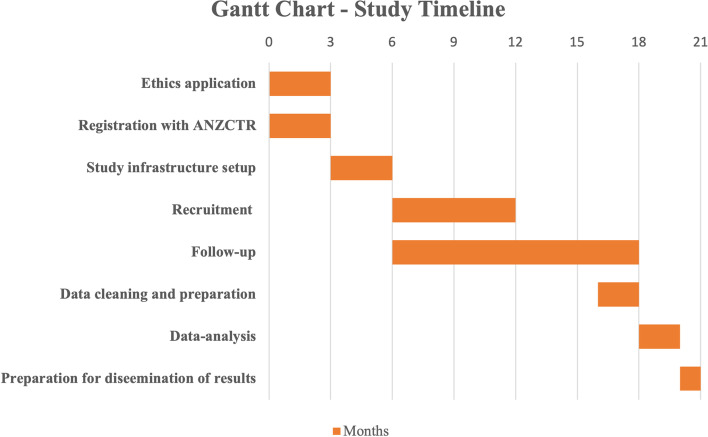
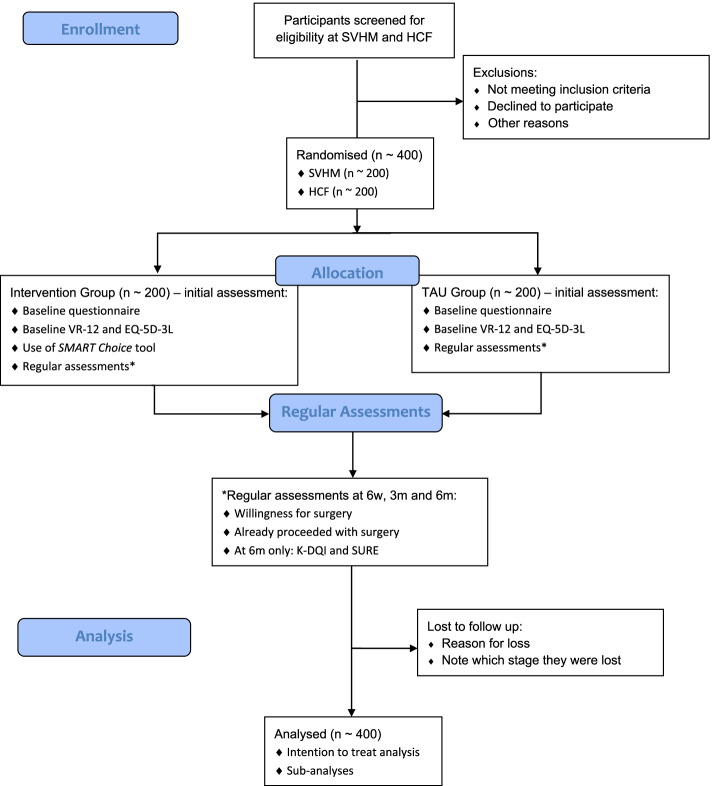
This is a multicentred, pragmatic, randomised controlled trial conducted in Melbourne, Australia. Participants will be recruited from the St. Vincent's Hospital, Melbourne (SVHM) Orthopaedic Clinic, and the client base of HCF, Australia (private health insurance company). Patients over 45 years of age who have been diagnosed with knee osteoarthritis and considering TKA are eligible for participation. Participants will be randomised to either use the SMART Choice tool or treatment as usual. The SMART Choice tool provides users with a prediction for improvement or deterioration / no change after surgery based on utility score change calculated from the Veterans-RAND 12 (VR-12) survey. The primary outcome of the study is patient willingness for TKA surgery. The secondary outcomes include evaluating the optimal timing for tool use and using decision quality questionnaires to understand the patient experience when using the tool. Participants will be followed up for 6 months from the time of recruitment.
The SMART Choice tool has the potential to improve patient decision making for TKA. Although many prognostic tools have been developed for other areas of surgery, most are confined within academic bodies of work. This study will be one of the first to evaluate the impact of a prognostic tool on patient decision making using a prospective clinical trial, an important step in transitioning the tool for use in clinical practice.
Australia and New Zealand Clinical Trials Registry (ANZCTR) - ACTRN12622000072718 . Prospectively registered - 21 January 2022.
大约每 5 名接受全膝关节置换术 (TKA) 的患者中就有 1 名感到不满意。预测工具可以帮助选择患者,并减少手术不满意的患者比例。本研究使用预测工具 SMART Choice(全膝关节置换术患者预后工具)来预测 TKA 后患者的改善情况。该工具旨在由患者在没有临床医生输入的情况下使用,不需要 X 光检查结果或血液结果等临床数据。本研究的目的是评估 SMART Choice 工具对患者决策的影响,特别是对手术的意愿。我们假设使用 SMART Choice 工具会影响手术意愿,尤其是在患者 TKA 旅程的早期使用时。
这是一项在澳大利亚墨尔本进行的多中心、实用、随机对照试验。参与者将从墨尔本圣文森特医院 (SVHM) 骨科诊所和澳大利亚 HCF(私人健康保险公司)的客户群体中招募。年龄在 45 岁以上、被诊断为膝骨关节炎并考虑接受 TKA 的患者有资格参加。参与者将被随机分配使用 SMART Choice 工具或常规治疗。SMART Choice 工具根据 Veterans-RAND 12 (VR-12) 调查计算的效用得分变化,为患者提供术后改善或恶化/无变化的预测。研究的主要结果是患者对 TKA 手术的意愿。次要结果包括评估工具使用的最佳时机,并使用决策质量问卷了解患者使用工具时的体验。参与者将从招募之日起随访 6 个月。
SMART Choice 工具有可能改善 TKA 的患者决策。虽然已经开发了许多用于其他手术领域的预测工具,但大多数都局限于学术工作中。这项研究将是第一个使用前瞻性临床试验评估预测工具对患者决策影响的研究之一,这是将工具过渡到临床实践的重要一步。
澳大利亚和新西兰临床试验注册中心 (ANZCTR) - ACTRN12622000072718。前瞻性注册 - 2022 年 1 月 21 日。