Kim Yonghwan, Kim Minjun, Hwang Jeongwook, Im Eunmi, Moon Geon Dae
Department of Advanced Materials R&D Center, Dae-Il Corporation (DIC), Ulsan 44914, Korea.
RIKEN Center for Emergent Matter Science (CEMS), Saitama 351-0198, Japan.
Polymers (Basel). 2022 Feb 9;14(4):656. doi: 10.3390/polym14040656.
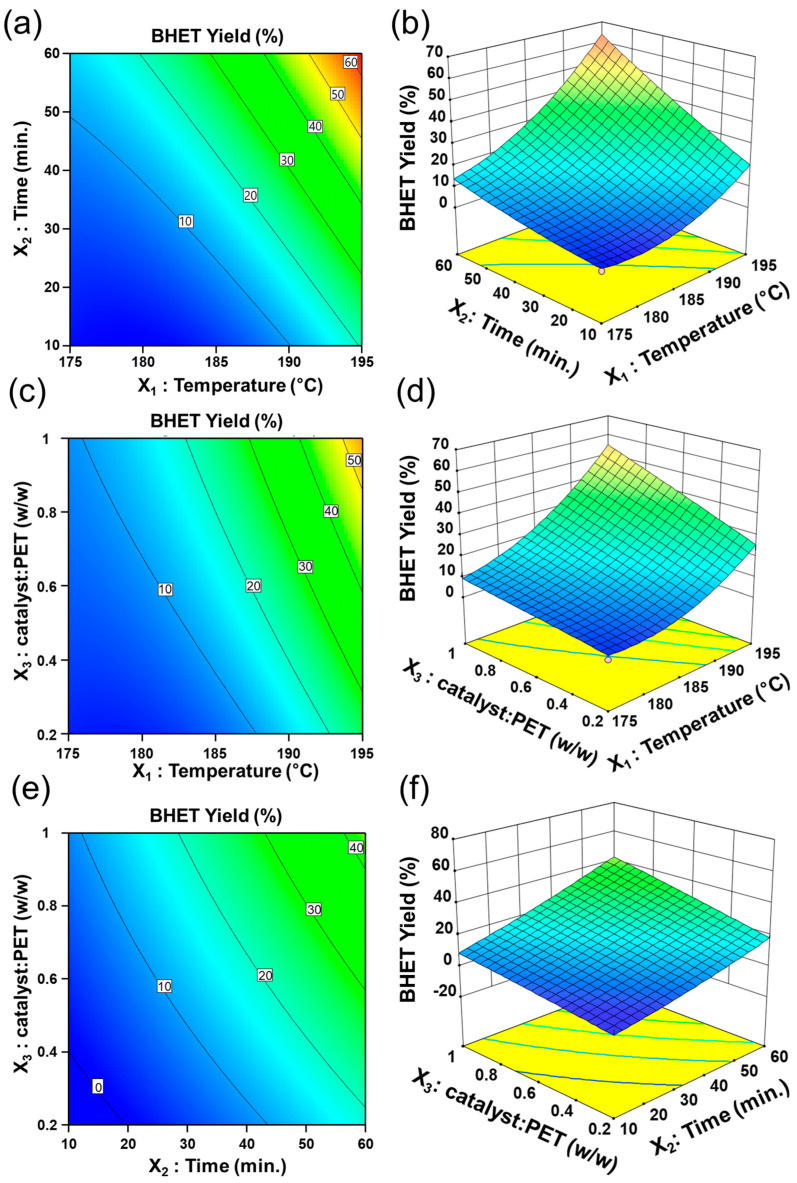
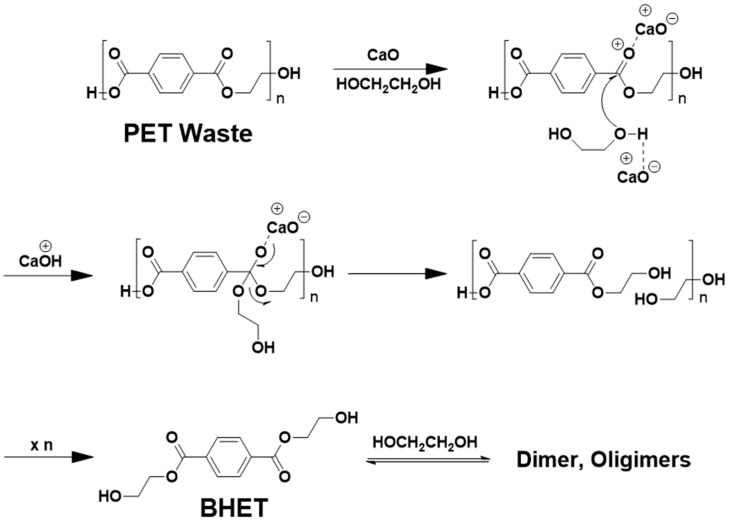
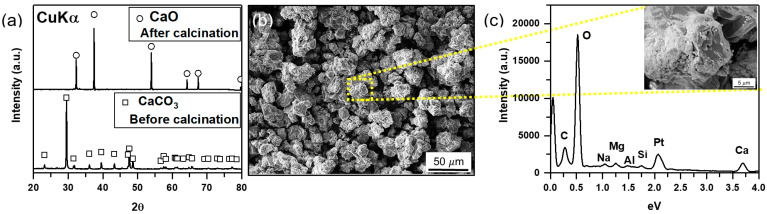
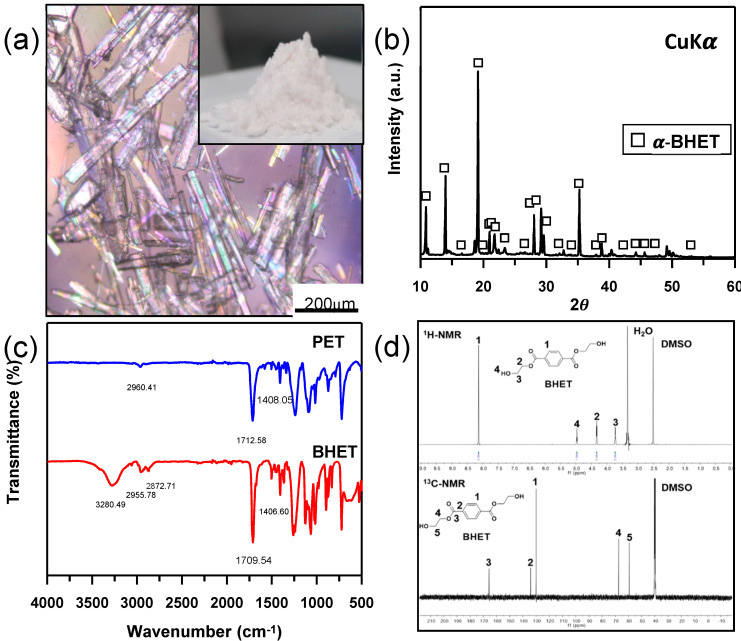
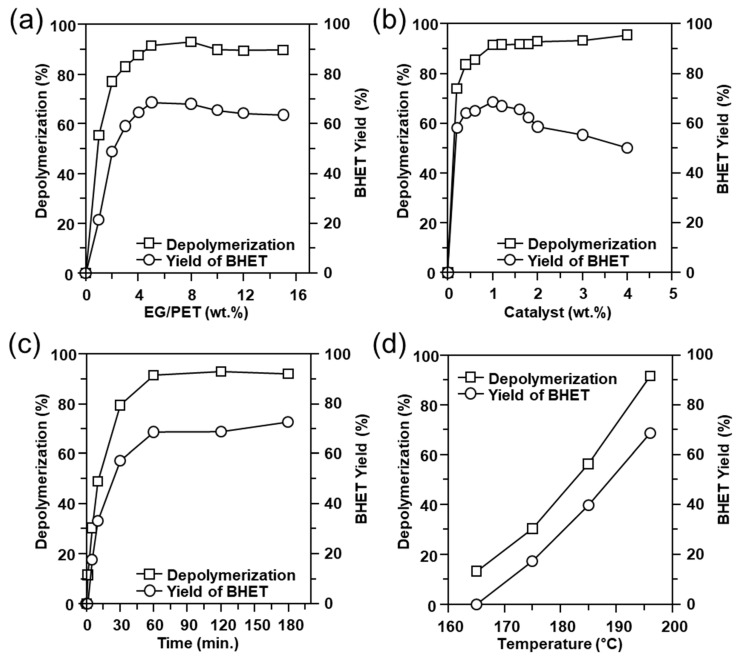
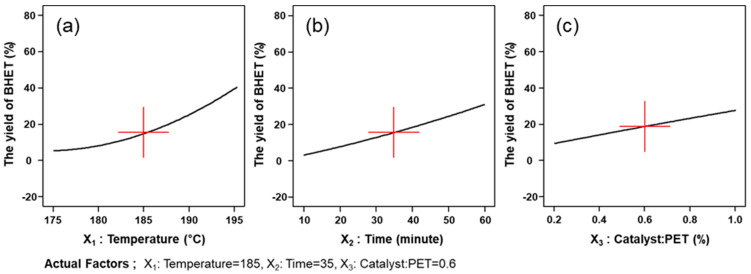
Polyethylene terephthalate (PET) waste was depolymerized into bis(2-hydroxyethyl) terephthalate (BHET) through glycolysis with the aid of oyster shell-derived catalysts. The equilibrium yield of BHET was as high as 68.6% under the reaction conditions of mass ratios (EG to PET = 5, catalyst to PET = 0.01) at 195 °C for 1 h. Although biomass-derived Ca-based catalysts were used for PET glycolysis to obtain BHET monomers, no statistical analysis was performed to optimize the reaction conditions. Thus, in this study, we applied response surface methodology (RSM) based on three-factor Box-Behnken design (BBD) to investigate the optimal conditions for glycolysis by analyzing the independent and interactive effects of the factors, respectively. Three independent factors of interest include reaction time, temperature, and mass ratio of catalyst to PET under a fixed amount of ethylene glycol (mass ratio of EG to PET = 5) due to the saturation of the yield above the mass ratio. The quadratic regression equation was calculated for predicting the yield of BHET, which was in good agreement with the experimental data (R = 0.989). The contour and response surface plots showed the interaction effect between three variables and the BHET yield with the maximum average yield of monomer (64.98%) under reaction conditions of 1 wt% of mass ratio (catalyst to PET), 195 °C, and 45 min. Both the experimental results and the analyses of the response surfaces revealed that the interaction effects of reaction temperature vs. time and temperature vs. mass ratio of the catalyst to the PET were more prominent in comparison to reaction time vs. mass ratio of the catalyst to the PET.
聚对苯二甲酸乙二酯(PET)废料在牡蛎壳衍生催化剂的辅助下通过醇解反应解聚为对苯二甲酸双(2-羟乙酯)(BHET)。在195℃下反应1小时,质量比(乙二醇与PET = 5,催化剂与PET = 0.01)的反应条件下,BHET的平衡产率高达68.6%。虽然生物质衍生的钙基催化剂用于PET醇解以获得BHET单体,但未进行统计分析以优化反应条件。因此,在本研究中,我们应用基于三因素Box-Behnken设计(BBD)的响应面方法(RSM),通过分别分析各因素的独立和交互作用来研究醇解的最佳条件。由于在该质量比以上产率已饱和,在固定量的乙二醇(乙二醇与PET的质量比 = 5)下,三个感兴趣的独立因素包括反应时间、温度以及催化剂与PET的质量比。计算了二次回归方程以预测BHET的产率,其与实验数据吻合良好(R = 0.989)。等高线图和响应面图显示了三个变量之间的交互作用以及BHET产率,在质量比(催化剂与PET)为1 wt%、195℃和45分钟的反应条件下,单体的平均产率最高为64.98%。实验结果和响应面分析均表明,与反应时间与催化剂与PET的质量比相比,反应温度与时间以及温度与催化剂与PET的质量比之间的交互作用更为显著。