Department of Nephrology, Department of Internal Medicine, Chi Mei Medical Center, Tainan 71004, Taiwan.
Department of Biological Science and Technology, Chung Hwa University of Medical Technology, Tainan 71703, Taiwan.
Int J Mol Sci. 2022 Feb 12;23(4):2052. doi: 10.3390/ijms23042052.
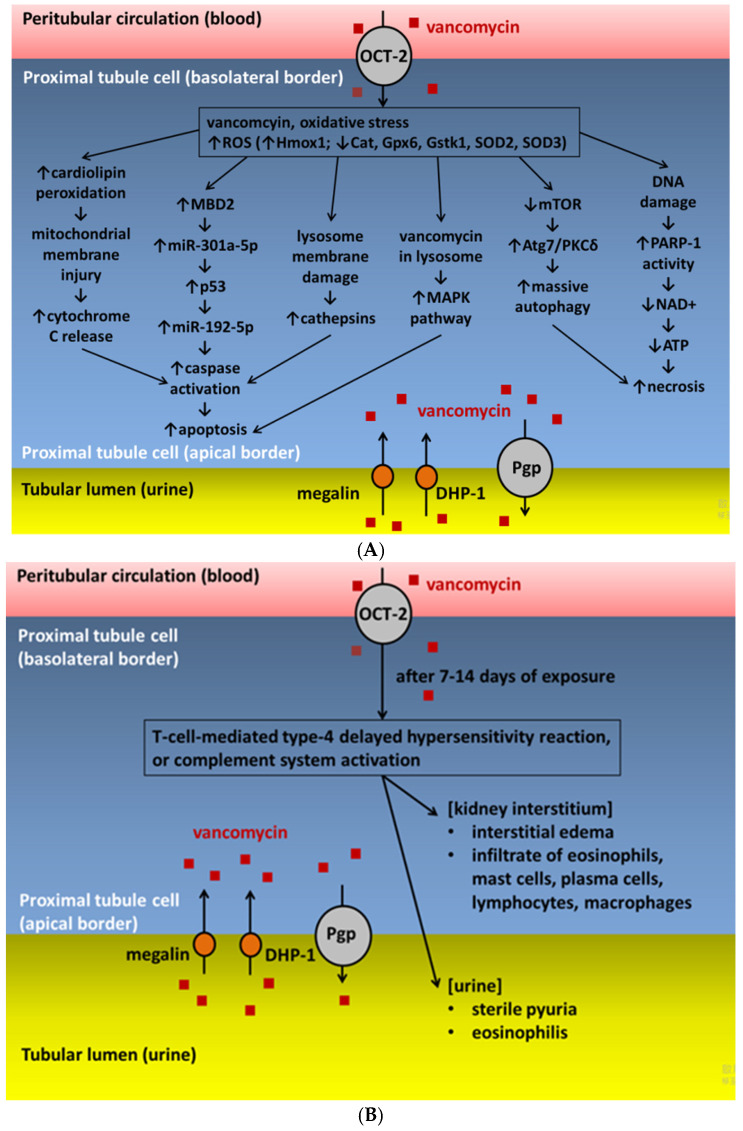
Vancomycin is the most frequently used antibiotic, accounting for up to 35% of hospitalized patients with infection, because of its optimal bactericidal effectiveness and relatively low price. Vancomycin-associated AKI (VA-AKI) is a clinically relevant but not yet clearly understood entity in critically ill patients. The current review comprehensively summarizes the pathophysiological mechanisms of, biomarkers for, preventive strategies for, and some crucial issues with VA-AKI. The pathological manifestations of VA-AKI include acute tubular necrosis, acute tubulointerstitial nephritis (ATIN), and intratubular crystal obstruction. The proposed pathological mechanisms of VA-AKI include oxidative stress and allergic reactions induced by vancomycin and vancomycin-associated tubular casts. Concomitant administration with other nephrotoxic antibiotics, such as piperacillin-tazobactam, high vancomycin doses, and intermittent infusion strategies compared to the continuous infusion are associated with a higher risk of VA-AKI. Several biomarkers could be applied to predict and diagnose VA-AKI. To date, no promising therapy is available. Oral steroids could be considered for patients with ATIN, whereas hemodialysis might be applied to remove vancomycin from the patient. In the future, disclosing more promising biomarkers that could precisely identify populations susceptible to VA-AKI and detect VA-AKI occurrence early on, and developing pharmacological agents that could prevent or treat VA-AKI, are the keys to improve the prognoses of patients with severe infection who probably need vancomycin therapy.
万古霉素是最常使用的抗生素,在感染住院患者中的占比高达 35%,这归因于其最佳杀菌效果和相对较低的价格。万古霉素相关性急性肾损伤(VA-AKI)是重症患者中一种具有临床相关性但尚未被充分认识的实体。目前的综述全面总结了 VA-AKI 的病理生理机制、生物标志物、预防策略以及一些关键问题。VA-AKI 的病理表现包括急性肾小管坏死、急性肾小管间质性肾炎(ATIN)和管腔内晶体阻塞。VA-AKI 的病理机制包括万古霉素诱导的氧化应激和过敏反应,以及万古霉素相关的管状铸型。与连续输注相比,同时使用其他肾毒性抗生素(如哌拉西林他唑巴坦)、高剂量万古霉素和间歇性输注策略与更高的 VA-AKI 风险相关。一些生物标志物可用于预测和诊断 VA-AKI。目前尚无有效的治疗方法。对于 ATIN 患者,可以考虑口服类固醇,而对于需要清除万古霉素的患者,可以进行血液透析。未来,揭示更有前途的生物标志物,这些标志物能够精确识别易发生 VA-AKI 的人群并早期检测 VA-AKI 的发生,以及开发能够预防或治疗 VA-AKI 的药物,是改善可能需要万古霉素治疗的严重感染患者预后的关键。