Department of Gastroenterology, The Third Hospital of Jilin University, Changchun, China.
Department of Thoracic Surgery, The Third Hospital of Jilin University, No. 126, Xiantai Street, Changchun, Jilin, China.
World J Surg Oncol. 2022 Feb 27;20(1):59. doi: 10.1186/s12957-022-02509-1.
N6-methyladenosine (m6A) is the most prevalent modification in mRNA in biological processes and associated with various malignant tumor initiation and progression. The present study aimed to construct a prognostic risk model based on m6A-related genes (the downstream genes influenced by m6A modulators) for LUSC.
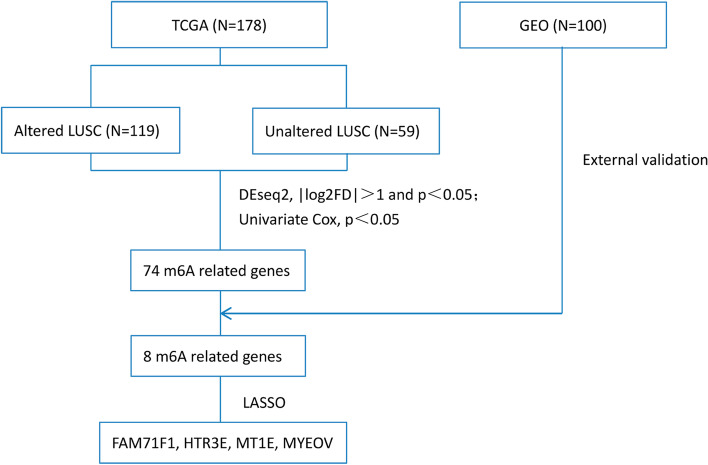
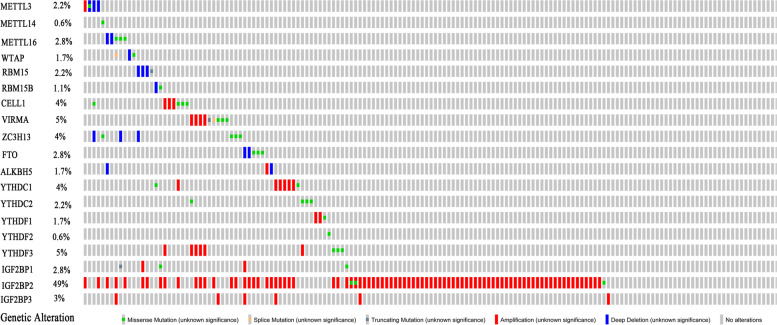
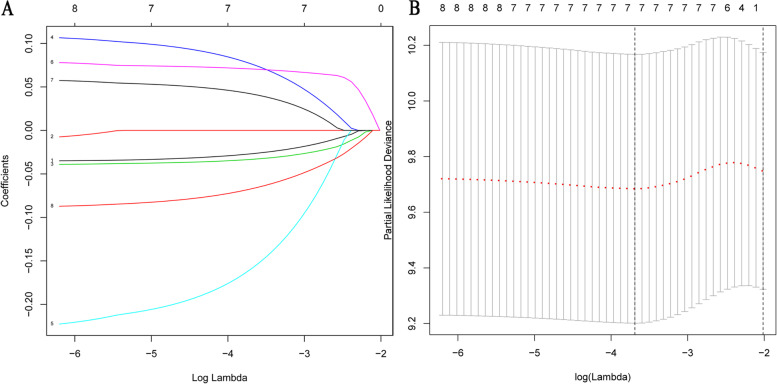
Based on TCGA, we stratified LUSC patients with and without genetic alteration of m6A modulators into altered and unaltered groups. Using univariate Cox and Lasso regression analyses, we identified prognostic m6A-related genes to construct a prognostic risk model. We then applied a multivariate Cox proportional regression model and the survival analysis to evaluate the risk model. Moreover, we performed the Receiver operating characteristic curve to assess the efficiency of the prognostic model based on TCGA and GSE43131. We analyzed the characteristics of tumor-associated immune cell infiltration in LUSC through the CIBERSORT method.
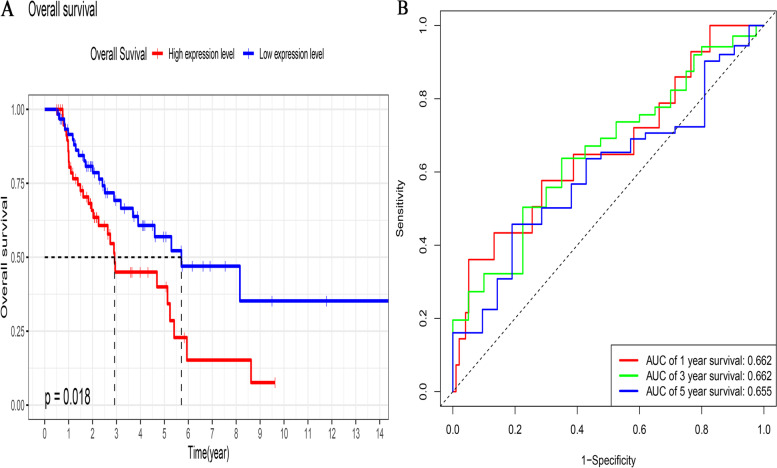
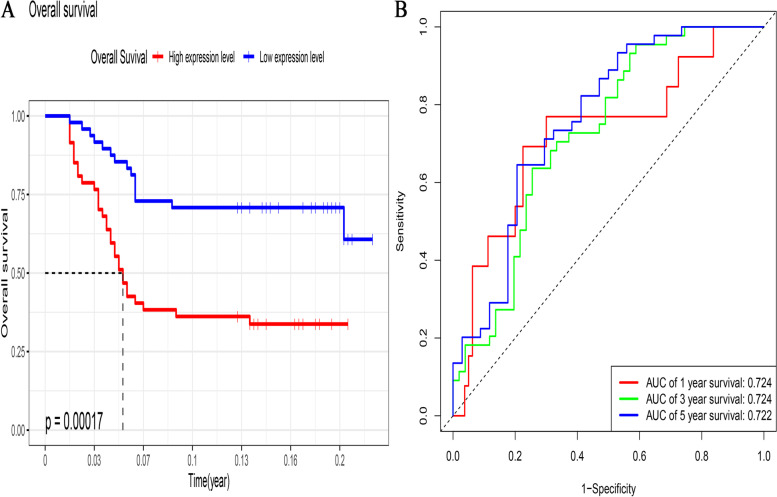
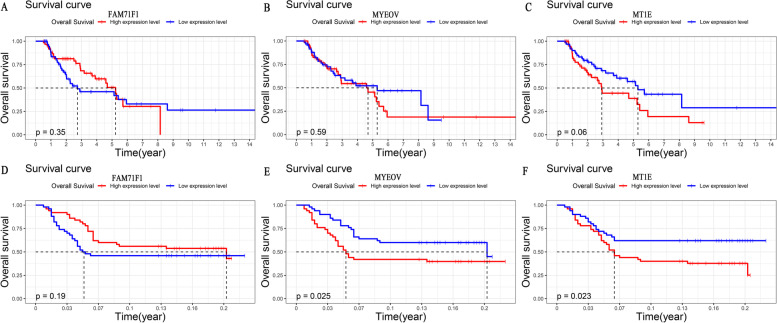
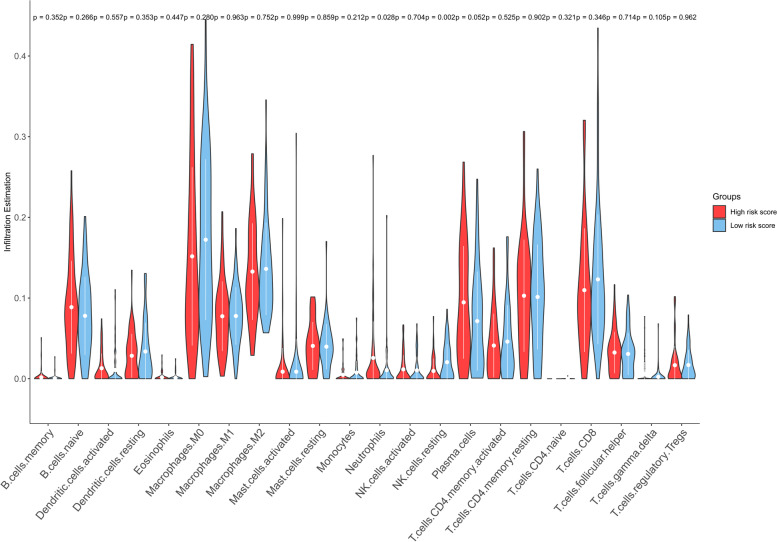
Three m6A-related genes (FAM71F1, MT1E, and MYEOV) were identified as prognostic genes for LUSC. A novel prognostic risk model based on the three m6A-related genes was constructed. The multivariate Cox analysis showed that the prognostic risk model was an independent risk factor (HR = 2.44, 95% CI = 1.21~3.56, p = 0.029). Patients with a high-risk group had worse overall survival both in TCGA (p = 0.018) and GSE43131 (p = 0.00017). The 1, 2, and 3-year AUC value in TCGA was 0.662, 0.662, and 0.655, respectively; The 1, 2, and 3-year AUC value in GSE43131 was 0.724, 0.724, and 0.722, respectively. The proportion of infiltrated neutrophils in the high-risk group was higher than that in the low-risk group (p = 0.028), whereas that of resting NK cells (p = 0.002) was lower.
A novel prognostic risk model based on three m6A-related genes for LUSC was generated in this study.
N6-甲基腺苷(m6A)是生物过程中 mRNA 中最普遍的修饰,与各种恶性肿瘤的起始和进展有关。本研究旨在构建基于 m6A 相关基因(m6A 调节剂下游受影响的基因)的 LUSC 预后风险模型。
基于 TCGA,我们将 LUSC 患者分为有和无 m6A 调节剂遗传改变的两组。使用单因素 Cox 和 Lasso 回归分析,我们确定了预后 m6A 相关基因,以构建预后风险模型。然后,我们应用多因素 Cox 比例回归模型和生存分析来评估风险模型。此外,我们通过 TCGA 和 GSE43131 进行了接受者操作特征曲线分析,以评估预后模型的效率。我们通过 CIBERSORT 方法分析了 LUSC 中肿瘤相关免疫细胞浸润的特征。
鉴定出三个 m6A 相关基因(FAM71F1、MT1E 和 MYEOV)为 LUSC 的预后基因。构建了一个基于三个 m6A 相关基因的新的预后风险模型。多因素 Cox 分析表明,预后风险模型是一个独立的危险因素(HR=2.44,95%CI=1.21~3.56,p=0.029)。在 TCGA(p=0.018)和 GSE43131(p=0.00017)中,高风险组的患者总生存情况均较差。在 TCGA 中,1、2、3 年 AUC 值分别为 0.662、0.662 和 0.655;在 GSE43131 中,1、2、3 年 AUC 值分别为 0.724、0.724 和 0.722。高风险组中浸润中性粒细胞的比例高于低风险组(p=0.028),而静止自然杀伤细胞的比例较低(p=0.002)。
本研究构建了一个基于 LUSC 三个 m6A 相关基因的新预后风险模型。