Bahauddin Afrin, Ivannikov Maxim, Wang Zhongying, Jamaluddin Mohammad, Curtis Kyra, Ibtehaj Naazneen, Yeager Linsey, Soong Lynn, Fang Xiang, Huda Ruksana
Department of Microbiology and Immunology, University of Texas Medical Branch at Galveston, Galveston, TX, United States.
Optical Microscopy Core, University of Texas Medical Branch at Galveston, Galveston, TX, United States.
Front Neurol. 2022 Feb 10;12:804113. doi: 10.3389/fneur.2021.804113. eCollection 2021.
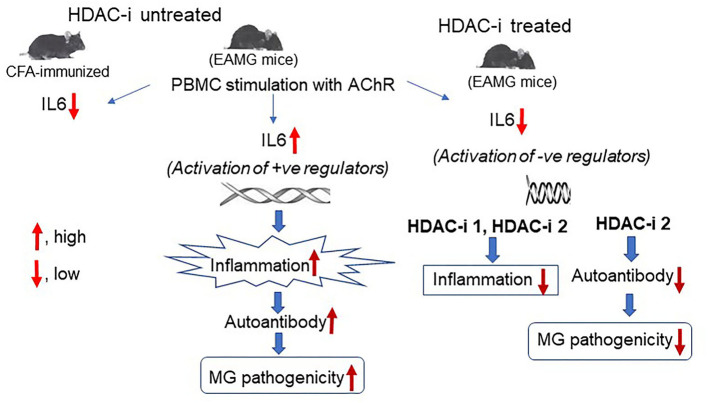
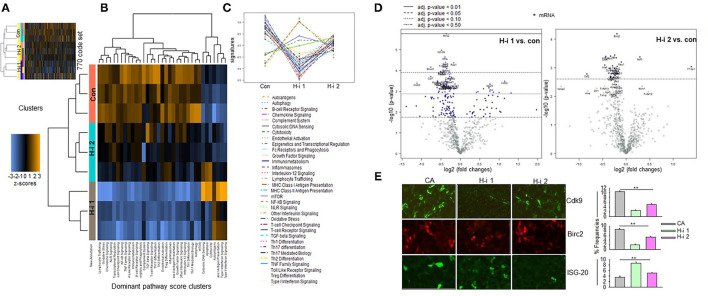
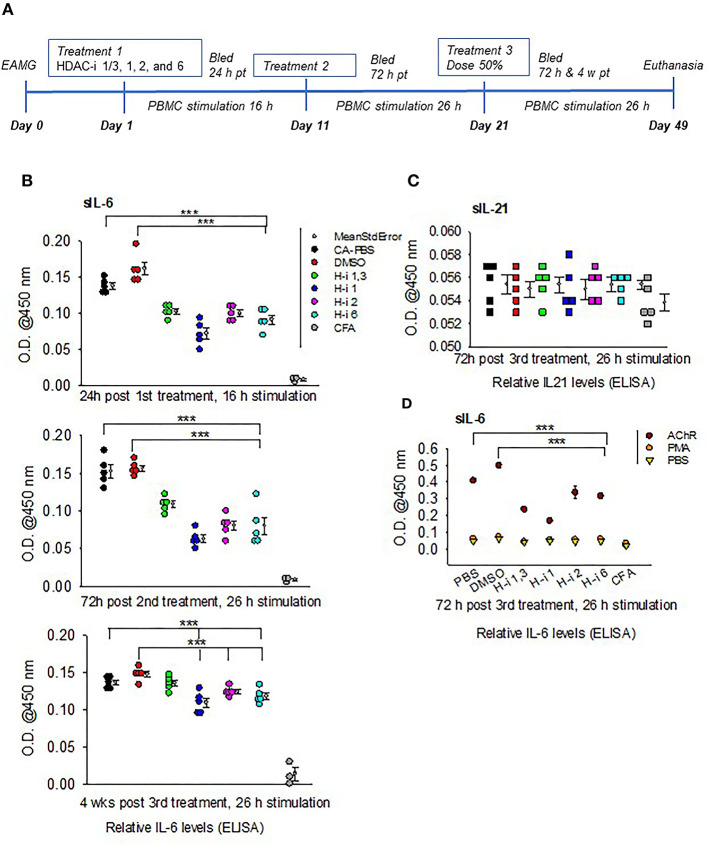
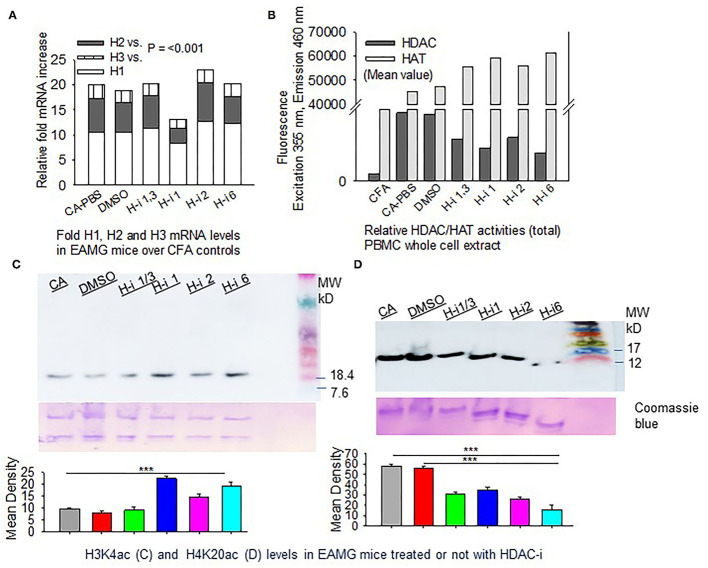
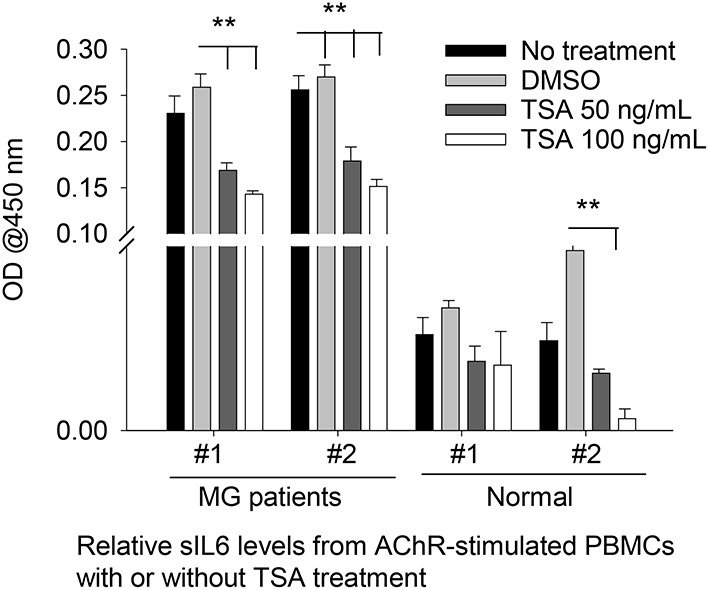
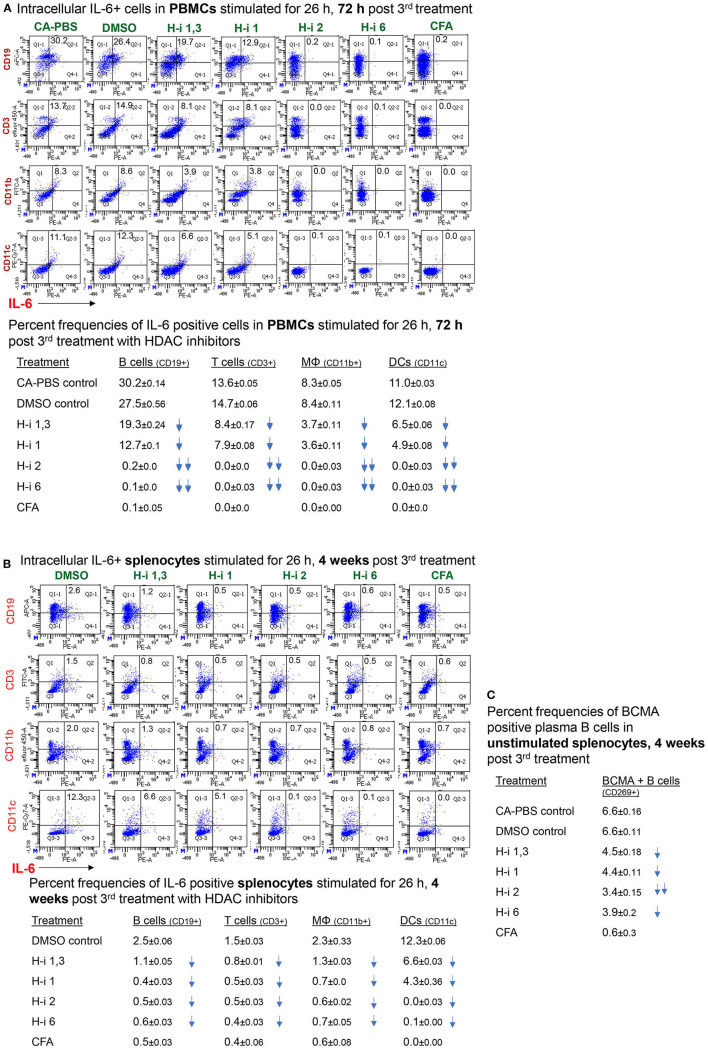
Myasthenia gravis (MG) is an autoimmune disease characterized by chronic muscle fatigue and weakness caused by autoantibodies and complement-mediated damage at neuromuscular junctions. Histone deacetylases (HDACs) are crucial epigenetic regulators of proinflammatory gene expression; however, it is unclear whether HDACs modulate chronic inflammation or autoantibody production associated with MG pathogenesis. We examined expression profiles and serum levels of key inflammatory cytokines (IL-6 and IL-21) and acetylcholine receptor (AChR)-specific autoantibodies following pharmacological inhibition of key HDAC isoforms in a mouse model of MG. We found that HDAC inhibition significantly reduced the production of IL-6, but not IL-21, in AChR-stimulated PBMCs and splenocytes ( = 5 per group). Trichostatin (pan-HDAC inhibitor) treatment of MG-PBMCs ( = 2) also exhibited reduced production of induced IL-6. Although HDAC1 inhibition lowered IL-6 levels the most, HDAC2 inhibition depleted intracellular IL-6 and markedly reduced serum anti-AChR IgG2b in EAMG mice. The transcriptomic profiling and pathway mapping also revealed that autoimmunity-linked, major cell signaling pathways were differentially altered by HDAC1/2 inhibition. HDAC inhibition-mediated reduction in IL-6 and autoantibody levels also correlated with milder disease and preservation of muscle AChR in the treated mice. Overall, our findings revealed isoform-specific functional variance of HDACs in reducing inflammation and identified HDAC-regulated many genes underlying specific inflammatory and autoantibody pathways in EAMG. Thus, the study provides a rationale for further research to evaluate the HDACs or their gene targets as a potential adjunct treatment for MG.
重症肌无力(MG)是一种自身免疫性疾病,其特征为慢性肌肉疲劳和无力,由自身抗体以及神经肌肉接头处补体介导的损伤所致。组蛋白脱乙酰酶(HDACs)是促炎基因表达的关键表观遗传调节因子;然而,尚不清楚HDACs是否调节与MG发病机制相关的慢性炎症或自身抗体产生。我们在MG小鼠模型中对关键HDAC亚型进行药理抑制后,检测了关键炎性细胞因子(IL-6和IL-21)以及乙酰胆碱受体(AChR)特异性自身抗体的表达谱和血清水平。我们发现,HDAC抑制显著降低了AChR刺激的外周血单核细胞(PBMCs)和脾细胞(每组n = 5)中IL-6的产生,但未降低IL-21的产生。曲古抑菌素(泛HDAC抑制剂)处理MG-PBMCs(n = 2)也显示诱导产生的IL-6减少。虽然HDAC1抑制最能降低IL-6水平,但HDAC2抑制可耗尽细胞内IL-6,并显著降低实验性自身免疫性重症肌无力(EAMG)小鼠血清中的抗AChR IgG2b。转录组分析和通路图谱还显示,HDAC1/2抑制使与自身免疫相关的主要细胞信号通路发生了不同改变。HDAC抑制介导的IL-6和自身抗体水平降低也与治疗小鼠病情较轻以及肌肉AChR的保留相关。总体而言,我们的研究结果揭示了HDACs在减轻炎症方面的亚型特异性功能差异,并确定了HDAC调节的许多基因参与EAMG中特定的炎症和自身抗体通路。因此,该研究为进一步研究评估HDACs或其基因靶点作为MG潜在辅助治疗提供了理论依据。