University of Veterinary Medicine Hannover, Foundation, Hannover, Germany.
Institute of Virology, Hannover Medical School, Hannover, Germany.
Front Immunol. 2022 Feb 9;13:786940. doi: 10.3389/fimmu.2022.786940. eCollection 2022.
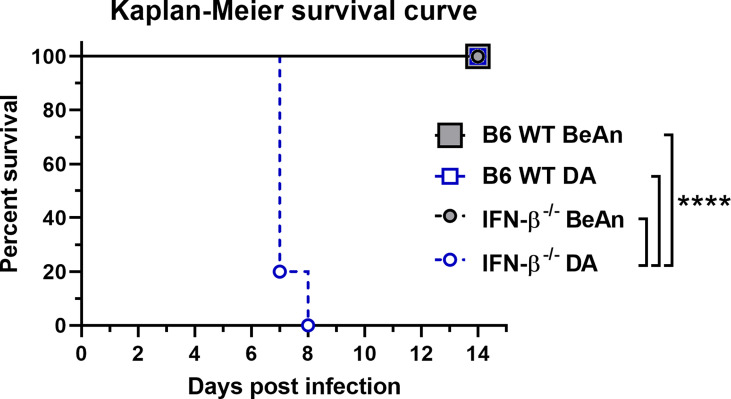
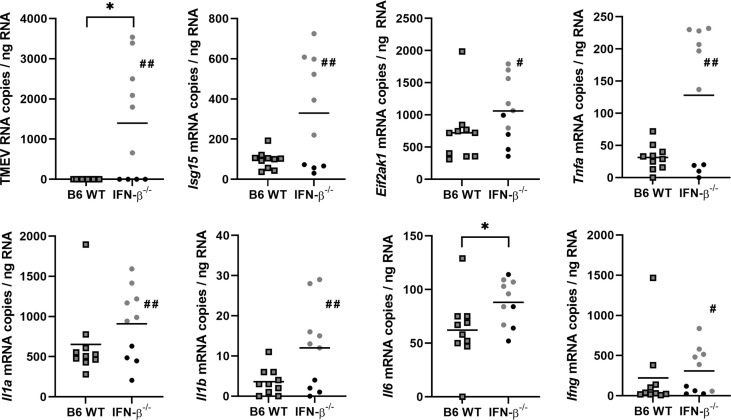
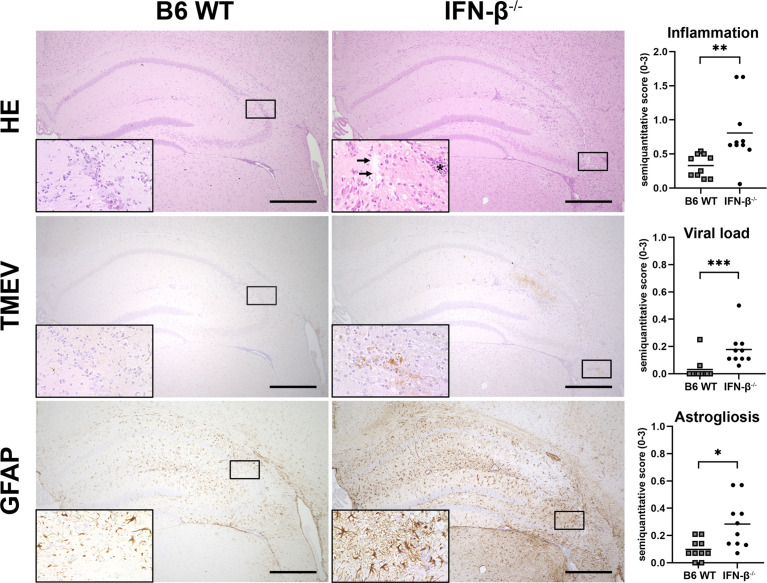
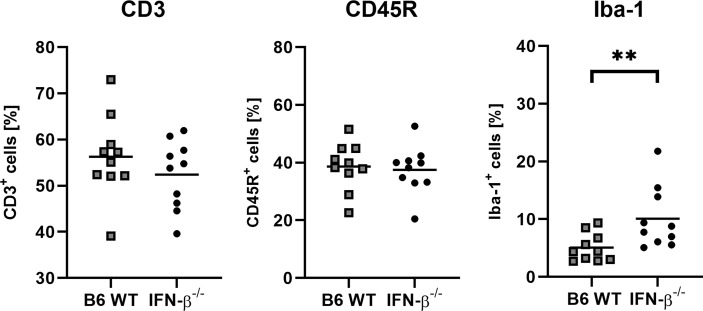
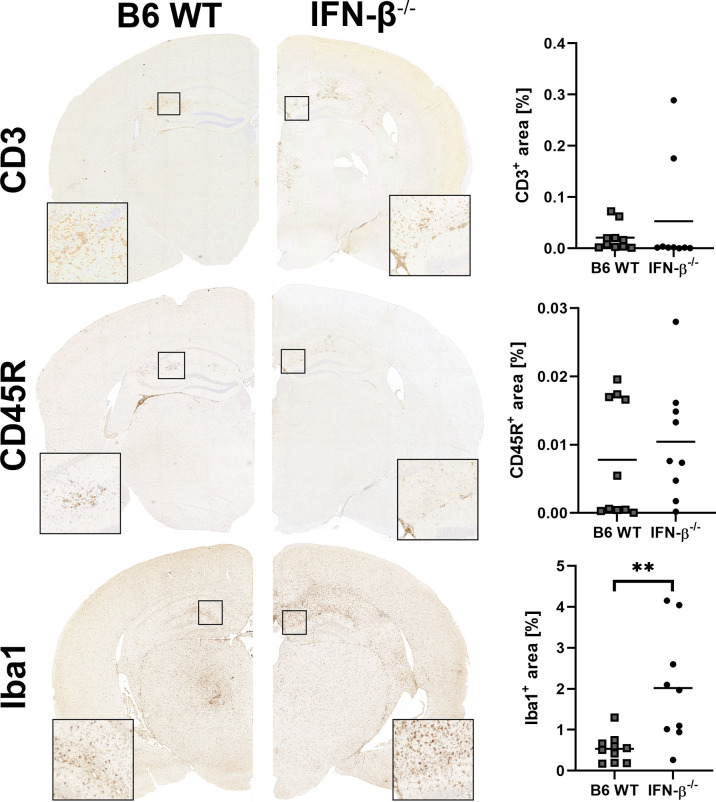
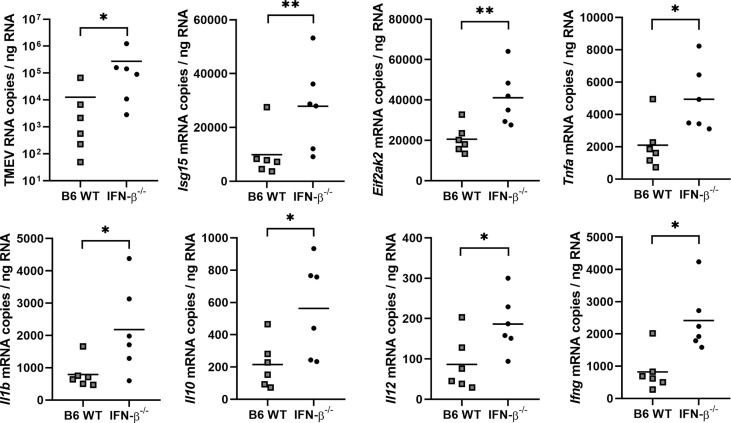
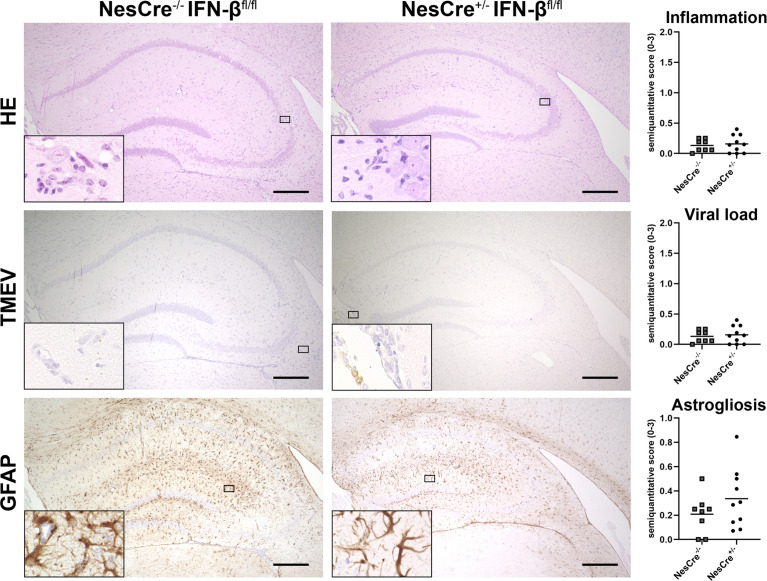
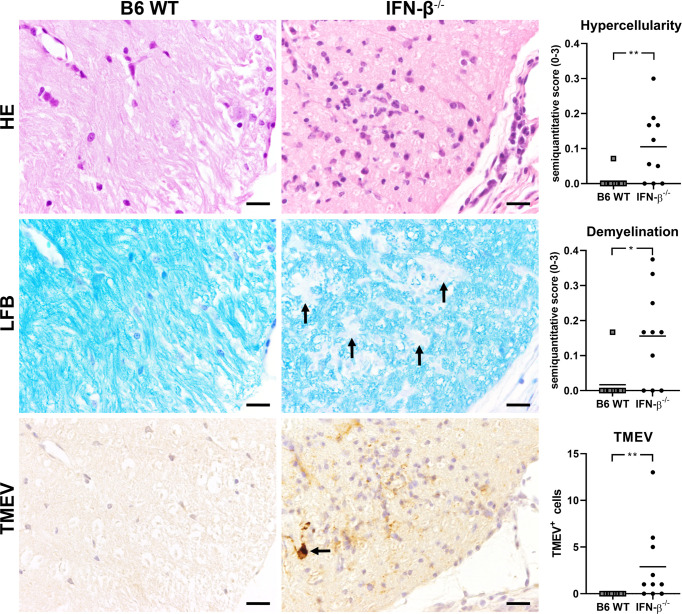
(IFN-I) are important inducers of the antiviral immune response and immune modulators. IFN-β is the most highly expressed IFN-I in the (CNS). The infection of SJL mice with the BeAn or the DA strain of (TMEV) results in a progressive demyelinating disease. C57BL/6 mice are usually resistant to TMEV-induced demyelination and eliminate these strains from the CNS within several weeks. Using C57BL/6 (IFN-β) mice infected with TMEV, we evaluated the role of IFN-β in neuroinfection. Despite the resistance of C57BL/6 (WT) mice to TMEV infection, DA-infected IFN-β mice had to be killed at 7 to 8 (dpi) due to severe clinical disease. In contrast, BeAn-infected IFN-β mice survived until 98 dpi. Nevertheless at 14 dpi, BeAn-infected IFN-β mice showed a stronger encephalitis and astrogliosis, higher viral load as well as higher mRNA levels of , (PKR), , , , and in the cerebrum than BeAn-infected WT mice. Moreover, the majority of IFN-β mice did not clear the virus from the CNS and developed mild demyelination in the spinal cord at 98 dpi, whereas virus and lesions were absent in the spinal cord of WT mice. Persistently infected IFN-β mice also had higher , , , , and mRNA levels in the spinal cord at 98 dpi than their virus-negative counterparts indicating an activation of IFN-I signaling and ongoing inflammation. Most importantly, BeAn-infected NesCre IFN-β mice, which do not express IFN-β in neurons, astrocytes and oligodendrocytes, only developed mild brain lesions similar to WT mice. Consequently, IFN-β produced by neuroectodermal cells does not seem to play a critical role in the resistance of C57BL/6 mice against fatal and demyelinating disease induced by TMEV strains.
(IFN-I) 是抗病毒免疫反应和免疫调节剂的重要诱导剂。IFN-β 是中枢神经系统 (CNS) 中表达最高的 IFN-I。SJL 小鼠感染 BeAn 或 DA 株 (TMEV) 会导致进行性脱髓鞘疾病。C57BL/6 小鼠通常对 TMEV 诱导的脱髓鞘具有抗性,并在数周内从 CNS 中消除这些毒株。使用感染 TMEV 的 C57BL/6 (IFN-β) 小鼠,我们评估了 IFN-β 在神经感染中的作用。尽管 C57BL/6 (WT) 小鼠对 TMEV 感染具有抗性,但由于严重的临床疾病,DA 感染的 IFN-β 小鼠必须在 7 至 8dpi 时被杀死。相比之下,BeAn 感染的 IFN-β 小鼠存活到 98dpi。然而,在 14dpi 时,BeAn 感染的 IFN-β 小鼠表现出更强的脑炎和星形胶质增生、更高的病毒载量以及更高的 、 、 、 、 和 在大脑中的 mRNA 水平比 BeAn 感染的 WT 小鼠高。此外,大多数 IFN-β 小鼠未能从 CNS 中清除病毒,并在 98dpi 时在脊髓中出现轻度脱髓鞘,而 WT 小鼠的脊髓中没有病毒和病变。持续性感染的 IFN-β 小鼠在 98dpi 时脊髓中的 、 、 、 、 和 mRNA 水平也高于其病毒阴性对照,表明 IFN-I 信号的激活和持续的炎症。最重要的是,不表达神经元、星形胶质细胞和少突胶质细胞中 IFN-β 的 BeAn 感染 NesCre IFN-β 小鼠仅表现出类似于 WT 小鼠的轻度脑损伤。因此,神经外胚层细胞产生的 IFN-β 似乎在 C57BL/6 小鼠抵抗 TMEV 株引起的致命和脱髓鞘疾病中不起关键作用。