Fayzullina Daria, Kharwar Rajesh Kumar, Acharya Arbind, Buzdin Anton, Borisov Nicolas, Timashev Peter, Ulasov Ilya, Kapomba Byron
World-Class Research Center "Digital Biodesign and Personalized Healthcare", Sechenov First Moscow State Medical University, Moscow, Russia.
Endocrine Research Lab, Department of Zoology, Kutir Post Graduate College, Chakkey, Jaunpur, India.
Front Oncol. 2022 Feb 10;12:820647. doi: 10.3389/fonc.2022.820647. eCollection 2022.
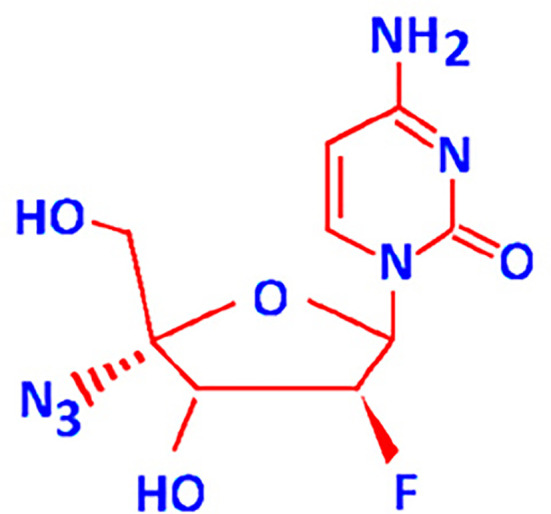
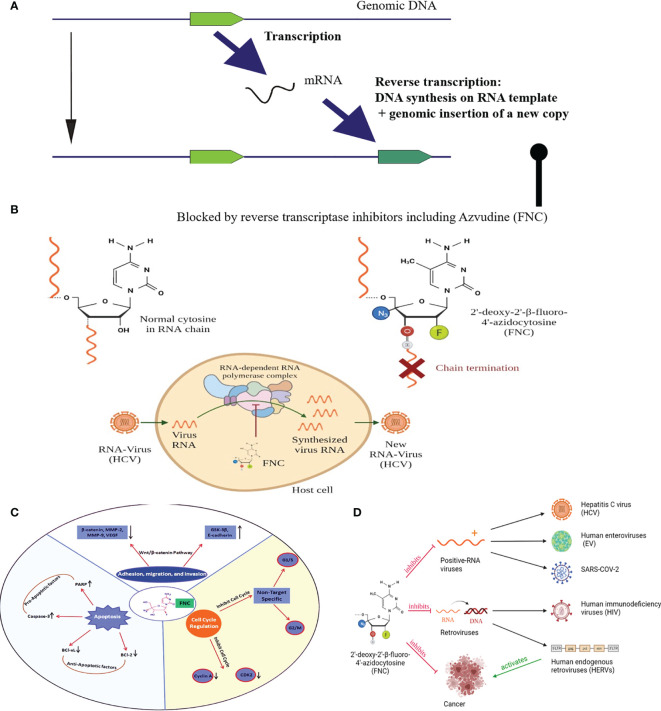
Azvudine (FNC) is a novel cytidine analogue that has both antiviral and anticancer activities. This minireview focuses on its underlying molecular mechanisms of suppressing viral life cycle and cancer cell growth and discusses applications of this nucleoside drug for advanced therapy of tumors and malignant blood diseases. FNC inhibits positive-stand RNA viruses, like HCV, EV, SARS-COV-2, HBV, and retroviruses, including HIV, by suppressing their RNA-dependent polymerase enzymes. It may also inhibit such enzyme (reverse transcriptase) in the human retrotransposons, including human endogenous retroviruses (HERVs). As the activation of retrotransposons can be the major factor of ongoing cancer genome instability and consequently higher aggressiveness of tumors, FNC has a potential to increase the efficacy of multiple anticancer therapies. Furthermore, FNC also showed other aspects of anticancer activity by inhibiting adhesion, migration, invasion, and proliferation of malignant cells. It was also reported to be involved in cell cycle arrest and apoptosis, thereby inhibiting the progression of cancer through different pathways. To the date, the grounds of FNC effects on cancer cells are not fully understood and hence additional studies are needed for better understanding molecular mechanisms of its anticancer activities to support its medical use in oncology.
阿兹夫定(FNC)是一种新型胞苷类似物,具有抗病毒和抗癌活性。本综述聚焦于其抑制病毒生命周期和癌细胞生长的潜在分子机制,并讨论这种核苷类药物在肿瘤和恶性血液病高级治疗中的应用。FNC通过抑制正链RNA病毒(如丙型肝炎病毒、肠道病毒、严重急性呼吸综合征冠状病毒2、乙型肝炎病毒)以及逆转录病毒(包括人类免疫缺陷病毒)的RNA依赖性聚合酶来抑制这些病毒。它也可能抑制人类逆转座子(包括人类内源性逆转录病毒)中的这种酶(逆转录酶)。由于逆转座子的激活可能是导致癌症基因组持续不稳定并进而使肿瘤具有更高侵袭性的主要因素,FNC有潜力提高多种抗癌疗法的疗效。此外,FNC还通过抑制恶性细胞的黏附、迁移、侵袭和增殖表现出其他抗癌活性方面。据报道,它还参与细胞周期阻滞和凋亡,从而通过不同途径抑制癌症进展。迄今为止,FNC对癌细胞作用的机制尚未完全了解,因此需要进一步研究以更好地理解其抗癌活性的分子机制,从而支持其在肿瘤学中的医学应用。