Yang Guangjian, Liu Chengming, Hu Jiaqi, Sun Yang, Hu Peizeng, Liu Liu, Xu Haiyan, Li Dazhou, Li Weihua, Yang Yaning, Sun Nan, He Jie, Wang Yan
Department of Medical Oncology, National Cancer Center/National Clinical Research Center for Cancer/Cancer Hospital, Chinese Academy of Medical Sciences and Peking Union Medical College, Beijing, China.
Department of Thoracic Surgery, National Cancer Center/National Clinical Research Center for Cancer/Cancer Hospital, Chinese Academy of Medical Sciences and Peking Union Medical College, Beijing, China.
Front Oncol. 2022 Feb 11;12:843299. doi: 10.3389/fonc.2022.843299. eCollection 2022.
The uncommon p.L747P mutation in epidermal growth factor receptor (EGFR) exon 19 reveals to alter the response to tyrosine kinase inhibitors (TKIs) in patients diagnosed with advanced non-small cell lung cancer (NSCLC). However, the underlying mechanism is still not clear. This study aimed to investigate the clinical outcomes, binding affinities, and modes of action of currently available EGFR TKIs towards p.L747P mutation.
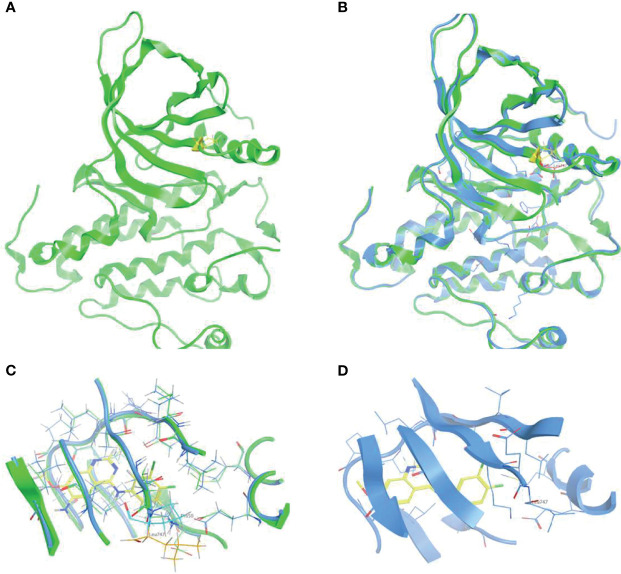
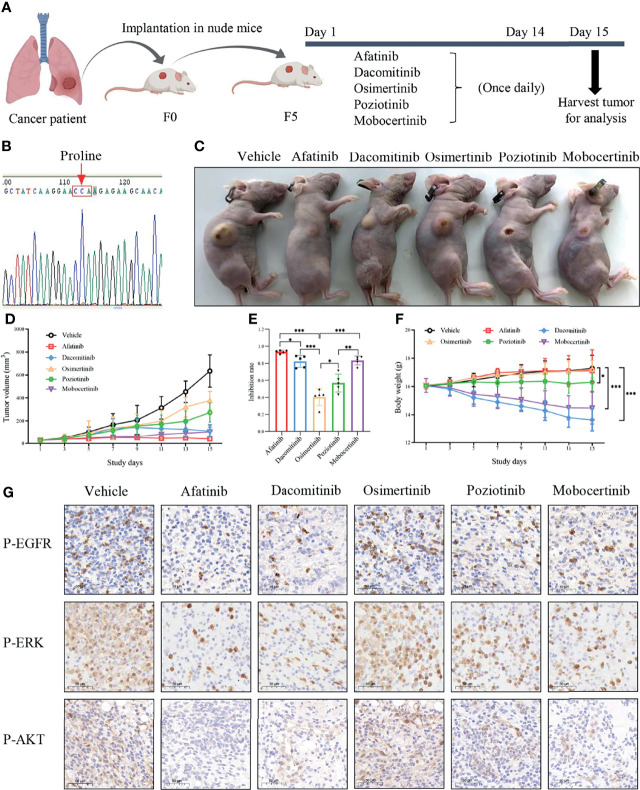
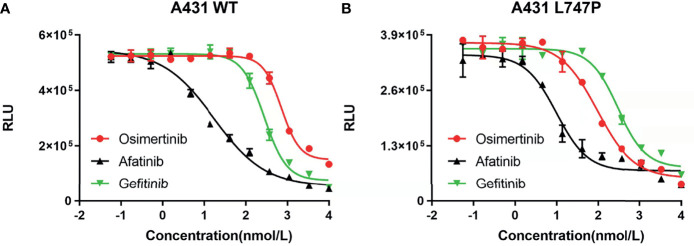
Clinical data of NSCLC patients harboring p.L747P mutation who had received different generations of EGFR TKIs were collected from medical records. Computational structure of p.L747P was constructed and cellular kinase inhibition assay and mice xenograft experiment were performed to predict and confirm the binding affinities and antitumor activities of diverse EGFR TKIs.
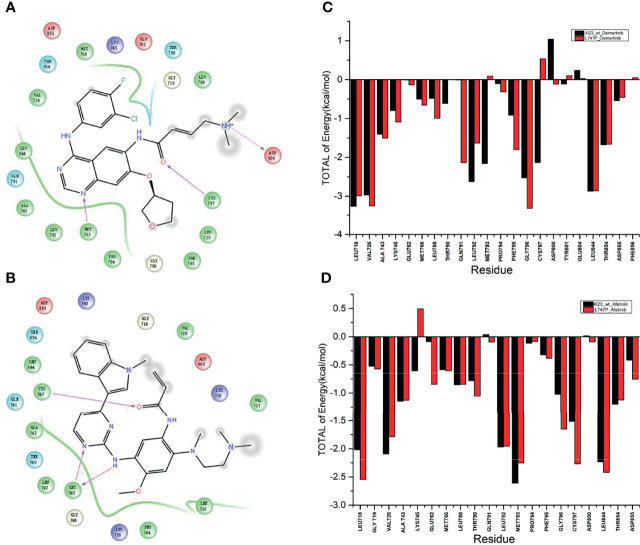
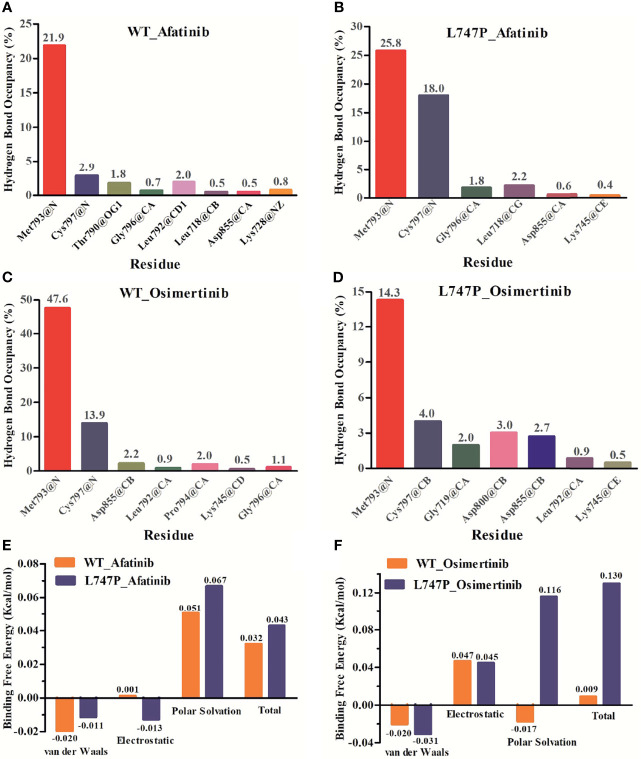
A total of five metastatic NSCLC patients with p.L747P mutation were included in the final analysis. Patients treated with second-generation (2G) TKI afatinib achieved numerically longer progression-free survival (range 2.4-8.5 months) than that with first-generation (1G, range 1.4-5.5 months) or third-generation (3G, range 1.6-7.5 months) TKIs. None of the patients administered 1G or 3G TKIs achieved tumor response, but two-thirds of them treated with afatinib achieved partial response. Dynamics simulation predicted that 2G TKIs presented the best binding affinity to p.L747P mutation. The cellular kinase inhibition assay and mice xenograft experiment confirmed that afatinib could potently inhibit p.L747P-mutant cells and significantly reduce p.L747P-mutant tumor growth (< 0.001), together with reduced phosphorylation of EGFR and its downstream signalings.
The uncommon p.L747P mutation in EGFR exon 19 resulted in a poor response to first-generation EGFR TKIs. Afatinib revealed a better clinical response and binding affinity compared with osimertinib for this specific alteration.
表皮生长因子受体(EGFR)第19外显子中罕见的p.L747P突变显示会改变晚期非小细胞肺癌(NSCLC)患者对酪氨酸激酶抑制剂(TKIs)的反应。然而,其潜在机制仍不清楚。本研究旨在调查目前可用的EGFR TKIs对p.L747P突变的临床疗效、结合亲和力及作用方式。
从病历中收集携带p.L747P突变且接受过不同代EGFR TKIs治疗的NSCLC患者的临床数据。构建p.L747P的计算结构,并进行细胞激酶抑制试验和小鼠异种移植实验,以预测和确认不同EGFR TKIs的结合亲和力和抗肿瘤活性。
最终分析纳入了5例携带p.L747P突变的转移性NSCLC患者。接受第二代(2G)TKI阿法替尼治疗的患者无进展生存期在数值上长于接受第一代(1G,范围1.4 - 5.5个月)或第三代(3G,范围1.6 - 7.5个月)TKIs治疗的患者(范围2.4 - 8.5个月)。接受1G或3G TKIs治疗的患者均未实现肿瘤缓解,但接受阿法替尼治疗的患者中有三分之二实现了部分缓解。动力学模拟预测2G TKIs对p.L747P突变具有最佳结合亲和力。细胞激酶抑制试验和小鼠异种移植实验证实,阿法替尼可有效抑制p.L747P突变细胞,并显著降低p.L747P突变肿瘤的生长(<0.001),同时降低EGFR及其下游信号的磷酸化水平。
EGFR第19外显子中罕见的p.L747P突变导致对第一代EGFR TKIs反应不佳。与奥希替尼相比,阿法替尼对这种特定改变显示出更好的临床反应和结合亲和力。