Nupur Neh, Joshi Srishti, Gulliarme Davy, Rathore Anurag S
Department of Chemical Engineering, IIT Delhi, Hauz Khas, New Delhi, India.
Institute of Pharmaceutical Sciences of Western Switzerland (ISPSO), University of Geneva, Geneva, Switzerland.
Front Bioeng Biotechnol. 2022 Feb 9;10:832059. doi: 10.3389/fbioe.2022.832059. eCollection 2022.
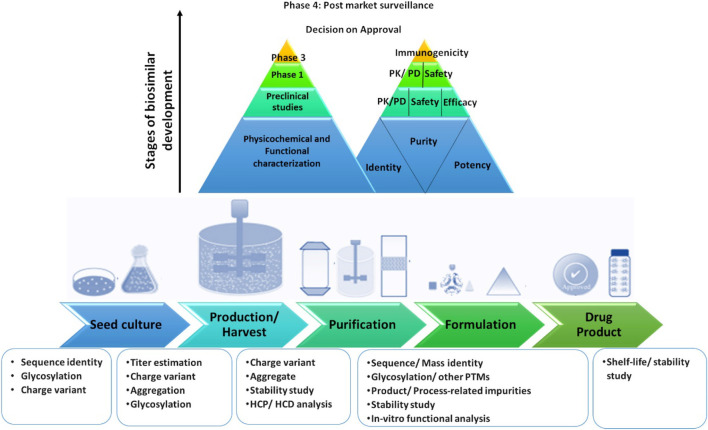
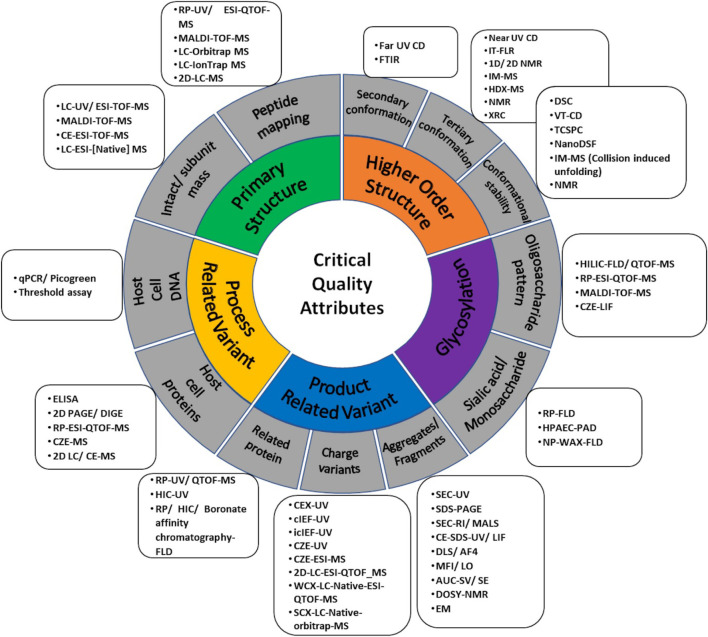
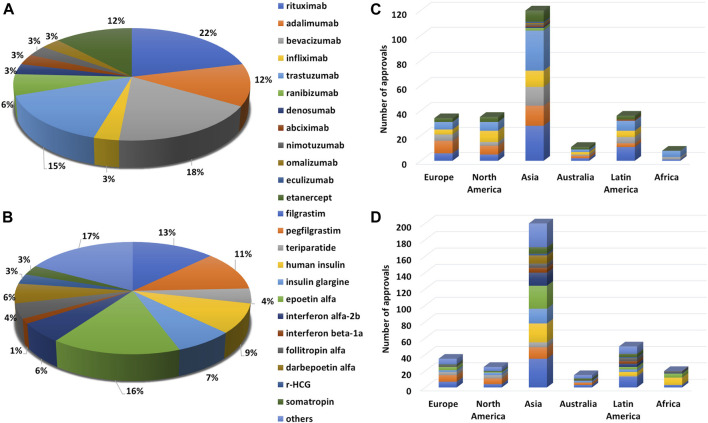
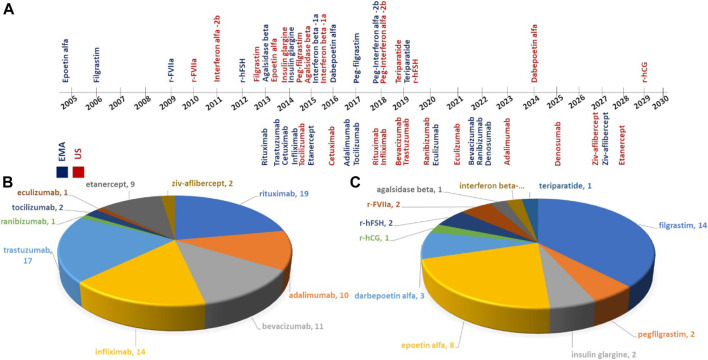
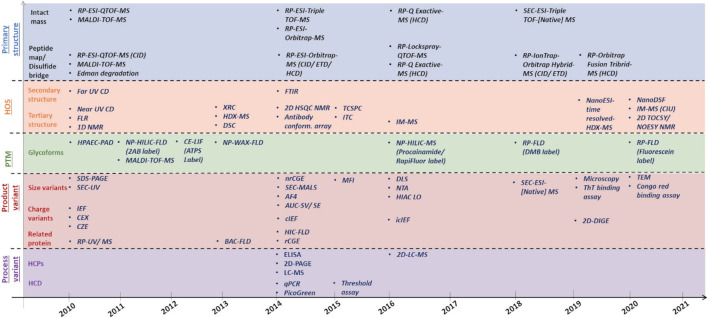
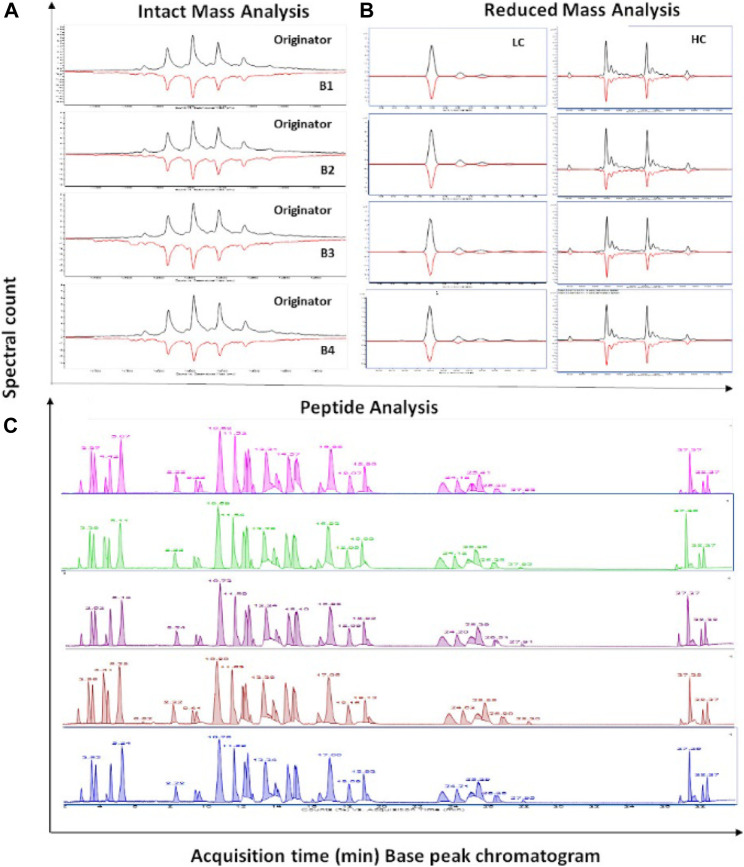
Biopharmaceuticals are one of the fastest-growing sectors in the biotechnology industry. Within the umbrella of biopharmaceuticals, the biosimilar segment is expanding with currently over 200 approved biosimilars, globally. The key step towards achieving a successful biosimilar approval is to establish analytical and clinical biosimilarity with the innovator. The objective of an analytical biosimilarity study is to demonstrate a highly similar profile with respect to variations in critical quality attributes (CQAs) of the biosimilar product, and these variations must lie within the range set by the innovator. This comprises a detailed comparative structural and functional characterization using appropriate, validated analytical methods to fingerprint the molecule and helps reduce the economic burden towards regulatory requirement of extensive preclinical/clinical similarity data, thus making biotechnological drugs more affordable. In the last decade, biosimilar manufacturing and associated regulations have become more established, leading to numerous approvals. Biosimilarity assessment exercises conducted towards approval are also published more frequently in the public domain. Consequently, some technical advancements in analytical sciences have also percolated to applications in analytical biosimilarity assessment. Keeping this in mind, this review aims at providing a holistic view of progresses in biosimilar analysis and approval. In this review, we have summarized the major developments in the global regulatory landscape with respect to biosimilar approvals and also catalogued biosimilarity assessment studies for recombinant DNA products available in the public domain. We have also covered recent advancements in analytical methods, orthogonal techniques, and platforms for biosimilar characterization, since 2015. The review specifically aims to serve as a comprehensive catalog for published biosimilarity assessment studies with details on analytical platform used and critical quality attributes (CQAs) covered for multiple biotherapeutic products. Through this compilation, the emergent evolution of techniques with respect to each CQA has also been charted and discussed. Lastly, the information resource of published biosimilarity assessment studies, created during literature search is anticipated to serve as a helpful reference for biopharmaceutical scientists and biosimilar developers.
生物制药是生物技术产业中发展最快的领域之一。在生物制药的范畴内,生物类似药领域正在不断扩张,目前全球已有超过200种获批的生物类似药。获得生物类似药成功获批的关键步骤是与原研药建立分析和临床相似性。分析性生物类似性研究的目的是证明生物类似药产品在关键质量属性(CQA)变化方面具有高度相似的特征,并且这些变化必须在原研药设定的范围内。这包括使用适当的、经过验证的分析方法对分子进行详细的比较结构和功能表征,以确定其特征,并有助于减轻因广泛的临床前/临床相似性数据的监管要求而带来的经济负担,从而使生物技术药物更具可及性。在过去十年中,生物类似药的生产和相关法规变得更加完善,导致大量产品获批。为获批而进行的生物类似性评估活动也更频繁地在公共领域发表。因此,分析科学的一些技术进步也渗透到了分析性生物类似性评估的应用中。考虑到这一点,本综述旨在全面介绍生物类似药分析和获批方面的进展。在本综述中,我们总结了全球监管格局中关于生物类似药获批的主要发展情况,并对公共领域中可获得的重组DNA产品的生物类似性评估研究进行了编目。我们还涵盖了自2015年以来生物类似药表征的分析方法、正交技术和平台的最新进展。本综述的具体目的是作为已发表的生物类似性评估研究的综合目录,详细介绍所使用的分析平台以及多种生物治疗产品所涵盖的关键质量属性(CQA)。通过这一汇编,还绘制并讨论了每种CQA相关技术的新兴发展。最后,在文献检索过程中创建的已发表生物类似性评估研究的信息资源预计将为生物制药科学家和生物类似药开发者提供有用的参考。