Poirier Aurore C, Kuang Dai, Siedler Bianca S, Borah Khushboo, Mehat Jai W, Liu Jialin, Tai Cui, Wang Xiaoli, van Vliet Arnoud H M, Ma Wei, Jenkins David R, Clark John, La Ragione Roberto M, Qu Jieming, McFadden Johnjoe
Department of Pathology and Infectious Diseases, Faculty of Health and Medical Sciences, School of Veterinary Medicine, University of Surrey, Guildford, United Kingdom.
Department of Pulmonary and Critical Care Medicine, Ruijin Hospital, School of Medicine, Institute of Respiratory Diseases, Shanghai Jiao Tong University, Shanghai, China.
Front Mol Biosci. 2022 Feb 9;8:794961. doi: 10.3389/fmolb.2021.794961. eCollection 2021.
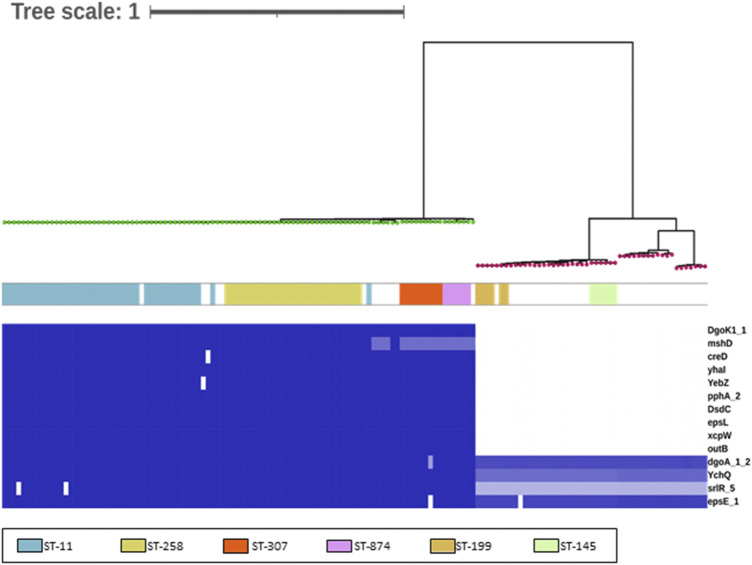
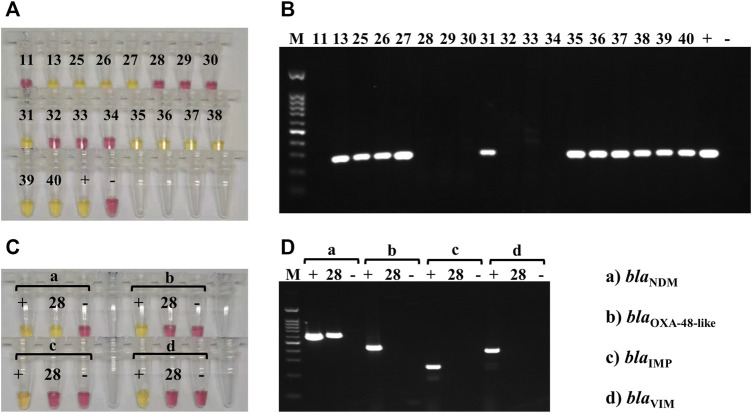
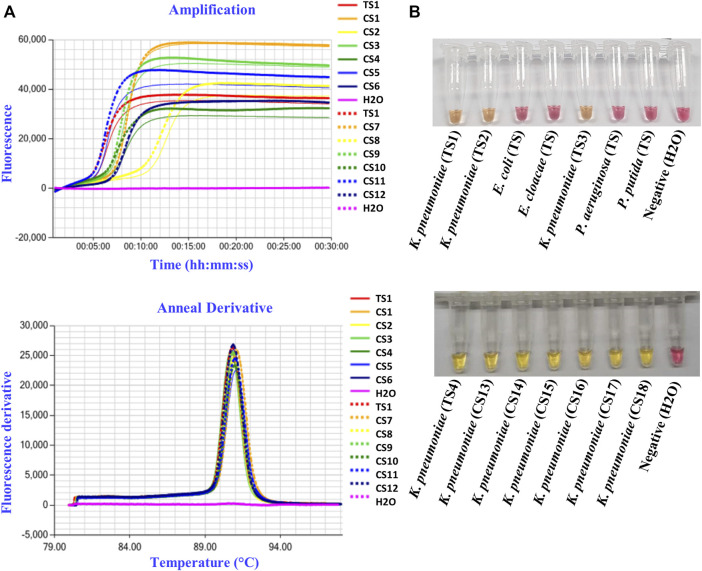
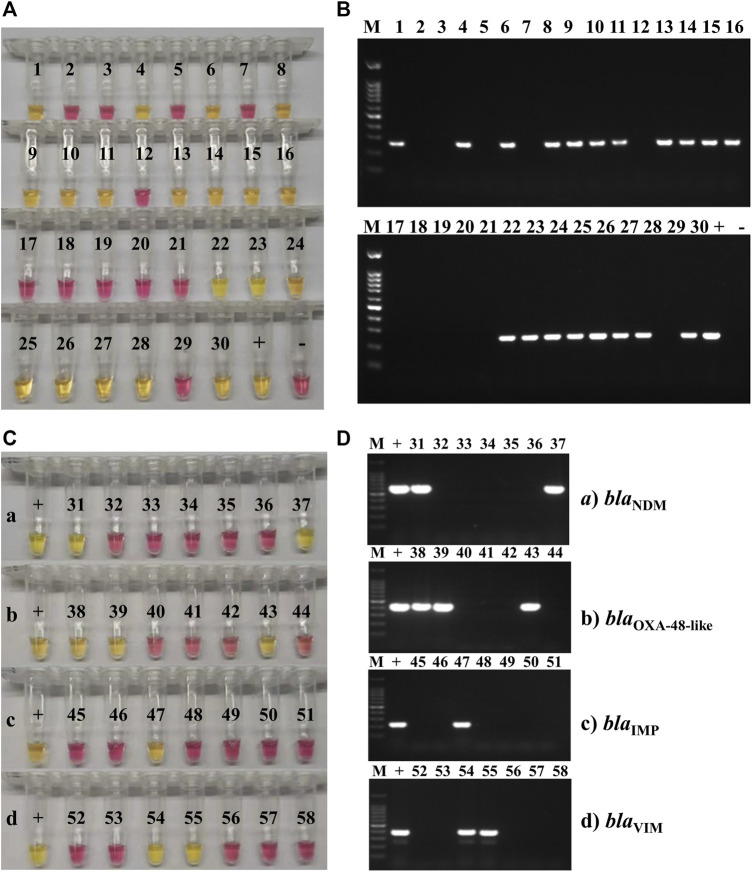
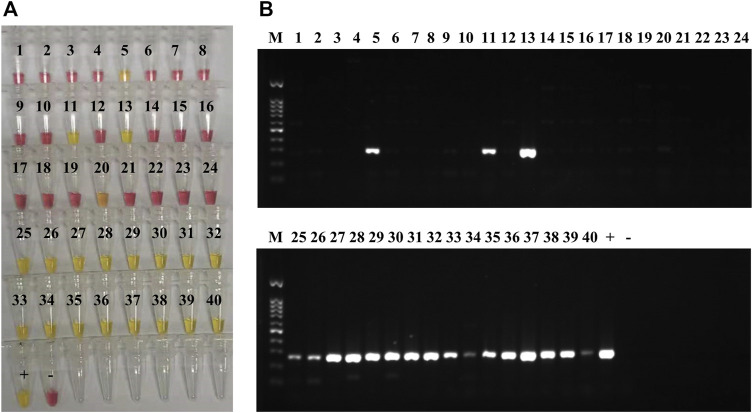
is an important pathogenic bacterium commonly associated with human healthcare and community-acquired infections. In recent years, has become a significant threat to global public and veterinary health, because of its high rates of antimicrobial resistance (AMR). Early diagnosis of infection and detection of any associated AMR would help to accelerate directed therapy and reduce the risk of the emergence of multidrug-resistant isolates. In this study, we identified three target genes (, , and ) common to isolates from both China and Europe and designed loop-mediated isothermal amplification (LAMP) assays for the detection of in clinical samples. We also designed LAMP assays for the detection of five AMR genes commonly associated with . The LAMP assays were validated on a total of 319 type reference strains and clinical isolates of diverse genetic backgrounds, in addition to 40 clinical human sputum samples, and were shown to be reliable, highly specific, and sensitive. For the -specific LAMP assay, the calculated sensitivity, specificity, and positive and negative predictive values (comparison with culture and matrix-assisted laser desorption/ionization-time of flight mass spectrometry) were all 100% on clinical isolates and, respectively, of 100%, 91%, and 90%, and 100% when tested on clinical sputum samples, while being significantly faster than the reference methods. For the and other carbapenemases' LAMP assays, the concordance between the LAMP results and the references methods (susceptibility tests) was 100%, on both pure cultures ( = 125) and clinical samples ( = 18). In conclusion, we developed highly sensitive and specific LAMP assays for the clinical identification of and detection of carbapenem resistance.
是一种重要的病原菌,通常与人类医疗保健和社区获得性感染相关。近年来,由于其高抗菌药物耐药率(AMR),已成为全球公共卫生和兽医卫生的重大威胁。早期诊断感染并检测任何相关的AMR将有助于加速定向治疗并降低多重耐药菌株出现的风险。在本研究中,我们鉴定了来自中国和欧洲的分离株共有的三个靶基因(、和),并设计了环介导等温扩增(LAMP)检测方法用于临床样本中的检测。我们还设计了LAMP检测方法用于检测通常与相关的五个AMR基因。除40份临床人痰液样本外,LAMP检测方法在总共319株不同遗传背景的标准参考菌株和临床分离株上进行了验证,并显示出可靠、高度特异和灵敏。对于特异性LAMP检测,在临床分离株上计算的灵敏度、特异性以及阳性和阴性预测值(与培养和基质辅助激光解吸电离飞行时间质谱法比较)均为100%,在临床痰液样本上检测时分别为100%、91%、90%和100%,同时比参考方法显著更快。对于和其他碳青霉烯酶的LAMP检测,在纯培养物(=125)和临床样本(=18)上,LAMP结果与参考方法(药敏试验)之间的一致性均为100%。总之,我们开发了用于临床鉴定和检测碳青霉烯耐药性的高度灵敏和特异的LAMP检测方法。