J Clin Invest. 2022 Mar 1;132(5). doi: 10.1172/JCI157820.
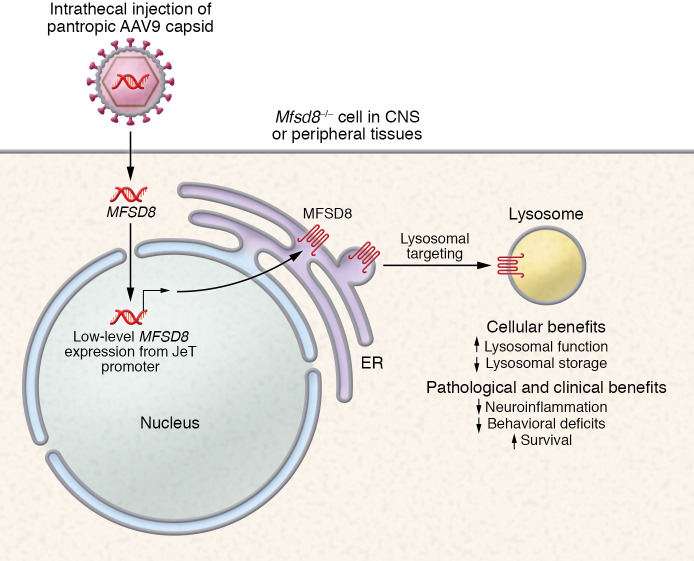
CLN7 Batten disease, also known as variant late infantile neuronal ceroid lipofuscinosis type 7 (vLINCL7), is an ultra-rare form of Batten disease that presents early in life with severe neurological symptoms, including visual deficits, motor problems, and frequent seizures. There is high unmet need for disease-modifying therapies, as no existing treatment can halt progression or prevent premature death. In this issue of the JCI, Chen et al. present an AAV gene therapy for CLN7 that shows marked benefit in a mouse model of CLN7 Batten disease, paving the way for a phase I trial. The candidate gene therapy shows benefit for histopathology, behavioral abnormalities, and survival in mice and offers an acceptable safety profile in both mice and rats. Questions remain regarding dose, scaling, and timing of administration for patients, but this work is a substantial step forward for a very challenging disease.
CLN7 神经蜡样脂褐质沉积症,也称为变异型晚婴儿神经元蜡样脂褐质沉积症 7 型(vLINCL7),是一种超罕见的神经蜡样脂褐质沉积症,在生命早期即出现严重的神经症状,包括视力减退、运动问题和频繁癫痫发作。目前尚无针对该疾病的治疗方法,因此对疾病修饰疗法的需求极高,无法阻止疾病进展或预防过早死亡。在本期 JCI 中,Chen 等人提出了一种针对 CLN7 的 AAV 基因疗法,该疗法在 CLN7 神经蜡样脂褐质沉积症的小鼠模型中表现出显著疗效,为 I 期临床试验铺平了道路。候选基因疗法在小鼠中对组织病理学、行为异常和存活率均有益,并在小鼠和大鼠中均具有可接受的安全性。关于患者的剂量、缩放和给药时间仍存在疑问,但这项工作是针对这种极具挑战性疾病的重大进展。