Department of Collective Behaviour, Max Planck Institute of Animal Behavior, Konstanz, Germany.
Centre for the Advanced Study of Collective Behaviour, University of Konstanz, Konstanz, Germany.
BMC Ecol Evol. 2022 Mar 2;22(1):21. doi: 10.1186/s12862-022-01980-4.
Sex-biased dispersal is a common and widespread phenomenon that can fundamentally shape the genetic structure of the social environments in which animals live. For animals that live in and move between social groups, sex-biased dispersal can result in an asymmetry in the degree of relatedness among cohabiting males and females, which can have strong implications for their social evolution. In this study, we measured the relatedness structure within and across groups of a wild population of Neolamprologus multifasciatus, a highly-social, shell-dwelling cichlid fish endemic to Lake Tanganyika, East Africa. In total, we genotyped 812 fish from 128 social groups at 20 microsatellite loci. Neolamprologus multifasciatus live at high densities, and also experience strong ecological constraints on free movement throughout their habitat. At the same time, they exhibit sex differences in the degree of reproductive competition within their groups and this makes them an excellent model system for studying the factors associated with sex-biased dispersal.
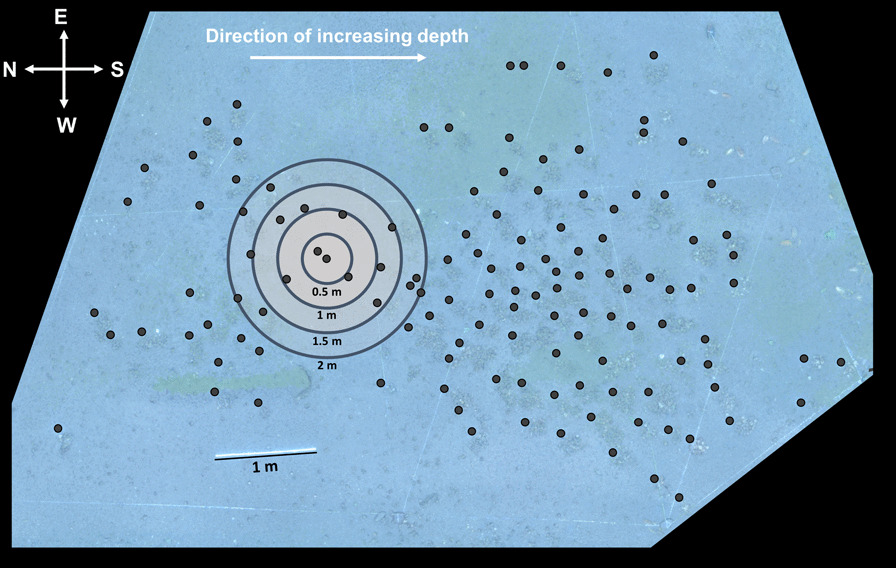
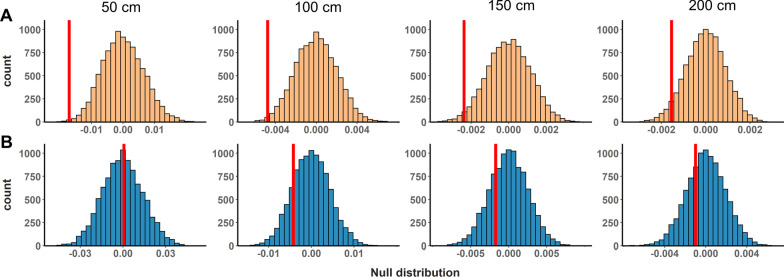
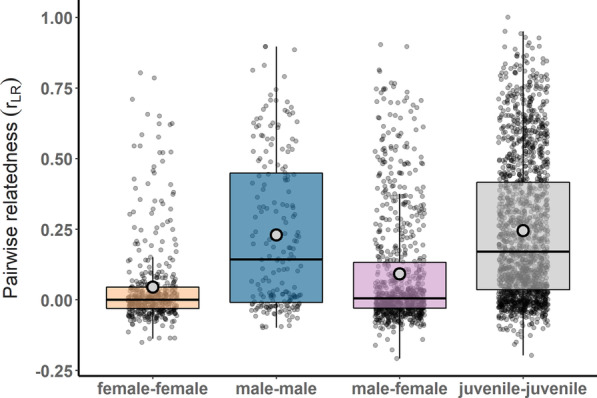
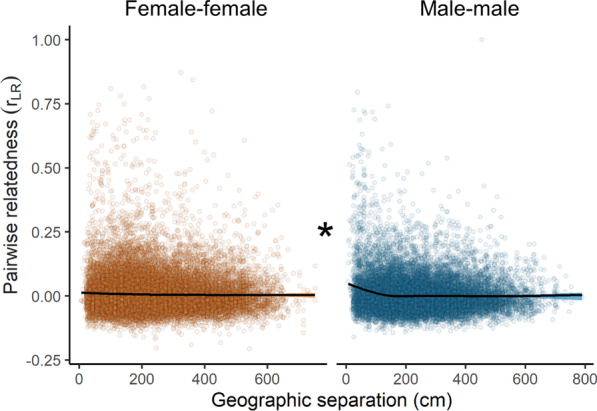
Social groups of N. multifasciatus consist of multiple males and females living together. We found that cohabiting females were unrelated to one another (Lynch-Ritland estimates of relatedness = 0.045 ± 0.15, average ± SD), while males shared much higher, albeit variable, levels of relatedness to other males in their groups (0.23 ± 0.27). We uncovered a pronounced decline in relatedness between males living in separate groups as the spatial separation between them increased, a pattern that was not evident in females. Female dispersal was also markedly constrained by the distribution and availability of nearby territories to which they could emigrate.
Our results indicate female-biased dispersal in N. multifasciatus. Our study also highlights how the spatial distribution of suitable dispersal destinations can influence the movement decisions of animals. We also emphasize how sex-biased dispersal can influence the relatedness structure of the social environment in which individuals interact and compete with one another.
性别偏向的扩散是一种常见且广泛存在的现象,它可以从根本上塑造动物生活的社会环境的遗传结构。对于那些在社会群体之间移动的动物来说,性别偏向的扩散可能导致共同生活的雄性和雌性之间的亲缘关系程度不对称,这对它们的社会进化有很大的影响。在这项研究中,我们测量了东非坦噶尼喀湖特有高度社会化的壳栖慈鲷鱼 Neolamprologus multifasciatus 的野生种群中,群体内和群体间的亲缘关系结构。我们总共在 20 个微卫星基因座上对来自 128 个社会群体的 812 条鱼进行了基因分型。Neolamprologus multifasciatus 生活在高密度环境中,并且在其栖息地中自由移动受到强烈的生态限制。与此同时,它们在群体内的繁殖竞争程度上存在性别差异,这使它们成为研究与性别偏向扩散相关因素的优秀模型系统。
Neolamprologus multifasciatus 的社会群体由多只雄性和雌性共同生活。我们发现,共同生活的雌性彼此之间没有亲缘关系(Lynch-Ritland 估计的亲缘关系=0.045±0.15,平均±标准差),而雄性在群体中与其他雄性共享更高但可变的亲缘关系水平(0.23±0.27)。我们发现,随着雄性之间空间分离的增加,它们之间的亲缘关系明显下降,而雌性则没有这种模式。雌性的扩散也受到附近可移民领地的分布和可用性的显著限制。
我们的结果表明 Neolamprologus multifasciatus 存在雌性偏向的扩散。我们的研究还强调了合适的扩散目的地的空间分布如何影响动物的移动决策。我们还强调了性别偏向的扩散如何影响个体相互作用和竞争的社会环境的亲缘关系结构。