Department of Cardiovascular Medicine, Graduate School of Medicine, Kyoto University, 54 Shogoin-Kawahara-cho, Sakyo-ku, Kyoto, 606-8507, Japan.
Japanese Red Cross Otsu Hospital, 1-1-35, Nagara-cho, Otsu, Shiga, 520-0000, Japan.
Sci Rep. 2022 Mar 2;12(1):3449. doi: 10.1038/s41598-022-07379-x.
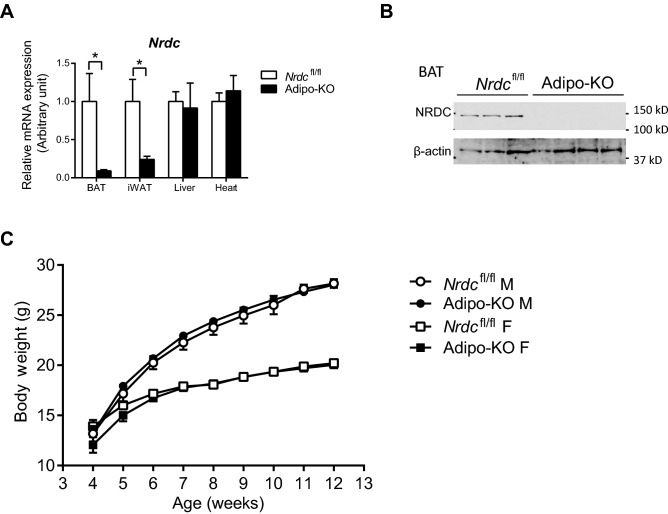
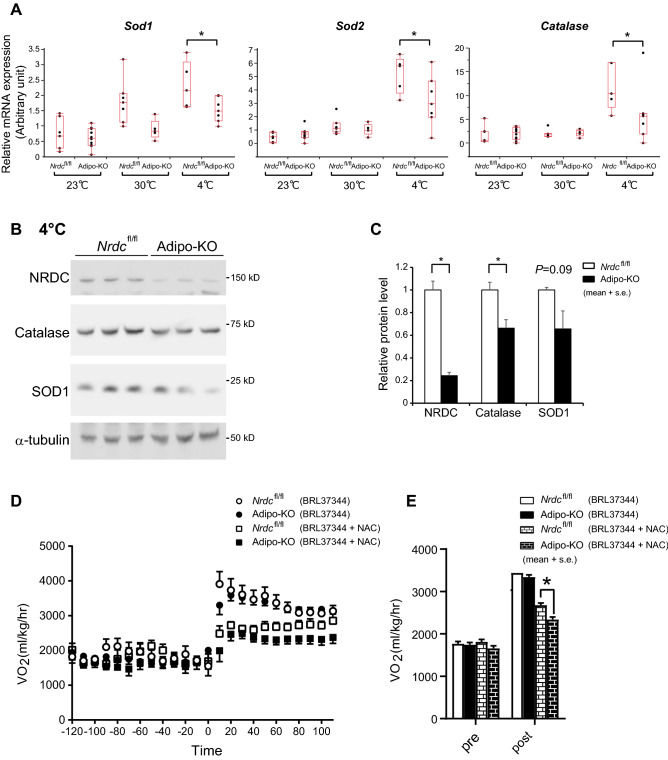
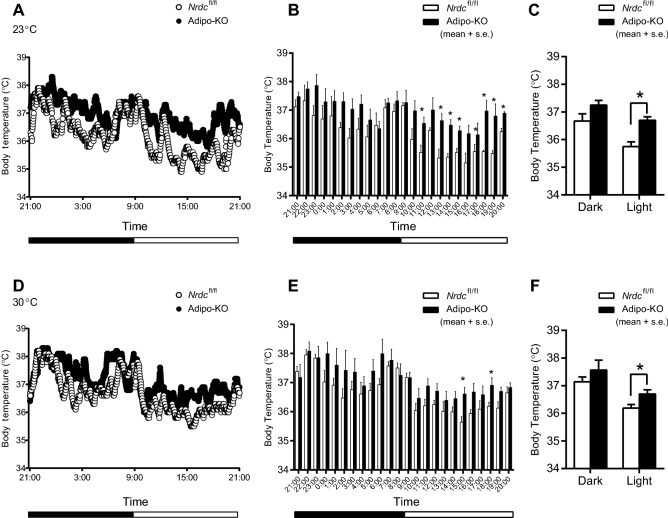
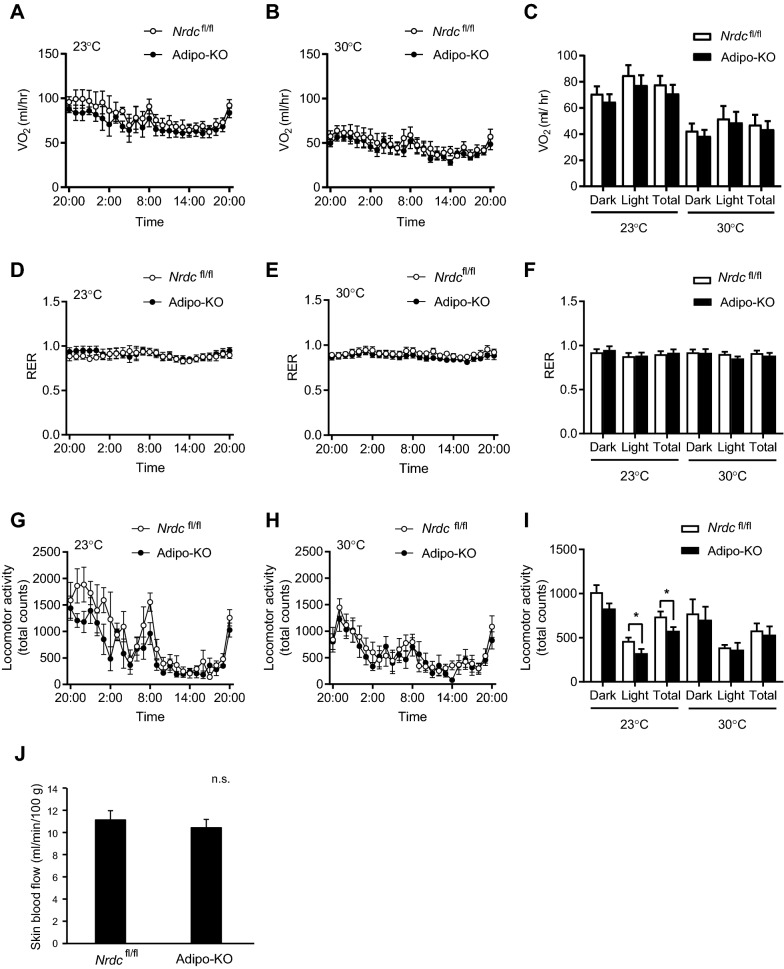
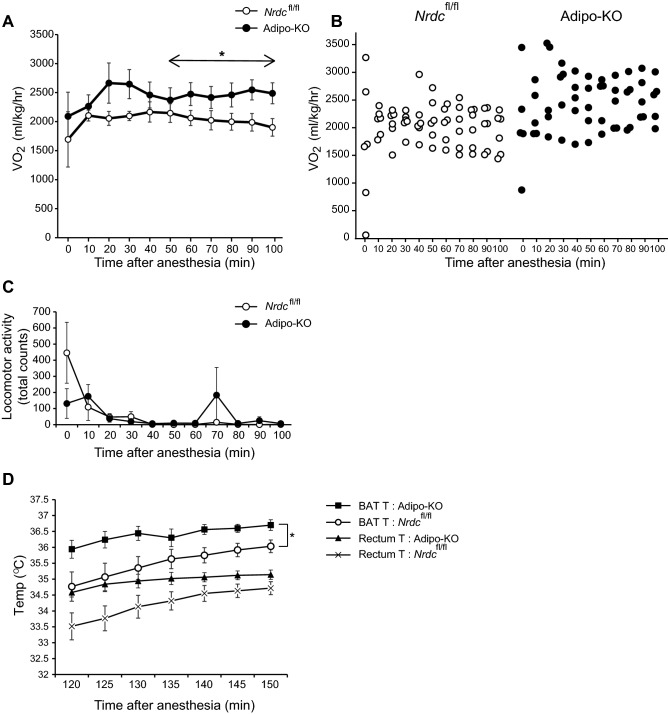
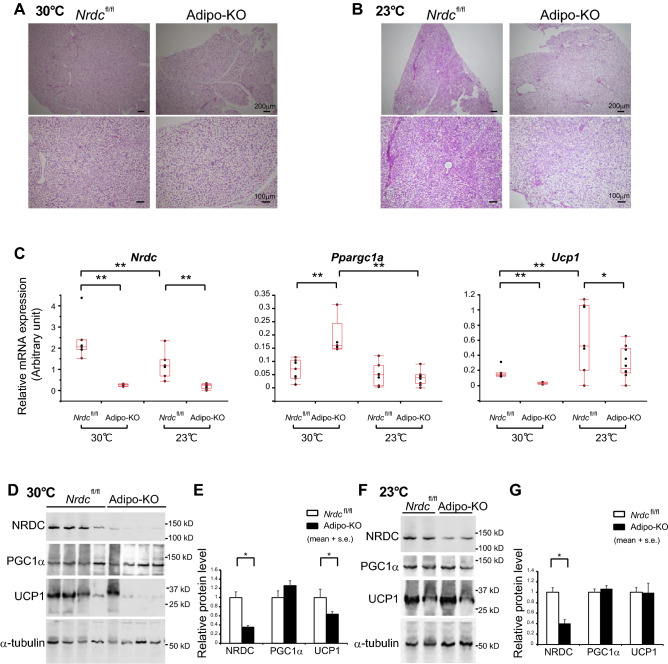
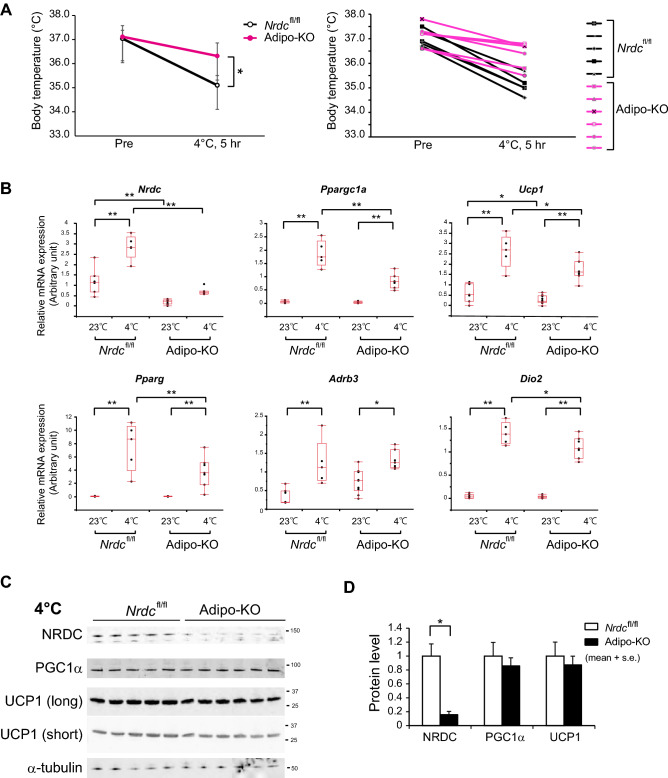
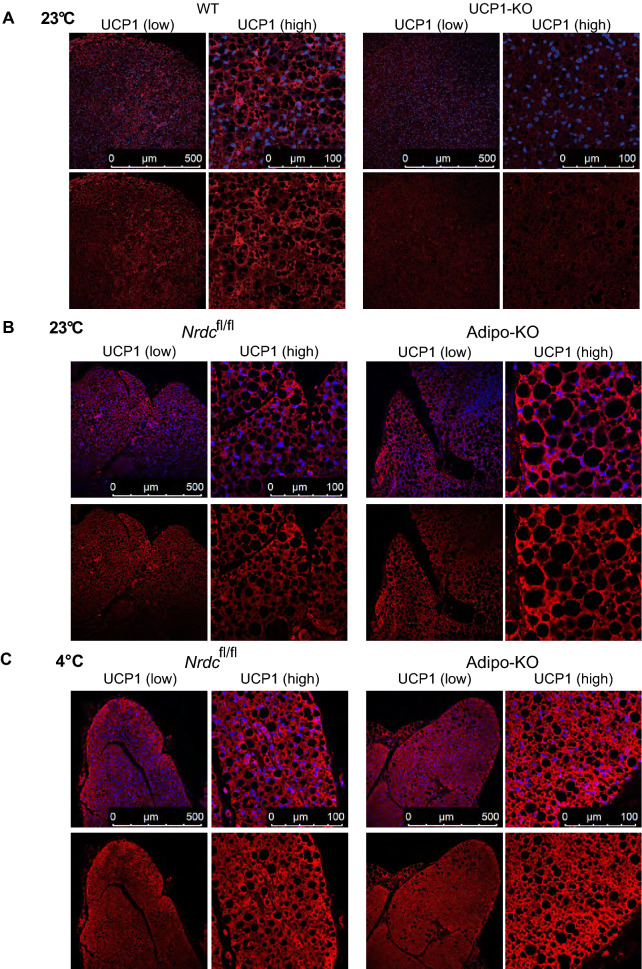
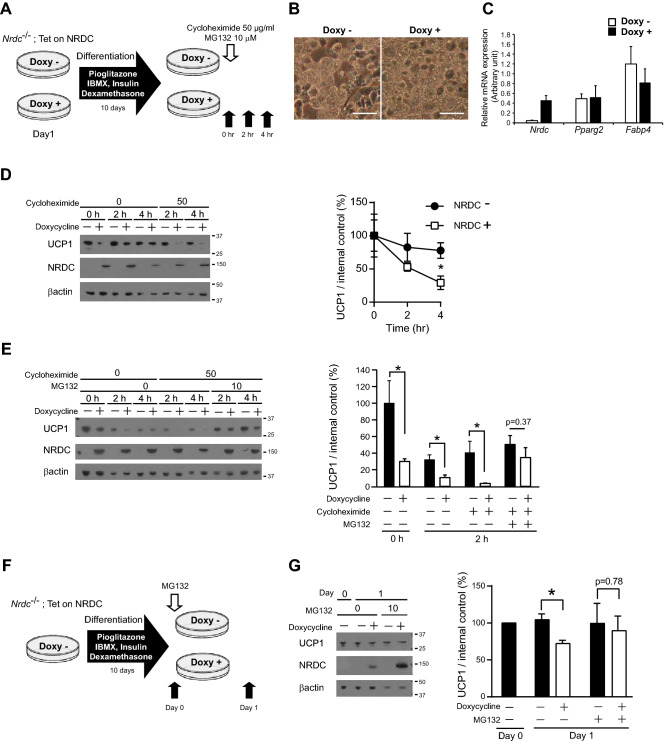
Brown adipose tissue (BAT) dissipates chemical energy as heat through uncoupling protein 1 (UCP1). The induction of mitochondrial reactive oxygen species (ROS) in BAT was recently identified as a mechanism that supports UCP1-dependent thermogenesis. We previously demonstrated that nardilysin (NRDC) plays critical roles in body temperature homeostasis. Global NRDC-deficient (Nrdc) mice show hypothermia due to a lower set point for body temperature, whereas BAT thermogenesis at room temperature (RT) is enhanced mainly to compensate for poor thermal insulation. To examine the primary role of NRDC in BAT thermogenesis, we generated adipocyte-specific NRDC-deficient (Adipo-KO) mice by mating Nrdc floxed (Nrdc) mice with adiponectin-Cre mice. Adipo-KO mice showed hyperthermia at both RT and thermoneutrality. They were also more cold-tolerant than Nrdc mice. However, UCP1 mRNA levels were significantly lower in Adipo-KO BAT at RT, thermoneutrality, and 4 °C, whereas no significant differences were observed in UCP1 protein levels at RT and 4 °C. We examined the protein stability of UCP1 using the cycloheximide chase assay and found that NRDC negatively regulated its stability via the ubiquitin-proteasome pathway. NRDC may be also involved in ROS-mediated in vivo thermogenesis because the inhibitory effects of N-acetyl cysteine, an ROS scavenger, on β3 agonist-induced thermogenesis were stronger in Adipo-KO mice. Collectively, the present results demonstrate that NRDC in BAT controls adaptive thermogenesis and body temperature homeostasis possibly via the regulation of UCP1 protein stability and ROS levels.
棕色脂肪组织(BAT)通过解偶联蛋白 1(UCP1)将化学能消散为热量。最近发现,BAT 中线粒体活性氧(ROS)的诱导是支持 UCP1 依赖性产热的一种机制。我们之前证明,纳迪利ysin(NRDC)在体温稳态中发挥关键作用。由于体温设定点较低,全球 NRDC 缺陷(Nrdc)小鼠表现出体温过低,而 BAT 在室温(RT)下的产热增强主要是为了弥补隔热性能差。为了研究 NRDC 在 BAT 产热中的主要作用,我们通过将 Nrdc 基因敲除(Nrdc)小鼠与脂联素-Cre 小鼠交配,生成脂肪细胞特异性 NRDC 缺陷(Adipo-KO)小鼠。Adipo-KO 小鼠在 RT 和热中性温度下均表现出体温过高。它们比 Nrdc 小鼠更能耐受寒冷。然而,在 RT、热中性温度和 4°C 时,Adipo-KO BAT 中的 UCP1 mRNA 水平显著降低,而在 RT 和 4°C 时 UCP1 蛋白水平没有显著差异。我们使用环己酰亚胺追踪实验检查了 UCP1 的蛋白稳定性,发现 NRDC 通过泛素-蛋白酶体途径负调控其稳定性。NRDC 也可能参与 ROS 介导的体内产热,因为 ROS 清除剂 N-乙酰半胱氨酸对 Adipo-KO 小鼠中β3 激动剂诱导的产热的抑制作用更强。总之,这些结果表明,BAT 中的 NRDC 通过调节 UCP1 蛋白稳定性和 ROS 水平来控制适应性产热和体温稳态。