Bir Raunak, Gautam Hitender, Arif Nazneen, Chakravarti Priyanka, Verma Jyoti, Banerjee Sayantan, Tyagi Sonu, Mohapatra Sarita, Sood Seema, Dhawan Benu, Chaudhry Rama, Kapil Arti, Das Bimal Kumar, Das Bhabatosh
Department of Microbiology, All India Institute of Medical Sciences, New Delhi, India.
Department of Microbiology, All India Institute of Medical Sciences, New Delhi 110029, India.
Ther Adv Infect Dis. 2022 Feb 26;9:20499361221080650. doi: 10.1177/20499361221080650. eCollection 2022 Jan-Dec.
Increasing occurrence of infections caused by multidrug-resistant Gram-negative bacteria resulted in colistin being the last agent for treatment. Apart from plasmid-mediated genes, mutations involving several genes like , and leading causes of colistin resistance. Four colistin susceptibility testing methods were compared against broth microdilution (BMD) and determined the presence of gene.
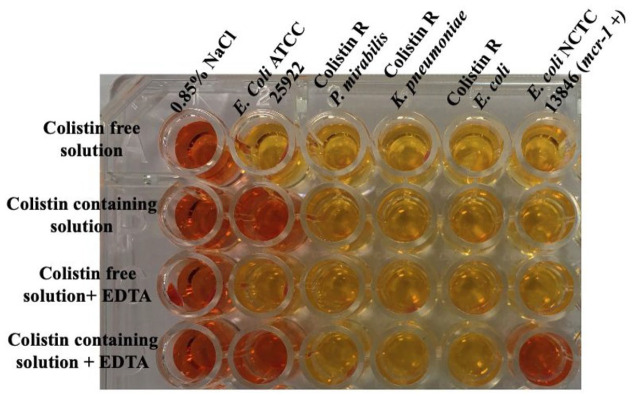
A total of 100 carbapenem-resistant isolates were tested for colistin susceptibility by commercial broth microdilution (cBMD), E-test, VITEK-2, and rapid polymyxin NP assay (RPNP) and compared with BMD. The presence of the gene was determined by modified RPNP and PCR. Two non- colistin-resistant XDR isolates were subjected to whole-genome sequencing using Illumina MiSeq sequencing platform.
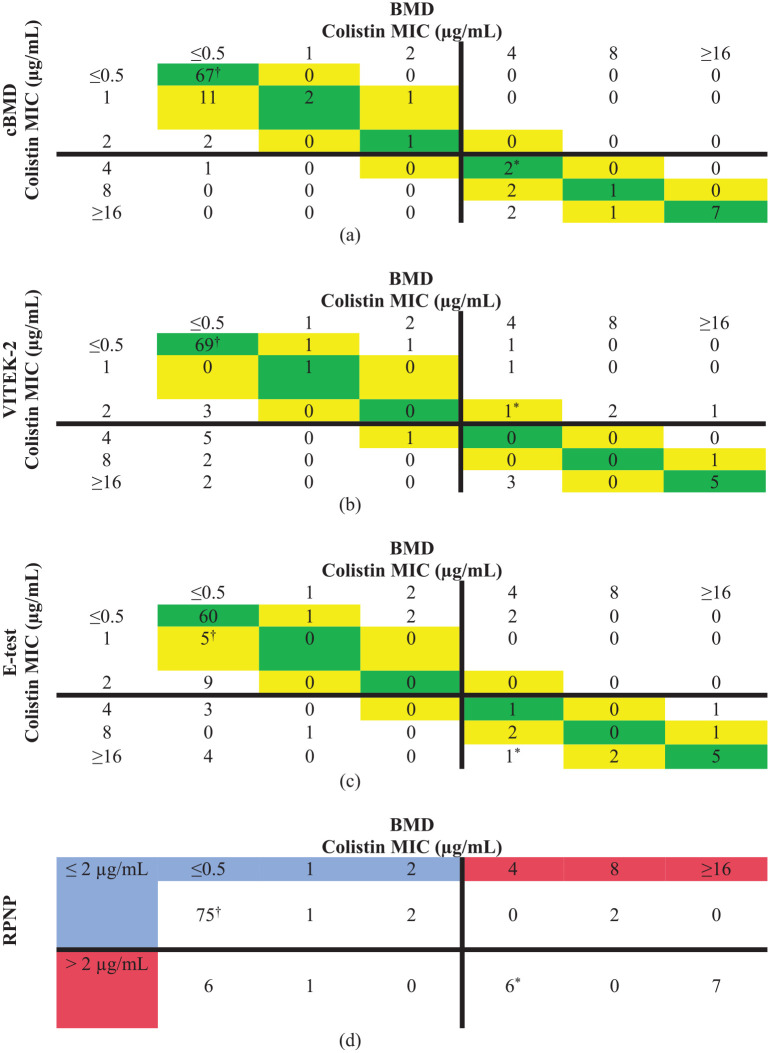
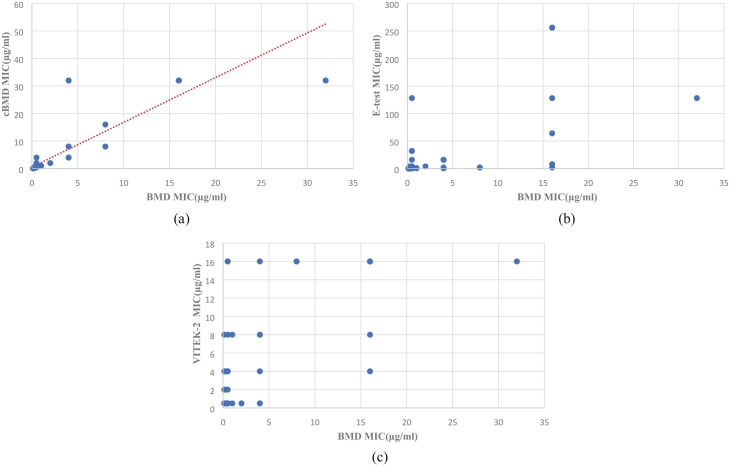
Among 100 carbapenem-resistant isolates, 15% were resistant to colistin. Essential agreement, categorical agreement, major error, and very major error for cBMD/E-test/VITEK-2/RPNP were 96%/73%/82%/NA; 99%/86%/88%/91%, 1.2%/9.4%/11.8%/8.2% and 0%/40%/13.3%/13.3%, respectively. Only one isolate harbored gene, observed by both methods. Whole-genome sequencing of two non- XDR showed multiple mutations in 10 genes responsible for lipopolysaccharide biosynthesis.
The performance of cBMD was excellent, whereas the E-test was unacceptable. VITEK-2 and RPNP performed better but remained unreliable due to high error rates. Multiple mutations in the target proteins involving lipopolysaccharide formation, modification, and regulation were seen, resulting in colistin resistance.
多重耐药革兰氏阴性菌引起的感染发生率不断增加,导致黏菌素成为最后的治疗药物。除了质粒介导的基因外,涉及多个基因(如 、 和 )的突变是黏菌素耐药的主要原因。将四种黏菌素敏感性检测方法与肉汤微量稀释法(BMD)进行比较,并确定 基因的存在情况。
总共100株耐碳青霉烯类 分离株通过商业肉汤微量稀释法(cBMD)、E-test法、VITEK-2法和快速多粘菌素NP检测法(RPNP)检测黏菌素敏感性,并与BMD法进行比较。通过改良的RPNP法和PCR法确定 基因的存在情况。使用Illumina MiSeq测序平台对两株非黏菌素耐药的广泛耐药 分离株进行全基因组测序。
在100株耐碳青霉烯类 分离株中,15%对黏菌素耐药。cBMD/E-test/VITEK-2/RPNP的基本一致性、绝对一致性、主要误差和非常主要误差分别为96%/73%/82%/无数据;99%/86%/88%/91%,1.2%/9.4%/11.8%/8.2%和0%/40%/13.3%/13.3%。两种方法均仅检测到一株 分离株携带 基因。两株非广泛耐药 的全基因组测序显示,负责脂多糖生物合成的10个基因存在多个突变。
cBMD的性能优异,而E-test法不可接受。VITEK-2法和RPNP法表现较好,但由于错误率较高,仍然不可靠。在涉及脂多糖形成、修饰和调节的靶蛋白中发现了多个突变,导致黏菌素耐药。