Javaid Uzair, Young Peter, Gill Gunvir, Bhargava Peeyush
Department of Radiology, University of Texas Medical Branch, Galveston, TX, 77555, USA.
Radiol Case Rep. 2022 Mar 2;17(5):1402-1406. doi: 10.1016/j.radcr.2022.02.008. eCollection 2022 May.
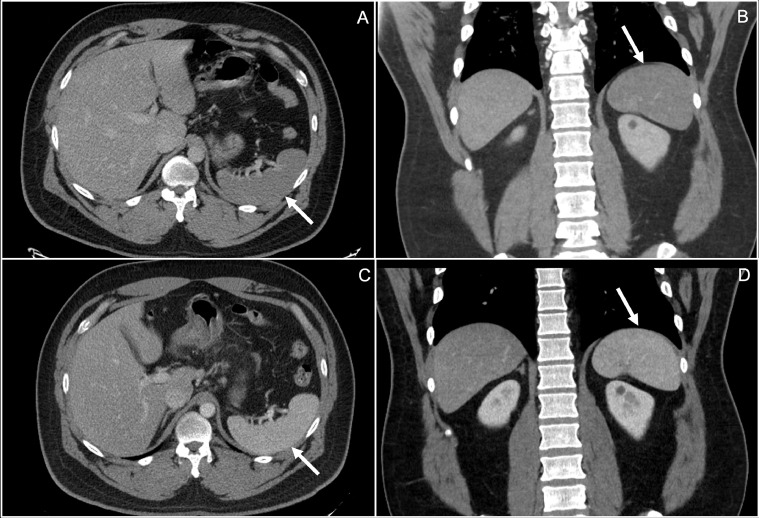
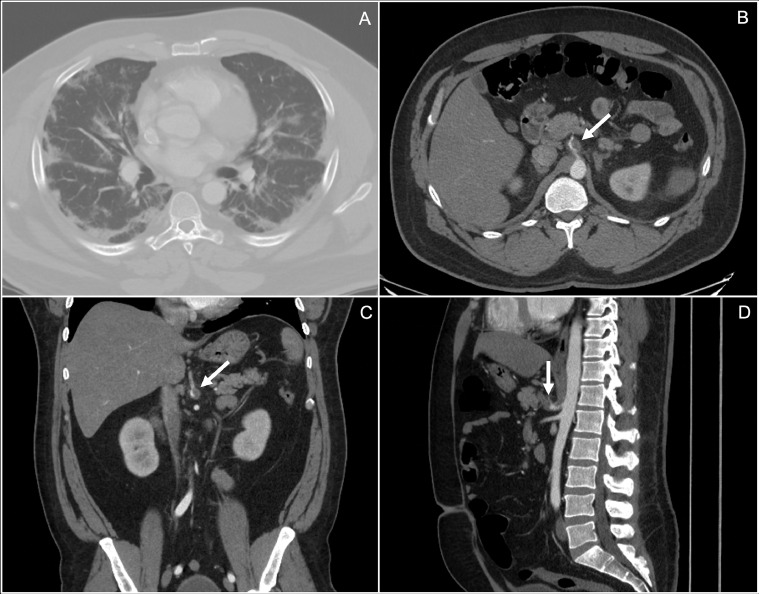
Splenic infarction in COVID-19 patients is a rare entity with few documented cases. We report a case of symptomatic complete splenic infarction and discuss COVID-19 related thrombosis, splenic infarction, diagnostic imaging for splenic infarction, and the management. Thrombotic events related to COVID-19 have been reported in unusual locations, and our case highlights an example of one such location, the splenic artery. Contrast enhanced Computed Tomography (CT) is the standard diagnostic modality and will typically reveal foci of hypo-enhancement, peripheral and wedge-shaped. CT angiography can be performed to evaluate the arteries and diagnose thrombosis. The primary treatment is aimed at addressing the underlying cause and includes supportive care. It is important that physicians consider splenic infarction as an explanation for abdominal pain in COVID-19 patients.
新冠病毒肺炎(COVID-19)患者发生脾梗死是一种罕见情况,仅有少数病例记录。我们报告一例有症状的完全性脾梗死病例,并讨论与COVID-19相关的血栓形成、脾梗死、脾梗死的诊断性影像学检查及治疗。与COVID-19相关的血栓事件已在不寻常部位被报道,我们的病例突出了其中一个部位,即脾动脉的一个例子。对比增强计算机断层扫描(CT)是标准的诊断方式,通常会显示低增强、外周及楔形的病灶。可进行CT血管造影以评估动脉并诊断血栓形成。主要治疗旨在解决潜在病因,包括支持治疗。医生将脾梗死视为COVID-19患者腹痛的一种解释很重要。