Division of Gastroenterology and Hepatology, Department of Internal Medicine, University of Michigan, Ann Arbor, Michigan, USA.
Periodontol 2000. 2022 Jun;89(1):142-153. doi: 10.1111/prd.12424. Epub 2022 Mar 4.
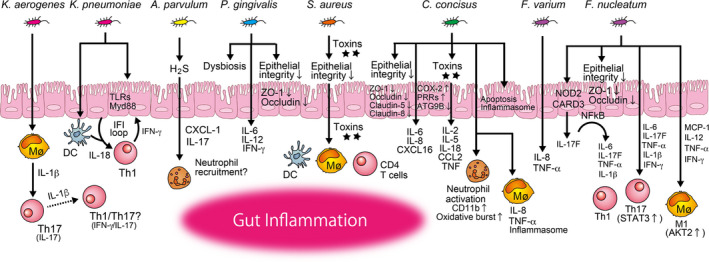
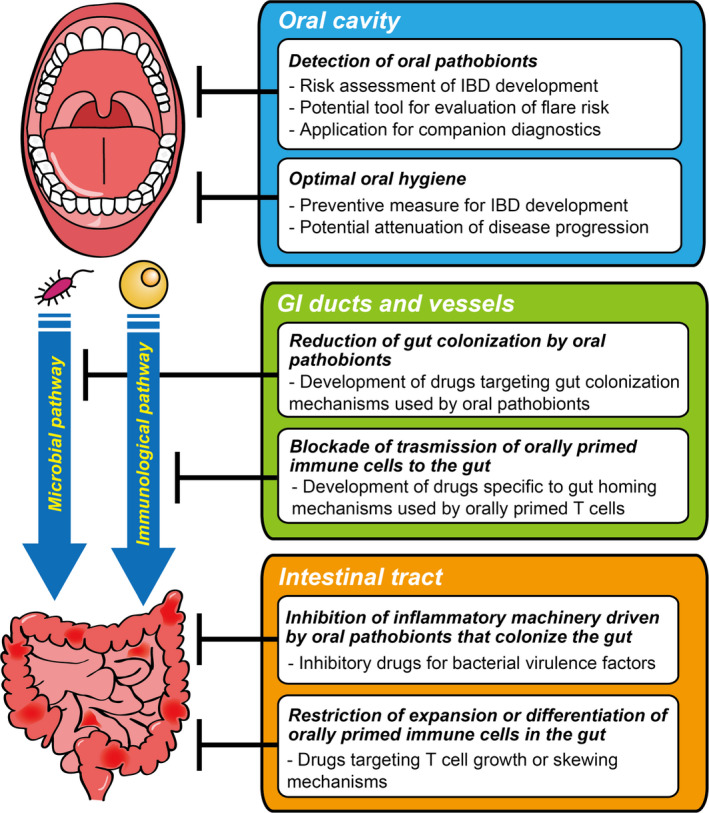
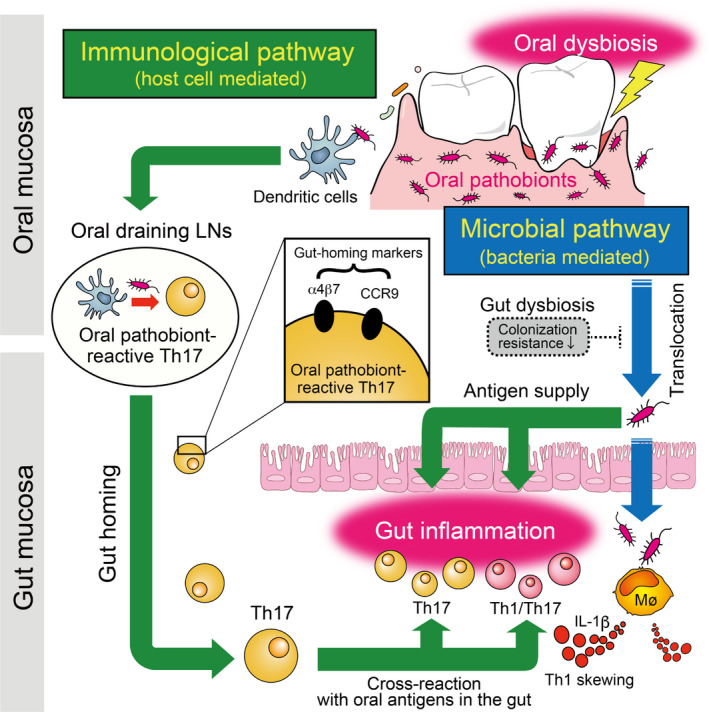
Humans have coevolved with the trillions of resident microbes that populate every nook and cranny of the body. At each site, the resident microbiota creates a unique ecosystem specialized to its environment, benefiting the development and maintenance of human physiology through harmonious symbiotic relationships with the host. However, when the resident microbiota is perturbed, significant complications may arise with disastrous consequences that affect the local and distant ecosystems. In this context, periodontal disease results in inflammation beyond the oral cavity, such as in the gastrointestinal tract. Accumulating evidence indicates that potentially harmful oral resident bacteria (referred to as pathobionts) and pathogenic immune cells in the oral mucosa can migrate to the lower gastrointestinal tract and contribute to intestinal inflammation. We will review the most recent advances concerning the periodontal connection with intestinal inflammation from microbiological and immunological perspectives. Potential therapeutic approaches that target the connection between the mouth and the gut to treat gastrointestinal diseases, such as inflammatory bowel disease, will be examined. Deciphering the complex interplay between microbes and immunity along the mouth-gut axis will provide a better understanding of the pathogenesis of both oral and gut pathologies and present therapeutic opportunities.
人类与栖息在身体每一个角落的数万亿常驻微生物共同进化。在每个部位,常驻微生物群落创造了一个独特的生态系统,专门适应其环境,通过与宿主的和谐共生关系,促进人类生理的发育和维持。然而,当常驻微生物群落受到干扰时,可能会出现严重的并发症,产生灾难性的后果,影响局部和远处的生态系统。在这种情况下,牙周病会导致口腔以外的炎症,例如胃肠道。越来越多的证据表明,口腔常驻的潜在有害细菌(称为条件致病菌)和口腔黏膜中的致病性免疫细胞可以迁移到下胃肠道,并导致肠道炎症。我们将从微生物学和免疫学的角度回顾牙周病与肠道炎症之间的最新进展。我们还将探讨针对口腔和肠道之间联系的潜在治疗方法,以治疗胃肠道疾病,如炎症性肠病。解析口腔-肠道轴上微生物和免疫之间的复杂相互作用将更好地理解口腔和肠道病理的发病机制,并提供治疗机会。