State Key Laboratory of Natural Medicines, China Pharmaceutical University, Nanjing, Jiangsu, China.
Jiangsu Center for the Collaboration and Innovation of Cancer Biotherapy, Cancer Institute, Xuzhou Medical University, Xuzhou, Jiangsu, China.
J Immunother Cancer. 2022 Mar;10(3). doi: 10.1136/jitc-2021-004414.
Immune checkpoint inhibitors as monotherapies for advanced hepatocellular carcinoma (HCC) fail to achieve satisfying results, while combination therapies show greater efficacy. Therefore, identifying new combined targets for immune checkpoint inhibitors could be promising.
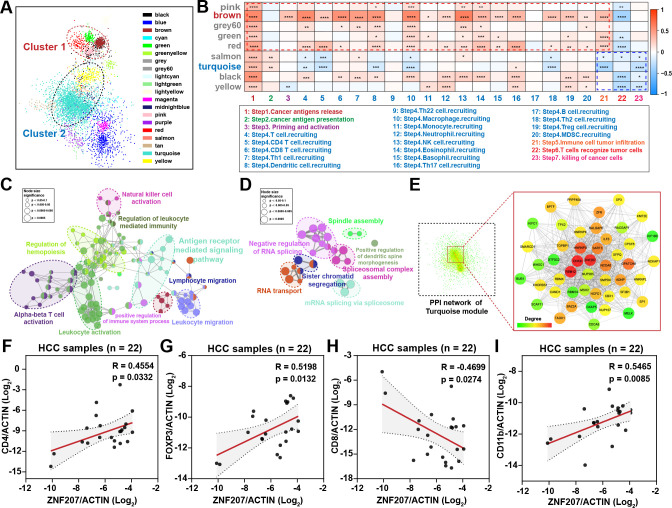
We combined the cancer-immunity cycle score with weighted gene coexpression network and system analyses to screen immunosuppressive targets in HCC. In vitro and in vivo experiments were used to assess the effect of zinc finger protein 207 (ZNF207) on HCC immunity. RNA sequencing, metabolomic, cytokine array analysis, dual-luciferase reporter gene assay, and ChIP quantitative PCR assay were used to investigate the role of ZNF207 in tumor immunity regulation.
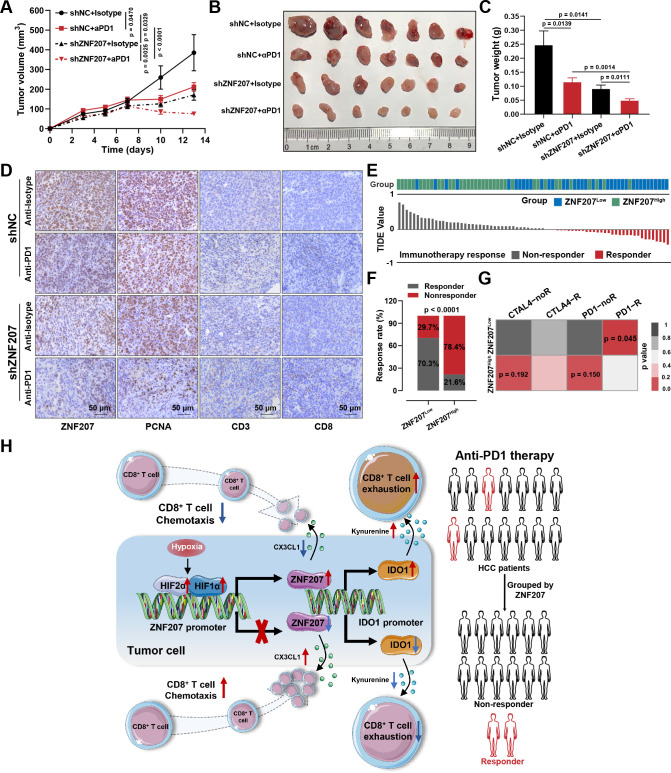
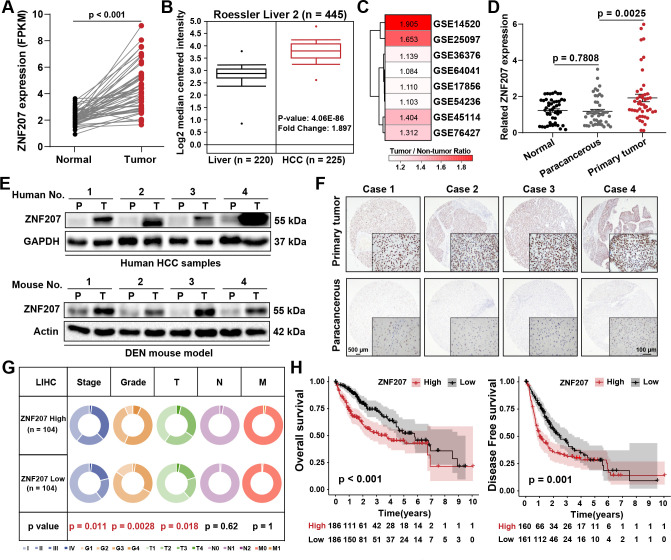
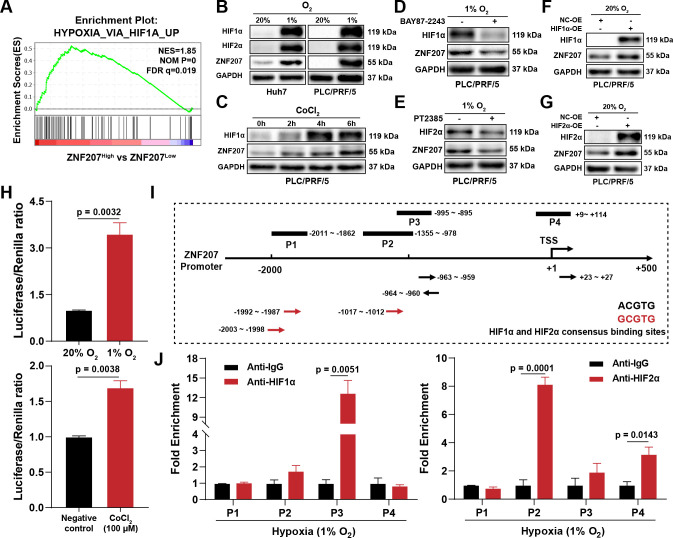
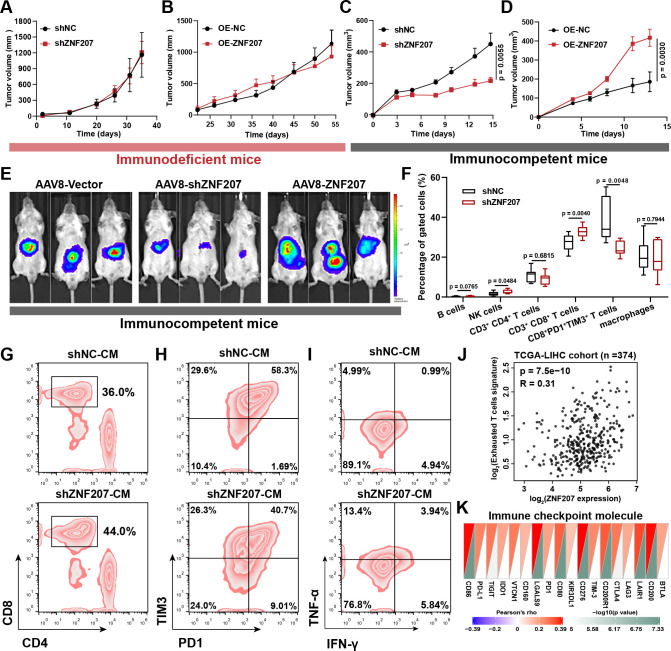
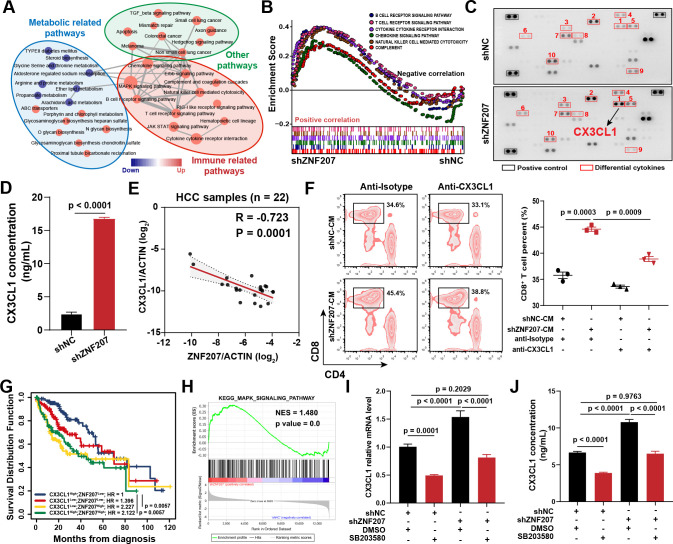
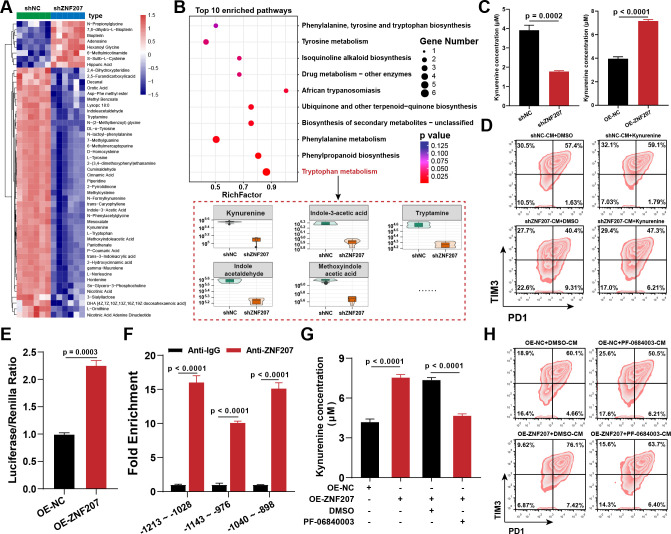
The system analysis and experimental verification revealed ZNF207 as an immunosuppressive target in HCC. Hypoxia-induced upregulation of ZNF207 promoted HCC progression in immunocompetent mice while being associated with decreased CD8 T-cell infiltration and increased exhaustion. Mechanistically, the mitogen-activated protein kinase (MAPK)-chemokine C-X3-C-motif ligand axis was involved in ZNF207-mediated CD8 T-cell chemotaxis. Furthermore, ZNF207 transcriptionally regulated indoleamine 2,3-dioxygenase 1 and elevated kynurenine levels, leading to the exhaustion of CD8 T cells. Patients with lower expression were more sensitive to antiprogrammed cell death protein 1 (PD1) therapy, and silencing could be beneficial to anti-PD1 combination therapy.
Our study implicates ZNF207 in suppressing the HCC microenvironment and showed the feasibility of targeting ZNF207 during anti-PD1 therapy in HCC.
免疫检查点抑制剂作为晚期肝细胞癌 (HCC) 的单一疗法未能取得令人满意的效果,而联合疗法显示出更大的疗效。因此,确定免疫检查点抑制剂的新联合靶点可能是有希望的。
我们将癌症免疫循环评分与加权基因共表达网络和系统分析相结合,筛选 HCC 中的免疫抑制靶点。体外和体内实验用于评估锌指蛋白 207 (ZNF207) 对 HCC 免疫的影响。RNA 测序、代谢组学、细胞因子阵列分析、双荧光素酶报告基因检测和 ChIP qPCR 检测用于研究 ZNF207 在肿瘤免疫调节中的作用。
系统分析和实验验证揭示 ZNF207 是 HCC 中的一种免疫抑制靶点。缺氧诱导的 ZNF207 上调促进了免疫功能正常小鼠的 HCC 进展,同时与 CD8 T 细胞浸润减少和衰竭增加有关。机制上,丝裂原活化蛋白激酶 (MAPK)-趋化因子 C-X3-C 基序配体轴参与了 ZNF207 介导的 CD8 T 细胞趋化作用。此外,ZNF207 转录调控吲哚胺 2,3-双加氧酶 1 并升高犬尿氨酸水平,导致 CD8 T 细胞耗竭。表达水平较低的患者对程序性细胞死亡蛋白 1 (PD1) 治疗更敏感,沉默 ZNF207 可能有益于抗 PD1 联合治疗。
我们的研究表明 ZNF207 抑制 HCC 微环境,并表明在 HCC 中抗 PD1 治疗期间靶向 ZNF207 的可行性。