Institute for Bioscience and Biotechnology Research, University of Maryland, Rockville, MD 20850.
Department of Molecular Biology, Princeton University, Princeton, NJ 08540.
Proc Natl Acad Sci U S A. 2022 Mar 15;119(11):e2112008119. doi: 10.1073/pnas.2112008119. Epub 2022 Mar 9.
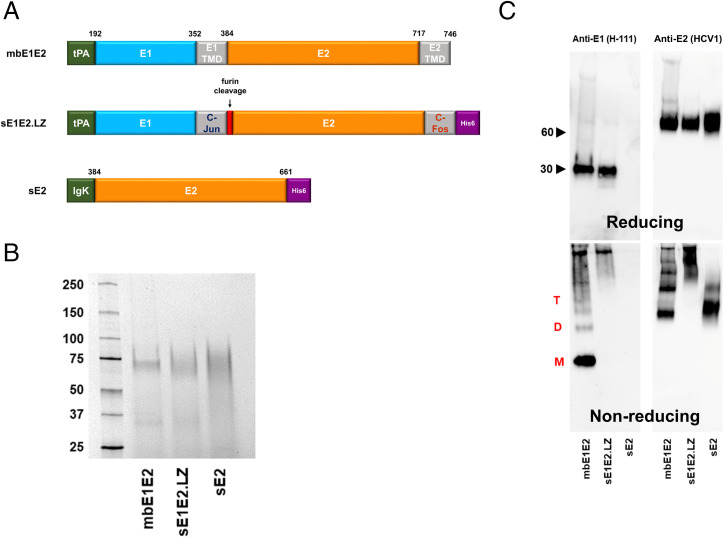
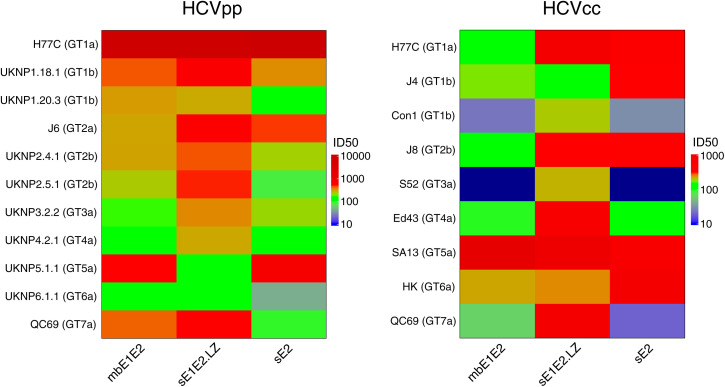
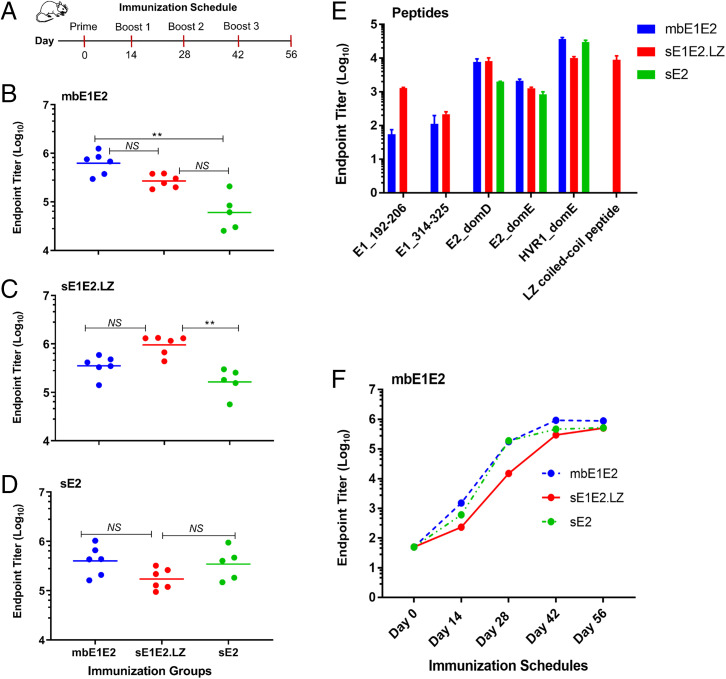
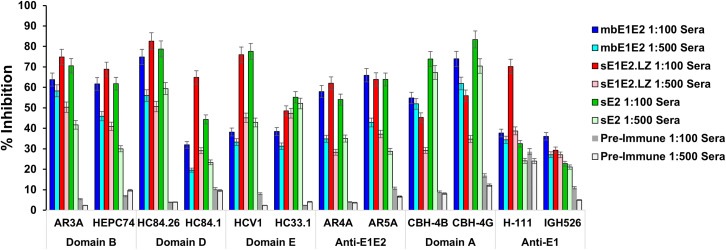
SignificanceHepatitis C virus chronically infects approximately 1% of the world's population, making an effective vaccine for hepatitis C virus a major unmet public health need. The membrane-associated E1E2 envelope glycoprotein has been used in clinical studies as a vaccine candidate. However, limited neutralization breadth and difficulty in producing large amounts of homogeneous membrane-associated E1E2 have hampered efforts to develop an E1E2-based vaccine. Our previous work described the design and biochemical validation of a native-like soluble secreted form of E1E2 (sE1E2). Here, we describe the immunogenic characterization of the sE1E2 complex. sE1E2 elicited broadly neutralizing antibodies in immunized mice, with increased neutralization breadth relative to the membrane-associated E1E2, thereby validating this platform as a promising model system for vaccine development.
意义丙型肝炎病毒慢性感染约占世界人口的 1%,因此开发一种有效的丙型肝炎病毒疫苗是一项重大的未满足的公共卫生需求。膜相关的 E1E2 包膜糖蛋白已被用于临床研究作为候选疫苗。然而,有限的中和广度和大量生产均匀的膜相关 E1E2 的困难阻碍了基于 E1E2 的疫苗的开发。我们之前的工作描述了设计和生化验证了一种天然样可溶性分泌形式的 E1E2(sE1E2)。在这里,我们描述了 sE1E2 复合物的免疫原性特征。sE1E2 在免疫小鼠中诱导出广泛中和抗体,与膜相关的 E1E2 相比,中和广度增加,从而验证了该平台作为疫苗开发的有前途的模型系统。