García-López José-Antonio, Oliva-Madrid María-José, Bautista Delia, Vicente José, Saura-Llamas Isabel
Grupo de Química Organometálica, Departamento de Química Inorgánica, Facultad de Química, Universidad de Murcia, E-30100 Murcia, Spain.
ACTI, Universidad de Murcia, E-30100 Murcia, Spain.
Organometallics. 2021 Feb 22;40(4):539-556. doi: 10.1021/acs.organomet.0c00787. Epub 2021 Jan 29.
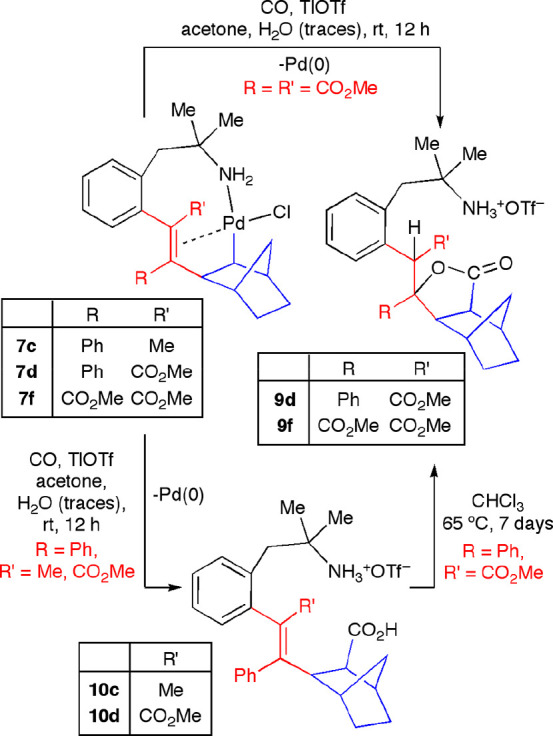
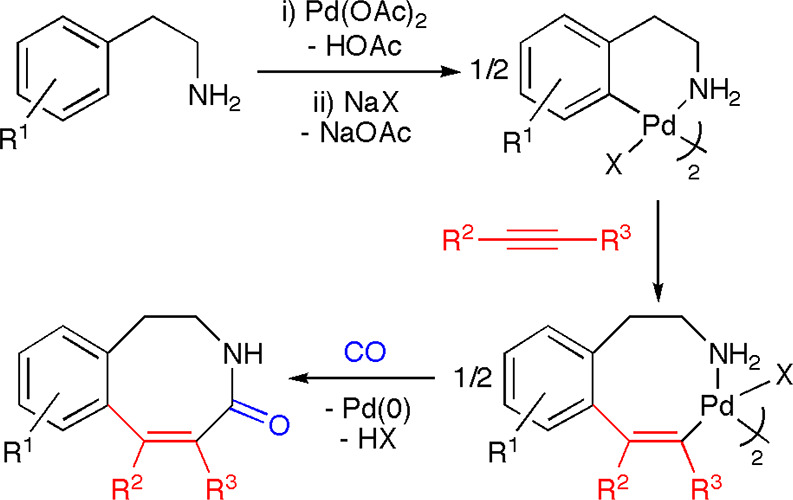
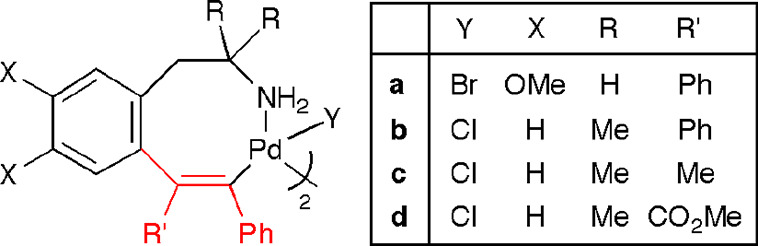
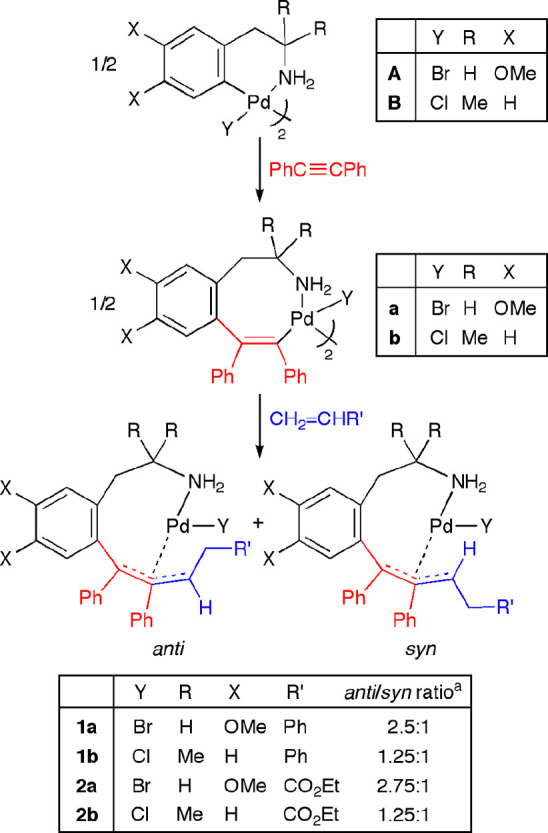
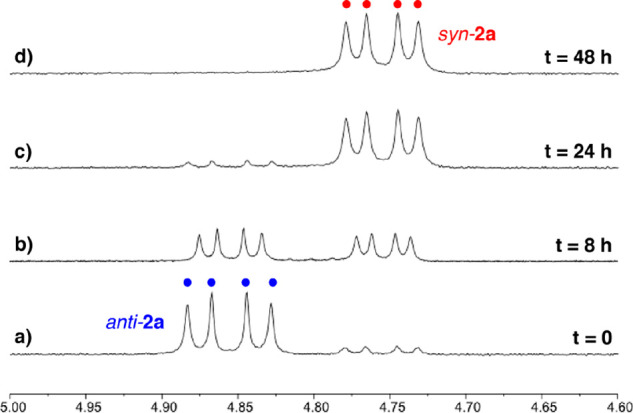
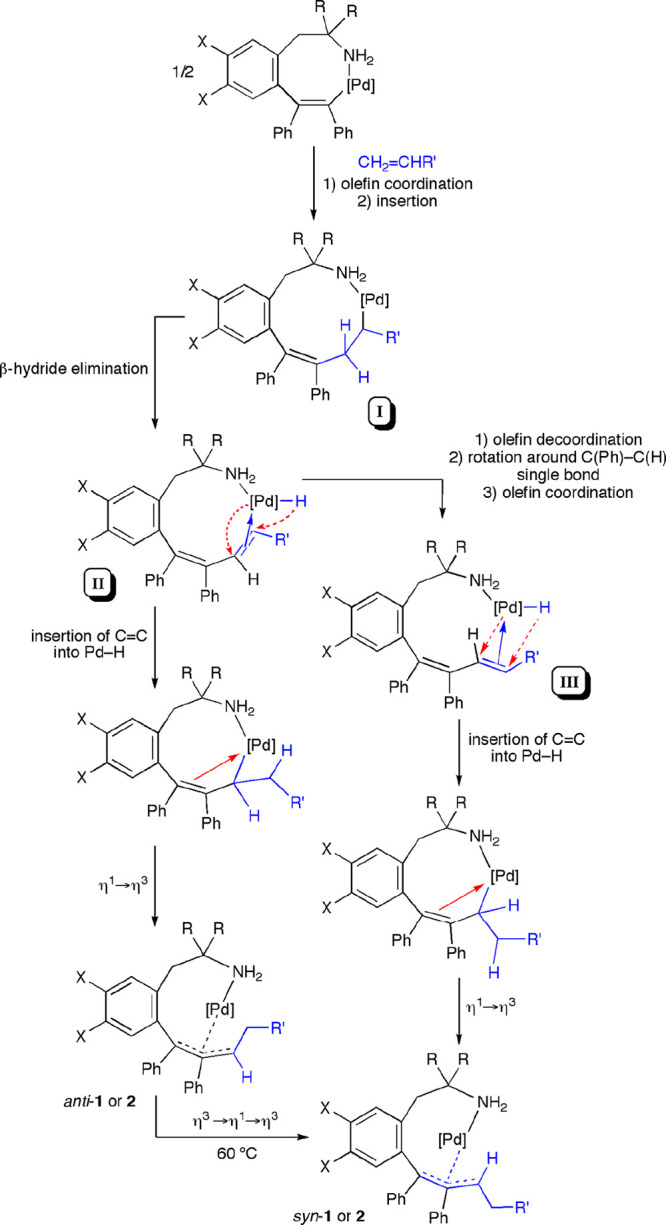
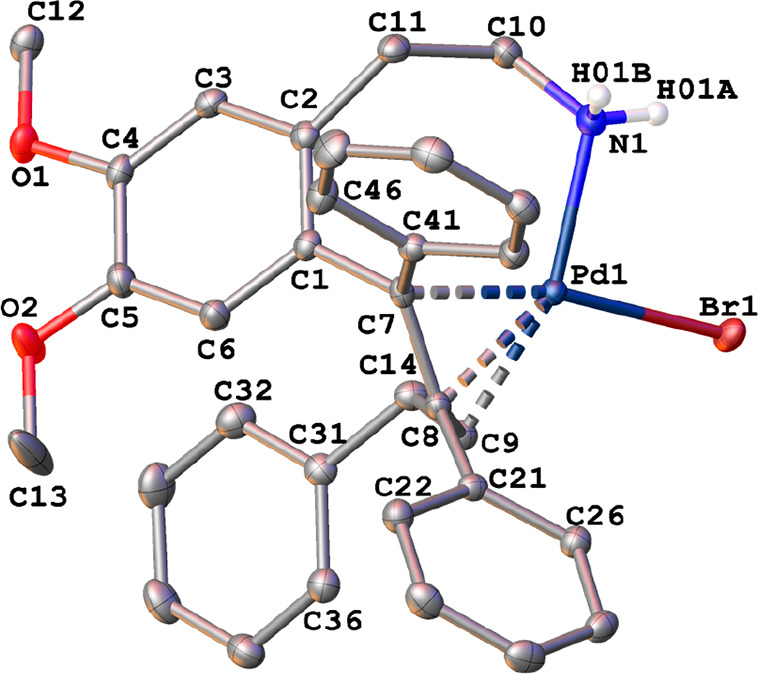
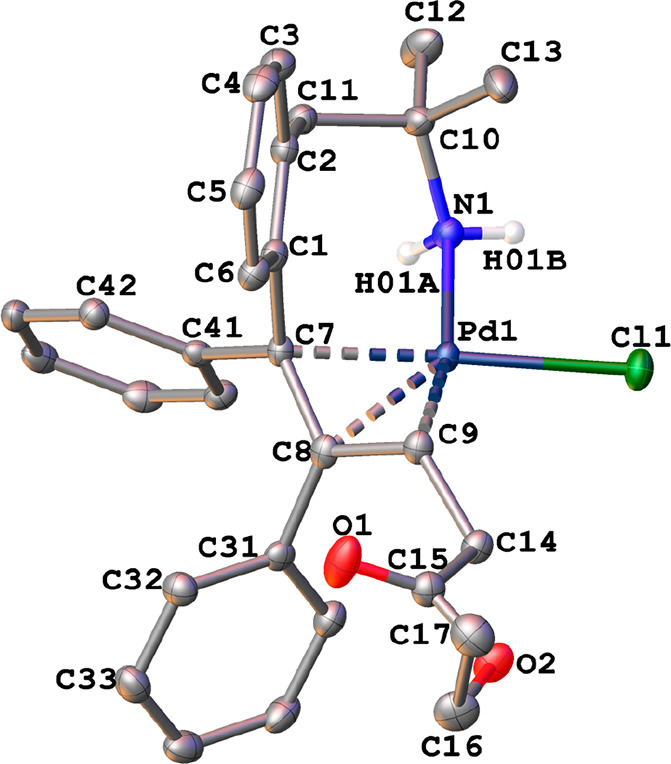
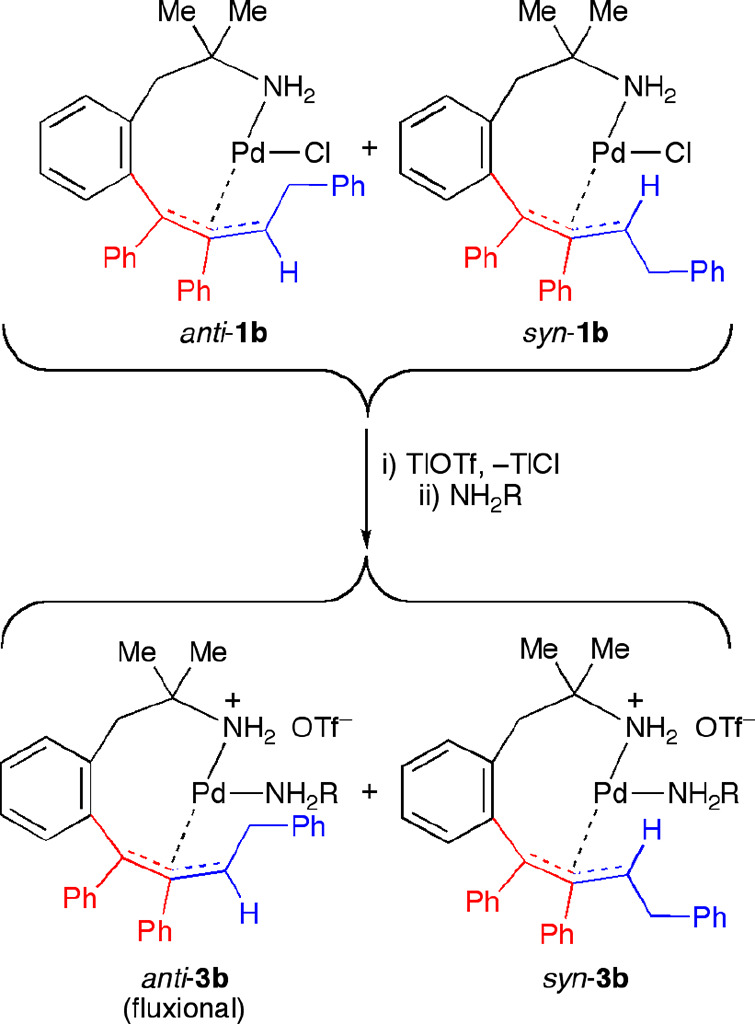
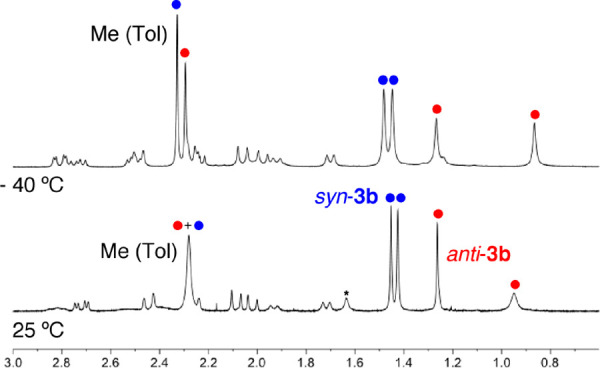
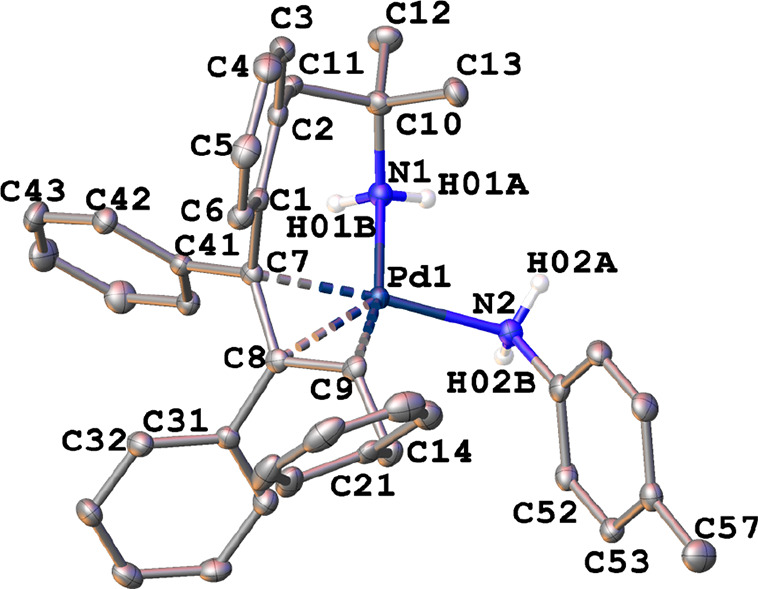
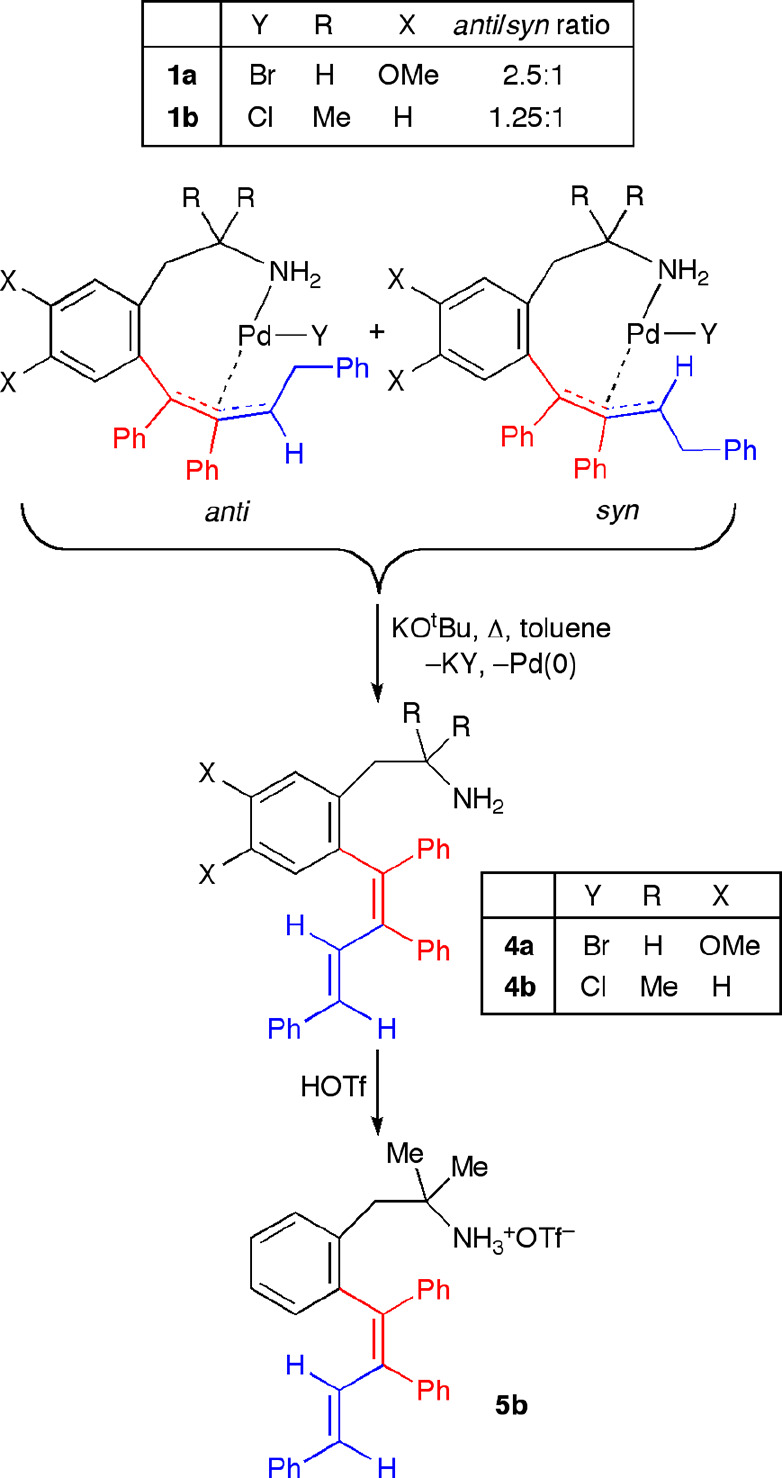
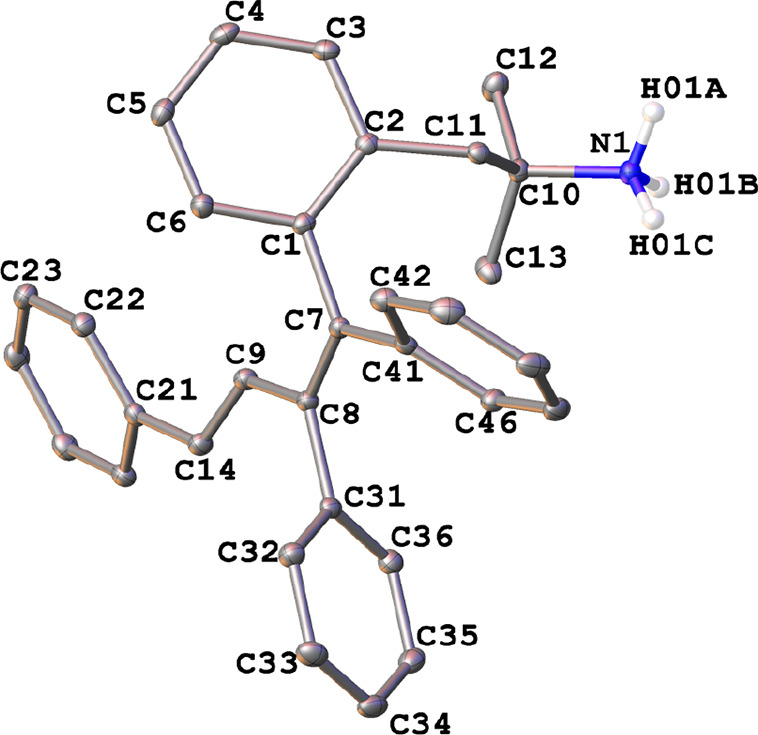
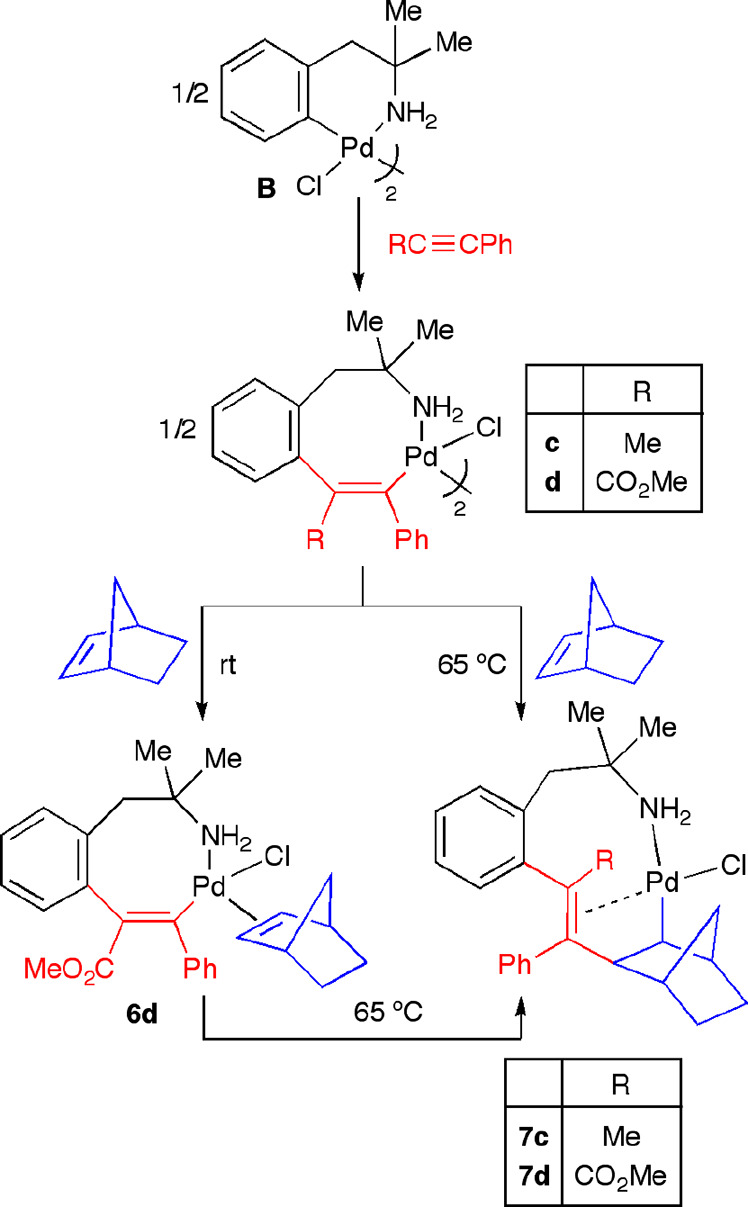
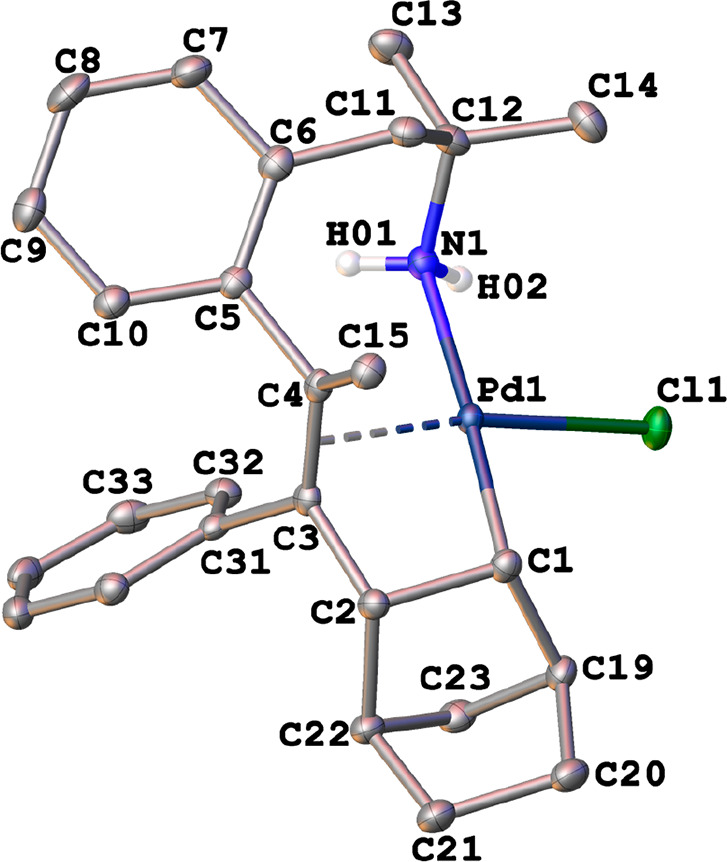
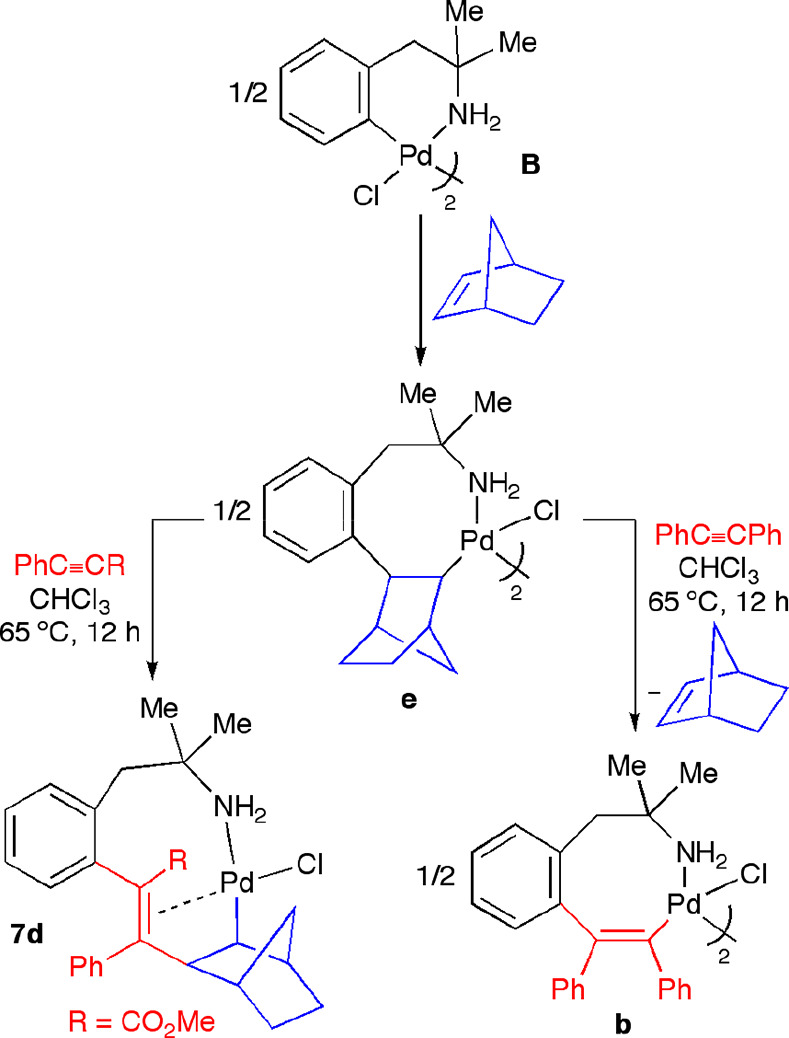
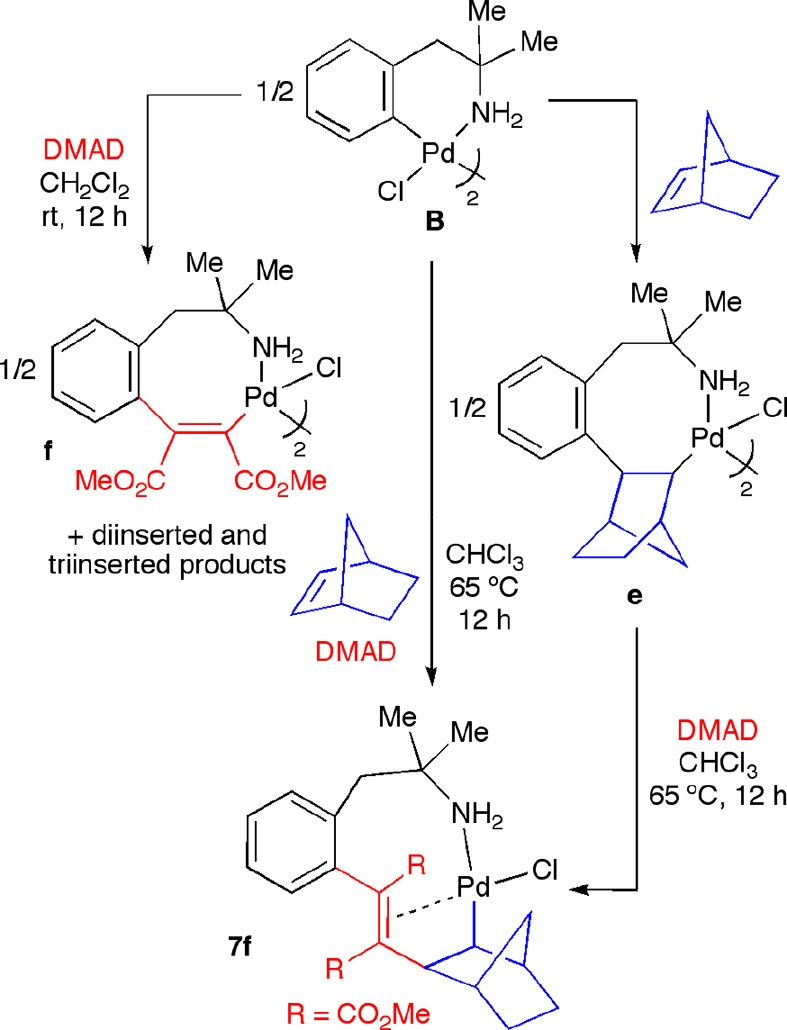
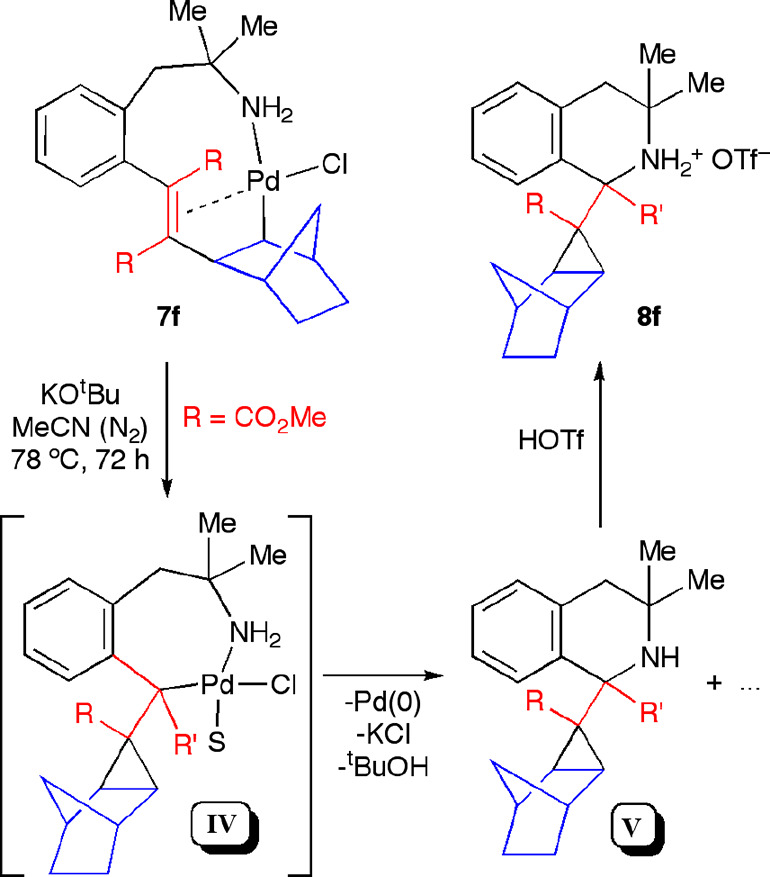
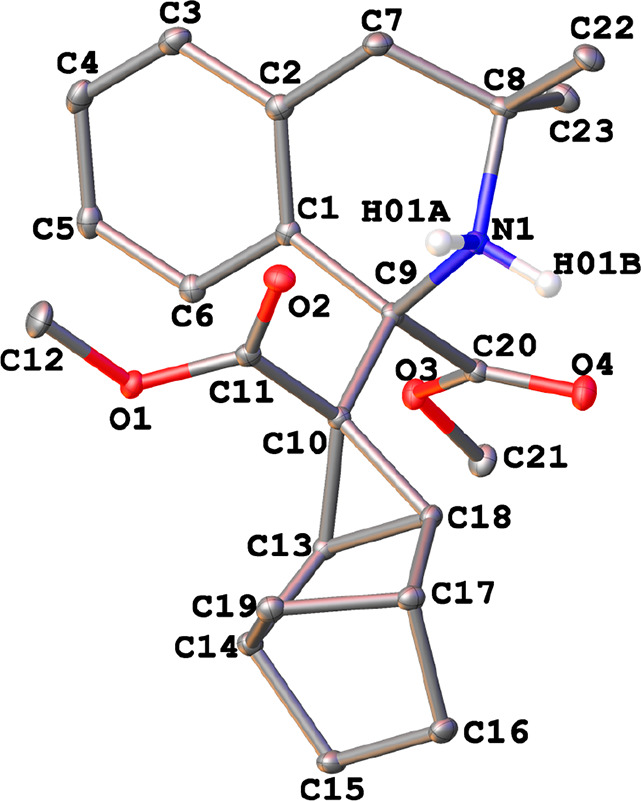
The eight-membered metallacycles arising from the insertion of 1 equiv of alkyne into the Pd-C bond of -metalated homoveratrylamine and phentermine can further react with alkenes to give two different types of mononuclear complexes depending on the nature of the olefin. When terminal alkenes (styrene and ethyl acrylate) are used, a mixture of the / η-allyl Pd(II) complexes are isolated, which evolve slowly to the isomers by heating the mixtures appropriately. These η-allyl Pd(II) complexes do not react with CO or weak bases, but when they are treated with a strong base, such as KOBu, they afford Pd(0) and the functionalized starting phenethylamines containing a 1,3-butadienyl substituent in an position. When 2-norbornene was used instead of terminal alkenes, the strained olefin inserts into the alkenyl Pd(II) complex to afford a 10-membered norbornyl palladium(II) complex, in which the new ,-chelate ligand is coordinated to the metal through an additional double bond, occupying three coordination positions. The reactivity of these norbornyl complexes depends on the substituents on the inserted alkenyl fragment, and thus they can further react with (1) KOBu, to give Pd(0) and a tetrahydroisoquinoline nucleus containing a tricyclo[3.2.1]octyl ring, or (2) CO and TlOTf, to afford Pd(0) and amino acid derivatives or the corresponding lactones arising from an intramolecular Michael addition of the COH group to the α,β-unsaturated ester moiety. Crystal structures of every type of compound have been determined by X-ray diffraction studies.
将1当量的炔烃插入金属化的高藜芦胺和苯丁胺的Pd-C键中产生的八元金属环,可根据烯烃的性质进一步与烯烃反应生成两种不同类型的单核配合物。当使用末端烯烃(苯乙烯和丙烯酸乙酯)时,可分离得到/η-烯丙基Pd(II)配合物的混合物,通过适当加热混合物,它们会缓慢演变成异构体。这些η-烯丙基Pd(II)配合物不与CO或弱碱反应,但当用强碱(如叔丁醇钾)处理时,它们会生成Pd(0)和在α位含有1,3-丁二烯基取代基的官能化起始苯乙胺。当使用2-降冰片烯代替末端烯烃时,张力烯烃插入烯基Pd(II)配合物中,得到一个十元降冰片基钯(II)配合物,其中新的α,β-螯合配体通过一个额外的双键与金属配位,占据三个配位位置。这些降冰片基配合物的反应性取决于插入的烯基片段上的取代基,因此它们可以进一步与(1)叔丁醇钾反应,生成Pd(0)和含有三环[3.2.1]辛基环的四氢异喹啉核,或(2)CO和三氟甲磺酸铊反应,得到Pd(0)和氨基酸衍生物或由COH基团对α,β-不饱和酯部分进行分子内迈克尔加成产生的相应内酯。每种类型化合物的晶体结构已通过X射线衍射研究确定。