Sierra Adriana, Otero Sol, Rodríguez Eva, Faura Anna, Vera María, Riera Marta, Palau Vanesa, Durán Xavier, Costa-Garrido Anna, Sans Laia, Márquez Eva, Poposki Vladimir, Franch-Nadal Josep, Mundet Xavier, Oliveras Anna, Crespo Marta, Pascual Julio, Barrios Clara
Department of Nephrology, Hospital del Mar, Institut Hospital del Mar d'Investigacions Mèdiques, 08003 Barcelona, Spain.
Department of Nephrology, Consorci Sanitari Alt Penedès-Garraf, 08800 Barcelona, Spain.
J Clin Med. 2022 Mar 5;11(5):1431. doi: 10.3390/jcm11051431.
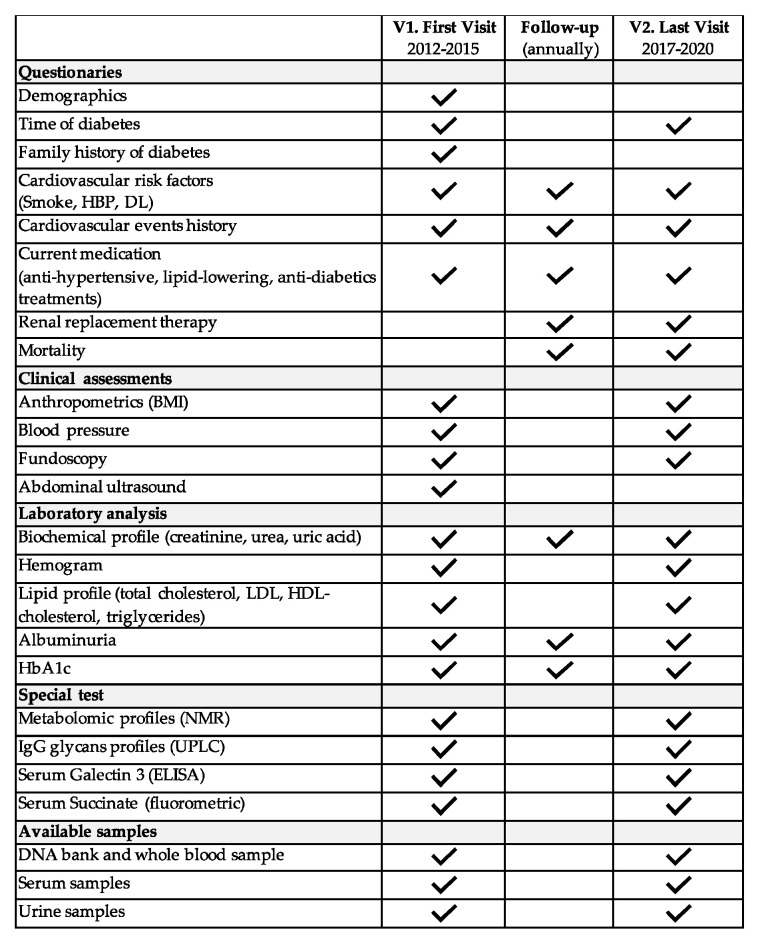
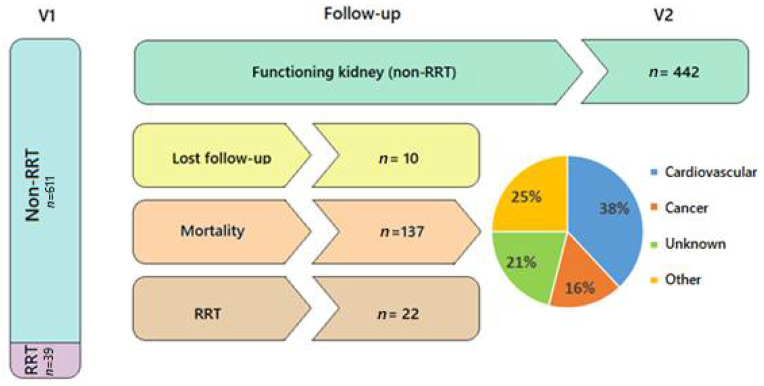
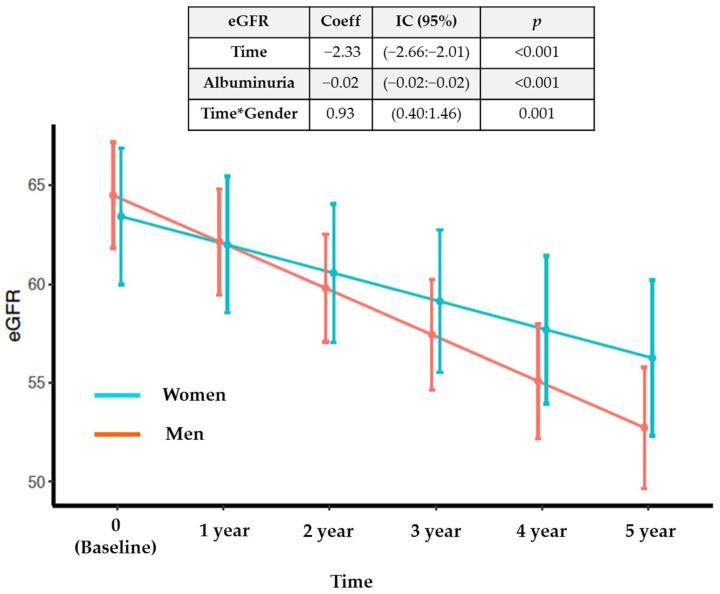
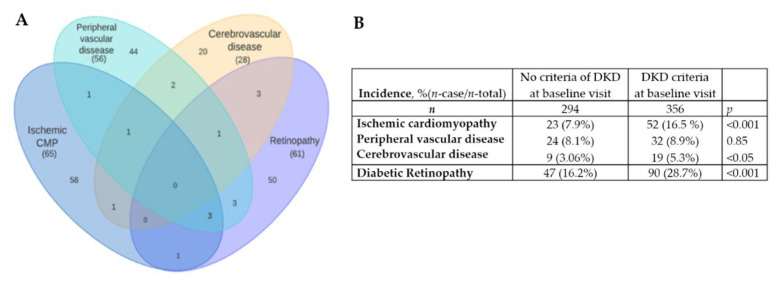
The GenoDiabMar registry is a prospective study that aims to provide data on demographic, biochemical, and clinical changes in type 2 diabetic (T2D) patients attending real medical outpatient consultations. This registry is also used to find new biomarkers related to the micro- and macrovascular complications of T2D, with a particular focus on diabetic nephropathy. With this purpose, longitudinal serum and urine samples, DNA banking, and data on 227 metabolomics profiles, 77 immunoglobulin G glycomics traits, and other emerging biomarkers were recorded in this cohort. In this study, we show a detailed longitudinal description of the clinical and analytical parameters of this registry, with a special focus on the progress of renal function and cardiovascular events. The main objective is to analyze whether there are differential risk factors for renal function deterioration between sexes, as well as to analyze cardiovascular events and mortality in this population. In total, 650 patients with a median age of 69 (14) with different grades of chronic kidney disease—G1−G2 (eGFR > 90−60 mL/min/1.73 m2) 50.3%, G3 (eGFR; 59−30 mL/min/1.73 m2) 31.4%, G4 (eGFR; 29−15 mL/min/1.73 m2) 10.8%, and G5 (eGFR < 15 mL/min/1.73 m2) 7.5%—were followed up for 4.7 (0.65) years. Regardless of albuminuria, women lost 0.93 (0.40−1.46) fewer glomerular filtration units per year than men. A total of 17% of the participants experienced rapid deterioration of renal function, 75.2% of whom were men, with differential risk factors between sexes—severe macroalbuminuria > 300 mg/g for men OR [IQ] 2.40 [1.29:4.44] and concomitant peripheral vascular disease 3.32 [1.10:9.57] for women. Overall mortality of 23% was detected (38% of which was due to cardiovascular etiology). We showed that kidney function declined faster in men, with different risk factors compared to women. Patients with T2D and kidney involvement have very high mortality and an important cardiovascular burden. This cohort is proposed as a great tool for scientific collaboration for studies, whether they are focused on T2D, or whether they are interested in comparing differential markers between diabetic and non-diabetic populations.
GenoDiabMar登记处是一项前瞻性研究,旨在提供在实际医疗门诊就诊的2型糖尿病(T2D)患者的人口统计学、生化和临床变化数据。该登记处还用于寻找与T2D微血管和大血管并发症相关的新生物标志物,尤其关注糖尿病肾病。为此,在该队列中记录了纵向血清和尿液样本、DNA库以及227种代谢组学谱、77种免疫球蛋白G糖组学特征和其他新兴生物标志物的数据。在本研究中,我们详细纵向描述了该登记处的临床和分析参数,特别关注肾功能进展和心血管事件。主要目的是分析性别之间肾功能恶化是否存在不同的危险因素,以及分析该人群的心血管事件和死亡率。共有650名患者,中位年龄为69(14)岁,患有不同程度的慢性肾脏病——G1−G2(估算肾小球滤过率>90−60 mL/min/1.73 m2)占50.3%,G3(估算肾小球滤过率;59−30 mL/min/1.73 m2)占31.4%,G4(估算肾小球滤过率;29−15 mL/min/1.73 m2)占10.8%,G5(估算肾小球滤过率<15 mL/min/1.73 m2)占7.5%——随访了4.7(0.65)年。无论是否存在蛋白尿,女性每年丢失的肾小球滤过单位比男性少0.93(0.40−1.46)个。共有17%的参与者经历了肾功能快速恶化,其中75.2%为男性,性别之间存在不同的危险因素——男性严重大量蛋白尿>300 mg/g的比值比[四分位间距]为2.40 [1.29:4.44],女性合并外周血管疾病的比值比为3.32 [1.10:9.57]。检测到总体死亡率为23%(其中38%归因于心血管病因)。我们表明男性肾功能下降更快,与女性相比存在不同的危险因素。患有T2D和肾脏受累的患者死亡率非常高,心血管负担很重。该队列被认为是进行研究的科学合作的一个很好的工具,无论这些研究是关注T2D,还是有兴趣比较糖尿病和非糖尿病人群之间的差异标志物。