Unité des Virus Émergents (UVE: Aix-Marseille Univ-IRD 190-Inserm 1207), Marseille, France.
Laboratoire Vet-Histo, Marseille, France.
Commun Biol. 2022 Mar 10;5(1):225. doi: 10.1038/s42003-022-03171-9.
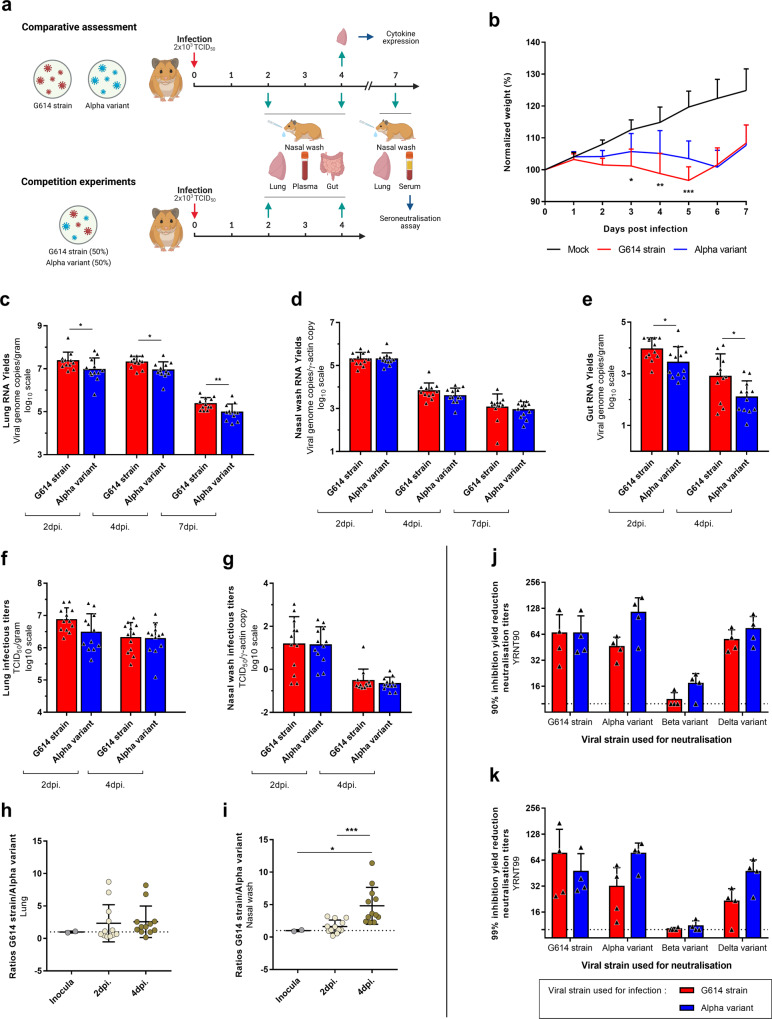
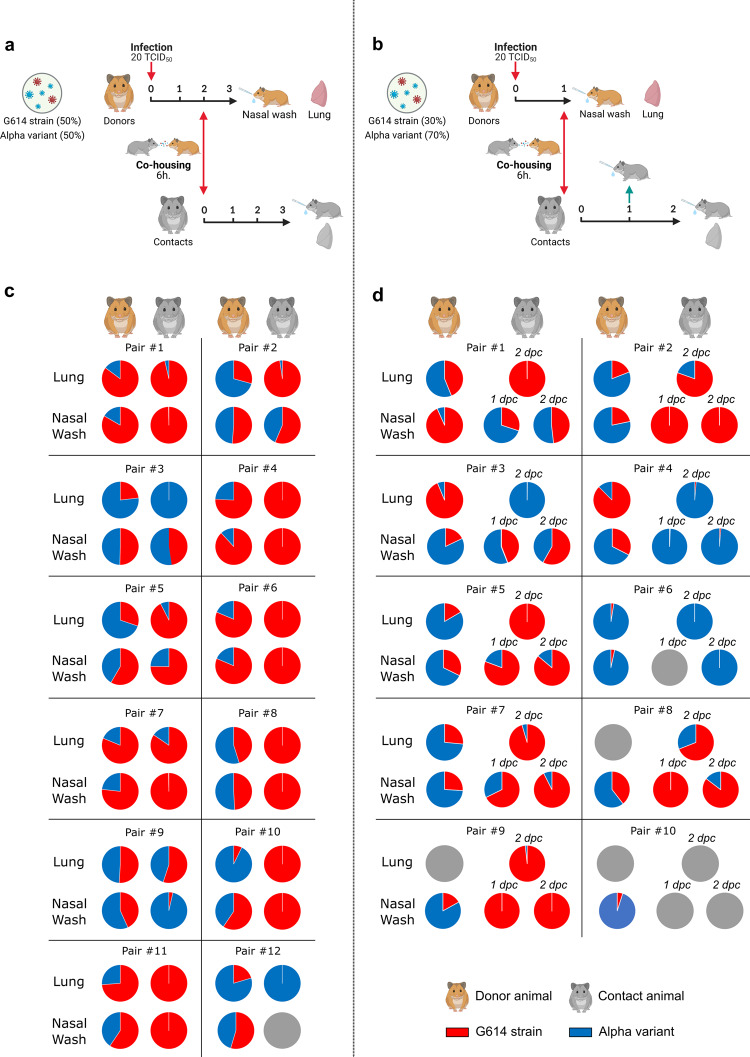
Late 2020, SARS-CoV-2 Alpha variant emerged in United Kingdom and gradually replaced G614 strains initially involved in the global spread of the pandemic. In this study, we use a Syrian hamster model to compare a clinical strain of Alpha variant with an ancestral G614 strain. The Alpha variant succeed to infect animals and to induce a pathology that mimics COVID-19. However, both strains replicate to almost the same level and induced a comparable disease and immune response. A slight fitness advantage is noted for the G614 strain during competition and transmission experiments. These data do not corroborate the epidemiological situation observed during the first half of 2021 in humans nor reports that showed a more rapid replication of Alpha variant in human reconstituted bronchial epithelium. This study highlights the need to combine data from different laboratories using various animal models to decipher the biological properties of newly emerging SARS-CoV-2 variants.
2020 年末,SARS-CoV-2 的 Alpha 变体在英国出现,并逐渐取代了最初参与大流行全球传播的 G614 株。在本研究中,我们使用叙利亚仓鼠模型比较了 Alpha 变体的临床株与原始 G614 株。Alpha 变体成功感染了动物,并诱导出类似于 COVID-19 的病理学。然而,两种菌株的复制水平几乎相同,并诱导出类似的疾病和免疫反应。在竞争和传播实验中,G614 株的适应性略有优势。这些数据与 2021 年上半年人类观察到的流行病学情况不一致,也与表明 Alpha 变体在人支气管上皮细胞重建中更快复制的报告不一致。本研究强调需要结合来自不同实验室的数据,使用各种动物模型来破译新出现的 SARS-CoV-2 变体的生物学特性。